10 best agentic AI frameworks to build intelligent AI agents
Aug 05, 2026
/
By Justina B.
/
16 min Read
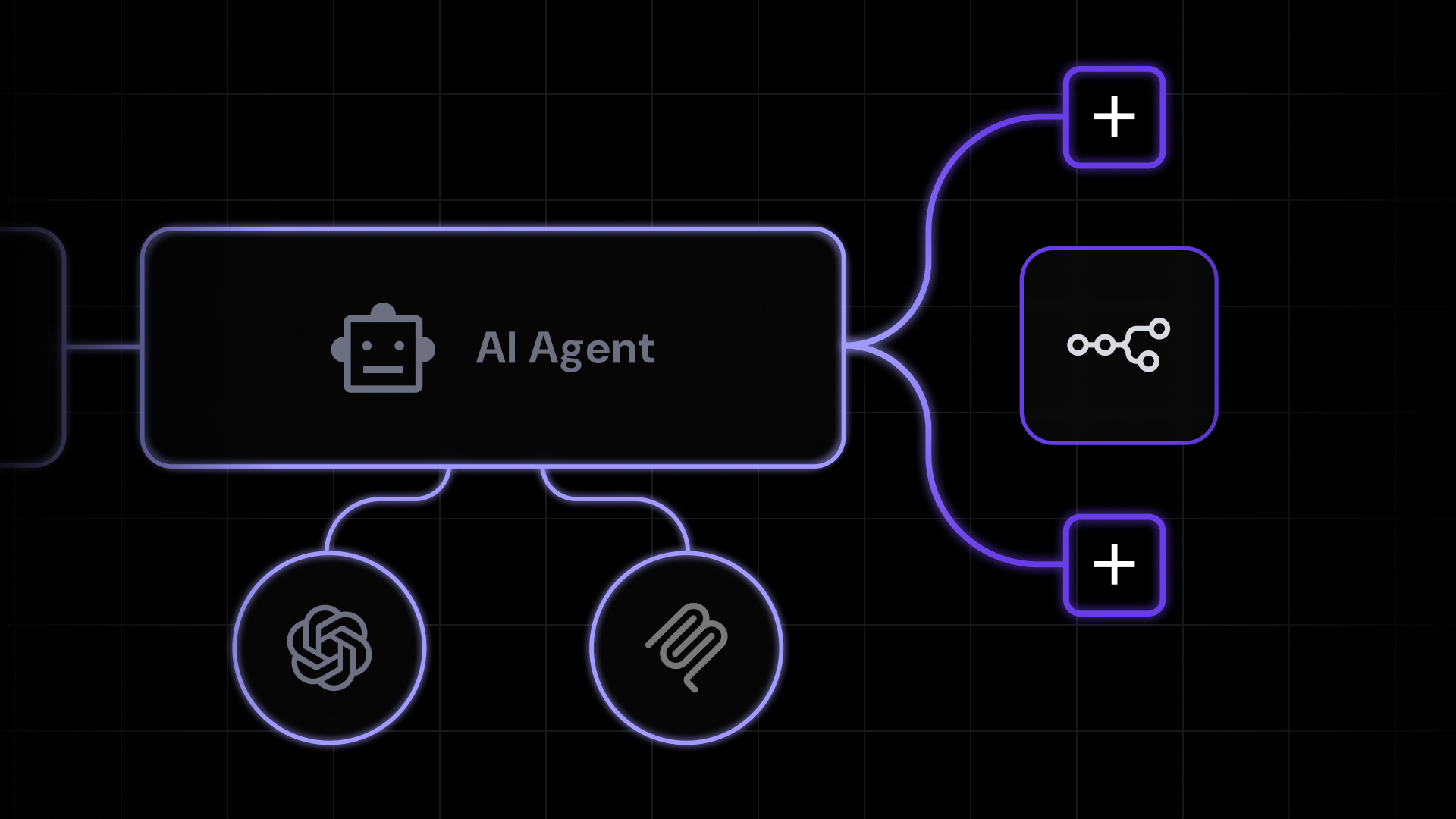
The best agentic AI framework depends on what you’re building. A tool that handles a single-agent workflow well can break down when agents need to delegate tasks, share context, or recover from failures independently.
Some frameworks prioritize fast prototyping with minimal code. Others are built for complex multi-agent systems in production, and a few are designed to work within specific cloud ecosystems like Azure or Google Cloud.
Your choice of framework commits you to an orchestration model, a state management approach, and a deployment path. Switching later can mean rewriting your agent logic, so the differences matter early.
| Framework | Architecture | Languages | Multi-agent | Memory/state | Human oversight | Best use case |
| LangGraph | Graph-based | Python, JavaScript | Native | Checkpointing and time travel | Interrupt() primitive | Stateful production workflows |
| CrewAI | Role-based | Python | Native crews | Unified memory API and flow state | Control Plane approval gates | Fast multi-agent prototyping |
| Microsoft Agent Framework | Graph-based | Python, .NET, Go | Native | Persistent and pluggable | First-class approvals | Microsoft ecosystem enterprise |
| LlamaIndex Workflows | Event-driven | Python | Supported | Session storage | Manual | Document-heavy RAG pipelines |
| OpenAI Agents SDK | Handoff-based | Python, TypeScript | Native handoffs | Configurable memory and sessions | Tool approval and Guardrails | Low-friction, OpenAI-optimized agents |
| Agno | Agent-platform | Python | Native Teams with four modes | Session and vector memory | User confirmation flows | Production agent platforms |
| PydanticAI | Type-safe functional | Python | Supported via Harness and Graph | Dependency injection | Tool approval gates | Type-safe structured outputs |
| Smolagents | Code-executing | Python | Supported | Ephemeral | Manual | Minimal code-executing agents |
| Haystack | Pipeline-based | Python | Supported | Document stores | Human-in-the-loop tool intercept | Search and RAG at scale |
| Mastra | Workflow-based | TypeScript | Native | Built-in memory and compression | Manual | TypeScript agent development |
What is an agentic AI framework?
An agentic AI framework is a software toolkit that handles the behind-the-scenes work that enables AI agents to function. Each component in the toolkit serves a specific role. Understanding what they do helps you evaluate which frameworks deliver the most value for your project.
Orchestration controls which step runs next, routes tasks to the right agent or tool, and determines when a workflow is complete. It can be centralized, where one orchestrator makes all the decisions, or decentralized, where agents coordinate peer-to-peer.
Tool use lets your agents reach beyond the language model itself. They can call external APIs, run functions, and pull data from other software.
Memory and state management track context at two levels. Short-term memory holds information within a single session, while long-term memory persists across sessions and often requires an external database.
Multi-agent coordination manages handoffs when multiple agents need to collaborate. It defines who does what and when control passes from one agent to another.
These components vary widely between agentic AI frameworks. Some excel at orchestration but lack memory depth, while others handle multi-agent coordination well but limit where and how you can run your agents.
How agentic AI framework architectures differ
Each framework follows a different architecture pattern. That pattern determines how your agents make decisions, how the state moves through the system, and how large language models fit into the process.
- Graph-based – LangGraph, Microsoft Agent Framework. Explicit nodes and edges control execution flow. You define exactly which step runs next, making these the most predictable but also the most verbose to set up.
- Role-based – CrewAI. Agents with defined roles, goals, and backstories collaborate on tasks through Crews. CrewAI also includes Flows, a structured, event-driven layer that adds deterministic routing to LLM-driven collaboration.
- Event-driven – LlamaIndex Workflows. Steps triggered by events with branching and loops. Well-suited for document processing and RAG tasks, though designed as a general-purpose orchestration layer.
- Handoff-based – OpenAI Agents SDK. Agents pass tasks to each other via handoff primitives. This creates a simpler multi-agent model than a graph, but with less granular control.
- Full-stack platform – Agno. Combines an SDK, AgentOS runtime, and control plane for building and managing single or multi-agent systems.
- Type-safe functional – PydanticAI. Validated inputs and outputs through Pydantic models. Catches agent logic errors at development time rather than runtime.
- Code-executing – Smolagents. The agent writes and runs Python as its primary action. A single script can handle multiple steps, reducing LLM calls by approximately 30% compared to JSON-based tool-calling agents.
- Pipeline-based – Haystack. Components connect into directed processing graphs. Haystack started in enterprise search and RAG but has since grown into a general-purpose AI orchestration framework with full agent workflow support.
- Workflow-based – Mastra. TypeScript workflows with built-in memory and compression. It is a TypeScript-first option for TypeScript and JavaScript developers.
1. LangGraph
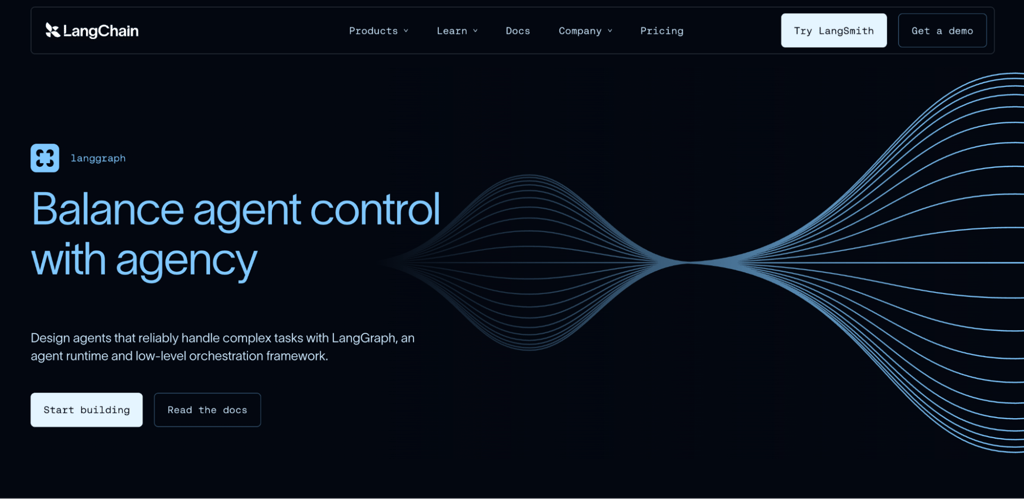
Best for: stateful production workflows where explicit control, resumability, and human review matter more than setup speed.
LangGraph is a graph-based framework that models agent workflows as directed graphs with explicit state transitions. You define which node runs next and under what conditions, giving you production-grade control over execution flow.
It supports Python and JavaScript. MCP tools can be connected through adapters, while standardized A2A endpoints are available through the managed LangSmith Agent Server rather than the open-source.
Compared to the OpenAI Agents SDK, LangGraph gives you more granular state management through time-travel debugging, but at the cost of a steeper learning curve.
LangGraph pros
- Checkpointing with time travel. You can rewind agent execution to any prior state, allowing developers to inspect history, resume a thread, or replay from a prior checkpoint.
- Human-in-the-loop via interrupt(). Pause execution at any node for human review before continuing, without custom workarounds.
- Proven at scale. Klarna rebuilt its AI assistant on LangGraph for multi-agent routing, serving more than 85 million active users, per a LangChain case study from February 2025. Replit and Elastic are also production users.
LangGraph cons
- Steep learning curve. Graph concepts and state schemas take time to understand. If your team needs quick results, either CrewAI or the OpenAI Agents SDK will help you reach a working prototype faster.
- No native A2A in the open-source version. A2A is only available on the managed LangGraph Platform. CrewAI, by contrast, ships native A2A support for free.
- Observability costs extra. End-to-end LangGraph tracing and managed evaluation use LangSmith, a separate product with free and paid tiers.
LangGraph pricing
LangGraph is open-source and free. LangSmith has a free Developer tier with one seat and 5,000 traces/month. Paid plans start at $39/seat/month on Plus, which includes 10,000 traces and one free small serverless deployment.
LangSmith Deployment for hosting agents incurs additional usage-based charges in addition to the seat fee.
2. CrewAI
Best for: fast multi-agent prototyping and workflows that map naturally to named roles.
CrewAI is a role-based framework in which you define agents with backstories, goals, and tools, and then organize them into collaborating crews. CrewAI Flows add stateful, event-driven routing around those crews.
The role-based metaphor is intuitive enough for non-engineers to understand, which sets it apart from LangGraph’s graph model. That makes it a strong choice for teams that include product managers or domain experts who need to follow the agent logic.
While LangGraph gives you precise control over every decision point, CrewAI lets the LLM determine how agents should interact.
CrewAI pros
- Accessible role-based setup. The role, goal, and backstory setup maps to how people naturally think about team collaboration.
- Native MCP and A2A support. Both protocols are built in, giving CrewAI stronger out-of-the-box interoperability than LangGraph, the OpenAI Agents SDK, or PydanticAI, which all lack native A2A.
- Large community. CrewAI has an active open-source community with examples, integrations, and troubleshooting resources.
- Built-in free tracing since OSS v1.0, no third-party tool required.
CrewAI cons
- High token consumption in benchmarks. LLM-driven routing between agents uses more tokens than LangGraph’s explicit graph edges or Smolagents’ code-execution approach. For cost-sensitive projects, this adds up.
- Limited control over execution flow. As workflows grow in complexity with conditional logic, retries, or fine-grained state management, the role-based metaphor becomes harder to manage. LangGraph may fit these cases better because its transactions are explicit.
CrewAI pricing
CrewAI is open-source and free. The Basic managed tier is free and includes 50 workflow executions/month. Enterprise plans with higher execution limits and compliance features are available at custom pricing.
3. Microsoft Agent Framework
Best for: Microsoft ecosystem teams building on Azure.
Microsoft Agent Framework is a graph-based SDK that merges AutoGen’s multi-agent patterns with Semantic Kernel’s enterprise tooling. It reached v1.0 GA on April 3, 2026.
Python and .NET are stable; Go is in public preview with a smaller feature set. The framework supports MCP and A2A, graph-based workflows, checkpointing, approvals, telemetry, and human-in-the-loop patterns.
Microsoft Agent Framework has its deepest integration with Microsoft Foundry, but it also supports OpenAI, Anthropic, Amazon Bedrock, Google Gemini, and Ollama.
If your team is already on the Microsoft stack, the Foundry integration saves setup time.
If you’re not, LangGraph or CrewAI give you more flexibility. Both run across cloud providers or self-hosted infrastructure, reducing Microsoft-specific dependencies.
Microsoft Agent Framework pros
- Approval and safety primitives are built into the core SDK. The framework supports human approval, middleware, telemetry, and provider-specific content controls, but teams still need to configure safeguards for their use case.
- Microsoft Foundry integration. Deploy, monitor, and manage agents through Microsoft’s platform while retaining support for non-Microsoft model providers.
Microsoft Agent Framework cons
- Strongest on the Microsoft stack. Teams outside the Azure and .NET ecosystem get less benefit from the tight integration. LangGraph or CrewAI may be a better fit for cloud-agnostic teams.
- Smaller community than the top alternatives. LangGraph and CrewAI have more third-party tutorials, production case studies, and community support. Finding help for edge cases takes more effort.
- Moderate learning curve. Conversational patterns, selector logic, and the graph workflow engine take time to learn.
Microsoft Agent Framework pricing
Microsoft Agent Framework is open-source and free. Microsoft Foundry, model endpoints, storage, search, and other connected services may carry separate consumption costs.
4. LlamaIndex Workflows
Best for: RAG-heavy workflows where agents load, parse, index, and retrieve information before acting.
LlamaIndex Workflows is an event-driven orchestration layer built for document-intensive agent pipelines. Event-driven steps with branching and loops map naturally to document processing tasks.
It’s Python only. The standalone TypeScript Workflows are deprecated and were archived on April 30, 2026, so new projects should not treat them as an active TypeScript Option.
LlamaIndex Workflows uses a flexible event-driven model, while Haystack uses a component pipeline and offers established document store integrations with databases such as Elasticsearch and Pinecone.
In comparison to general-purpose frameworks like LangGraph, LlamaIndex is stronger when documents are at the center of your workflow but less capable for agent tasks that don’t involve document processing.
LlamaIndex Workflows pros
- Deep data connector ecosystem. Document loaders, parsers, vector stores, and retrieval components plug directly into Workflows, giving document-heavy pipelines a broad set of integrations.
- OpenTelemetry-compatible observability. Production monitoring with traceAI can integrate with standard observability stacks.
LlamaIndex Workflows cons
- Less capable outside document workflows. If your agents aren’t primarily working with documents, LangGraph, CrewAI, or the OpenAI Agents SDK is a better fit.
- Multi-agent support exists, but it is not the framework’s primary design focus. CrewAI, Agno, or LangGraph may be easier for agent-team-first systems.
LlamaIndex Workflows pricing
LlamaIndex Workflows is open-source and free. The managed document platform is now branded LlamaParse and is priced separately for parsing, extraction, indexing, and document-agent services.
LlamaParse includes 10,000 free credits/month. Starter costs $50/month with 40,000 included credits, while Pro costs $500/month with 400,000 included credits; additional usage is credit-based.
5. OpenAI Agents SDK
Best for: low-friction, OpenAI-optimized agents.
The OpenAI Agents SDK is a lightweight framework built around agents, handoffs, guardrails, sessions, human approval, and tracing. It replaced the experimental Swarm project.
The OpenAI Agents SDK provides a secure environment for running AI code. It features a built-in sandbox, native model management, and filesystem tools like shell and apply_patch. It also supports multi-agent setups and dedicated code modes.
The SDK has official Python and TypeScript implementations. Both support the core agent, handoff, tool, session, streaming, and tracing patterns, though specific feature releases may vary by platform.
This framework sits between CrewAI’s simplicity and LangGraph’s control. You get more structure than CrewAI’s LLM-driven routing, and the handoff model lets you see exactly when and why an agent passes work to another.
OpenAI Agents SDK pros
- Minimal boilerplate to get started. Define an agent, give it tools, and run it. Fewer concepts to learn than LangGraph’s graphs or CrewAI’s role-based setup.
- Built-in tracing without extra tools. You don’t need a separate product like LangSmith to trace agent execution.
- Native sandboxing for code execution. Agents can run code in isolated environments with built-in support for providers like E2B, Modal, and Cloudflare. smolagents supports similar sandbox providers, but you’ll need to install and configure those integrations separately.
OpenAI Agents SDK cons
- No native A2A protocol layer. Cross-framework communication requires external solutions. CrewAI and Microsoft Agent Framework both have native A2A support.
- Less mature state management than LangGraph. Sessions and memory were added in April 2026, but they lack LangGraph’s time-travel debugging and fine-grained rewind.
- Pre-1.0 API stability. The 0.x versioning means breaking changes are possible between releases. LangGraph and Haystack have more stable APIs for production use.
OpenAI Agents SDK pricing
The OpenAI Agents SDK is open-source and free. LLM API costs apply when using OpenAI models. Non-OpenAI models via LiteLLM carry their own API costs.
6. Agno
Best for: production agent platforms with strong observability needs.
Agno is a Python agent-platform framework with a full SDK, runtime, and control plane. It was formerly called Phidata and is model-agnostic.
Agno supports four delegation modes: coordinate, route, broadcast, and tasks. It also supports nested team structures.
Where CrewAI uses roles and backstories to define agent relationships, Agno gives you several explicit ways to distribute work. It is less granular than LangGraph’s node-and-edge model.
The AgentOS control plane is the main differentiator. It gives you a centralized layer for monitoring, debugging, and managing agents and workflows.
Agno pros
- Four delegation modes for teams. Coordinate, route, broadcast, and tasks, plus nested team structures, give you more flexibility than CrewAI’s single role-based model or the OpenAI Agents SDK’s handoff approach.
- Built-in vector and session memory. Both memory types are part of the core SDK. LangGraph focuses on durable workflow state, while smolagents does not provide the same built-in persistence layer.
- AgentOS control plane included. Monitor and manage agents through a centralized platform with a free tier for local use. LangGraph’s comparable tooling offers only a limited free tier, with production-grade features requiring a paid subscription.
Agno cons
- Fewer production case studies. LangGraph’s Klarna deployment and CrewAI’s Fortune 500 adoption provide more confidence for enterprise teams evaluating risk.
- Less structured than graph-based frameworks. More flexibility means more decisions about execution flow, which can be a drawback for teams that prefer LangGraph’s explicit structure.
- Smaller third-party ecosystem. Includes many built-in tools and model providers, but less common integrations may require custom work.
Agno pricing
Agno is open-source and free. AgentOS has a free tier for local use. The Pro plan starts at $150/month with one live connection, four seats, and unlimited usage. Enterprise pricing is custom.
7. PydanticAI
Best for: type-safe, structured outputs.
PydanticAI uses Python’s type system and Pydantic validation to catch many schema and integration errors earlier in development. It’s built by the Pydantic team and is model-agnostic.
If your team already uses Pydantic for data validation, PydanticAI will feel familiar. Agent inputs, dependencies, and structured outputs can use validated Pydantic models, which helps surface schema errors earlier.
Where CrewAI and LangGraph focus on orchestration, PydanticAI focuses on correctness. The type system handles output validation directly, so you spend less time writing complex prompts to format responses.
Multi-agent support is available through agent delegation, programmatic hand-offs, and graph-based control flow via pydantic-graph. The approach is more code-oriented than CrewAI’s crew of LangGraph’s graph abstraction.
PydanticAI pros
- Structured outputs with validation. The type system validates outputs directly, reducing reliance on prompt wording alone to enforce a schema.
- Dependency injection for easier testing. Swap out real tools for mocks without changing agent code without changing the main agent logic.
- Human-in-the-loop tool approval. Gate specific tool calls for human review before execution. LangGraph uses a broader interrupt mechanism that can pause workflow execution at defined points.
PydanticAI cons
- The agent framework is Python-only. There’s no TypeScript or JavaScript SDK for building agents with PydanticAI. If your team works primarily in Node.js, you’ll need a different framework.
- Growing but smaller community. CrewAI and LangGraph currently have broader collections of examples and community resources.
PydanticAI pricing
PydanticAI is open-source and free. Pydantic Logfire has a free Personal tier with 10 million records per month. However, ingestion pauses if the limit is exceeded, and there is no option to pay for overages.
Paid plans start at $49/month on the Team plan, which includes five seats. Unlike the free tier, paid plans allow you to pay for overages at $2 per additional million records instead of pausing ingestion.
8. Smolagents
Best for: minimal, code-executing agents.
Smolagents is Hugging Face’s minimalist framework in which agents write and execute Python code as their primary means of acting. The CodeAgent can run generated Python through local or sandboxed executors, reducing the number of LLM calls needed for multi-step tasks.
The framework supports MCP tools. It also ships a ToolCallingAgent for teams that prefer traditional tool calls over code execution.
Where tool-calling frameworks make a separate LLM call for each action, smolagents can write a Python script that handles multiple steps at once. This may reduce orchestration turns, but token use still depends on the task, model, retries, and tool outputs.
Smolagents supports basic multi-agent setups through manager agents and hierarchical teams. The trade-off is that it lacks durable state management and observability compared to frameworks like LangGraph.
Smolagents pros
- Efficient code-execution approach. One script can handle multiple steps instead of separate model calls for each tool use, which may reduce token spend when the code succeeds without retries.
- Small surface area. Less code to learn and maintain. If you need a lightweight agent that calls a few tools, smolagents gets the job done without the complexity of LangGraph’s graphs or CrewAI’s role system.
- Hugging Face and MCP integration. Works with Transformers, Hub, Inference Providers, local models, third-party APIs, and MCP servers. If you’re already running models on Hugging Face infrastructure, smolagents is the natural fit.
Smolagents cons
- No built-in durable checkpointing. If you need to rewind, replay, or persist execution state, you will need an external persistence layer. LangGraph provides a more complete native checkpointing model.
- Default code execution is not sandboxed. The built-in LocalPythonExecutor is explicitly not a security boundary and can be bypassed. Secure execution requires integrating a third-party sandbox like E2B, Modal, or Docker, which adds setup overhead.
- Requires extra work for enterprise audit requirements. Limited built-in observability, state management, and approval workflows make compliance harder. LangGraph, Microsoft Agent Framework, and Haystack are better fits for regulated environments.
Smolagents pricing
Smolagents is open-source and free. Model inference, hosted sandboxes, and Hugging Face Inference Endpoints are separate usage-based services.
9. Haystack
Best for: search and RAG at scale.
Haystack is deepset’s open-source pipeline framework. Its architecture grew from enterprise search before the current wave of agents, giving it a mature foundation for document-heavy applications.
It’s Python-only and offers integrations with Elasticsearch, OpenSearch, Weaviate, Pinecone, and Qdrant. It also supports MCP tools and OpenTelemetry tracing.
Compared to LlamaIndex Workflows, which also focuses on document tasks, Haystack takes a pipeline approach rather than an event-driven one. Haystack emphasizes document store components, while LlamaIndex offers a broad ecosystem of data connectors.
For pure agent workflows without a heavy search component, LangGraph or CrewAI are more focused options.
Haystack pros
- Broad document store integrations. Elasticsearch, OpenSearch, Weaviate, Pinecone, and Qdrant have available connectors, while LlamaIndex places more emphasis on data loaders.
- Mature RAG evaluation tooling. Test and benchmark your RAG pipeline’s accuracy before shipping to production.
- Long production track record for search workloads. Enterprise search deployments predate the current agent wave, which means more real-world edge cases have been found and fixed.
Haystack cons
- Agent primitives are still evolving. Haystack 3.0 introduced a first-class Agent component with lifecycle hooks and built-in observability, but LangGraph’s explicit graph model still offers more structural flexibility for fine-grained agent control.
- Conceptual overhead for pure agent use cases. The pipeline model was designed for search workflows. Using Haystack exclusively for agents adds complexity that LangGraph’s graph model or CrewAI’s role model handles more naturally.
- Less focused on multi-agent orchestration. Multi-agent coordination is supported, but it isn’t the primary design focus. LangGraph, CrewAI, and Agno are stronger choices if multi-agent is your main need.
Haystack pricing
Haystack is open-source and free. The deepset Studio is free for one user and includes 100 pipeline hours, 50 files, and two development pipelines; Enterprise is custom.
10. Mastra
Best for: TypeScript-first agent development.
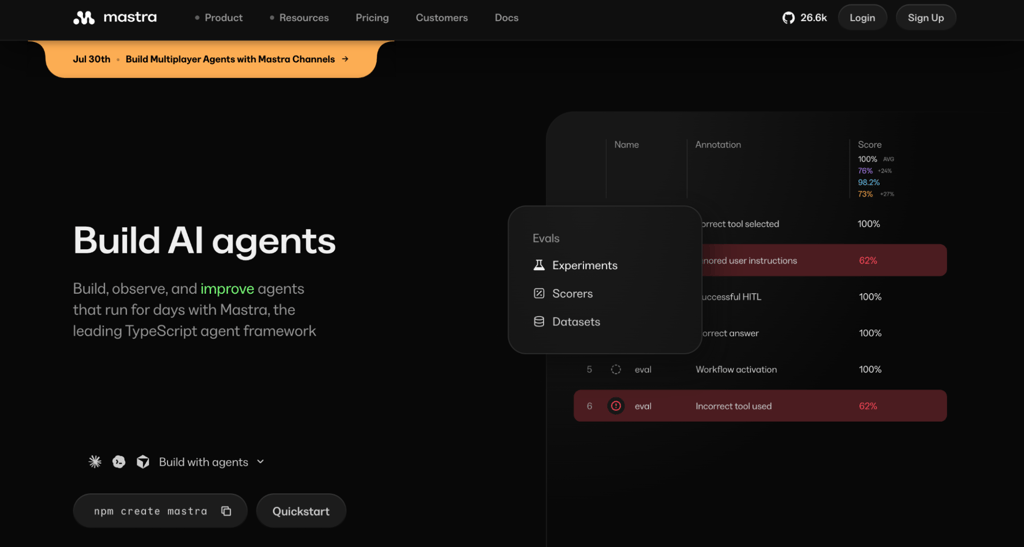
Mastra is an open-source TypeScript framework from the team behind Gatsby. It bundles workflows, RAG, evals, and built-in memory into a single package.
Most frameworks in this list are Python-first or Python-only, making Mastra a strong TypeScript-native option. It can run on Node-compatible servers, containers, and supported serverless platforms.
Where Python teams choose between LangGraph, CrewAI, and several other options, TypeScript teams have Mastra as their primary choice. LlamaIndex deprecated its standalone TypeScript Workflows in April 2026.
Mastra reports a SOC 2 Type II examination for its service and security, which may matter to enterprise teams with compliance requirements.
Mastra pros
- Workflows, RAG, evals, and memory in a single package. No need to stitch together separate libraries. Python frameworks like LangGraph often require LangSmith for tracing and separate tools for evaluation.
- Persistent memory with automatic compression. Long conversations and agent histories are compressed automatically to stay within context limits. LangGraph handles state but not memory compression.
- SOC 2 Type II certified. Received October 2025. The only framework in this list with this certification, which simplifies procurement for enterprise teams.
Mastra cons
- TypeScript only. No Python SDK, so Python teams should consider LangGraph, CrewAI, or another Python framework option.
- Newer framework with fewer case studies. Fewer production deployments than LangGraph, CrewAI, or Haystack. Enterprise teams evaluating risk will find less evidence to go on.
- Some packages and platform features continue to evolve. Review package stability and migration notes, authentication, and deployment components before standardizing on them.
Mastra pricing
Mastra is free to self-host under the Apache 2.0 license. Mastra Platform has a free Starter tier with 100,000 observability events and 24 CPU hours/month.
The Teams plan starts at $250/month and includes 1 million observability events, 250 CPU hours, multiple teams, SSO, and SOC 2 documentation. Enterprise pricing is custom.
Where can you deploy an agentic AI framework?
A VPS sits between running agents on a laptop and paying for a managed platform. You get full control over the runtime, dependencies, Docker containers, databases, and security while keeping costs predictable.
Hostinger VPS hosting gives you full root access with AI and LLM application support. It includes Docker tools, automated weekly backups, firewall controls, and AI assistant Kodee for server setup and troubleshooting.

For API-based agent workloads, KVM 2 is a practical starting point: 2 vCPU cores, 8 GB RAM, 100 GB NVMe storage, 8 TB bandwidth. The introductory price is ₦11,590.00/month for a two-year term, and renews at $14.99/month.
KVM 2 can support a single orchestration service or a small multi-agent application that calls external model APIs. Once you pick a plan, follow the guide to setting up a VPS, then install the framework, database, reverse proxy, and monitoring stack your application needs.
Is Hostinger VPS good for deploying agentic AI agents?
Hostinger VPS hosting works well for single-agent or small multi-agent deployments that call external LLM APIs, such as those from OpenAI or Anthropic. Hostinger VPS also supports one-click deployment of tools like Claude Code and Codex CLI for AI coding agent workflows.
You get full root access and a self-managed environment, so you can install frameworks like LangGraph, CrewAI, or Microsoft Agent Framework, or the OpenAI Agents SDK, and configure their dependencies.
KVM 2 is suitable for a lightweight orchestration layer and persistent store. A larger plan may be needed for local vector databases, concurrent workers, or several agent services, so load-test memory, CPU, disk, and network use before launch.
Important! Hostinger VPS hosting doesn’t include GPU access, so it’s not suited for running large language models locally or handling GPU-heavy inference. If your setup requires local model hosting at scale, you’ll need a provider with dedicated GPU instances.
What are the most important criteria for agentic AI frameworks?
Six criteria matter most when evaluating which framework fits your project, because picking an agentic AI framework locks your team into an orchestration model, a state management approach, and a deployment path.
Architecture and supported languages
The architecture determines how agents make decisions and how state flows. Graph-based frameworks like LangGraph give explicit control. Role-based frameworks like CrewAI offer faster setup.
Language support matters too. Most frameworks are Python-first, but there are exceptions. Microsoft Agent Framework supports .NET and Python as first-class languages, with Go in public preview. The OpenAI Agents SDK supports Python and TypeScript, while Mastra is TypeScript-only. Check whether each SDK has feature parity before deciding.
Multi-agent capabilities
If you’re building a single agent, most frameworks work. For multi-agent systems, the differences in delegation, shared state, failure handling, and observability become significant.
LangGraph and CrewAI have well-developed multi-agent abstractions. Agno’s Teams system offers four delegation modes. PydanticAI and smolagents support multi-agent setups but are not built around them.
Memory, state, and human oversight
Stateful workflows need checkpointing. LangGraph offers time travel and interrupt(). Microsoft Agent Framework has persistent, pluggable state management with native Azure deployment support.
Check whether the framework supports pausing execution for human approval. Not all do.
Observability and integrations
Production agents need tracing and debugging. LangSmith pairs with LangGraph, Pydantic Logfire with PydanticAI, and several frameworks support OpenTelemetry. Check whether the framework integrates with the tools and APIs your agents need to call.
Production readiness
LangGraph and Haystack have established production histories. CrewAI reports broad adoption. Mastra and the rebranded Agno have fewer public case studies under their current names.
Learning curve and best use case
CrewAI and the OpenAI Agents SDK use fewer initial orchestration concepts than LangGraph and Haystack. Match the framework’s strengths to your actual use case. A graph-based framework may be unnecessary for a simple single-agent chatbot.
How to test an agentic AI framework in production conditions
The only reliable way to validate a framework is to run a representative workload against real infrastructure before committing.
Build a minimal agent using the tools, data sources, and LLM providers your production system will actually use. Skip toy examples. Use real API calls, real data volumes, and real latency conditions.
Measure four things:
- Token cost per task.
- End-to-end latency.
- Error and retry behavior.
- Trace quality.
Token cost varies significantly between frameworks because of how they route decisions between agents. LLM-driven routing incurs higher token costs than explicit graph edges.
Test human-in-the-loop and checkpointing explicitly. Can you pause execution, review an agent’s decision, and resume? Can you return to a prior state when something goes wrong? These capabilities matter in production but are easy to skip during evaluation.
Run the same workload on your top two candidates side-by-side. The framework that looks best on paper doesn’t always win when you measure actual performance on your specific use case.
Where agentic AI frameworks are heading in 2026
The agentic AI framework landscape is consolidating. Microsoft merged AutoGen and Semantic Kernel into Microsoft Agent Framework. OpenAI replaced Swarm, and Phidata became Agno. These automation trends show that experimental projects are moving toward supported platforms.
MCP and A2A are becoming interoperability layers. MCP standardizes access to tools and data, while A2A standardizes communication and delegation between independent agents.
The distinction between prototyping and production tools is narrowing. CrewAI now integrates with monitoring platforms, the OpenAI Agents SDK now supports persistent sessions, and Haystack has added a dedicated Agent component. Features that once separated these categories are spreading fast.
Frameworks and cloud platforms are also growing more tightly linked. Microsoft Agent Framework integrates with Microsoft Foundry, LangGraph with LangSmith, Agno with AgentOS, and Mastra with Mastra Platform. The framework you pick will increasingly shape where and how you deploy and monitor agents.
The right question isn’t “which framework is best?” but “which one fits how your team actually works?” Prioritize frameworks with built-in MCP and A2A support, and revisit your choice when your agent count, team language, or integration needs change.

Justina is a Content Writer passionate about marketing, with a background in social media and customer success management. She also loves reading books, traveling and exploring new places as well as cooking, and trying out new recipes. Follow her on LinkedIn.