How to start a crochet business in 8 steps
Aug 28, 2026
/
By Justina B.
/
10 min Read
To start a crochet business, choose a niche, decide what products to sell, build a brand, and register the business. From there, pick your sales channels, set prices that cover materials and labor, photograph your products, and start reaching buyers.
Pricing crochet comes down to one thing: your time is the real cost, not the yarn. Each item is handmade, so you need to factor in both material costs and the hours spent crocheting. For example, a hat that takes a few hours to make has a very different profit margin than a single coaster you can finish in 20 minutes.
You can sell your crochet items through marketplaces like Etsy, social media platforms, craft fairs, and local markets, or build your own ecommerce store. You don’t have to choose just one.
1. Choose your crochet niche
Choose your crochet niche around projects you enjoy making and can confidently produce over and over – and that people are actually buying. Simple, repeatable items like beanies and scarves are a strong anchor for the business. If you prefer detailed work, amigurumi toys and lace home decor are the better fit.
Five popular crochet niches to consider:
- Baby and nursery. Blankets, booties, stuffed animals, and nursery decor for new parents and gift buyers.
- Fashion and accessories. Hats, scarves, bags, and tops for customers who want handmade wearables.
- Home decor. Pillows, wall hangings, coasters, and table runners for people decorating their space.
- Gifts and personalization. Custom-order items like monogrammed blankets or color-matched sets for special occasions.
- Toys and amigurumi. Character plushies, animal figures, and playsets for families and collectors.
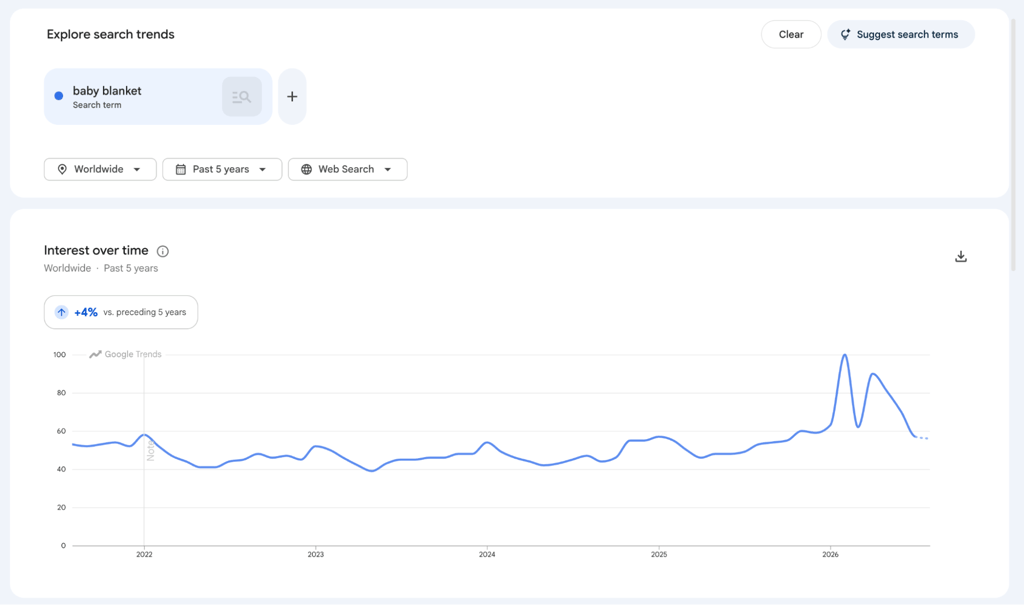
Validate your direction before committing to it. Check whether people are actually searching for and buying those products. Google Trends shows whether interest in a product is growing, shrinking, or seasonal. Pinterest reveals what the crochet community is excited about right now.
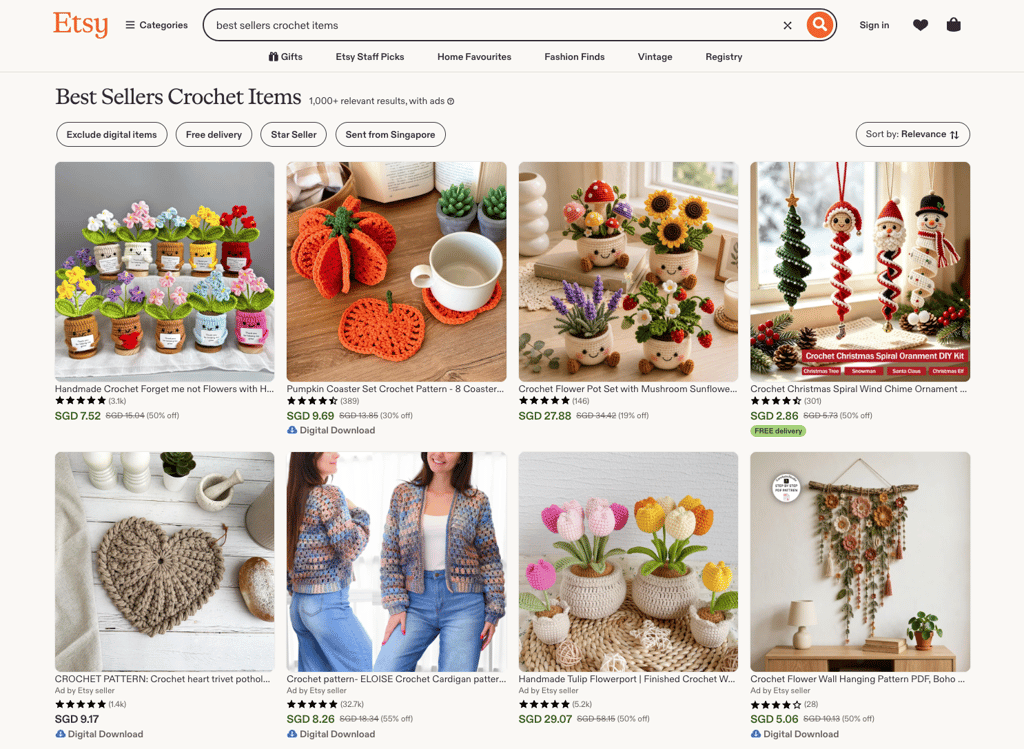
Check what sells well on marketplaces like Etsy to see what buyers want, then look at how many other shops are offering the same thing. High demand with fewer sellers means more room for you.
If a market is crowded, you’ll need a way to stand out, like custom options, eco-friendly materials, or a distinct style. If hardly anyone is selling it, make sure people are actually searching for it before going all in.
Constellation Crochet, for example, specializes in custom, whimsical crochet pieces such as plushies, home decor, and throw blankets for customers seeking one-of-a-kind items.
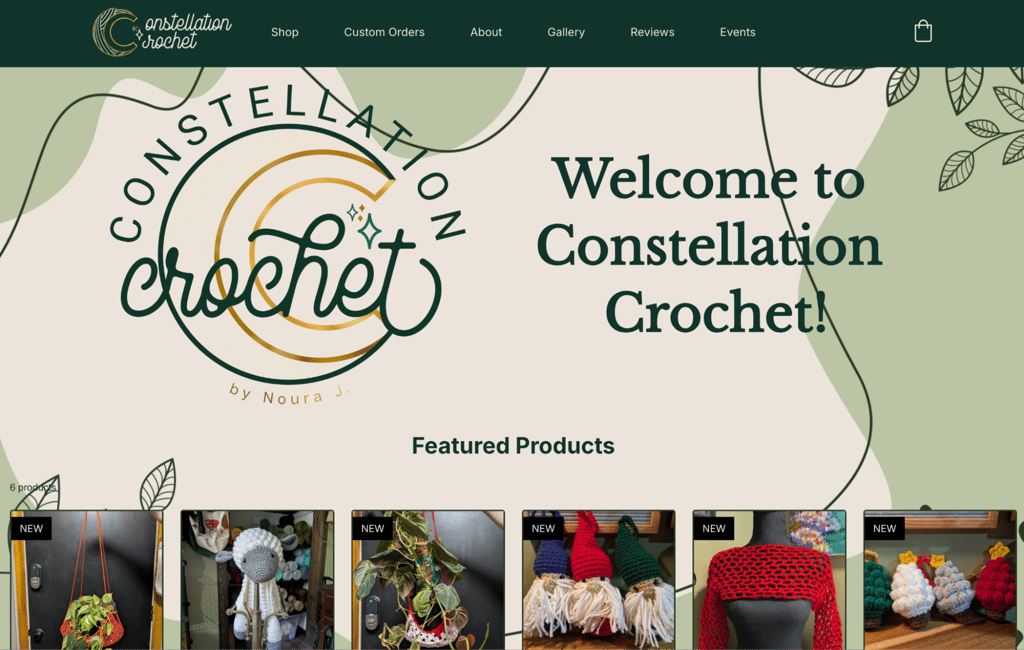
They found success by picking a clear style and building everything around it. You can take the same approach whether crocheting stays as a side project or you’re planning to start a small business.
2. Choose what crochet products to sell
To choose what crochet products to sell, weigh six factors for each item you’re considering:
- Demand. Are people actively searching for and buying this item?
- Material cost. How much does the yarn and any hardware (buttons, zippers, stuffing) cost per unit?
- Production time. How many hours does one piece take from start to finish?
- Selling price. What are customers willing to pay, and does it leave enough margin after costs?
- Skill level. Can you consistently make this a quality you’re proud of?
- Shipping complexity. Is the item lightweight and easy to pack, or bulky and fragile?
Then, choose a production model. Ready-made products let you build inventory in advance and ship quickly, which works well for items you can batch-produce. Made-to-order products reduce the risk of unsold inventory and allow you to offer customization, but customers wait longer, since you only start making the item once they’ve ordered.
Digital crochet patterns are another option worth considering. Design and write up an original pattern once, and you can sell it repeatedly without making any additional physical products.
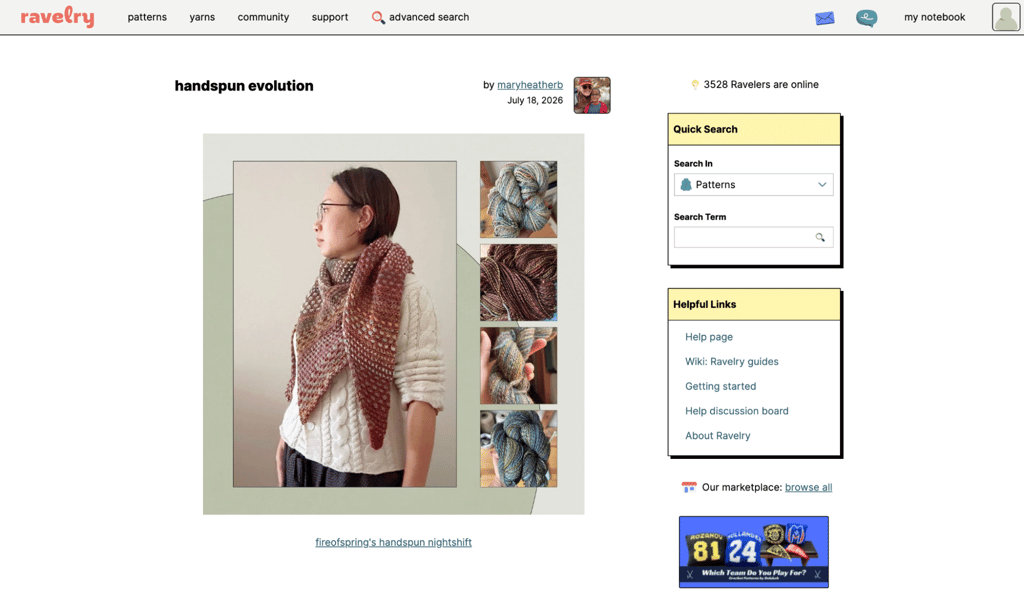
Etsy, Ravelry, and your own store all support digital downloads. Ravelry is crochet and knitting-specific, so the audience is smaller but already looking for patterns.
Start with two or three core physical products. Once you’ve made one enough times to know it works, write it up as a pattern and sell that alongside it. Track what sells and expand around it, rather than adding new categories.
3. Build your crochet brand
Start with a business name and a consistent visual style across your shop, social media, and packaging. Your product descriptions, photos, and even how you wrap orders all shape how buyers remember you.
Business name. Pick a name that reflects your niche and sticks in people’s minds. A cozy home decor shop goes with something like SnugStitches or Hearth & Hook. An amigurumi shop calls for something more playful, like TinyLoopZoo or HookedCritters.
To come up with a business name, brainstorm words related to your craft or use a name generator for fresh ideas. Test your top picks with friends or online communities before making a final decision.
Visual identity. Choose two or three core colors and a couple of fonts, then use them consistently on your website, packaging, social media, and product tags. Keep your logo simple and make sure it works well across all of them.
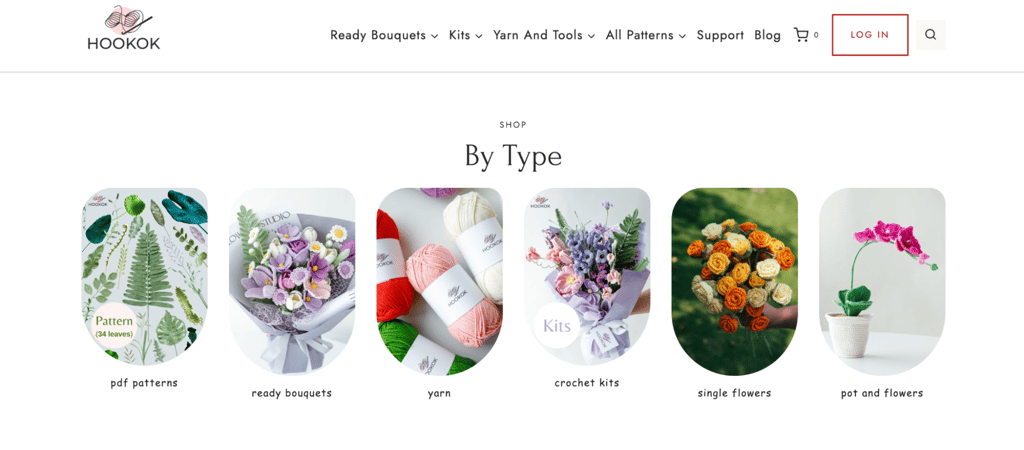
For example, Hookok’s logo combines the brand name with a ball of yarn and a crochet hook. It works because it’s clean and relevant to the craft.
Product style. Think about how your entire range looks and feels together, not just each individual piece. Eco-friendly home decor calls for earthy tones and organic textures. Playful amigurumi leans toward bright colors and cheerful character designs.
Packaging. The unboxing experience makes a real difference for gift buyers. A branded sticker, a care instruction card, or tissue paper in your brand colors turns a basic shipment into something memorable.
Brand tone. Your tone shapes how customers experience your brand across product descriptions, social media captions, and emails. A baby products brand leans warm and gentle, while a fashion accessories brand leans bold and trend-forward.
Write a short “About” section. Explain why you started crocheting and what makes your products different. This personal story builds trust and gives customers a reason to choose you.
4. Register your crochet business
To register your crochet business, choose a business structure, obtain any required licenses or permits, set up tax collection, and open a separate bank account. Exact requirements vary by country, state, and business structure, so check your local rules before you file.
Business registration. In the US, a sole proprietorship is the simplest structure. You can often operate under your own name without formal registration, but using a different business name requires a DBA (doing business as) filing.
A limited liability company (LLC) provides more liability protection and separates personal assets from business debts, which matters as the business grows.
Licenses or permits. Requirements vary by location, but common ones include a general business license, a home occupation permit for home-based businesses, and a temporary vendor permit for craft fairs. Check your local government’s website for specifics, or look into the requirements for getting a business license to sell online.
Taxes. In the US, self-employment net earnings of $400 or more require you to pay self-employment tax (Social Security and Medicare contributions). All self-employment income needs to be reported on your tax return, regardless of the amount. Depending on your state, you also need to collect and remit sales tax.
Separate business banking. Open a dedicated business checking account. Mixing personal and business finances makes bookkeeping messy and tax preparation harder. A separate account also looks more professional for financial records.
Expense tracking. Keep receipts for every business purchase, from yarn and hooks to shipping supplies and website hosting. Use accounting software or a spreadsheet to log income and expenses from day one. This makes tax season simpler and helps you see whether the business is actually profitable.
5. Choose where to sell crochet products
You can sell your crochet products through your own ecommerce store, online marketplaces like Etsy, social media platforms, craft fairs, or local retailers. Where you sell affects your profit margins and how much control you have over the customer experience.
Your own ecommerce store gives you full control over branding, pricing, product presentation, and customer data. There are no listing fees or commissions eating into your margins, and you’re not competing with other sellers on the same page. The trade-off is that you need to drive your own traffic through marketing and SEO.
Hostinger Ecommerce helps you set up your own store quickly with AI, no design or coding experience needed. There are no transaction fees beyond standard payment processing, so more of each sale stays with you than on a marketplace.
It supports 100+ payment methods with no extra setup, making checkout simple for your customers, no matter how they prefer to pay. You manage products, orders, and inventory from a single dashboard.

Etsy and other online selling platforms connect you with buyers who are already searching for handmade goods. These platforms handle much of the discovery work, which is valuable before you have an established audience.
The downsides include listing and transaction fees, heavy competition from other sellers, and limited control over how your shop looks.
Social media platforms like Instagram Shopping, TikTok Shop, and Facebook Marketplace let your customers browse and buy directly from your posts. These work best as add-ons to a main sales channel rather than your sole way to sell.
Craft fairs and local markets give you face-to-face interaction with buyers. You can gather real-time feedback, test new product ideas, and build local brand recognition. They work especially well for seasonal items and gift-oriented products.
Local retailers, such as boutiques and gift shops, can stock your products, giving you access to their existing customer base. Your per-unit margins are lower with wholesale pricing, but you save time on marketing and individual order fulfillment.
| Channel | Reach | Fees | Brand control | Effort |
| Own store | You drive traffic | Low (hosting + payment processing, zero transaction fees) | Full | High (setup + marketing) |
| Marketplaces | Built-in audience | Medium to high (listing fees + sales commissions) | Limited | Medium |
| Social media | Follower-dependent | Low to medium (selling fees + ad costs) | Moderate (your posts, platform’s layout) | Medium (content creation) |
| Craft fairs | Local | Low to medium (booth fee) | Full | High (in-person) |
| Local retailers | Their customer base | Medium (wholesale margins) | Limited | Low (after setup) |
6. Price your crochet products
Pricing your crochet products starts with adding up four components – material costs, labor, overhead, and profit margin. The right balance keeps you from undervaluing your time or pricing yourself out of the market.
Here’s a formula to price crochet items:
Price = materials + labor + overhead + profit margin
Break down each component:
- Materials. Yarn, stuffing, buttons, zippers, safety eyes, and any other supplies you use in the product.
- Labor. Your time spent crocheting is measured in hours and multiplied by your hourly rate. Many handmade sellers in the US charge $20–30/hour as a starting rate.
- Overhead. Packaging, shipping supplies, platform fees, payment processing fees, website hosting, and any other recurring costs. Divide the monthly overhead across the number of products you expect to sell.
- Profit margin. The amount you add on top of your costs is what makes the business worth running. A 20–30% markup on total costs is common for handmade goods.
Here’s a worked example for a crocheted amigurumi bear:
| Cost component | Amount |
| Yarn and safety eyes | $6 |
| Production time (2.5 hours × $20/hour) | $50 |
| Packaging and shipping supplies | $3 |
| Platform/payment fees (estimated) | $3 |
| Subtotal (costs) | $62 |
| Profit margin (25%) | $15.50 |
| Selling price | $77.50 |
A crochet business is profitable when you balance four things:
- Production time.
- Material costs.
- Pricing.
- Demand.
Review your prices every few months. A product that consistently sells out fast likely has room for a price increase. If something sits unsold through its season, check your photos and listing keywords before lowering the price – slow sales are often a visibility problem. If it still doesn’t move, it may not belong in your product line.
7. Photograph your crochet products
To photograph your crochet products well, use natural light, keep backgrounds clean, and capture stitch detail from multiple angles.
Use natural light. Photograph near a large window during the day, aiming for indirect or diffused light rather than direct sunlight, which creates harsh shadows. Overcast skies naturally soften the light, and on sunny days, a sheer curtain or a white sheet over the window does the same. Skip the flash entirely, as it flattens details and washes out colors.
Keep backgrounds clean. A white or light neutral surface works for most product shots. A piece of foam board, a marble tile, or a clean wooden table is an inexpensive option that looks professional. Busy backgrounds distract from the product.
Shoot from multiple angles. Show the front, back, top, and sides of each item. Your buyers want to see the full product before purchasing, especially for wearables and home decor.
Capture close-ups of stitches and texture. This is where crochet products stand out. Zoom in on stitch patterns, yarn texture, and fine details like button placement or embroidery. These shots communicate the handmade quality that justifies a higher price point.
Show scale. Give buyers a visual sense of size. A blanket draped over a couch tells your buyer much more about its size than the dimensions listed in text. A beanie held in someone’s hands or a tote bag filled with everyday items works the same way.
Add lifestyle or modeled photos. A baby blanket laid in a crib, a scarf styled with an outfit, or coasters arranged on a coffee table help customers picture the product in their own lives. You can also reuse these shots for your social media posts and marketing materials.
You don’t need expensive equipment to start. A smartphone with a decent camera, natural light, and a clean background gets the job done. As the business grows, a basic tripod and an LED panel light give you more consistent results. Avoid lightboxes for textured items like amigurumi or wearables, as they flatten the shadows that give crochet its depth and dimension.
8. Market your crochet business
Marketing your crochet business works best when you focus on visual platforms like Instagram, TikTok, and Pinterest, build an email list, and connect with buyers at local events.
Instagram is a natural fit for crochet businesses because it lets you show off your work. Post high-quality product photos, short process Reels, and Stories to announce new drops and restocks. Use relevant hashtags and engage with the crochet community by commenting on other makers’ posts.
Instagram Shopping lets your followers discover and tap on your products directly from your posts, then directs them to your website to complete the purchase.
TikTok’s algorithm tends to surface creative, authentic content over polished production. Time-lapse crochet videos, satisfying stitch close-ups, and packing order clips tend to perform well. Post consistently, since volume matters more here than any single video looking perfect.
Pinterest drives long-term traffic. Unlike Instagram and TikTok, where posts fade within days, Pinterest pins tend to generate clicks for months or even years. New pins often take a few months to gain traction, so treat Pinterest as a long game that compounds over time.
Pin your product photos, link them to your store, and create boards organized by product category or occasion.
Crochet-specific content that resonates includes:
- Making process videos showing a project from start to finish.
- Finished product reveals with styled photography.
- Custom order showcases highlighting personalization.
- Styling ideas showing how customers can use or wear your products.
- Behind-the-scenes looks at your workspace, materials, and daily routine.
Email marketing gives you a direct line to past buyers, helping you to bring them back. Collect email addresses through your website and send occasional updates about new products, restocks, seasonal collections, and exclusive offers. Even a simple monthly newsletter builds repeat business over time.
Hostinger Reach lets you create branded email campaigns from a short description using AI, so you spend less time on design and more on crocheting. You can start for free, and if you already host with Hostinger, your domain, contacts, and campaigns all live in one dashboard.

Local events like craft fairs, pop-up shops, and holiday markets put your products in front of buyers who might not discover you online. These events also help you test new products, collect feedback, and build local brand recognition.
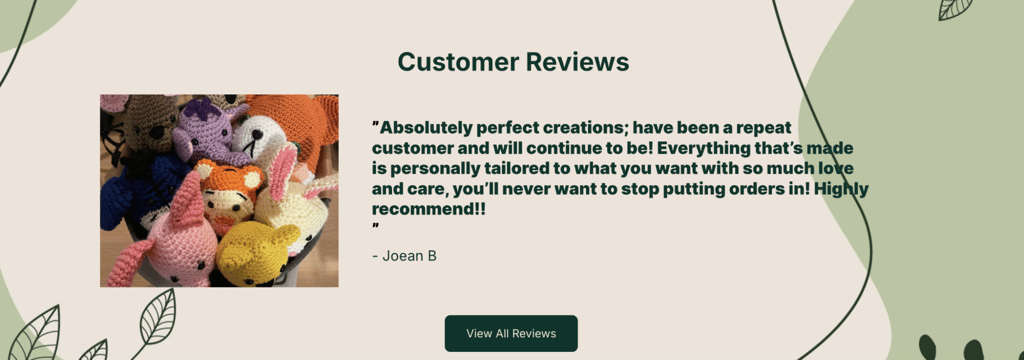
Customer reviews build trust with new buyers who haven’t seen your work in person. Ask satisfied customers to leave a testimonial or rating on your website or marketplace listing. Constellation Crochet prominently displays buyer feedback on its website, reassuring first-time buyers about the quality of its custom plushies.
Seasonal campaigns drive sales during peak periods. Plan your collections around holidays and gift-giving occasions, like ornaments for Christmas or heart-themed items for Valentine’s Day. Announce them in advance, share sneak peeks, and offer pre-orders to build momentum.
The goal is to increase online sales by reaching the customers most likely to buy, not by broadcasting to everyone.
Use AI to run your crochet business more efficiently
AI can take over the repetitive parts of running a business, so you spend more of your time crocheting:
- Content creation. Generate product descriptions, social media captions, and blog post drafts faster.
- Email marketing. Write and schedule email campaigns, segment customer lists, and personalize messages.
- Customer support. Set up automated responses for common questions about order status, sizing, and care instructions.
- Bookkeeping. Categorize expenses, track income, and prepare basic financial summaries.
- Inventory planning. Forecast demand based on sales patterns and seasonal trends.
None of these replace the creative work of crocheting itself, but they free up hours each week for the parts of the business that only you can do. Tasks like writing product descriptions and scheduling social media posts are a good place to start using AI for your small business.
This article is a localized version of How to start a crochet business in 8 steps, originally published in English.

Justina is a Content Writer passionate about marketing, with a background in social media and customer success management. She also loves reading books, traveling and exploring new places as well as cooking, and trying out new recipes. Follow her on LinkedIn.