How to sell photos online: Best sites and tips for big profits
May 20, 2026
/
Simon L. & Miglė C.
/
7 min Read
To sell photos online, you can either upload them to stock photography marketplaces or create your own ecommerce website.
To be successful, you’ll need to focus on a few key factors:
- Find a specific niche and create high-quality, marketable photo collections.
- Use relevant keywords in titles and descriptions so people can find your work.
- Set competitive prices and understand the legal rights involved in selling your images.
- Promote your portfolio, especially on social media, to drive visitors who will buy your photos.
Stock photo platforms like Shutterstock, Getty Images, and Adobe Stock are a great place to start. They are large marketplaces where customers can license your images for their own needs.&
The alternative is to build your own website, giving you full control to sell prints, digital downloads, or merchandise directly to your audience.
This is the best way to sell pictures online if you want to maximize your profit and build a memorable brand.
1. Create high-quality, marketable collections
Instead of uploading photos randomly, build cohesive collections around specific themes or niches. This strategy to sell online attracts buyers looking for a consistent set of images and encourages them to purchase multiple photos.
- Target niche markets. Focus on specific groups, such as pet lovers or travel enthusiasts. A collection titled Candid Street Photography in Tokyo will strongly appeal to those interested in Japanese culture and urban life.
- Align with trends. Research current photography trends, such as minimalism or vintage aesthetics. A collection like Pastel Dreamscape could appeal to buyers looking for calming, pastel-colored art for their homes.
- Maintain a consistent style. Ensure that every photo in a collection shares a consistent editing style, color palette, and theme. This is a core part of a strong ecommerce marketing strategy that helps buyers who want a cohesive look.
2. Use relevant keywords and descriptions
Potential buyers often find your images when they search for a specific theme or subject on search engines like Google. Here’s how to make your photos stand out:
- Research keywords. Use tools like Google Keyword Planner and Ahrefs to find popular search terms in your niche. For example, instead of a broad term like sunset, a more specific keyword like golden hour beach sunset photography will attract more targeted buyers.
- Write descriptive titles. Your titles should be concise but powerful enough to capture the photo’s essence. Instead of Beautiful Landscape, try a title like Misty Mountain Landscape at Sunrise in Autumn.
- Optimize photo descriptions. Mention the location, subject, and mood to help buyers connect with the image. For instance, “A serene early morning shot of a fog-covered mountain range, ideal for calm and nature-themed interior decor.”
- Include relevant tags. Most platforms let you add tags to your photos. Use a mix of broad and specific tags like nature, outdoors, foggy mountains, and sunrise landscape to show up in more searches.
3. Promote your photos using social media
Social media is an effective tool for reaching your target audience and driving traffic to your portfolio. Here’s how to use the most popular platforms:
- Instagram. Create a cohesive feed with your best work, use relevant hashtags, and engage your audience with stories and reels. You can even use Instagram Shopping to link directly to your product pages.
- Pinterest. You can learn how to sell on Pinterest by creating themed boards for your collections, such as Black and White Urban Photography, and pinning your photos with links to purchase.
- Facebook. Join photography groups to share your work, get feedback, and connect with potential buyers. You can also set up a business Page to run targeted ad campaigns or use Facebook Marketplace to sell prints directly.
- TikTok. Use short-form video to show behind-the-scenes content or showcase your photo collections. Create a video slideshow from a themed photo collection and pair it with music that captures the overall mood you want to convey.
4. Understand your legal rights to sell photos online
Selling photos online involves legal details that every photographer must understand to protect their work and avoid copyright disputes.
- Decide on your licenses. You can offer photos under a royalty-free license, which lets a buyer use the photo multiple times for a single fee, or a rights-managed license, which restricts usage.
- Get release forms. You need signed model or property releases if your photos feature recognizable people or private property. This is essential if you plan to sell the images for commercial use.
- Protect your work. Add a discreet watermark when showcasing photos online, especially on social media. You can also register your images with your country’s copyright office for full legal protection.
5. Set competitive and clear pricing
A key part of selling photos online is learning how to price a product correctly. Pricing your work too low can undervalue it, while setting the price too high might make it unreachable for many potential buyers.
Here’s how to set effective pricing:
- Research the market. See how competitors price similar photos on different platforms. Analyze prices for stock photos, prints, and exclusive licenses to stay competitive.
- Offer different pricing tiers. For digital downloads, offer multiple resolutions at different price points. For prints, provide various sizes and finishes, like glossy, matte, or canvas, each priced accordingly.
- Include clear licensing terms. Clearly state what the price includes, such as a personal use license, commercial use, or an extended license. This clarity prevents misunderstandings and potential issues down the road.
- Encourage bundled sales. Create themed photo bundles, like Winter Wonderland or Urban Nightscapes, and offer them at a discount. This is a great way to increase your average order value.
What types of photos sell the best online?
The types of photos that sell best online often feature people, work, food, and nature. While any high-quality photo has the potential to sell well, these categories are consistently in high demand.
- People: Authentic photos of people in everyday situations, like working, socializing, or enjoying hobbies, are extremely popular. Companies are always looking for relatable images that represent their customers.
- Business and work: Images of office environments, technology, meetings, and teamwork are staples for corporate websites, presentations, and articles.
- Food and drink: From fresh ingredients to beautifully plated meals, food photography is in high demand for blogs, restaurant menus, and marketing materials.
- Travel and nature: Breathtaking landscapes, cityscapes, and unique travel destinations are always sought after for editorial and commercial use.
- Health and wellness: Photos related to fitness, meditation, healthy eating, and self-care are always in high demand.
Is a professional camera necessary to sell photos online?
No, a professional camera is not strictly necessary to start selling photos online, but high-quality images are.
Many modern smartphone cameras can produce images sharp and clear enough for stock photography, especially for web use.
However, for selling large prints or competing at the highest level, a DSLR or mirrorless camera will provide better resolution, dynamic range, and overall image quality.
What matters most are the basics: your photos must be in focus, well-exposed, and free of noise.
Top 10 websites to sell photos online
Choosing where to sell photos online depends on your goals and current situation.
Selling on your own website means you keep all the profits and are in total control over your brand.
Stock photo sites offer a huge existing audience that is already interested in buying photos. But the downside is that they take a significant commission of your sales.
Here’s a breakdown of some popular platforms for selling pictures:
| Platform | Best for | Price | Commission rates |
| Hostinger Website Builder | Building a personal brand and keeping 100% of profits | Starts at CA$ 5.59/month | 0% |
| Shutterstock | Beginners looking for a large audience | Free to sign up | 60-85% |
| Adobe Stock | Photographers using Adobe creative software | Free to sign up | 67% |
| Getty Images | Professional photographers with premium content | Free to apply | 80% |
| Alamy | Photographers with niche or highly specific images | Free to sign up | 50% (exclusive), 60% (non-exclusive) |
| 500px | Building a community and licensing photos | Free to $13.99/month | 40% (exclusive), 75% (non-exclusive) |
| Picfair | Photographers who want to keep more profits | Free to $10/month | 0% (Picfair adds a 20% fee to the buyer’s price) |
| Dreamstime | Photographers with large, diverse portfolios | Free to sign up | 50-75% |
| SmugMug | Professional portfolio hosting with sales features | Starts at $13/month | 15% (you keep 85% of the markup) |
| Envato Elements | Creators who prefer a subscription-based model | Free to contribute | 50% of net subscription revenue (shared pool) |
So, what’s the verdict?
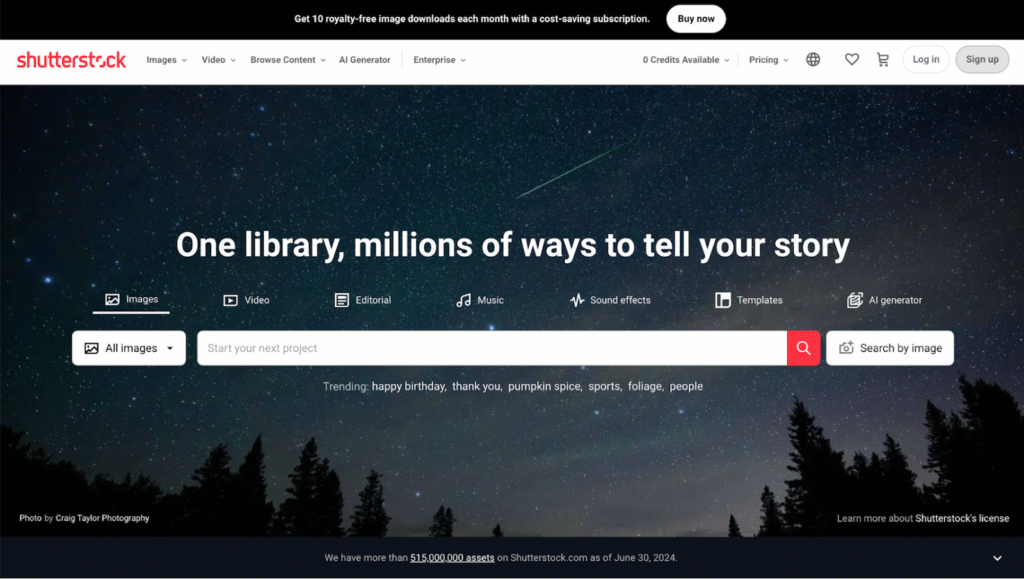
For photographers just starting out, Shutterstock offers a massive audience and an easy sign-up process.
If you’re confident in the quality of your work and want higher commissions from a marketplace, Alamy is a great option.
But for those aiming to build a long-term business, maximize income, and control their brand, creating a website is the clear winner.
Why sell photos on your own website instead of marketplaces?
While stock photo sites offer a simple way to get started with an existing audience, building your own website puts you in the driver’s seat of your business. Here’s why:
You keep more profits
The greatest advantage of selling photos on your site is that you keep a much larger portion of your profits. Marketplaces often take commissions ranging from 40% to 85% for every sale.
When you sell through your own site, you don’t have to share a portion of your sales price with a marketplace. The full amount goes directly into your bank account, and that difference adds up significantly over time.
You have full brand control
You also have complete creative and brand control. On a marketplace, your work is displayed alongside your competitors, using a standard template, leaving you little room to stand out.
With your own website, you decide on the layout, the presentation of your photos, your pricing structure, and the entire customer experience.
This allows you to build a recognizable brand that attracts a loyal following.
You can build a website easily
Building a professional photography website is easier than you might think. With Hostinger Website Builder, you get access to designer-made templates, AI-powered tools, and built-in ecommerce functionality.;

You can set up an online store in an afternoon without needing any technical skills, giving you the perfect platform to sell online and grow your business on your terms.
Do I keep ownership of my photos if I sell them online?
Yes, you keep the copyright ownership of your photos when you sell them online.
What you are actually selling is a license, which gives the buyer the right to use your photo in specific ways.
There are different types of licenses, such as royalty-free or rights-managed, which dictate how the image can be used.
Selling the full copyright is a separate, less common transaction that transfers all ownership rights to the buyer.
How much money can I make selling photos online?
A beginner selling photos on stock photography marketplaces can earn anywhere from $25 to $500 per month. This income is largely passive but depends heavily on the size and quality of your portfolio.
Top contributors on major platforms can make thousands, but that takes years of dedicated effort.
Your earning potential changes completely when you sell from your own website. While you are responsible for marketing and driving traffic, you keep 100% of the profits.
A successful photographer running their own online store can earn a full-time income, with earnings directly tied to their marketing efforts, brand strength, and the collections they offer.
Ultimately, your income depends on your chosen platform, the quality of your work, the niche you focus on, and how effectively you market your photos.
You can take the first step today by learning how to sell digital products. It’s your guide to defining your niche, building your online store, and creating a marketing plan that brings buyers directly to you.

Simon is a dynamic Content Writer who loves helping people transform their creative ideas into thriving businesses. With extensive marketing experience, he constantly strives to connect the right message with the right audience. In his spare time, Simon enjoys long runs, nurturing his chilli plants, and hiking through forests. Follow him on LinkedIn.

Miglė Cicėnaitė-Jocė is a Product Manager for Hostinger's Website Builder. She is on a mission to redefine website creation, focusing on the AI flow and its features, and is always eager for product feedback and market insights to improve the user experience. Follow her on LinkedIn.