How to optimize your content for AI search results
May 18, 2026
/
Aris S. & Matleena S.
/
9 min Read

AI search optimization is the practice of adapting your content and technical SEO so generative AI systems – like ChatGPT and Google AI Overviews – can easily process, parse, and cite it.
Unlike traditional search engines, which feature pages mostly based on keywords and backlinks, generative AI tools consider content’s meaning, context, and authority to generate direct answers.
To optimize for AI search, you’ll need to:
- Create high-quality, user-centric content that anticipates follow-up questions
- Implement structured data and semantic markup for better machine understanding
- Focus on user intent instead of just keywords
- Improve site speed and mobile-friendliness
- Build authority with trust signals like backlinks and brand mentions
- Use AI tools to track content performance
- Maintain clean, structured HTML and configure robots.txt for AI crawlers
- Create an llms.txt file to help AI systems parse your content effectively
Explore AI search optimization in detail, including how it works, its authority signals, and how to improve your content for it.
How AI search optimization works
AI search optimization works by adapting your content and technical search engine optimization (SEO) to allow AI systems to process information.
Traditional search engines primarily rank pages based on keyword matching and linking. Meanwhile, generative AI agents and tools with search capability use multi-step processes to synthesize a comprehensive answer based on the meaning behind a user’s query.
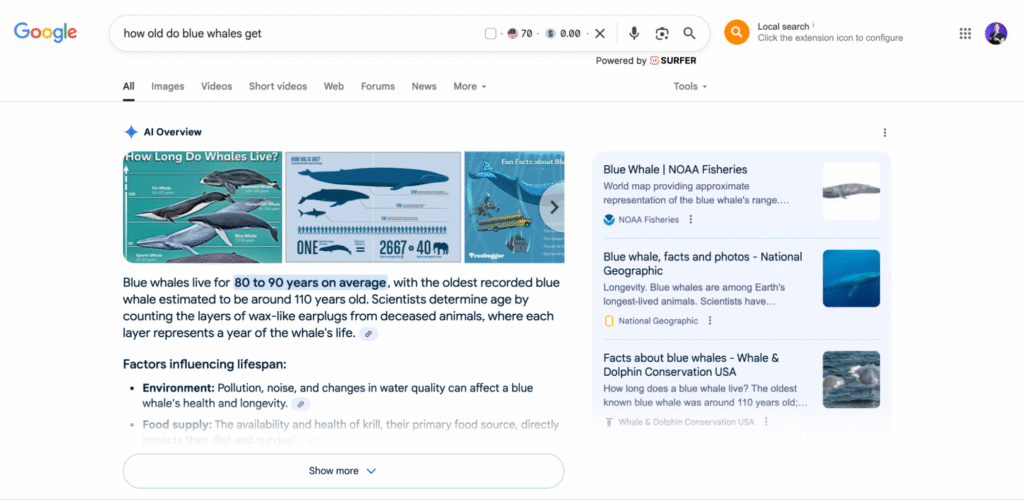
For instance, for the query “How old do blue whales get,” the AI overview compiles information about the whale’s age from various sources and summarizes it to search query directly:
When a user submits a conversational query, an AI search engine follows a specific process to generate an answer:
- Query interpretation. The AI uses Natural Language Understanding (NLU) to break down the query, interpreting the user’s intent and context. It works by running syntactic and semantic analysis to determine the real meaning behind a query.
- Semantic matching. The system captures the meaning behind words and phrases by converting them into numerical sequences called vectors. This allows the AI to identify relationships between ideas by comparing them against existing data and finding semantically relevant content, regardless of the keyword relevance.
- Data retrieval. Instead of simply indexing links, AI models retrieve semantically structured content that aligns with the user’s intent. They can also break down a complex query into multiple subqueries and search for related topics simultaneously, a process known as query fan-out.
- Content synthesis. The AI gathers information from multiple trusted sources to generate a conversational and nuanced answer. This crucial step distinguishes AI search from its traditional counterpart, as the AI creates a new response instead of just providing a list of links.
- Answer generation. The AI presents the final, synthesized answer in a natural, conversational format, often with citations to the original sources.
This process is designed to support an ongoing conversation, where the AI remembers previous exchanges and users can ask natural follow-up questions.
Therefore, your content must be structured to answer those follow-up questions and connect related topics smoothly.
Understanding AI’s authority signals
AI search optimization also emphasizes the content’s credibility and trustworthiness, as more authoritative means higher relevancy to queries. This is where Google’s E-E-A-T (Experience, Expertise, Authority, and Trustworthiness) framework becomes a core standard for evaluating content quality.
Similar to developing an SEO-friendly website, there are several signals to pay attention to when improving authority for AI search engines:
- Demonstrated experience and credibility. AI rewards content featuring real-world experience, not just generic advice. This means you should include author bios with credentials, link to reputable sources, transparently cite your data, and avoid misleading claims.
- Brand mentions and backlinks. When your brand is mentioned in credible publications, podcasts, or other authoritative sources, it boosts your authority and trust signals with AI systems. High-quality backlinks from industry-relevant sites also signal that your content is valuable and trustworthy.
- Technical soundness. A fast-loading, secure, and mobile-friendly website contributes to perceived authority. These factors enable AI crawlers to access and parse your content more efficiently.
- Content consistency and freshness. Creating consistently helpful content helps algorithms flag your brand as reliable. Regularly updating your content with fresh data and insights is also essential for maintaining relevance and trustworthiness.
How to optimize for AI search
To optimize for AI search, you must go beyond traditional SEO practices and focus on creating content and a site infrastructure that AI can easily understand and trust.
1. Create high-quality, user-centric content
AI models prefer content that is easy to parse and focused on answering user intent directly. Here’s how to create such content:
- Give quick, direct answers early. Start your content with a clear summary or a “TL;DR” section covering all topics to be discussed. Consider using answer boxes, definitions, and checklists to help AI quickly find and extract key information.
- Use a conversational tone. Write as if you were explaining a topic to a curious friend. AI is more likely to use this natural language style, which generates conversational responses.
- Anticipate follow-up questions. Structure your content to answer the main question and anticipate and address subqueries. For example, a guide on how to start a blog should also cover topics like choosing a niche, picking a domain name, and selecting a hosting provider.
2. Implement structured data and semantic markup
Structured data is a method of labeling content to help search engines and AI systems understand it better. This enables them to present information in a way that more accurately answers user queries, such as formatting it as a rich result.
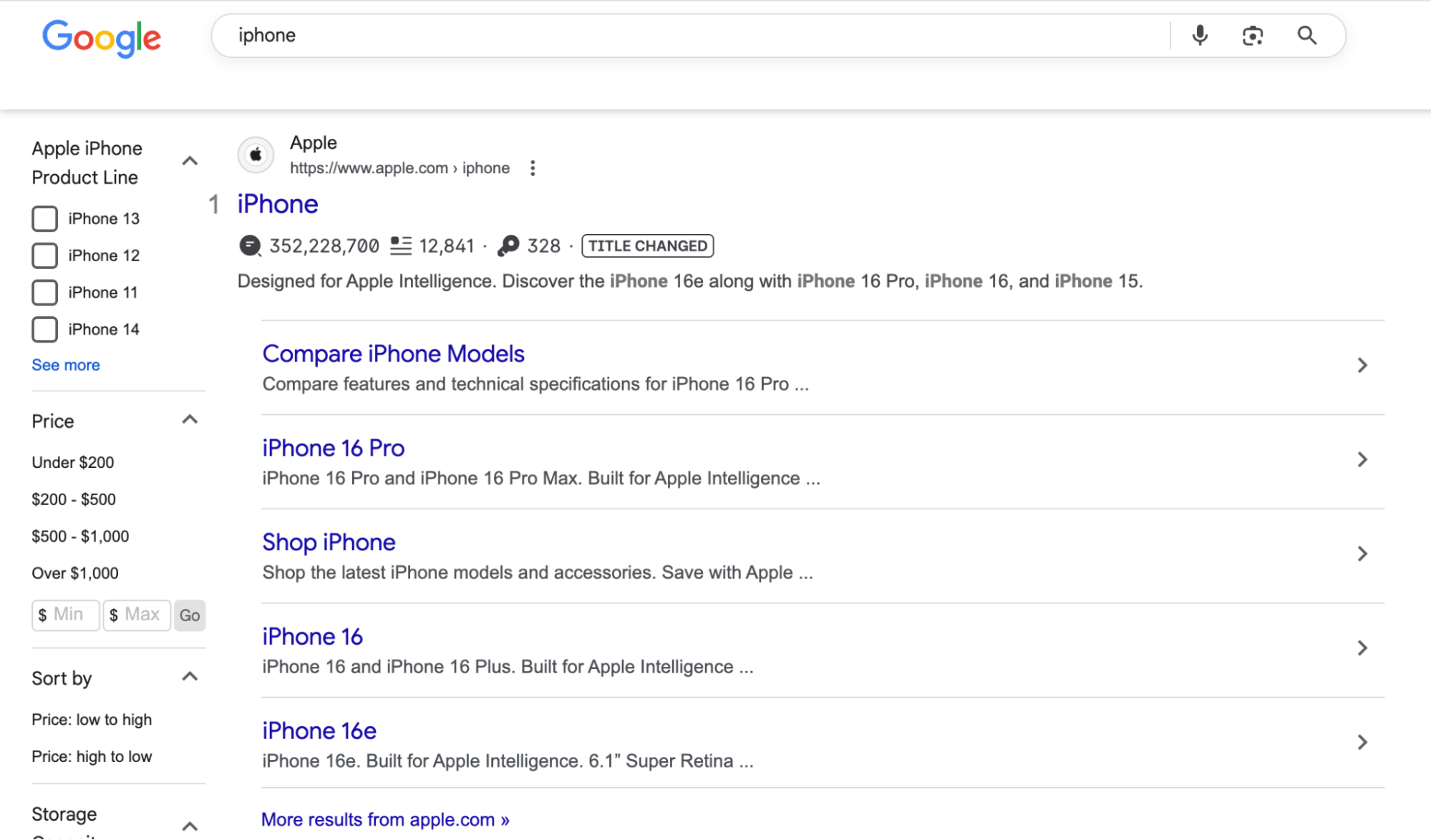
Here’s how you can structure your content properly:
- Use Schema Markup. Implement schema markup (like JSON-LD) to explicitly tell AI what your content is about. For example, use the HowTo schema for guides and FAQPage for a Q&A.
- Validate structured data. Use tools like Google’s Rich Results Test to validate your structured data and ensure search engines and AI systems can read it correctly.
- Ensure visibility. Since AI crawlers might not execute JavaScript, make sure you include the structured data in the initial HTML response.
3. Optimize for user intent, not just keywords
AI search engines use NLU to analyze both the context and intent behind a query.
By directly targeting user intents, your content will answer their search queries more efficiently and precisely, improving the likelihood of AI search engines citing your website.
Here’s how to optimize for different user intents.
- Informational. The informational intent indicates that the user seeks knowledge or details about a specific topic. Create comprehensive guides and tutorials that answer a user’s question in depth.
- Navigational. A user with the navigational intent wants to find a specific page, website, or resource. Ensure your brand name is easy to find and consistently used, so AI can direct users to you when they search for your company.
- Transactional. When searching with transactional intent, the user wants to complete a specific action, like purchasing a product or subscribing to a newsletter. Provide clear calls to action and product information to help users complete a purchase.
4. Improve site speed and mobile-friendliness
A fast, mobile-friendly website is a trust signal for users and AI search engines. It also helps AI crawlers parse and process your content more efficiently, improving the chance of being displayed to users.
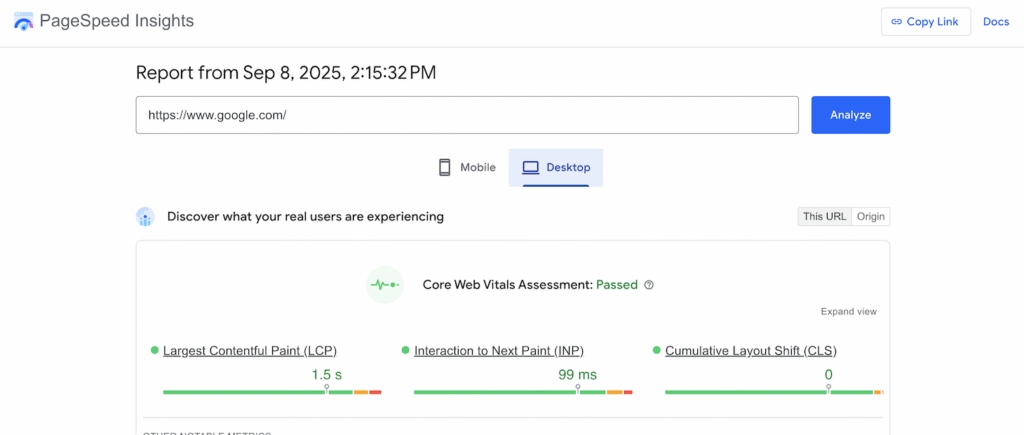
To ensure your website performs well, use tools like Google PageSpeed Insights to check its page loading speed and identify areas for improvement. Gaining these insights is important to determine the actionable website optimization strategy to address performance-related issues.
Also, your website must look and work properly on mobile devices. In addition to catering to a broader range of users, maintaining mobile-friendliness also contributes to a better user experience, which signals to AI that it’s a reputable website.
Some of the strategies for making your website mobile-friendly include strategically placing interactive elements and minimizing visual clutter that can affect usability on the smaller screens of mobile devices.
5. Build authority with trust signals
Building authority is crucial for getting your content cited by AI. Practices to improve the trustworthiness of your site include:
- Earning backlinks. Actively seek backlinks from reputable sites in your industry. You can do this through guest posts, digital public relations (PR), or by creating linkable assets like original research or comprehensive guides.
- Getting brand mentions. Look for opportunities to be mentioned in credible sources like news sites, podcasts, and industry publications.
- Showing social proof. To demonstrate credibility, include testimonials, case studies, and customer reviews on your site. This user-generated content acts as a powerful trust signal.
6. Use AI tools to track content performance
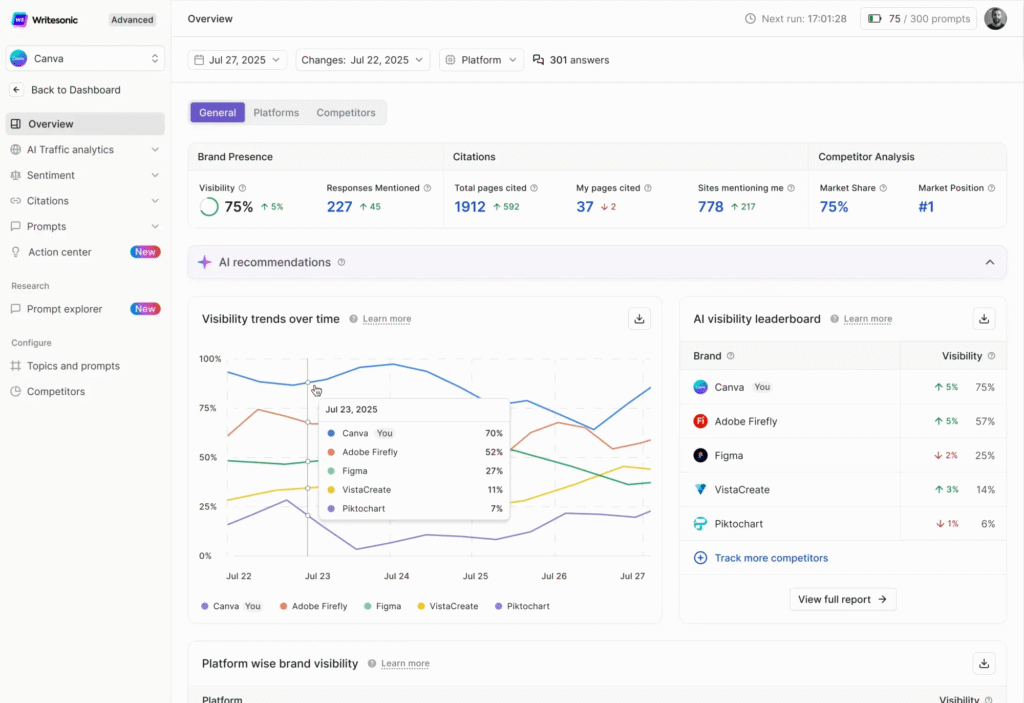
Traditional analytics tools often don’t capture AI crawler activity. You need specialized tools to measure your AI overview performance.
Platforms like Writesonic’s GEO tool can provide comprehensive insights into how AI crawlers interact with your content in real-time. Use them to:
- Track AI citations. Ask questions related to your content to platforms like ChatGPT, Claude, and Gemini to see if your content is being referenced or cited in their responses.
- Monitor branded search. Look for increased branded queries in Google Search Console, which can indicate that AI answers mention your brand.
- Analyze quality traffic. Focus on metrics like dwell time and conversion rates for AI-referred traffic, as these clicks come from people with a deeper, more specific search intent.
7. Use clean and structured HTML
Clean HTML helps AI crawlers parse and process your content more effectively since they understand what each section is about.
To do this, use semantic HTML5 tags like <article>, <section>, <header>, and <footer> to logically structure your page. This helps AI understand the different parts of your content and their relationships.
Then, organize sections in your content using clear H1, H2, and H3 to help the AI understand the hierarchy of information and relevance to subqueries. This increases the likelihood of your content being featured in AI-generated summaries.
8. Configure robots.txt to allow AI crawlers
Your robots.txt file is the primary tool for controlling which search engine crawlers can access your site. While AI crawlers are not blocked by default, you must explicitly allow or block them.
This provides a more granular control and ensures that the AI you wish to crawl your website can access your content. Limiting the crawlers that parse your content also helps minimize server load, as they add large amounts of traffic to your site.
When writing robots.txt, avoid using a blanket disallow directive and provide specific instructions for each AI crawler. This would prevent services like Google Search from indexing your site, harming traditional SEO.
Here’s a good example of a robots.txt snippet:
User-agent: GPTBot
Allow: /

User-agent: PerplexityBot
Allow: /
9. Create and maintain an llms.txt file
The new llms.txt standard is a simple file written in Markdown that provides a curated, AI-optimized map of your website. It gives a concise table of contents for large language models (LLMs), helping them extract and retrieve relevant information within their token limits.
You can create llms.txt by simply creating a Markdown file with that name. Then, include a project title, a short summary, and organized sections with curated links to your most important content.
Here’s an example of llms.txt structure:
# My Awesome Website
> This is a website about creating awesome websites.

## Blog
* [Getting Started with Web Hosting](https://example.com/blog/getting-started)
* [How to Use the Hostinger Website Builder](https://example.com/blog/website-builder)

## Products
* [Web Hosting Plans](https://example.com/hosting-plans)
* [Domain Checker](https://example.com/domain-checker)
Then, you can validate your llms.txt using our online llms.txt validator and check whether it is embedded properly into your website by accessing this URL, with domain.com being your actual domain name:
domain.com/llms.txt
If you develop your site using AI website builder, the llms.txt is automatically generated when you publish your project to ensure AI accessibility by default.

Technical and authority factors in AI search optimization
Technical and authority factors are essential for AI search optimization because they help AI systems determine if your content is both accessible and trustworthy.
Technical optimizations involve ensuring your website is structured and configured in a way that AI crawlers can easily understand and process. For example, a fast-loading, mobile-friendly site provides a strong signal of quality and technical soundness.
Similarly, authority-building activities are crucial for proving to AI that your content is credible and reliable. AI models rely on signals like backlinks from reputable sources and brand mentions to establish trust.
By combining a solid technical foundation with strong authority signals, you can increase the likelihood of your content being cited and synthesized into direct answers by AI.
Optimizing your website’s technical infrastructure for AI
Technical SEO for AI means ensuring your site is easily accessible and readable by AI crawlers. This goes beyond traditional SEO practices and focuses on how AI bots behave.
- Crawler behavior. AI crawlers like GPTBot and PerplexityBot are designed to collect data for model training and real-time information retrieval. They access content directly from the server and don’t execute JavaScript or leave referral data, which is why their visits are often invisible in tools like Google Analytics.
- Crawlability. Make sure your content is easily accessible to these crawlers. This means having a clean site structure, proper internal linking, a well-configured robots.txt file, and a clear llms.txt file, which enable AI systems to parse your content more easily.
- Site speed. A fast-loading website is a signal of a well-maintained and authoritative site, which AI systems value when finding resources to answer queries.
Why AI search optimization matters
Adapting to AI search is not just about keeping up with trends; it’s essential for future-proofing your online presence. Here are several benefits of optimizing for AI:
- Increased visibility. As more users turn to AI assistants and generative search for answers, optimizing your content for AI gives you a significant competitive advantage. When your content is chosen for an AI-generated answer, it gains a new form of visibility that traditional search can’t provide.
- Higher-quality traffic. When an AI cites your content, the users who click through are often looking for more in-depth information, leading to higher engagement, longer dwell times, and better conversion rates.
- Competitive edge. Many businesses are still focused on traditional SEO. By adopting generative engine optimization (GEO) for AI early, you can capture a larger share of voice in AI responses and build your brand’s authority before your competitors do.
Remember that although GEO and AI search optimization are important, they won’t completely replace traditional SEO. Instead, they will work together and complement each other to ensure your content is helpful for users.
What is the future of AI search optimization?
As AI models become more sophisticated, they will get better at understanding complex queries and synthesizing information. This will put an even greater emphasis on creating high-quality, semantically rich content.
New types of AI agents that can perform complex, multi-step tasks for users will also emerge. Your content strategy will need to adapt to these agents by providing clear, actionable instructions and a well-structured site map.
Moreover, the rapid rise of voice searches using assistants like Siri means your content must be optimized for how people naturally speak. This reinforces the need for a conversational tone and direct answers.
The best way to prepare for the future is to focus on creating great content for humans first, and then structure it for AI second. We recommend checking out our other tutorial to learn more about using AI for your website.

Aris is a Content Writer specializing in Linux and WordPress development. He has a passion for networking, front-end web development, and server administration. By combining his IT and writing experience, Aris creates content that helps people easily understand complex technical topics to start their online journey. Follow him on LinkedIn.

Matleena is a seasoned Content Writer with 5 years of content marketing experience. She has a particular interest in emerging digital marketing trends, website building, and AI. In her free time, Matleena enjoys cups of good coffee, tends to her balcony garden, and studies Japanese. Follow her on LinkedIn