How to become a prompt engineer
May 10, 2026
/
Matleena S.
/
9 min Read
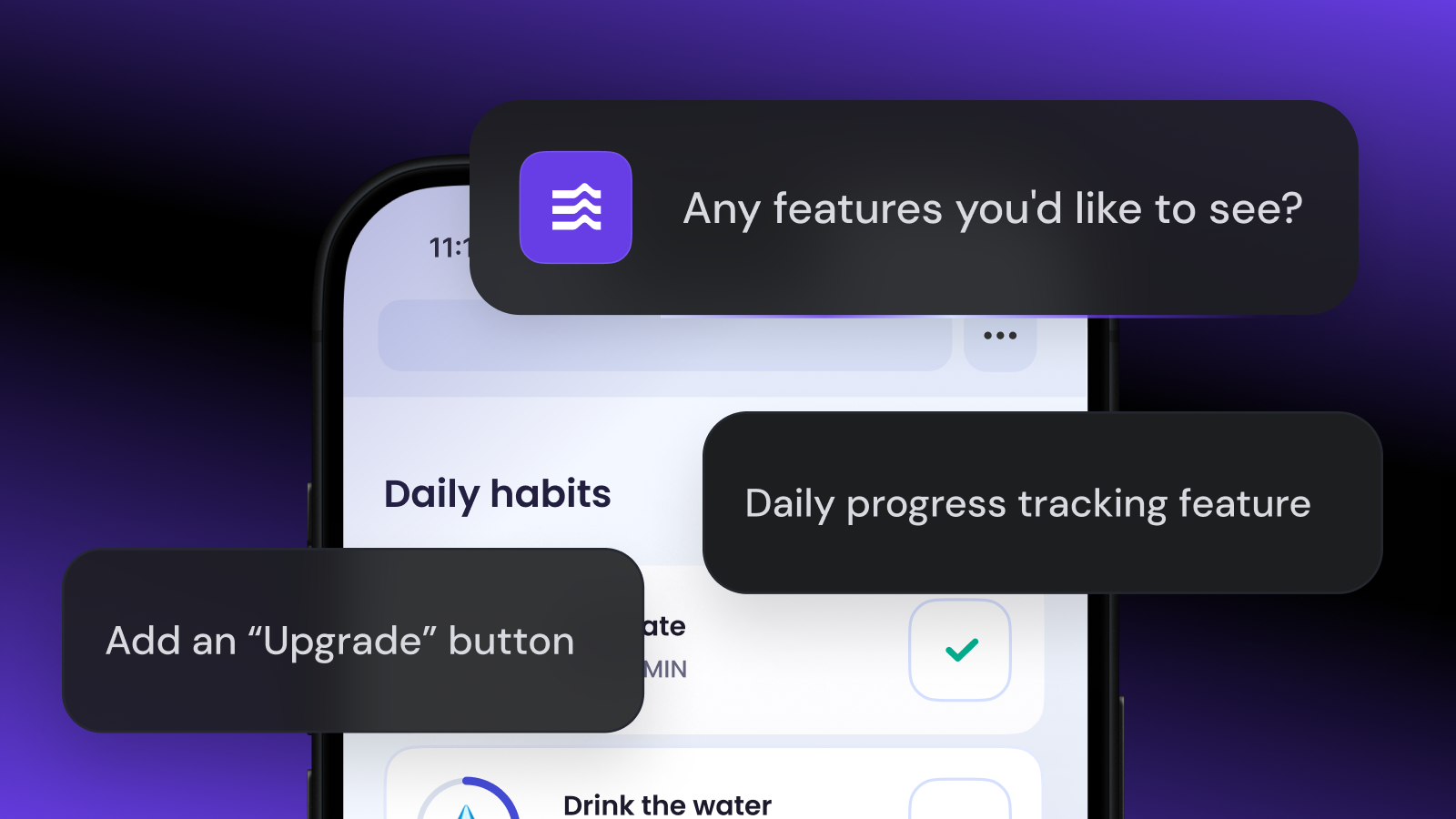
A prompt engineer is a specialist who creates precise instructions, known as prompts, for artificial intelligence (AI) models to generate accurate, relevant, and high-quality outputs.
This role is becoming increasingly important in the AI and machine learning industry. Many organizations now rely on AI systems for tasks like content creation, customer support, and data analysis.
Prompt engineers work closely with AI models, such as ChatGPT, to design inputs that lead to the best possible responses. To become one, focus on learning AI fundamentals, exploring NLP, practicing the prompt engineering process, developing coding skills, and gaining real project experience before moving on to community involvement and certifications.
1. Understand the basics of AI and machine learning
A prompt engineer’s effectiveness depends on how well they understand how AI models work. Even if you’re not building models from scratch, knowing the fundamentals helps you write AI prompts that align with the model’s strengths and limitations.
Start by understanding the building blocks of modern AI:
- Artificial Intelligence (AI) – systems that can perform tasks requiring human-like intelligence, such as language understanding, image recognition, or decision-making.
- Machine Learning (ML) – a subset of AI where models learn from data instead of relying on fixed rules.
- Deep learning – a specialized form of ML using layered neural networks to process data and identify complex patterns.
- Neural networks – interconnected nodes (neurons) that transform inputs into outputs, much like how the human brain processes information.
- Natural Language Processing (NLP) – AI’s ability to understand and generate human language, crucial for prompt work.
Knowing how AI models and algorithms work will help you understand the prompt engineering process and how your inputs influence the outputs.
Google, NASA, and IBM have all written about the basics of AI. We recommend reading about the topic if you aspire to become a prompt engineer.
2. Learn about natural language processing (NLP)
NLP is the branch of AI that focuses on understanding and generating human language. It’s essential for prompt engineers because it determines how AI interprets your instructions.
Important NLP concepts include:
- Tokenization – breaking text into smaller units, such as words or sub-words, that the model processes individually.
- Word embeddings – representing words as vectors in a way that captures their meaning and relationship to other words.
- Sentiment analysis – determining whether a piece of text expresses a positive, negative, or neutral sentiment.
- Named entity recognition (NER) – identifying and classifying entities like names, places, and dates in text.
How to learn NLP effectively
You can start with beginner-friendly online resources, such as the Natural Language Processing with Classification and Vector Spaces course on Coursera, or explore interactive tutorials using Hugging Face Transformers.
Reading case studies on how NLP is used in chatbots, analytics, search engines, or translation tools will also help you connect theory to real-world use cases.
Once you understand how AI models handle language, you can better learn prompt engineering techniques, such as structuring prompts to avoid ambiguity or ensuring your instructions align with the AI’s tokenization patterns.
This knowledge will help you create prompts that yield consistent and predictable responses.
3. Understand the prompt engineering process
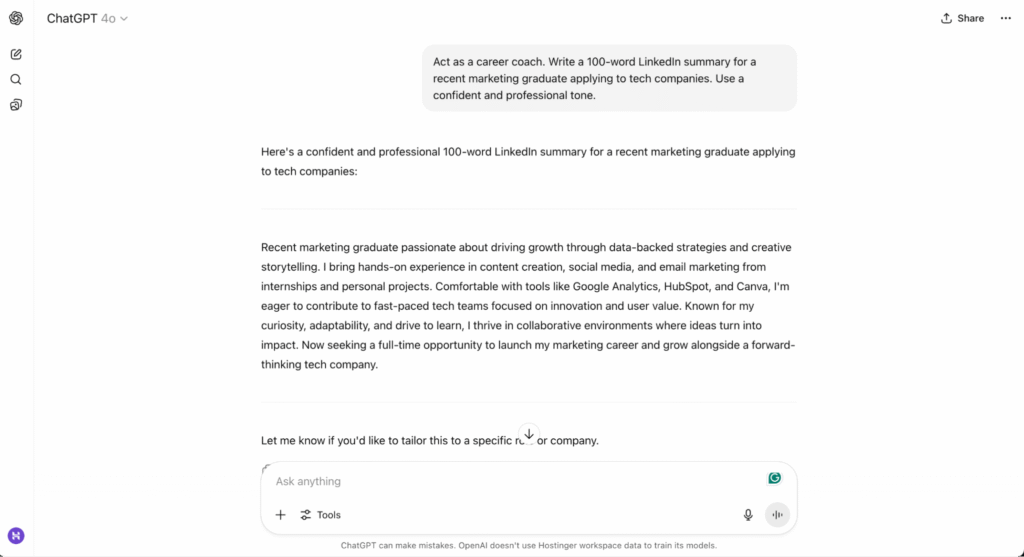
Prompt engineering is the practice of designing and refining inputs so that an AI model produces the most accurate and relevant output possible. This is the core skill you will need to master, as it directly impacts the quality of the results you get from an AI system.
What the process involves
The prompt engineering process starts with clearly defining the task you want the AI to perform. You then write an initial prompt, test it, review the output, and adjust your instructions based on what worked and what didn’t. This is an iterative cycle – the more you refine, the closer you get to the desired result.
You can write quality prompts by experimenting with different structures and refining them based on the AI’s responses. Start by doing this:
- Be specific – clearly state the format, style, and scope of the output you expect.
- Provide context – give the AI enough background information to understand the request.
- Break down complex tasks – split multi-step instructions into smaller, manageable parts.
- Use examples – show the model a sample of the desired output when possible.
- Test variations – try multiple versions of the same prompt to see which produces better results.
An AI model can interpret a vague or incomplete prompt in unexpected ways, leading to irrelevant or low-quality answers. Understanding how to structure instructions so the model processes prompts correctly will save you time and improve accuracy. Over time, you’ll learn how small adjustments to wording, structure, or formatting transform the outcome.
How to practice
Choose a common AI tool like ChatGPT or Gemini and set a specific goal, such as generating product descriptions, creating blog outlines, or summarizing technical documents. Write your first prompt, review the results, and keep refining until you get the most useful output. This hands-on approach is the fastest way to develop skill in writing quality prompts.
Expert tip
For anyone just starting, my most concrete tip is this: Always give the AI a role, a task, and a format. For example: ‘Act as a friendly and knowledgeable travel guide (role). Create a three-day itinerary for a first-time visitor to Rome (task). Present it as a bulleted list with a brief description for each day (format).’ This simple ‘Role, Task, Format’ structure is a powerful starting point for getting predictable and high-quality results from any AI.

4. Develop coding and scripting skills
While you can start prompt engineering without programming knowledge, learning a programming language like Python will significantly expand what you can do.
Coding allows you to automate prompt generation, integrate AI into real-world applications, and fine-tune outputs for better accuracy. Plus, it’s easy to start learning coding for free online.
For example, by coding, you can:
- Automate repetitive prompt tasks
- Integrate AI into custom software or application programming interfaces (APIs)
- Build pipelines that test and refine multiple prompts automatically
- Implement prompt tuning – a process of adjusting prompts at the code level for better model performance
Python is the best choice for prompt engineering because it’s easy to read, has a massive AI ecosystem, and integrates smoothly with every major model provider. You can prototype in minutes and deploy production code without switching stacks.
Begin by writing simple Python scripts that send prompts to an AI API and return results. Gradually add features such as formatting the output, storing results in a database, or chaining prompts together for multi-step processes. Even basic automation like this will make you faster and more consistent in your work.
Expert tip
Start with automating the boring stuff with Python. Python is designed to be read and written like plain text – almost like writing a story. Whatever you describe in words is what the code does, without needing special symbols.

Your core Python stack
Once you’re ready to set up your coding workspace, your prompt engineering Python tech stack should look something like this:
- Environment and packaging: venv or conda for isolated environments; pip or Poetry for dependency management.
- Interactive work: Jupyter Notebook or JupyterLab for quick experiments; VS Code for projects with testing and CI.
- HTTP & data handling: requests or httpx for API calls, pydantic for structured results, and pandas for quick analysis.
- AI libraries:
- Transformers (Hugging Face) for working with LLMs locally or via providers.
- OpenAI, Cohere, or Anthropic Python SDKs for hosted models.
- LangChain (optional) when you need prompt chains, tools, and retrieval.
- Testing & evaluation: pytest for unit tests and small prompt evals; simple JSON or CSV logs to compare prompts.
Coding transforms you from a manual prompt designer into a technical AI prompting specialist who can handle advanced, production-level applications. This skill set is highly valued in both freelance and full-time prompt engineering jobs.
5. Get experience with real projects
Studying theory is important, but real progress happens when you apply your skills in practical situations. Working on real-world projects will not only help you understand the challenges of prompt engineering but also give you concrete examples that you can show to potential employers or clients.
You can build experience by targeting fields where AI is already making an impact. Per the latest AI statistics, we recommend starting by paying attention to the following specializations:
- Content generation – create blog posts, ad copy, product descriptions, or SEO content for small businesses.
- Customer service – design and optimize chatbot flows to improve accuracy and tone.
- Virtual assistants – fine-tune prompts for scheduling, research, and task automation.
- Data processing – use prompts to summarize documents, extract structured information, or generate reports.
For a more thorough rundown, check out our comprehensive list of the top 50+ AI tools.
You can also speed up this process by experimenting with AI web app tools that let you build apps and test prompts directly in a development environment. Hostinger Horizons is a great option for this. It lets you create, run, and refine AI-powered projects without heavy setup or existing coding knowledge.
By using Horizons for your prompt engineering experiments, you can quickly turn ideas into working demos and add them to your portfolio.
This is especially valuable if you’re aiming for a freelance prompt engineer role or building your prompt engineer career.
6. Stay updated and join the community
Prompt engineering is not a static skill. Techniques that work well today may become less effective as AI models improve or change. Keeping up with the latest developments ensures you can adapt your prompts, adopt new tools, and take advantage of emerging opportunities.
Here are a few ways to stay informed:
- Follow AI research and industry news – Websites like arXiv, Towards Data Science, and VentureBeat AI provide reliable updates.
- Subscribe to AI newsletters – Consider The Batch by deeplearning.ai and Import AI by Jack Clark.
- Track model provider updates – Follow blogs and release notes from OpenAI, Anthropic, and Hugging Face.
- Experiment with new tools – Set aside time each month to test new AI frameworks or plugins.
Connecting with other AI practitioners accelerates your learning and exposes you to new techniques.
Online spaces like the Hugging Face community and Reddit’s r/MachineLearning are great for technical discussions, while AI-focused Discord servers – including the Hostinger Horizons Discord channel – offer more informal opportunities to exchange ideas and collaborate.
By engaging in these communities, you can get feedback on your prompts, discover best practices, and sometimes even find freelance or full-time opportunities.
7. Get formal education or certification
While prompt engineering is a skill you can learn through self-study and hands-on projects, formal education and certifications can help you stand out in a competitive job market. They signal to employers and clients that you’ve invested in structured learning and mastered essential concepts in AI, machine learning, and natural language processing.
Certifications also provide credibility, especially when applying for roles in larger organizations that value recognized qualifications. For freelance prompt engineers, certifications can make your portfolio more appealing to clients who are still learning to assess AI expertise.
Education and certification pathways
The right learning path depends on your starting point. Here’s how you can approach it at different stages of your career:
- Beginner stage – If you’re new to AI, start with short, accessible online courses that introduce AI fundamentals and NLP concepts. Platforms like Coursera, edX, and Udacity offer free or affordable programs designed for learners without a technical background. These will give you the basic vocabulary and concepts you need before moving to more advanced topics.
- Intermediate stage – Once you understand the basics, focus on specialized training in machine learning or applied NLP. These programs go deeper into how AI models interpret prompts and generate responses. You’ll also start working with hands-on projects that help you apply theory in real-world scenarios.
- Advanced stage – If you’re aiming for leadership, research, or high-level technical roles, a degree in computer science, data science, or AI can be valuable. This path offers both a strong academic foundation and networking opportunities that are harder to access through short courses alone.
Remember that you can pursue certifications at any stage. Industry-recognized options include Google’s AI and machine learning certificates, IBM’s Applied AI Professional Certificate, and DeepLearning.AI’s Natural Language Processing Specialization.
Or, if you prefer an intensive, hands-on approach, emerging bootcamps focused on prompt engineering can provide targeted skills in a short period.
How to choose the right program
The best choice depends on your career goals. If you aim to work in enterprise environments, choose certifications from widely recognized organizations.
If you plan to work as a certified prompt engineer in a freelance or startup setting, focus on practical, project-based training that you can immediately showcase in your portfolio.
Formal education is not mandatory to succeed in prompt engineering, but it can accelerate your learning, improve your credibility, and expand your professional network.
What skills do I need to work as an AI prompt engineer?
To succeed as an AI prompt engineer, you’ll need both technical and soft skills.
Technical skills:
- AI fundamentals – understanding LLMs, NLP, and model behavior.
- Programming – automating tasks and integrating prompts.
- Data analysis – interpreting AI output and improving results.
- Tool proficiency – working with AI APIs and platforms.
Soft skills:
- Creativity – finding unique approaches to prompt design.
- Critical thinking – evaluating AI responses and spotting flaws.
- Communication – explaining technical concepts clearly.
- Adaptability – keeping pace with AI advancements.
Is it difficult to become a prompt engineer?
Becoming a prompt engineer can be challenging, especially if you’re new to AI. Obstacles include:
- Prior knowledge – you’ll need a baseline understanding of AI concepts.
- Learning curve – mastering both tech and creative aspects.
- Fast-changing field – staying up to date requires constant learning.
Fortunately, you can overcome these challenges with consistent practice and curiosity.
What tools are needed to start with prompt engineering?
Prompt engineers often use:
- AI model platforms (OpenAI, Hugging Face)
- Coding environments (VS Code, Jupyter Notebook)
- APIs for AI integration
- AI coding tools to streamline development
What is the best industry to start as a prompt engineer?
Tech is the most common starting point due to its rapid adoption of AI. Other industries with growing opportunities include:
- Healthcare – assisting with medical data analysis and research.
- Customer support – building advanced chatbots.
- Education – creating interactive learning experiences.
- Marketing – automating personalized content creation.
How do you start working as a prompt engineer?
Prompt engineering is one of the most exciting careers in the AI era. To get started:
- Learn AI and NLP fundamentals.
- Practice prompt creation and refinement.
- Build coding skills and real-world projects.
- Stay connected with the AI community.
- Consider certifications to boost credibility.
Experiment often and keep learning to position yourself for a career in AI prompt engineering.

Matleena is a seasoned Content Writer with 5 years of content marketing experience. She has a particular interest in emerging digital marketing trends, website building, and AI. In her free time, Matleena enjoys cups of good coffee, tends to her balcony garden, and studies Japanese. Follow her on LinkedIn