AI statistics and trends: New research for 2026
Mar 10, 2026
/
Matleena S. & Brian
/
12 min Read

Every time I scroll through LinkedIn, I see at least one post about artificial intelligence (AI), whether it’s SEO professionals debating if Perplexity AI will replace Google, influencers revealing their AI hacks, or brands introducing their new AI features.
Suffice it to say, AI has become a mainstream technology, an indispensable part of our digital and professional lives.
But how big exactly will the AI market get? More importantly, how growing AI adoption will impact the global economy and workforce? To find out, we’ve compiled key AI statistics from credible sources and original data from our own survey.
Top 10 AI stats you should know for 2025
- The global AI market is expected to grow annually by 37%.
- From 2024 to 2030, the AI market is projected to grow at a compound annual growth rate (CAGR) of 28.46%.
- The AI market size is estimated to reach $305.9 billion by the end of 2024.
- AI is estimated to create 133 million new jobs by 2030.
- By 2030, AI is projected to contribute over $15.7 trillion to the global economy.
- Businesses allocate up to 20% of their tech budget to AI, and 58% of companies will increase AI investments in 2025.
- Generative AI is the most popular AI technology, with 51% of companies using it for content creation, customer support, and process automation.
- The generative AI market is projected to hit $1.3 trillion by 2032.
- AI drives 37% of business leaders to upskill their employees in the next two or three years.
- Data privacy, security risks and potential bias are the top concerns of AI usage among Gen Z business leaders.
What our survey reveals about AI
We asked 1,000 founders, small business owners, and executives in the United States about AI adoption in their organizations.
Here are the results.
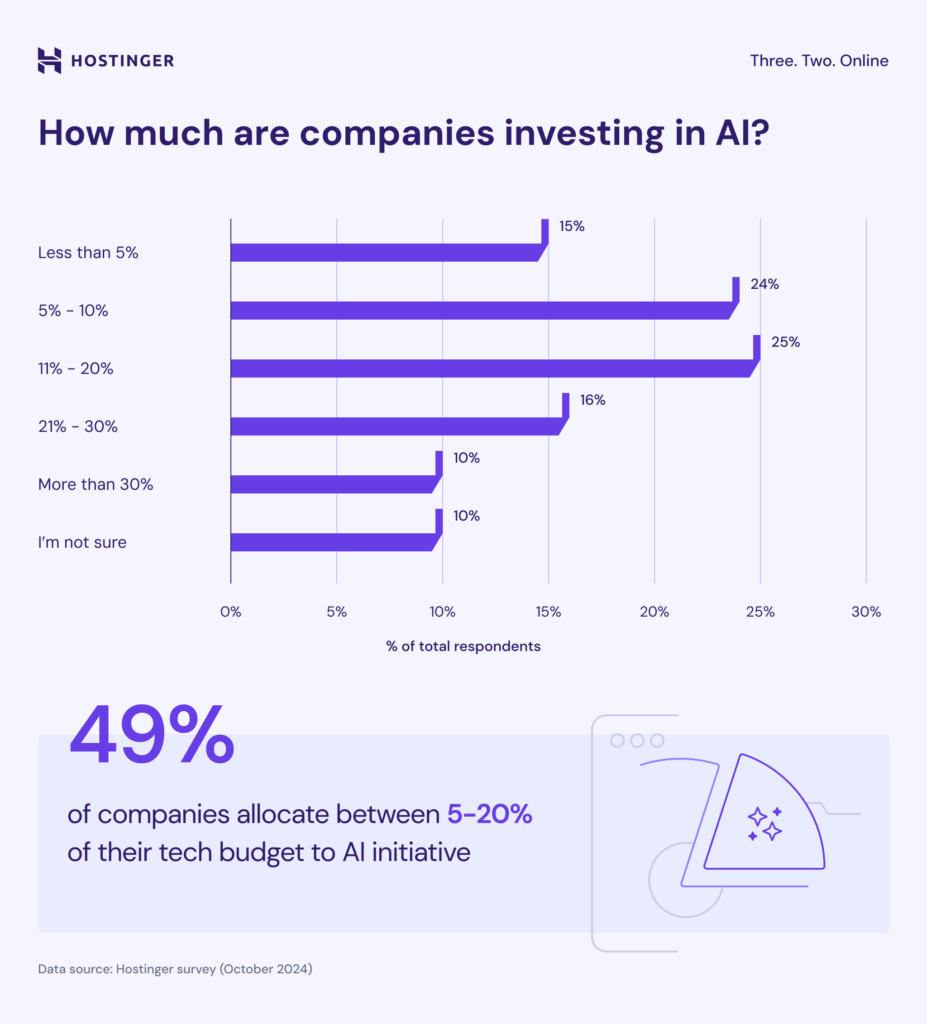
1. Almost half of businesses spend up to 20% of their tech budget on AI
Companies are willing to spend more money to adopt, integrate, and train AI models to improve business processes. According to our survey, 49% of decision makers have allocated 5-20% of their company’s technology budget to AI.
In terms of sectors, businesses in retail, eCommerce, and professional services are more likely to spend a considerable portion of their budget on AI, while education organizations are the least likely.
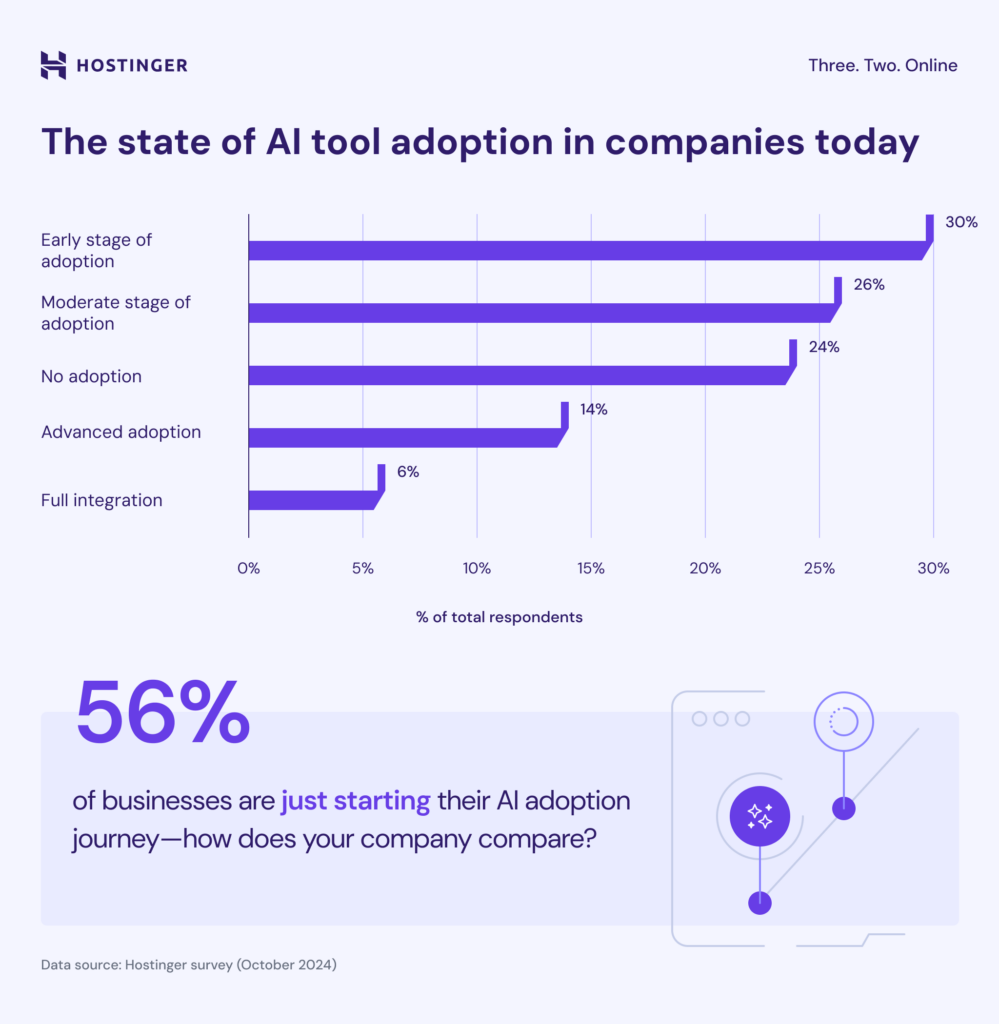
2. Around 56% of business leaders report early or moderate AI adoption
Most companies are still figuring out the best way to use AI, experimenting with different methods and tools.
Only 20% of business leaders we surveyed said they had implemented AI across multiple business functions or fully integrated AI in their operations. Surprisingly, 24% of businesses still haven’t adopted AI tech in any shape or form.
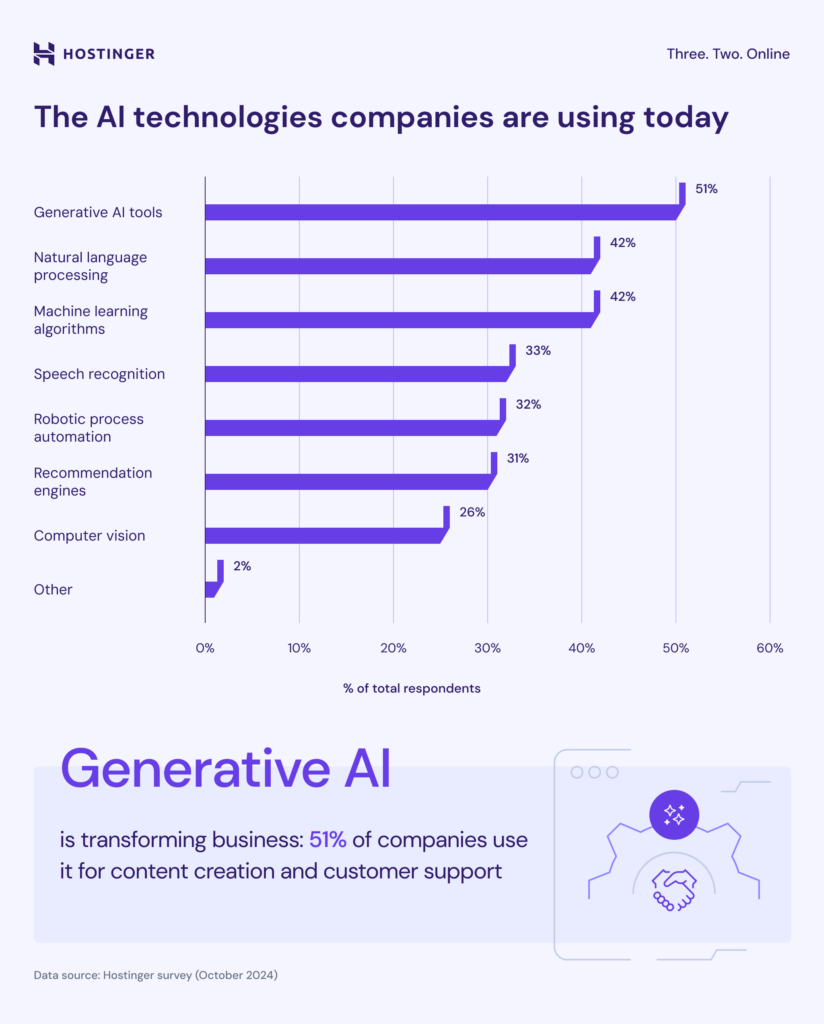
3. Generative AI is the most popular AI technology
51% of companies use Generative AI for content creation, customer support, and process automation. In contrast, computer vision (like facial recognition programs) is the least popular AI tech, with only 26% of our respondents implementing it.
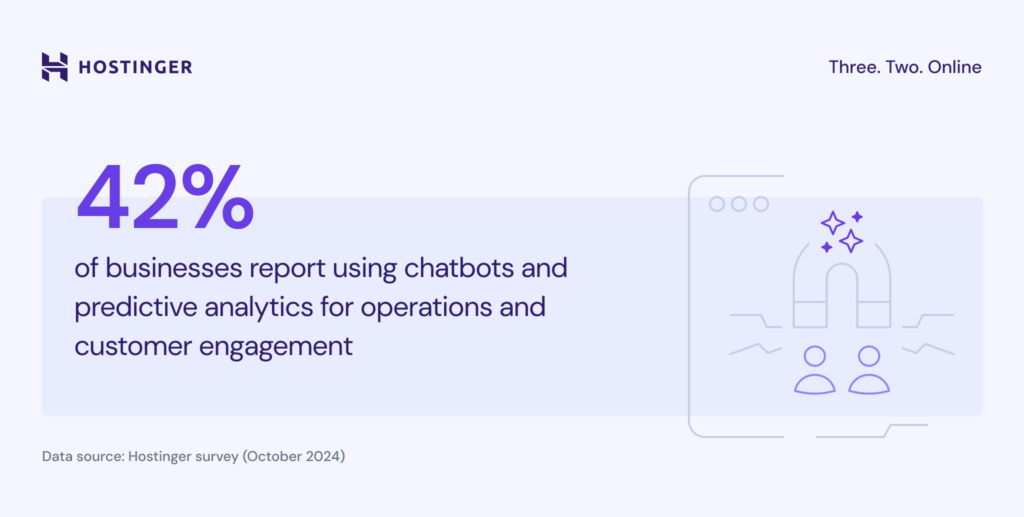
4. Chatbots and predictive analytics in use by 42% of businesses
Besides gen AI, other popular AI technologies include natural language processing (NLP) tools like chatbots and machine learning (ML) algorithms like predictive analytics.
Chatbots are capable of answering basic questions commonly asked by customers, taking some load off customer support teams. Meanwhile, predictive analytics helps companies forecast future trends based on existing data.
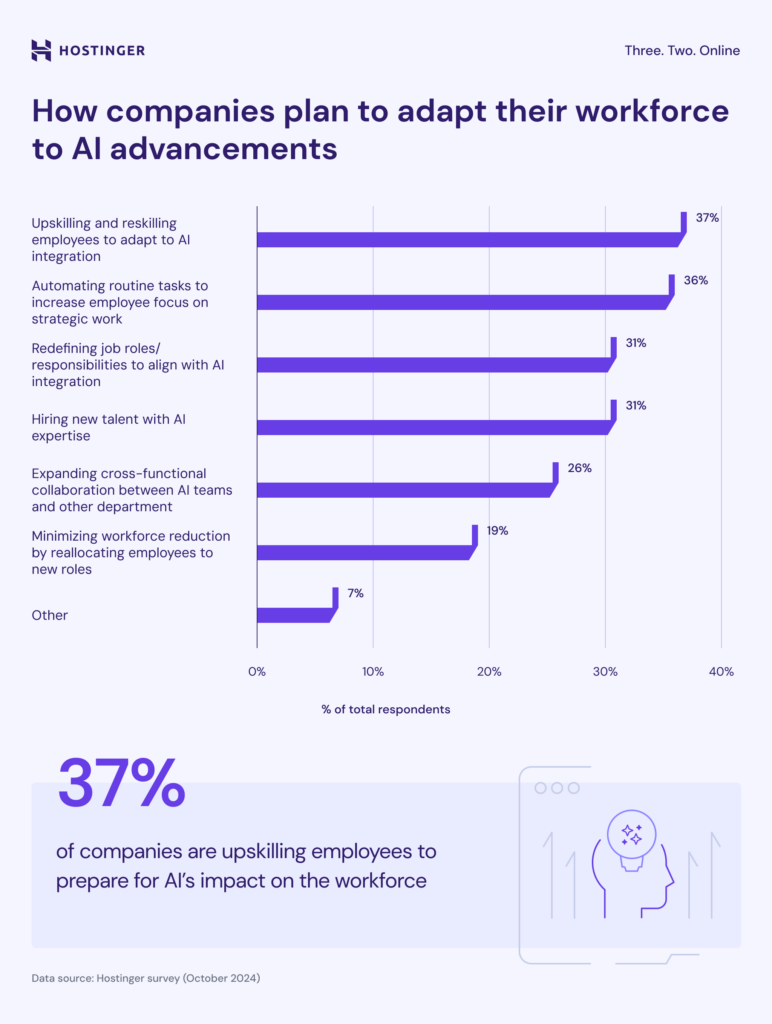
5. AI drives companies to upskill employees
AI is great at automating mundane tasks, empowering humans to focus more on strategic and higher-value work.
But the thing is, higher-value tasks also require a higher skilled workforce to be effective. That’s exactly why 37% of business founders and owners are planning to upskill their employees in the next two or three years.
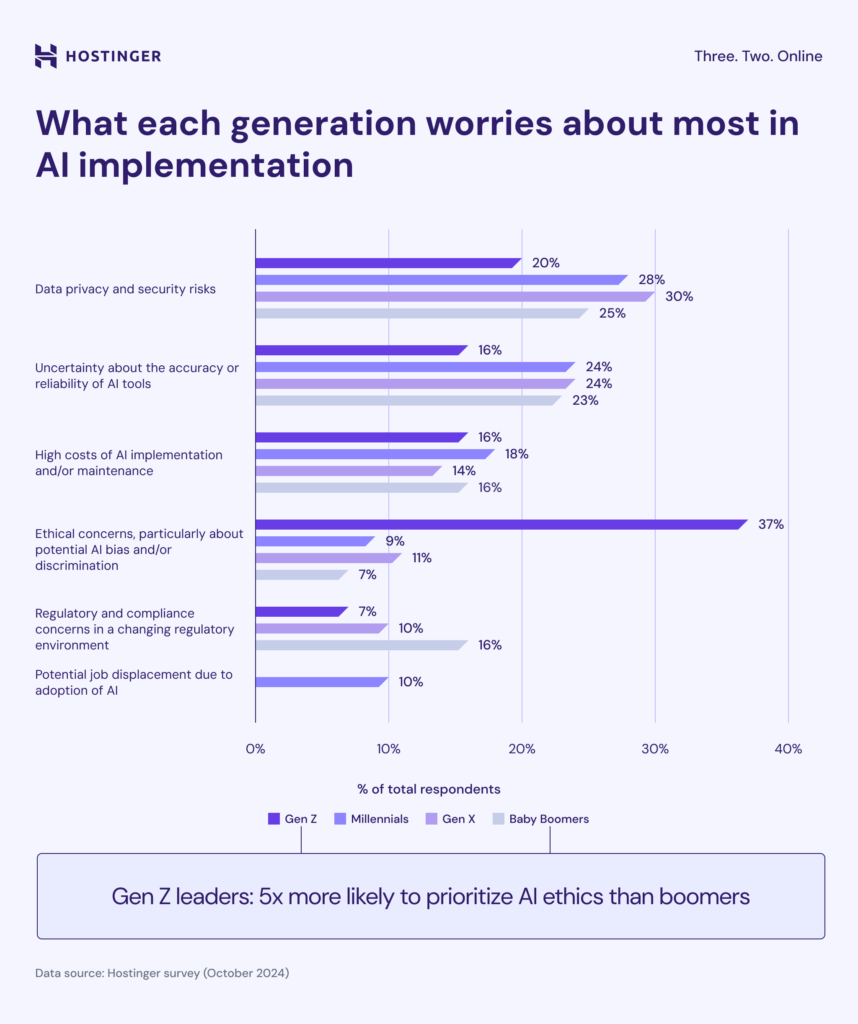
6. Gen Z leaders are 5x more likely to worry about AI ethics than Boomers
Concerns about data privacy and security risks associated with AI remain high, especially among Gen Z business leaders. This makes sense, given their high familiarity with technology as digital natives.
Gen Z founders and executives also expressed concerns about the inaccuracy, misinformation, and potential bias of AI output.
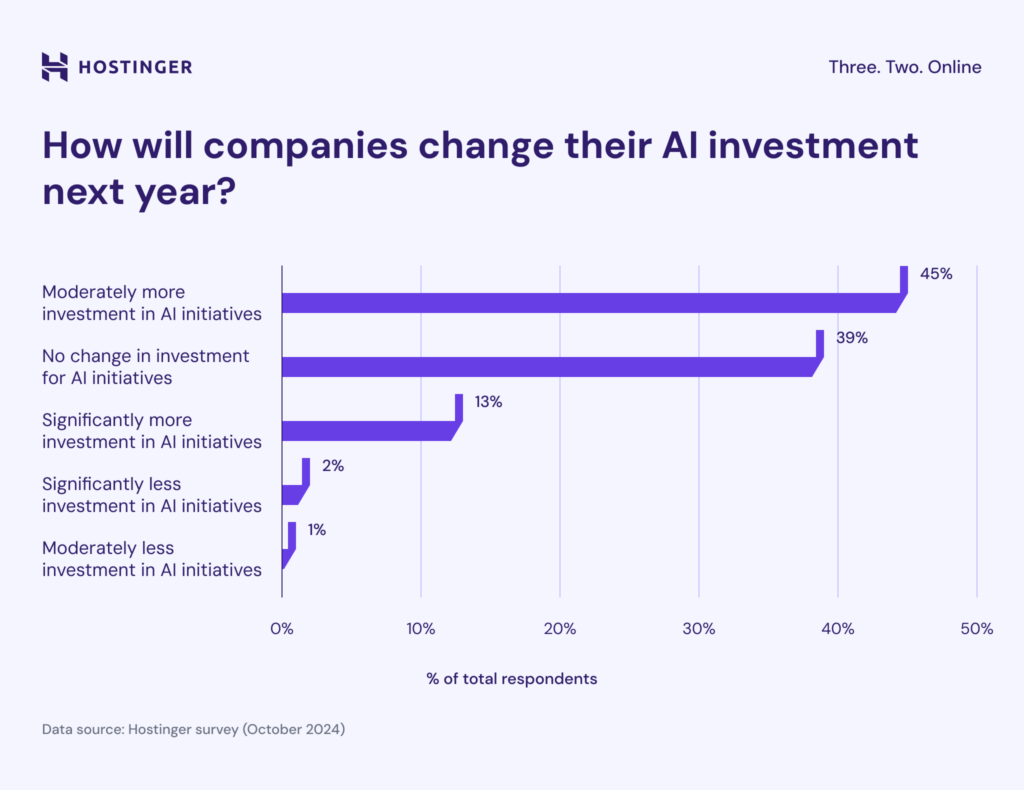
7. Nearly 60% of businesses plan to increase AI investments in 2025
Despite security concerns and ethical dilemmas of AI usage, 58% of companies still plan to increase their AI investments over the next year. This is especially the case with businesses in the logistics and customer service sectors.
General artificial intelligence statistics
In this section, you will find a curated list of AI statistics from various sources. These insights will give you an idea of how quickly AI is growing, and how it will impact the job market.
8. The global AI market size is expected to grow 37% every year from 2024 to 2030
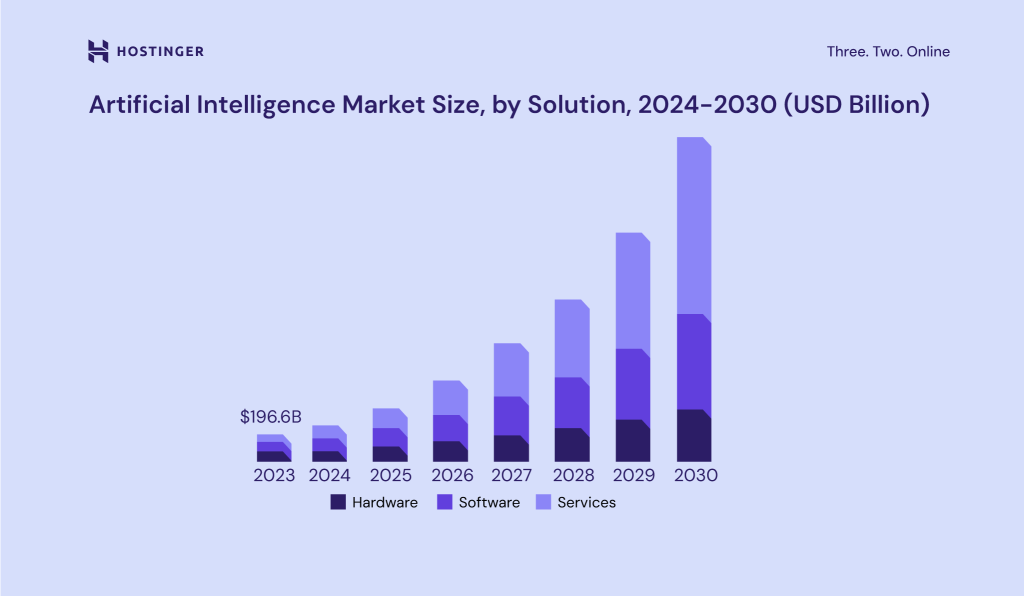
With an expected CAGR of 37.7%, it’s clear that the AI market is growing exponentially, signaling artificial technology’s increasing importance across all industries.
Businesses can use AI solutions to streamline job processes, improve employee productivity, and gain a competitive edge. Individuals, on the other hand, can benefit from acquiring AI-related skills, such as data analytics and machine learning.
9. The AI market size reached over $184 billion in 2024
This is quite a significant increase from the $135.9 billion reported in 2023, reflecting a year-over-year growth of nearly $50 billion.&
The surge is fueled by escalating investments in AI technologies and broader applications across various business industries.
10. Over 40% of business leaders report increased productivity through AI automation
AI usage in automation helps with repetitive tasks, letting you focus on more complex and creative assignments.
For business leaders, adopting AI-driven automation leads to immediate gains in productivity. For employees, understanding how to work alongside AI tools can make you an indispensable asset to your organization.
11. Artificial intelligence is expected to create 133 million new jobs by 2030
Specialized AI and big data roles are set to grow by 30-35% due to their vital role in AI solution development. The roles include data science, machine learning, natural language processing, and computer vision.
Our AI in Business article highlights that 31% of businesses are actively hiring for AI expertise, while 27% have already established new AI-specific roles, further emphasizing the growing demand for skilled professionals in these fields.
12. AI will contribute over $15.7 trillion to the global economy by 2030
AI has the potential to revolutionize global economic productivity and GDP, with local economies expected to experience a 26% GDP growth by 2030. AI-driven automation will increase labor productivity and lead to significant economic gains.
13. Interest in AI website builders has grown 50% in the previous 12 months
AI website builders have made it super easy to create websites, even if you have no coding or design skills. For example, Hostinger AI website builder is an AI platform that enables you to create a high-quality website in a few minutes.

You can also improve your website using AI. For instance, predictive analytics helps you understand user behavior and deliver a more personalized experience. Moreover, integrating chatbots can reduce wait times and increase customer satisfaction.
Growth of AI adoption
Our survey revealed that AI adoption will continue to grow, with business leaders planning to invest more in the technology.
But how exactly do these companies implement AI in their day-to-day operations?
14. Robotic process automation has an adaptation rate of 39%
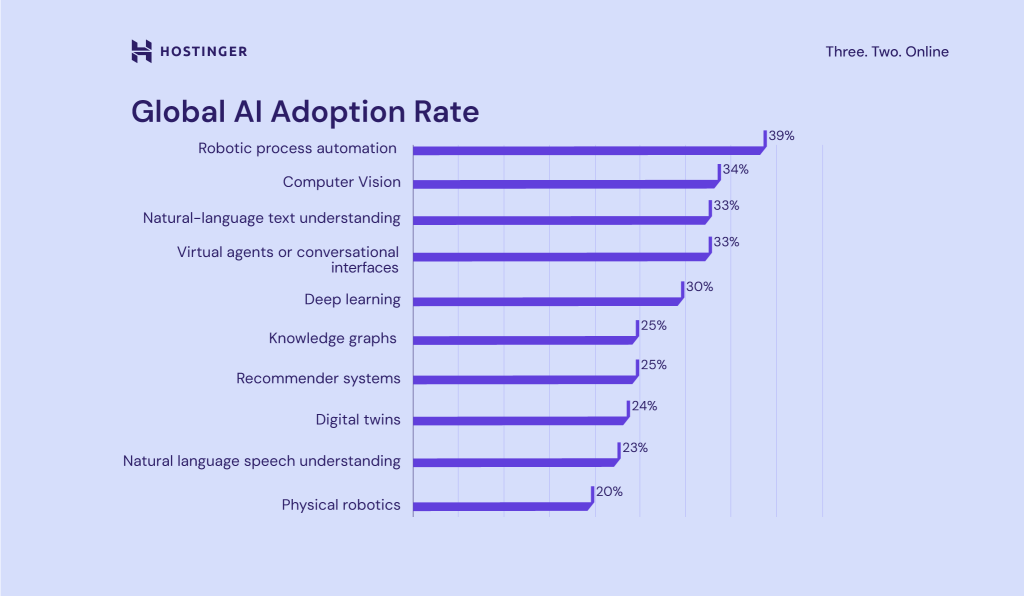
Robotic Process Automation (RPA) leads with a notable adoption rate of 39%, highlighting AI’s crucial role in automation. This is followed by computer vision at 34% and natural language text understanding at 33%.
15. Approximately 25% of companies have adopted AI to address labor shortages
On top of that, more than a third of all companies (35%) use AI in their business. The primary driver of adoption was accessibility, which made AI easier to implement across the organization. At the same time, companies are also looking to AI to help increase task automation and reduce costs.
16. Nearly 47% of AI adoption cases focus on automating IT processes
The significant adoption rate highlights the increasing dependence on AI to streamline IT operations, boost efficiency, and minimize manual efforts in system management.
AI investment and funding
AI is so hot right now that 3 out of 5 fastest-growing tech startups are AI companies. And like any other high-demand commodity, AI attracts significant investments.
17. Global AI funding reached $20 billion in February 2024
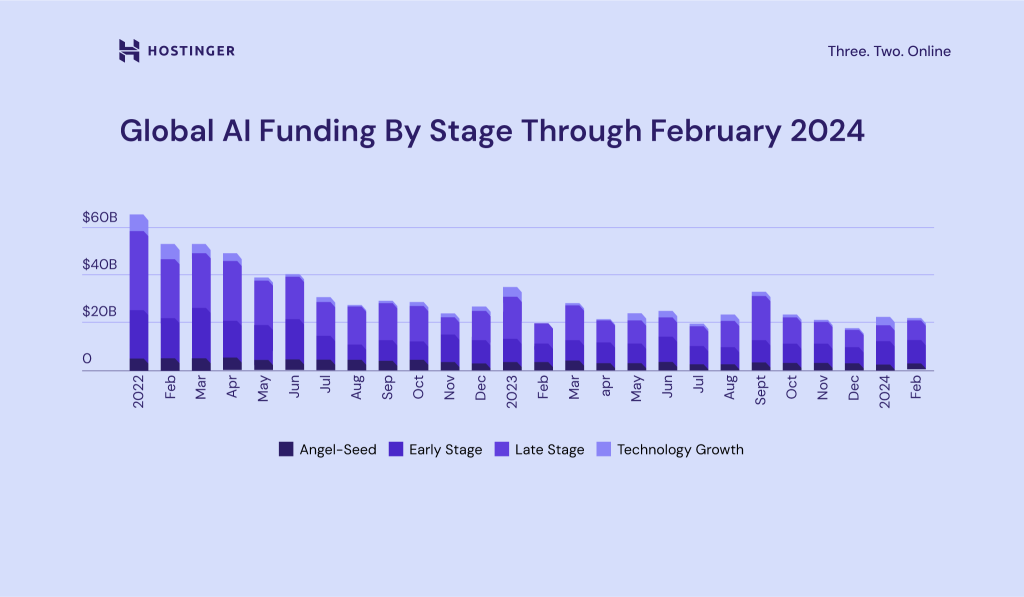
The total AI funding globally reached $20 billion in 2024. As the global AI market gets bigger, we can expect higher investments in the upcoming years.
18. The top countries for AI investment are the United States and China
AI is projected to increase China’s GDP by 26.1% by 2030, while the US could see a 14.5% GDP boost. Together, these gains are expected to contribute approximately $10.7 trillion to the global economy, accounting for almost 70% of AI’s worldwide economic impact.
19. Baidu holds the most AI patents worldwide
Along with Tencent, another major Chinese company, Baidu is among the top five patent holders globally. As of the latest data, these companies are part of a broader trend where significant technology firms are heavily investing in AI, with the number of AI patents continually growing.
20. ASAPP unveiled as the top-funded conversational AI startup, raising $380 million
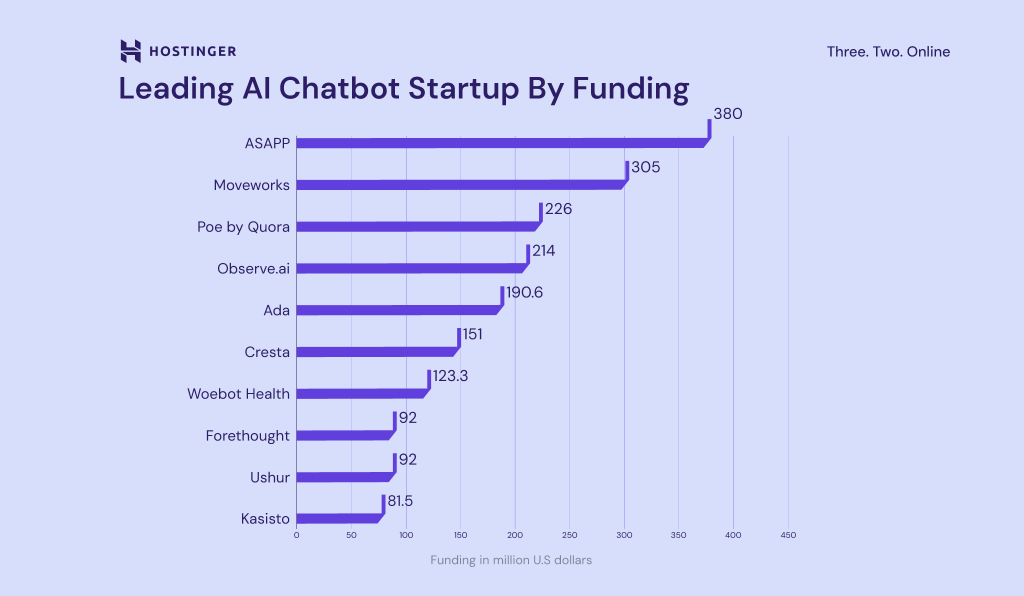
The chatbot market is growing at an impressive rate, as seen from the $380 million funding of ASAPP. According to Statista, the AI messaging platform will raise even more money by 2025, projected at a whopping $1.25 billion.
21. OpenAI dominates machine learning funding with $11 billion in 2024
OpenAI secured a remarkable $11 billion in machine learning funding, vastly outpacing its competitors, where the next closest company received just over $600 million.
This substantial investment could also advance the performance of ChatGPT and DALL-E in language processing and digital imagery, respectively.
AI job market trends
With more and more businesses using AI for various business functions, how will it impact the job market? Check out these key AI stats to find out.
22. AI and big data skills are the top priorities in company training strategies
AI and Big Data skills take center stage in corporate training strategies, ranking as the third overall priority for training until 2027. For companies with over 50,000 employees, these skills are the number one training focus.
In regions like the United States, China, Brazil, and Indonesia, over 40% of technology training programs will focus on AI and Big Data.
23. Over 75% fear job loss from AI
Additionally, 44% are very concerned, and 33% are somewhat concerned. The concerns about job loss highlight the importance of reskilling programs, job transition support, and education to assist workers in adapting to changing job markets.
24. The average salary for AI professionals is $128,000
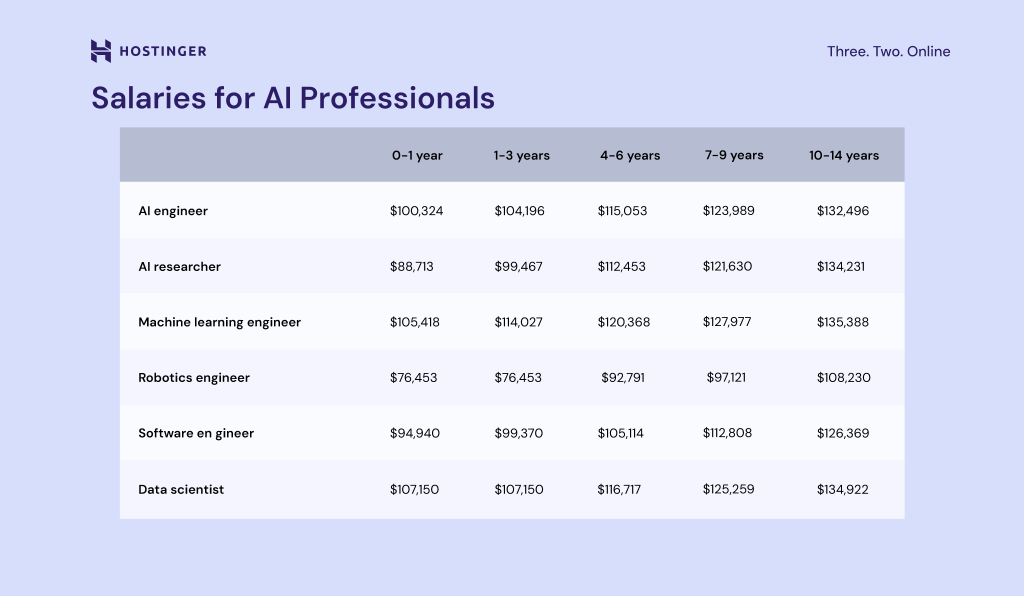
AI professionals typically earn a high salary, reflecting their specialized skills and the strong demand in the field. While the average salary across top positions is around $128,000, individual earnings can vary based on factors like experience and location.
25. By 2030, 30% of work hours across the US economy could be automated with AI
Thanks to AI implementation, more time and effort can be dedicated to creative and strategic tasks. Often, these tasks require more human input, resulting in a better allocation of business resources.
26. AI has the potential to boost workforce productivity and industry growth
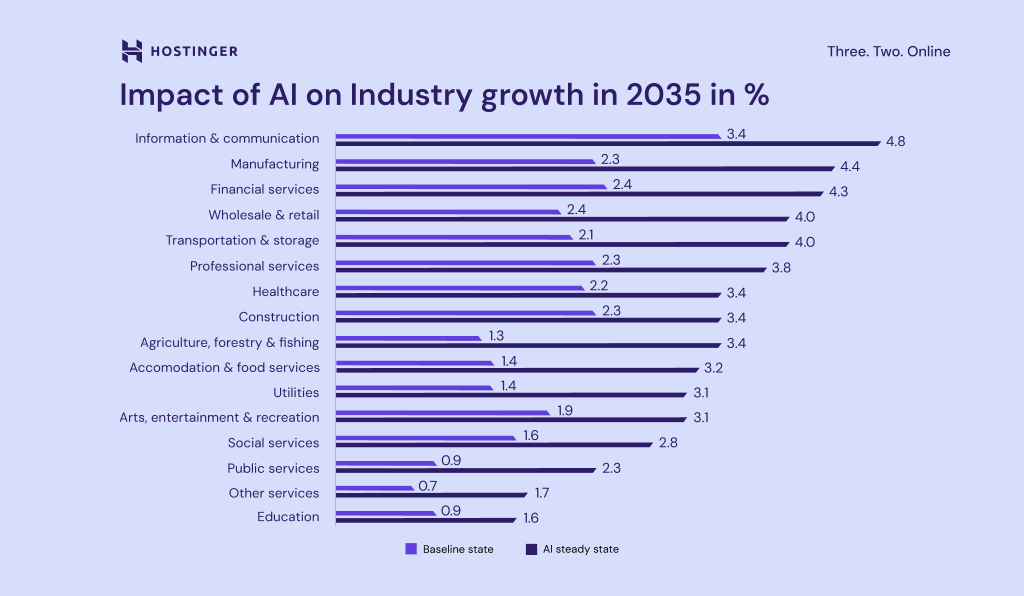
AI’s impact on workforce productivity and industry growth is significant and varied, with potential increases ranging from 11% in Spain to 37% in Sweden. Across 16 industries, AI could boost economic growth rates by a weighted average of 1.7% by 2035.
AI in automation
Discover the role of AI in automating job processes, improving productivity, and introducing innovations across different business sectors.
27. Healthcare, finance, and manufacturing sectors have the biggest AI market share
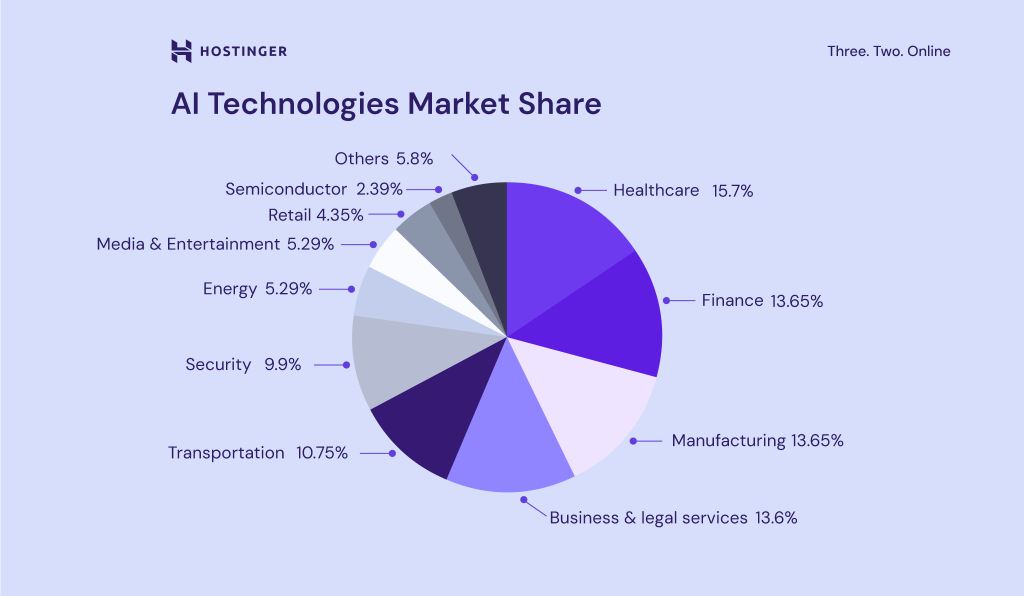
For businesses in these sectors, AI gives them a competitive edge and helps them meet regulatory requirements more efficiently. For those considering a career shift or specialization, these sectors present promising opportunities for AI-related roles.
28. US companies dominate when it comes to industrial automation with AI
The dominance of American companies in industrial AI automation indicates the country’s innovation ecosystem and supportive policies. These companies include Apple, Google, IBM, and Microsoft.
29. Self-driving cars are expected to make up 10% of the global car fleet by 2030
This shift is expected to generate a substantial economic impact, with projected revenues ranging from $300 billion to $400 billion. Tesla is a significant player in this transformative automotive trend, driving forward the integration of self-driving technology in the global market.
Natural Language Processing advancements
Natural Language Processing (NLP) is a technology that enables computers to understand, interpret, and use human language.
As per our survey, NLP is one of the most widely used AI technologies among businesses, where it helps with customer interaction through chatbots and predictive analytics.
30. The NLP market is expected to be worth over $40 billion in 2025
This projected growth of the NLP market illustrates its increasing integration into various industries, from the retail sector to healthcare. For businesses, this is an opportunity to invest in NLP technologies to gain a competitive edge in their field.
31. NLP-driven smart speaker market forecasted to surpass $15.6 billion
AI voice assistants like Siri and Alexa have become household names for NLP technologies. The market value indicates consumer acceptance and reliance on these devices for tasks ranging from setting reminders to home automation.
For developers and entrepreneurs, this suggests an expanding arena for NLP applications beyond basic voice commands.
32. There are over 1800 NLP companies in the world
Startups and public software companies develop NLP for projects like business tools, data analytics, and AI telecommunications.
Numerous companies in NLP development create a diverse, competitive landscape, providing varied options for business owners seeking specialized NLP solutions.
33. NLP is one of the most in-demand skills in the job market
AI knowledge is a significant advantage when looking for a new job. The high demand for NLP skills reflects its widespread application across industries.
For professionals, this demand means an immediate opportunity to upskill, making them more marketable and versatile in a rapidly evolving job market and global workforce.
Generative Artificial Intelligence advancements
Generative AI (GenAI), a new subsector, is making waves in marketing. It not only assists with customer tasks but also delves into the creative side of marketing.
The following statistics highlight the growth and impact of generative AI.
34. The generative AI market is expected to reach 1.3 trillion by 2032
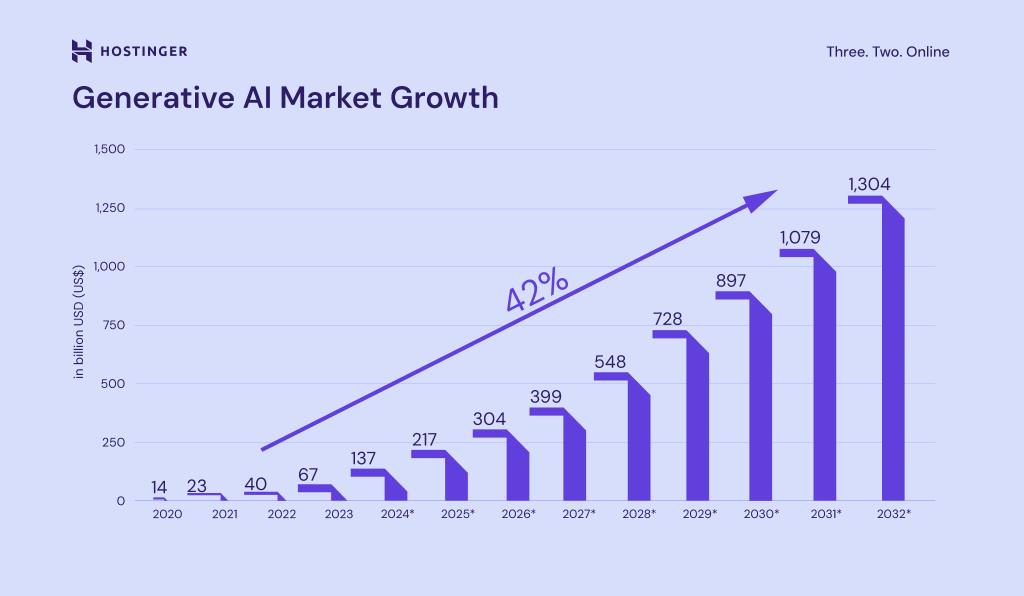
Growth may reach 42% CAGR, propelled by training infrastructure in the short term and transitioning to inference devices for large language models, digital ads, specialized software, and services in the medium to long term.
35. Over 95% of executives agree that generative AI will revolutionize where and how AI is used
Generative AI represents a breakthrough in how you can apply the technology, extending its use beyond simple data analytics to new data generation and simulations. For business strategy, 44% of business leaders plan to modernize data to leverage GenAI better.
36. Generative AI drives significant impact in CustomerOps, marketing, engineering, and R&D
Examples include generative AI’s ability to support interactions with customers, develop creative content for marketing and sales, and generate computer code from natural-language prompts.
37. Generative AI boosts CustomerOps productivity
Some notable use cases include personalized customer support, automated responses, and real-time problem-solving, which collectively contribute to a more efficient and satisfying customer service environment.
38. Generative AI dominates US marketing and advertising
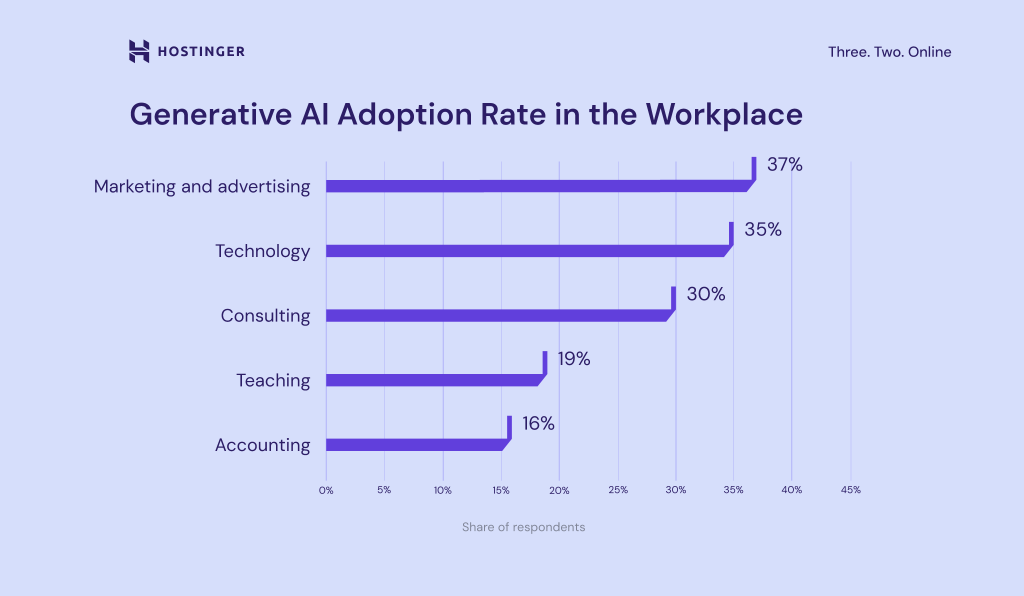
The technology sector follows closely behind marketing and advertising at 35%, with consulting at 30%.
Generative AI in marketing and advertising is mainly used to generate images and text. Many brands use AI content generators to write blog posts, short ad copy, and other types of marketing assets faster.
Regulation, AI ethics, and bias
From our research, we learned that data privacy and security risks remain top concerns for business leaders in large organizations and data-sensitive sectors, such as healthcare and finance.
There are also concerns regarding potential bias and discrimination in AI algorithms, making ethical considerations and regulatory oversight more important than ever.
39. Over 60% of Americans fear bias and potential discrimination in AI-assisted hiring processes
The public perception in the US shows that AI ethics is a mainstream issue. To begin with, people are afraid that AI technology might be biased. For policymakers and companies, this signals solid backing for AI regulation and guidelines ensuring equitable AI practices.
40. UNESCO establishes AI ethics with a global standard for responsible AI
Central to these guidelines is the importance of human oversight over AI systems to ensure that they adhere to core values such as fairness, transparency, and accountability.
These standards help foster AI development that respects human rights and promotes social well-being, underscoring the critical need for ethical considerations in the rapidly evolving AI landscape.
41. Women solely publish only 11% of global AI research
The limited diversity in AI research can reinforce biases and restrict the technology’s usefulness. Academia and the tech industry should take this statistic as a reminder to create more inclusive environments, so AI can give fairer output.
Future of AI technology
In the next five years, the business world expects to see an even bigger shift towards a more defined AI strategy.
Looking ahead, businesses and professionals must ready themselves for a future where AI takes on a more crucial role.
42. The AI industry is expected to be worth $826.70 billion by 2030
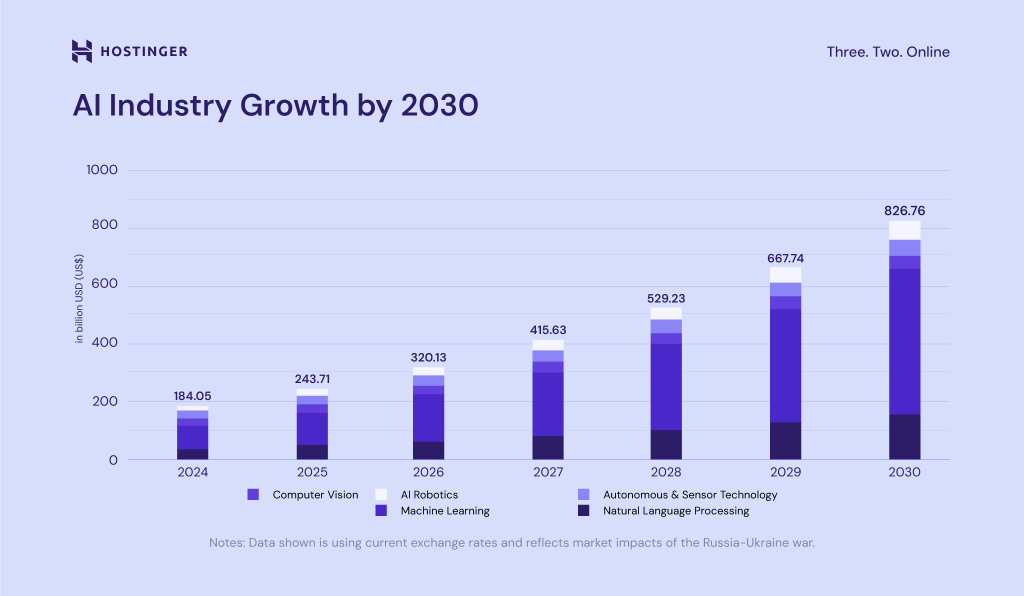
Over the next six years, the market is projected to grow at an annual rate of 28.46%, culminating in a value of $826.70 billion by 2030. This rapid growth underscores the increasing integration and reliance on AI technologies across various sectors globally.
43. AI and digital access fuel job growth in over 65% of surveyed businesses
Adopting AI is more likely to fuel job growth rather than eliminate jobs in the current economic landscape. Over 65% of businesses expect AI integration to boost job creation and economic development, with only around 7% predicting a labor market shrinkage from AI advancements.
44. Around 75% of businesses will embrace eCommerce and digital trade
Technologies like big data, cloud computing, and AI are anticipated to see high adoption rates due to their potential to enhance digital business operations.
Additionally, a significant 86% of surveyed companies plan to integrate digital platforms and apps into their operations over the next five years.
45. The rise of AI training for employees
50% of companies surveyed intend to invest in on-the-job and internal training departments for AI adoption.
As a result, companies are investing in upskilling their workforce. For individuals, this presents an opportunity to engage in lifelong learning, enhancing their employability and career prospects in an AI-driven world.
46. AI tools expected to reach over 700 million users by 2030
AI tools are reshaping content creation, enhancing productivity, and simplifying workflows. They assist with tasks like article writing by suggesting edits, sparking new ideas, and even crafting full articles from basic prompts.
This increased reliance on AI underscores a significant step in AI’s integration into our everyday digital tasks.
47. Data management is the AI infrastructure bottleneck
According to our study, 34% of business leaders experienced challenges with data quality and availability. This highlights the critical need for organizations to refine their data management strategies to capitalize on AI’s potential fully.
More on AI
AI in eCommerce
Best AI Content Generators text
Top AI Web Development Tools
AI for Websites
Best Large Language Models
AI Prompt Engineering
Main takeaways
Artificial intelligence has helped businesses in various industries drive innovations, increase productivity, and connect better with their customers. Given its importance, it’s no wonder that companies plan to invest more in AI in upcoming years.
Still, there are some concerns that need to be addressed before companies can fully integrate AI into their operations. These include data privacy and security risks, as well as potential bias and discrimination in AI algorithms.
But as AI adoption continues to grow, one question arises: will AI take over our jobs? The truth is, some roles will be replaced completely with AI automation. But the technology will also create millions of new jobs, especially in the fields of data science, machine learning, natural language processing, and computer vision.
Methodology
The data is taken from a survey of 1,000 professionals in the United States conducted by Datalily on behalf of Hostinger in October 2024.
The respondents included a sample of business leaders and professionals with decision-making power – founders, executives, researchers, consultants, and small-business owners – across size and industry.
We also curated existing AI statistics from reliable publications (listed below).
Sources
- Grand View Research
- Statista
- McKinsey
- World Economic Forum
- PwC
- CB Insights
- IBM
- Forbes
- Coursera
- GlobalData
- Crunchbase
- Upwork
- Bloomberg
- Pew Research Center
- UNESCO
- OECD
- WEKA
AI statistics FAQ
What percentage of businesses are currently using AI?
In 2024, approximately 35% of global companies were using AI in their business operations. Furthermore, about 42% of companies are exploring possibilities for AI adoption in the near future.
What is the forecast for AI investment in 2025?
The forecast for AI investment in 2025 expects it to hit $200 billion worldwide. This initial investment is crucial for setting up AI technologies and achieving major changes.
What challenges does AI face in 2025?
Data privacy in AI is the biggest challenge the technology faces. Besides that, users are concerned about algorithm bias, privacy and security risks, transparency ethics, and overall technology regulation.
Which country is leading in AI?
The United States leads in AI research, according to Macro Polo, with almost 60% of top-tier AI researchers working for American universities and companies. Mirae Assets estimates that private funding has reached $249 billion to date.
How many jobs will AI replace by 2030?
AI is expected to replace 300 million full-time jobs worldwide. Despite this, it’s also predicted to generate new job prospects. Jobs demanding high emotional intelligence or intricate decision-making are less prone to automation.
What percentage of consumers interact with AI in their daily routine?
According to Servion Global Solutions, AI is expected to drive 95% of customer interactions by 2025 – that’s 19 out of 20 interactions.

Matleena is a seasoned Content Writer with 5 years of content marketing experience. She has a particular interest in emerging digital marketing trends, website building, and AI. In her free time, Matleena enjoys cups of good coffee, tends to her balcony garden, and studies Japanese. Follow her on LinkedIn

Brian is a Content Writer who loves telling complex stories in a simple way. He has written all types of content, including tutorials, blog posts, landing pages, social media posts, white papers, infographics, and YouTube scripts. Follow him on LinkedIn.