What does .io mean: when to use it, pros and cons, and more
May 04, 2026
/
By Maulidina M.
/
6 min Read
The .io domain extension has emerged as a popular choice beyond just the tech industry. Originally the country code for the British Indian Ocean Territory, .io has evolved into a sought-after domain for startups, tech companies, and online services.
This guide explores what makes .io domains distinctive, when they’re worth the investment, and how to effectively use them for your online presence. We’ll examine their advantages in technical and startup circles, potential limitations for mainstream audiences, and practical considerations before registering your own .io domain.
Whether you’re launching a SaaS platform, building an online game, or establishing a tech brand, understanding the strategic value of .io domains will help you make an informed decision for your digital identity.

What does .io mean?
.io is a country-code top-level domain name (ccTLD) for the Chagos Archipelago, assigned to the British Indian Ocean Territory (BIOT). However, it has become a generic domain and is popular in the tech world since IO or I/O means input/output in computer science.
What kind of domain extension is .io?
The .io domain extension is a country code top-level domain (ccTLD) originally assigned to the British Indian Ocean Territory. However, it has gained widespread popularity beyond its geographical designation and is now recognized globally as a preferred domain for technology companies, startups, and digital services. Today, .io is managed by Internet Computer Bureau, Ltd, a U.K.-based tld custodian, while Name.com provides registrar services.
The extension has become particularly associated with tech businesses due to its resemblance to “input/output” in computing terminology. Many developers, SaaS companies, and online platforms choose .io domains to signal their technical focus and innovation-oriented approach.
While technically a country code domain, .io functions practically as a generic domain in the global market, offering an alternative to .com domain names when creating a distinctive online identity for technology-focused businesses.
When should you use the .io domain extension?
Compared to other popular top-level domains, fewer sites use .io, but this domain extension is increasingly popular in high-traffic tech sites.
These are just a few examples of popular .io websites:
- Opensea.io – the largest non-fungible token (NFT) marketplace.
- Etherscan.io – a website for searching Ethereum blockchain transactions.
- Greenhouse.io – an applicant tracking system and recruiting software.
Although .io is popular in the tech industry, this extension can be suitable for other niches, too.
The perception of this extension is also something to take into consideration. May people see this domain as more of a generic one than a country-specific, like .co.uk or .fr.
As a result, Google treats .io as one of the generic country-code TLDs – ccTLDs that are acknowledged as generic top-level domains. Another example of a generic ccTLD is .ai domain. Although it is an official extension of Anguilla, it is also popular among tech startups in the artificial intelligence industry.
Note that the case of.io is different from that of the .ly TLD, which is still administered as the country-code top-level domain for Libya, although many businesses outside the country like Bit.ly and Ow.ly use this extension.
It’s no surprise then that using .io is one of the popular domain hacks for global companies to own memorable brand names and secure impactful domains. They don’t have to be located in the BIOT to register .io domains or worry about search rankings as it is not country-targeted.
For example, Marco Rubio successfully employed rub.io for his US presidential campaign. Bricklink, a platform for selling and buying LEGO parts, uses stud.io to redirect it to its studio software. In this case, they used. io as a short and memorable alternative to .studio domains.

Meanwhile, Italian and Esperanto speakers use .io to make a geographically relevant and keyword-friendly domain. “Io” in Italian means “I” and acts as a suffix to terminate official names of lands and countries.
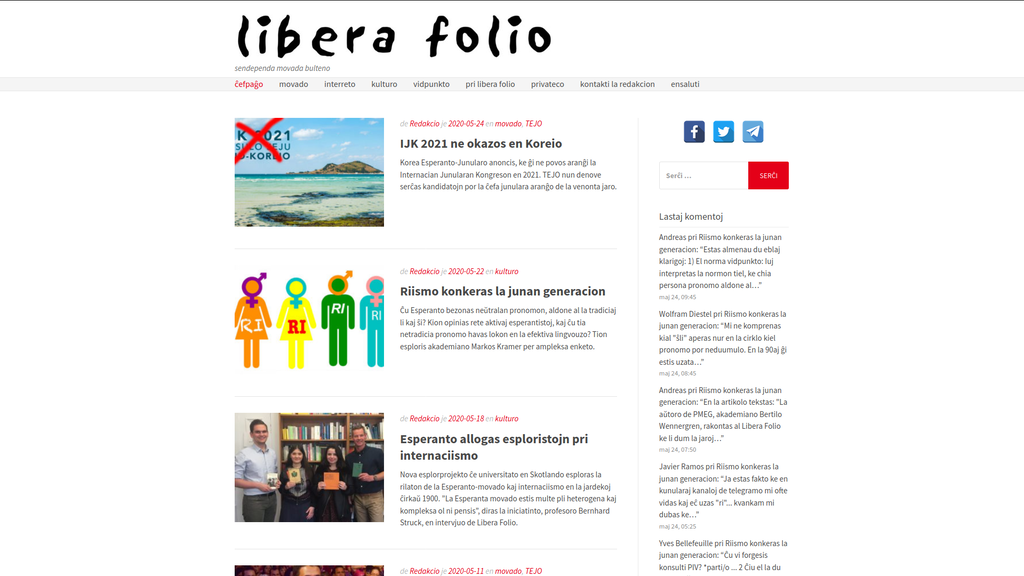
For instance, esperant.io redirects to Libera Folio’s website, an online bulletin written in Esperanto.
What does .io mean for startups?
Tech and SaaS startups use .io domain names due to their reference to the input/output terminology, providing a single word relevant to their audience and startup communities. Also, .com may not be available for their second-level domain choices, making .io a perfect domain alternative.
What does .io mean for tech companies?
Similar to tech startups, other companies in the tech scene use .io to associate themselves with the input/output reference. For a lot of people, even without this reference, .io is already associated with tech. Entities that predominantly opt for this extension include open-source organizations and the financial services sector, like cryptocurrency companies.
Many video gaming projects also use .io as a matching domain since the term “io” is associated in the gaming industry with browser-based games with multiplayer components and minimalist graphics.

Pros and cons of .io domain
Now that you know the basic concept of the .io domain, let’s examine the advantages and disadvantages of using this extension in your web address.
Pros of .io domains
Here are some excellent reasons why people use the .io domain:
- Tech affiliation – .io is recognizable in the tech space and startup communities. This makes the domain effective for external communications, helping people recognize the industry quickly.
- Greater availability – Compared to other domains, like .com and .net, the .io address only accounts for 0.6% of all domains worldwide, according to W3Techs statistics. As a result, this TLD is more likely to be available than other options when you buy a domain name for your existing brand.
- Wide search engine recognition – Google doesn’t relate .io to British Indian Ocean Territory, meaning it does not specifically target that geographical area when showing .io sites in search results.
- A creative name – Using .io to shorten your URLs can help create more memorable domains.
Cons of .io domains
Besides offering several advantages, the .io domain extension also brings several downsides, including:
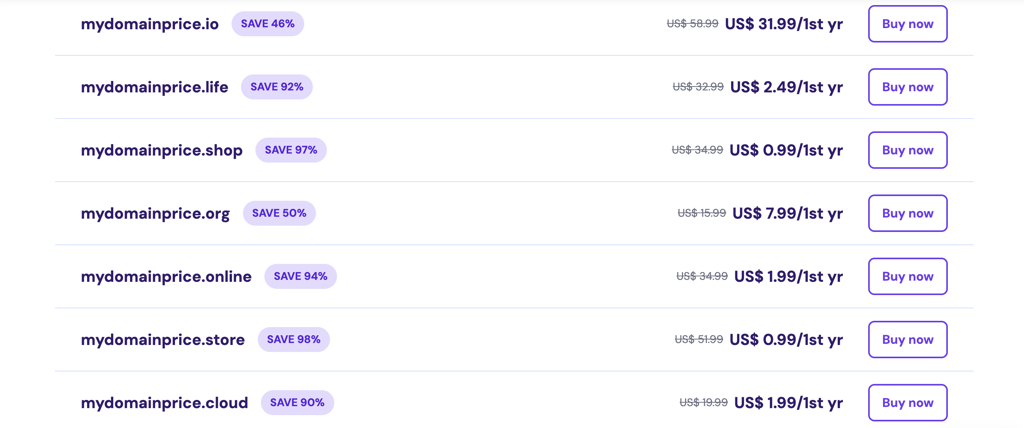
- A higher price – The domain name cost depends on its extension, availability, and popularity, and .io is more expensive than .online, .tech, or .org domains. One of the reasons for this is that it has become trendy and on-demand in the tech industry and startups.
- Lower trust and memorability scores – compared to popular domains like .com and .org, .io is less trustworthy and memorable. Its trust rating sits at only around 3.0, and it is one of the least memorable domain name extensions, with a score of 28%. It might be because .io is relatively new and has not gained the same credibility and reputation as .com.
- A controversial history – there are geopolitical issues over the Chagos Archipelago between the UK, Mauritius, and the US. Depending on the outcome, the dispute might immediately deactivate the BIOT, the IO ISO-3166 country code, and the .io domain, similarly to how UK businesses cannot register or renew their .eu domain names after Brexit.
Pro Tip
If you're going with the .io extension, make sure you search for a domain name through a reputable provider like Hostinger first. All domain names come with WHOIS info privacy protection and 24/7 expert support. Alternatively, purchase our web hosting plan and get a free domain name.
Conclusion
The .io domain used to be one of the country-code TLDs only, specifically for the geographic region of the British Indian Ocean Territory. However, it is no longer country-specific as Google acknowledges it as a generic top-level domain, serving a much broader audience.
Many people see .io as the right domain name extension for their tech businesses, referring to the input/output in the computing process. Meanwhile, others buy it to make a more creative and relevant domain utilizing a different TLD.
Despite its higher cost, lower trust rating, and complex history, .io extension provides greater domain availability and a shorter name. It also helps people associate .io websites with tech startups or companies.
Hopefully, you will now have an easier time deciding whether to use the .io domain for your website or no. If .io fits your needs, make sure you register the domain while it is still available via a reputable registrar or a hosting provider, together with a hosting plan.
Learn More About Domain Names
How to Buy a Domain Name - Full Guide and Tips
What Are Subdomains? A Comprehensive Guide For Beginners
FQDN (Fully Qualified Domain Name): What It Is, Examples, and More
What Is a Domain Name? A Beginner-Friendly Guide
URI vs URL: Differences and When to Use Them
Domain vs Hosting: Definition and Differences
What does .io mean FAQs
What are the requirements for registering a .io domain?
There are no specific requirements for registering a .io domain. It is open for registration to individuals, businesses, organizations, and anyone interested in establishing an online presence. The registration process typically involves choosing an available domain name and completing the registration through a domain registrar or hosting provider.
How much does It cost to register a .io domain?
The cost of registering a .io domain can vary depending on the domain registrar and any additional services included. On average, the registration fee for a .io domain can go up to $60 per year. With Hostinger, you can get a .io domain for $31.99/year.
Can I transfer my .io domain to another registrar?
Yes, you can transfer your .io domain to another registrar. The process typically involves unlocking the domain, obtaining an authorization code, initiating the transfer with the new registrar, and confirming the transfer request. Both the current and new registrar may have specific procedures and fees for domain transfers.
This article is a localized version of What does .io mean: when to use it, pros and cons, and more, originally published in English.

Lidin is passionate about online business and marketing. She believes that these topics should be accessible to everyone, so she is determined to help people unlock their digital potential through written pieces. Outside her working hours, Lidin enjoys exploring new cities and editing videos.