How to sell stuff online: 9 steps for beginners
Oct 14, 2026
/
By Alma & Simon L.
/
12 min Read
To sell online, choose a sales channel like an online marketplace or your own store, create a compelling listing with high-quality photos, and set a competitive price. Once your listing is live, you can promote it to attract customers and then arrange shipping after you make a sale.
The entire process breaks down into three key stages. It starts with preparing your items and taking clear, well-lit photos.
From there, you’ll choose the best platform to reach your audience, which can be a marketplace like eBay or your own website, and write a compelling description with a fair price.
The final stage is managing the sale itself, from communicating with buyers and packing your item securely to arranging shipping.
1. Find and prepare your items for sale
The first step is to decide what you want to sell. Your approach will depend on whether you’re selling items you already own or finding new products.
Find new products to sell
If you want to sell new products, a great first step is to explore online business ideas and find a profitable niche.
Analyze Amazon’s Best Sellers list to see what’s selling now, and browse social media trends like the #TikTokMadeMeBuyIt hashtag to discover what people are excited about.
Beyond just trends, look for products that solve a specific problem or serve a passionate hobby, as these often have more dedicated customers.
This research-based approach is a great way to make money online.
Sell used items
If you want to declutter, start by finding valuable items around your home that you no longer use. Popular product categories include:
- Electronics. Old cell phones, laptops, and gaming consoles.
- Fashion. Brand-name clothing, shoes, jewelry, and thrifted goods.
- Furniture and decor. Small tables, chairs, lamps, and decorative items.
- Media and hobbies. Books, vinyl records, and collectibles.
Prepare your items for sale
Once you’ve gathered your items, prepare them for sale.
- Clean them thoroughly. Dust off electronics, wash clothing, and wipe down any surfaces. A clean item looks more valuable and shows you’ve taken good care of it.
- Test everything. Make sure electronics power on and function correctly. Check clothing for any hidden tears or stains. Being honest about the item’s condition is vital for building trust.
- Gather all parts. If an item came with accessories, like chargers, cables, or manuals, find them. A complete package is much more attractive to a buyer and can often fetch a higher price.
2. Photograph your items
Buyers can’t inspect the product in person, so your product photos need to do the heavy lifting.
Here’s how to take pictures that sell:
- Use good lighting. Natural light is best. Place your item near a window on an overcast day to get soft, even light without harsh shadows. Avoid using your camera’s flash, as it can wash out colors and create glare.
- Choose a neutral background. A plain white or light-colored wall, a sheet, or a poster board works well. A simple background ensures the focus stays on your item.
- Take multiple shots. Capture the item from every angle – front, back, top, bottom, and sides. Take close-ups of any important details, unique features, or flaws. If possible, show clothing on a hanger or a mannequin.
- Show the scale. If the size isn’t obvious, place an everyday object like a coin or ruler next to it in one of the photos. This helps buyers understand the item’s actual size.
- Be honest about flaws. If there’s a scratch, a dent, or a stain, take a clear photo of it. Buyers appreciate transparency, and it prevents disputes later on.
For example, if you’re selling a piece of art, photographs that capture the texture, colors, and details can intrigue art lovers and collectors, making them more inclined to consider the purchase despite not seeing the piece in person.
3. Choose the right platform
When deciding where to sell online, your options fall into four main categories: your own online store, online marketplaces, social media platforms, and local selling sites. Each one serves a different purpose and is suited to different types of sellers.
Marketplaces and social media are great for beginners because they have a built-in audience, making it easier to find buyers.
On the other hand, creating your own ecommerce website gives you complete control over your branding and customer experience, which is ideal for building a long-term business.
The right platform depends on what you’re selling, who your target customer is, and how much control you want. Here’s a breakdown of the main ones.
| Platform | Listing Fee | Transaction Fee | Monthly Fee | Key Features |
| Hostinger AI Builder | None | None | Starts at CA$ 4.99/month | Built-in AI tools, 150 designer-made templates, drag-and-drop editor, no extra fees |
| Amazon | None for Individual Plan | $0.99/item + referral fees | Starts at $39.99/month | Vast audience, comprehensive services |
| eBay | $0.35 after free listings | ~13.25% + $0.30/order | Optional store subscriptions vary | Wide reach, auction, and fixed-price listings |
| Etsy | $0.20/item | 6.5% of sale price | $10/month for Etsy Plus (optional) | Community of crafters and artists, unique items |
| Facebook Marketplace | None | 5% for Checkout on Facebook | None | Integrated social media audience, no listing fee |
| Craigslist | Free for most | None | None | Local in-person transactions, a wide variety of categories |
Set up your own online store
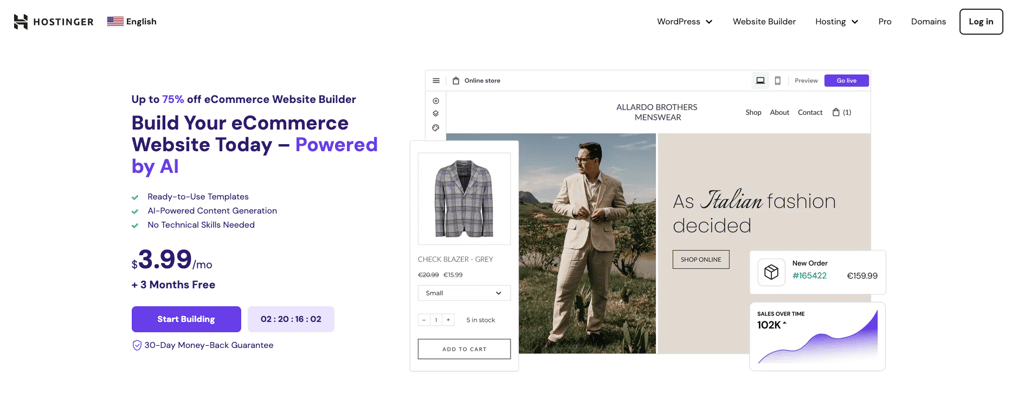
Creating your own ecommerce website is the best long-term option if you plan to build a brand or sell a large volume of products. You control the design, branding, and customer policies without being restricted by marketplace rules or fees on every sale.
Having your own site offers several practical benefits:
- Higher profit margins. Without marketplace commission fees taking a significant cut of every transaction, you keep more of the money from each sale.
- Direct customer relationships. You own your customer list, allowing you to build an email newsletter, run targeted promotions, and encourage repeat business directly, which is often restricted on third-party platforms.
- No on-page competition. On your website, you are the only option. Customers won’t see a competitor’s product listed right next to yours, taking attention away from your products.
- Full creative control. You can design your product pages, run unique promotions, and customize the checkout experience to create a brand that stands out.
Hostinger’s AI website builder lets you create a professional online store without coding or design skills. You can customize your store’s design with an intuitive drag-and-drop editor, while built-in AI and SEO tools help you manage products, process payments, and attract more customers.
This gives you complete control over your brand and customer engagement, setting you up for long-term success. For a complete walkthrough, see our guide on how to start an online store.

Sell on marketplaces
Online marketplaces are a great starting point for new sellers, providing immediate access to millions of customers and handling the technical setup for you. The main trade-offs for this convenience are intense competition with other sellers and transaction fees on every sale.
On Amazon, sellers choose between a pay-per-item or monthly plan and shipping items themselves or using Fulfillment by Amazon (FBA). Success on the platform depends on heavily optimizing your listings with keywords and quality images to stand out from the competition.
eBay is known for its flexible auction and fixed-price formats, where success is built on creating detailed listings and earning a strong feedback rating through excellent customer service.
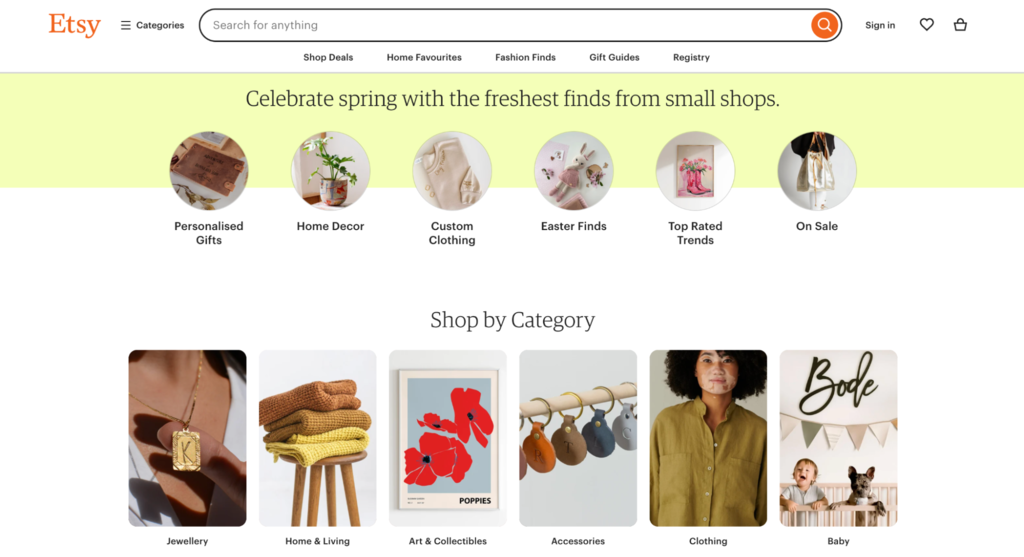
In contrast, Etsy is the go-to marketplace for handmade and vintage goods, attracting a dedicated audience of buyers and supporting creators with simple, built-in shop tools.
Sell on social media
Selling on social media gives you direct access to existing communities and allows you to engage with customers in a way that builds a loyal following.
Success on any platform relies on creating engaging content that tells a story, and using high-quality photos and videos to showcase your products visually.
It’s also vital to interact directly with your audience by responding to comments and messages to build relationships.
Here are the most popular social media platforms to sell on:
- Instagram: Ideal for visually appealing products like fashion, beauty, and art. To make money on Instagram, upload high-quality images and videos, and use Instagram Shopping to tag products directly in your posts.
- Facebook: A versatile platform with a broad demographic reach. Use Facebook Marketplace for local sales and its powerful targeted ads to reach highly specific audiences based on their interests.
- Pinterest: A search and discovery engine perfect for products related to home decor, fashion, and DIY projects. To sell on Pinterest, create inspiring, keyword-rich pins that link back to your products.
- TikTok: Best for reaching younger demographics through short-form video content. Drive sales by creating engaging videos that showcase your product in action and participating in viral trends.
Sell on local platforms
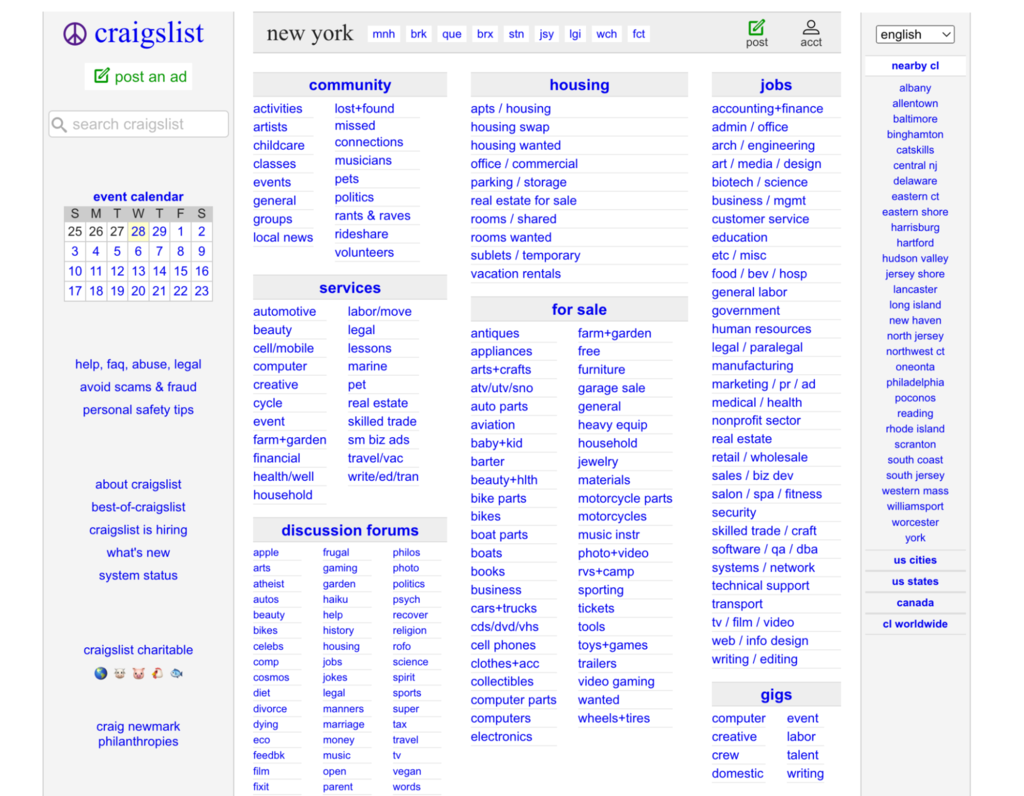
For items that are hard to ship or best examined in person, sell stuff online locally with platforms like Craigslist, Nextdoor, VarageSale, and Offerup. These platforms enable you to reach buyers in your area, simplifying the selling process and eliminating shipping hassles.
When selling in your local area, clear descriptions and fair pricing are key. Be honest about the condition of your items and set prices that are in line with local market rates. High-quality pictures that accurately represent the item can encourage buyers to contact you.
Safety is paramount when conducting in-person transactions. For safer local selling, consider these factors:
- Meet in a public place. Conduct each local pickup in public areas like malls or coffee shops.
- Schedule trades during daylight. Plan your meet-ups when the sun is up for added security.
- Get a friend to accompany you. Enhance safety by having someone with you during the transaction.
- Meet at police stations for high-value items. If that’s an option in your country, use safe trade stations at local police stations for transactions involving valuable items.
Want to see the full process from niche to launch? This video covers picking a niche, building your brand, choosing a platform, and setting up your store with AI Builder.


4. Write a compelling listing
A great listing answers a buyer’s questions about the product before they even ask, building the trust needed to make a sale. Here’s what you need to do:
Write a descriptive title
Think like a buyer: what words would you use to search for your item? A specific title helps the right people find your product.
Always include key details like:
- Brand and model
- Size and color
- The condition it’s in
Example of a bad title: Blue Coat
Example of a good title: J. Crew Women’s Navy Blue Wool Peacoat – Size Medium – Excellent Condition
Write an honest description
In the description, expand on the title and be completely honest about the item’s condition. This is especially important for used or refurbished goods, as transparency prevents returns and builds trust with shoppers.
A good description should include:
- Features and benefits. What does it do? What makes it special?
- Condition details. Be upfront about any scratches, dents, or wear.
- Measurements or sizing. Provide exact dimensions for furniture or clothing.
- What’s included. List any accessories, like chargers or original packaging.
- Policies. Briefly mention your shipping and return policy.
Keep your language clear and simple, and use bullet points to make the description easy to scan. Consider learning the basics of how to write SEO-friendly content for best results.
5. Set the right price
The best way to set the right price is to research completed sales for similar items. Many platforms, like eBay, let you filter your search to show only completed sales. This gives you a realistic benchmark for your item’s value.
Look at several listings for items in the same condition as yours to find a realistic price range. Consider these factors:
- Condition. A new-in-box item will sell for more than a used one.
- Completeness. An item with all its original accessories and packaging is worth more.
- Rarity. Is the item hard to find?
- Shipping costs. Factor in shipping when setting your final price. You can offer free shipping and add the cost to the item price, or you can charge for shipping separately.
Expert tip
For a detailed guide with more advanced strategies, learn exactly how to price a product.
Effective pricing example
Let’s use an example of a 1950s Leica M3 camera to see how this works in practice.
- Research: You find that similar Leica models have recently sold for between $1,200 and $1,500.
- Assess value: Your camera is in excellent condition and includes a valuable lens, placing it at the high end of that range.
- Calculate: You decide on a base value of $1,350 and add a $100 cushion to cover marketplace fees and insured shipping.
- Market value: $1,350
- Fees and shipping cushion: +$100
- Final listing price: $1,450
This price is competitive and attractive to serious buyers. It also protects your profit margin.
6. Post your listings
Once your title, photos, description, and price are ready, it’s time to post your listing.
Each platform has a slightly different process, but they generally follow the same steps. You’ll be asked to upload your photos, add your title and description, set the price, and choose shipping options.
Always choose the most specific category available on the marketplace. This ensures that buyers who are actively browsing for your type of item can easily find it.
Use relevant tags and add keywords that describe your item’s brand, style, color, and purpose. Think of every term a buyer might search for to find what you’re selling.
Listings get the most attention in the first few hours after they go live. To maximize views, try posting on evenings or weekends when more people are shopping online in their free time.
Finally, double-check all the details before you hit publish.
7. Communicate with buyers
Quick and helpful communication often secures the sale and leads to great reviews. Your goal is to be the reliable and trustworthy seller people want to buy from.
Here are a few simple rules for communicating with potential buyers:
- Respond quickly and politely. Shoppers are often comparing multiple items, and a fast, helpful response can be the deciding factor. During busy seasons like the back-to-school rush, a quick answer makes a huge difference.
- Be open and honest. Always be transparent and invite buyers to ask questions. If someone is unsure about an item’s condition, offering extra details or another photo builds immense trust and can easily close the sale.
- Learn from your buyers. If you get the same question multiple times, update your listing’s description to include the answer. This simple, proactive step can answer questions for future buyers and lead to faster sales.
8. Finalize the sale
Once a buyer commits to purchasing your item, it’s time to finalize the sale.
Always use the platform’s official payment system, such as PayPal or a managed payment service. These offer seller protection and are often safer than accepting checks, bank transfers, or other methods.
Never ship an item until you confirm that the payment has been received and cleared.
As soon as the payment is confirmed, pack the item carefully to prevent any damage during transit. Ship it out as quickly as you can and always provide the buyer with a tracking number. This builds trust and protects you in case of any delivery issues.
Consider including a small handwritten thank-you note in the package to make a lasting impression and encourage positive feedback. A simple gesture like this can turn a one-time buyer into a repeat customer.
9. Follow up after the sale
A smart follow-up is key to getting positive reviews and building a base of repeat customers.
A few days after the item is scheduled to arrive, take these two steps:
- Check in with your buyer. Send a brief, polite message to confirm they received the item and are happy with it. This shows you care and allows you to solve any issues before they become a problem.
- Ask for feedback. In your message, politely invite them to leave a review. Positive feedback helps you build trust with future buyers.
To encourage customers to buy again, consider giving them exclusive offers, loyalty programs, or personalized recommendations.
Here are a few ideas to try:
- Send past customers a special discount or early access to new items. This makes them feel valued and more likely to buy again.
- Reward repeat business with a simple points system or special perks. This makes customers feel like they’re part of an exclusive club and encourages them to return.
- Use their purchase history to suggest other products they might like. A relevant recommendation is one of the most effective ways to drive another sale.
What’s the easiest way to sell?
For most beginners, the easiest way to sell is through social media platforms like Facebook Marketplace or local selling apps like Nextdoor.
Here’s why it works: you can list an item in just a few minutes using your phone, there are no listing fees, and you can reach a built-in audience of local buyers.
The barriers to entry are especially low for large items like furniture, where you can arrange for local pickup and avoid the complexities of shipping.
As you gain more experience, you can explore other channels and learn how to promote your products effectively with ecommerce marketing across different platforms.
How can I sell products online safely?
To sell products online safely, always use the official payment and communication channels provided by your selling platform.
Here are some specific tips to protect yourself:
- Use secure payment methods. Only accept payments through trusted services like PayPal or the platform’s integrated payment system. These services offer seller protection against fraudulent claims. Never accept wire transfers, checks, or gift cards.
- Document everything. Keep records of your listing, your communication with the buyer, and proof of shipping, like a tracking receipt. This documentation is essential if a dispute arises.
- Watch for red flags. Be wary of buyers who offer to pay more than your asking price, ask to switch to a different payment method, or request that you ship to a different address than the one on their profile. These are common scam tactics.
- Use tracked and insured shipping. Always ship items with tracking, and for more valuable items, add shipping insurance. This protects you in case the package is lost or damaged in transit.
What are the rules for selling online?
The rules for selling online vary depending on what you sell, where you sell it, and your location.
Generally, you must accurately represent your products, handle payments securely, and comply with the platform’s terms of service.
As your sales grow, you might wonder whether you need a business license to sell online. Since regulations can change once you reach a certain sales volume, it’s crucial to check your local laws as well as the policies of your selling platform.
Is it profitable to sell things online?
Yes, selling things online is profitable, but your success depends on what you sell, your costs, and your effort.
These factors directly influence your profitability:
- Product cost. This is what you pay for your products. A lower cost means a higher potential profit. This cost is effectively zero for those selling used items they already own.
- Pricing strategy. A competitive price attracts buyers, but it must also cover your expenses. Research the market to understand what customers will pay for your specific item.
- Shipping and fees. High shipping costs and platform fees can quickly erase profits. Always find cost-effective shipping and understand your platform’s fee structure.
- Marketing spend. Any money spent on ads or promotions directly reduces your profit. Focus on efficient marketing that targets the right audience.
Selling used items can be a great source of extra income for beginners. The potential is huge for those building a business, as the latest ecommerce statistics show that global online sales are projected to reach $6.4 trillion by 2029.
You don’t need a big budget to begin, either. You can learn how to start an ecommerce business without money by using methods like dropshipping or selling items you already own.
Tips for selling online
The best tips for selling online often involve a few key areas: excellent presentation, strategic pricing, and professional service. Mastering each of these will help you build trust, attract buyers, and earn great reviews.
Here’s how to put those principles into practice:
- Tip 1: Prepare your items well. Before listing products for sale, make sure they are in the best possible condition. Clean them, make minor repairs, and gather all the accessories. A well-prepared item looks better in photos and can also command a higher price.
- Tip 2: Let your photos do the selling. Since buyers can’t inspect the product in person, your photos are their first and most important impression. Use clear, natural light against a simple background and capture every angle to build buyer confidence.
- Tip 3: Price based on data, not guesses. The most common mistake is pricing an item based on emotion. Always research what similar items have actually sold for to find a competitive price that works.
- Tip 4: Be specific and honest. Write a title packed with keywords and a description that details the item’s true condition, including any flaws. Honesty prevents returns and earns you great reviews.
- Tip 5: Provide excellent service from start to finish. Respond quickly, ship promptly, and always provide a tracking number. Great service is what earns positive feedback and repeat customers.
Putting these tips into practice is how you build a reliable income from selling online. The best part is you don’t have to figure it all out from scratch.
Draw inspiration from these successful ecommerce website examples to see what a professional online store looks like. When you’re ready, you can use Hostinger AI Builder to have your own online store ready to launch this weekend.
This article is a localized version of How to sell stuff online: 9 steps for beginners, originally published in English.

Alma is an AI Content Editor with 9+ years of experience helping ideas take shape across SEO, marketing, and content. She loves working with words, structure, and strategy to make content both useful and enjoyable to read. Off the clock, she can be found gaming, drawing, or diving into her latest D&D adventure.

Simon is a dynamic Content Writer who loves helping people transform their creative ideas into thriving businesses. With extensive marketing experience, he constantly strives to connect the right message with the right audience. In his spare time, Simon enjoys long runs, nurturing his chilli plants, and hiking through forests. Follow him on LinkedIn.