Why software projects fail and how to avoid it
Aug 25, 2026
/
By Ksenija
/
8 min Read


Oftentimes, software projects fail as a result of setting unrealistic goals, a lack of planning, skill gaps, and team misalignment. Some projects never launch. Others barely make it to the finish line, over budget, overdue, and underdelivering.
The good news is that most of these reasons can be avoided. By understanding where you are likely to stumble upon an obstacle, you can drastically improve your project’s chances of success.
In this guide, we’ll explore the top eight reasons why software development failures happen, including:
- Poor communication and collaboration
- Inexperienced managers
- Failure to develop an MVP
- Lack of resources
- Poor project management
- Insufficient testing
- Overconfident developers
- Tech and business teams misalignment
We’ll break down each of these points, offering practical solutions to keep your projects on track.
Whether you’re a developer, project manager, or business owner, we will provide you with the insights you need to lead your projects to a successful launch.
1. Poor communication and collaboration
Software development is fundamentally a joint endeavor, bringing together diverse skills and perspectives to build a great software product. Poor collaboration and communication naturally emerge as the leading cause of failure.
This happens when teams don’t share critical updates, fail to align on project goals, or misunderstand client expectations, all of which can happen when trying to build a software platform.
You are likely to have this problem if you see the following patterns:
- Team members frequently miss deadlines or struggle to keep up.
- Developers and designers work in isolated teams without a clear understanding of each other’s progress.
- Clients are often surprised by project outcomes, indicating a mismatch in expectations.
What you can do to solve these issues:
- Implement regular stand-up meetings to keep everyone on the same page.
- Use project management tools like Jira, Slack, or Asana to track progress and centralize communication.
- Nurture a transparent environment where your team members can and want to speak up about potential issues early.
- Clearly define roles and responsibilities to avoid confusion and reduce friction.
2. Inexperienced managers
One of the common signs of inexperience is delayed decision-making. In fact, according to ScrumInc research, projects where leadership can make decisions in under an hour have a 70% success rate, while those that take five hours or more have just a 25% success rate.
And it’s not just the delays — an inexperienced manager might overlook critical steps like risk assessment, timeline planning, or stakeholder communication, which can lead to chaos and costly mistakes.
Signs that indicate your managers are lacking experience include:
- Missed deadlines and budget overruns are becoming the norm.
- Team members are feeling lost or overwhelmed without clear guidance.
- Critical decisions are getting delayed, and the project is stagnating.
What you can do to tackle the issue:
- Invest in training for your managers or consider hiring experienced project leaders from the start.
- Use project management tools like Agile or Scrum for structure and clarity.
- Regularly review project milestones to ensure things are on track.
- Pair inexperienced managers with mentors who can guide decision-making and risk management.
3. Failure to develop an MVP
A Minimum Viable Product (MVP) is essentially a stripped-down version of your product that tests core features and validates your assumptions early.
Or, as Scott M. Graffius, award-winning author and international speaker, cleverly puts it, “Let’s talk about Minimum Viable Product, or as I like to call it: the art of building just enough to find out you’re wrong.”
Without an MVP, you risk building a product that misses the mark or drains your budget before gaining traction. It also opens the door to feature creep, when extra features are added the project over time, stretching the scope far beyond what was originally intended.
You might be facing this issue if:
- The project keeps expanding without a clear focus on core features.
- Major changes disrupt progress late in development, adding cost and causing delay.
- User feedback arrives too late to make meaningful adjustments, leaving little room for changing direction.
What to do to avoid having this setback:
- Prioritize features that solve the main problem your software is addressing.
- Validate your ideas with real users early in the development process.
- Set clear MVP success criteria with measurable outcomes to avoid feature creep.
- Use rapid prototyping tools like Figma or InVision for early user feedback before development.
4. Lack of resources
According to the 2023 State of Upskilling report, 47% of technologists have been forced to take on tasks outside their job functions due to hiring pauses or freezes.
But it’s not just about manpower. Successful projects also need the right software development tools and funding to move forward.
You could be experiencing resource shortages if you see the following instances happen:
- Team members are overworked or experiencing burnout.
- Missed deadlines as a result of the employee shortage.
- The project stalls because key tools or technologies are missing.
You can avoid this obstacle by:
- Conducting a thorough resource assessment before starting a project.
- Ensuring your budget accounts for all phases of development, including post-launch support.
- Cross-training team members so they can cover different roles during shortages.
- Considering outsourcing or hiring contractors for specialized tasks.
5. Poor project management
Besides setting deadlines and tracking tasks, project management should also align the entire team around a shared goal, manage risks, and adapt to changes.
Common signs of poor project management include:
- Frequent scope creep or uncontrolled changes to project requirements.
- Lack of clear project milestones or deliverables.
- High employee turnover due to project chaos.
To improve management, try:
- Using project management tools to set clear timelines and track progress.
- Creating detailed project plans that account for potential risks.
- Regularly reviewing progress with stakeholders to keep everyone aligned.
Frequent scope changes remain one of the biggest challenges, highlighting just how critical effective management is for project success.
6. Insufficient testing
Testing is often the first thing to be cut when deadlines are tight, but this is a dangerous move.
According to the 2023 World Quality Report, 52% of organizations will see increased costs and delays due to insufficient or late web app testing, with 48% discovering defects only after release.
You most likely haven’t done sufficient testing if:
- You get frequent bug reports from early users.
- Features break or malfunction unexpectedly.
- The software struggles under real-world conditions.
How to solve it:
- Invest in automated and manual web app testing to catch issues early.
- Create a dedicated testing team or work with external testers for an unbiased perspective.
- Use test-driven development (TDD) to catch bugs before they reach production.
7. Overconfident developers
Confidence is great, but overconfidence can be risky. As Chris Pine, author of Learn to Program, wisely put it, “Programming isn’t about what you know; it’s about what you can figure out.”
This mindset is crucial because even the most experienced developers can misjudge a project’s complexity or overlook critical feedback.
How to recognize overconfidence in your developers:
- They dismiss potential risks or ignore user concerns.
- Deadlines are consistently missed due to overly optimistic estimates.
- Code quality suffers as developers rush to deliver features.
What you can do about it:
- Foster a culture of humility and continuous learning.
- Encourage code reviews and pair programming to catch mistakes early.
- Set realistic deadlines and encourage honest assessments of project progress.
- Use objective metrics to track code quality and keep confidence grounded in data.
8. Tech and business teams misalignment
Tech teams and business teams often have different goals, leading to misalignment. This can cause projects to drift away from customer needs or market realities.
How to recognize misalignment:
- The final product doesn’t meet business objectives or customer needs.
- Frequent conflicts between developers and business stakeholders.
- Project goals are unclear or frequently change.
What you can do to solve the problem:
- Hold regular cross-team meetings to align on goals and priorities.
- Use shared tools for documentation and project tracking.
- Clearly define the project’s value proposition from the start.
- Assign product owners or coordinators to bridge communication between tech and business teams.
The most famous software project failures
Even the tech giants aren’t immune to project failures.
Here are some of the most notable examples of failed projects:
Apple’s Copland operating system
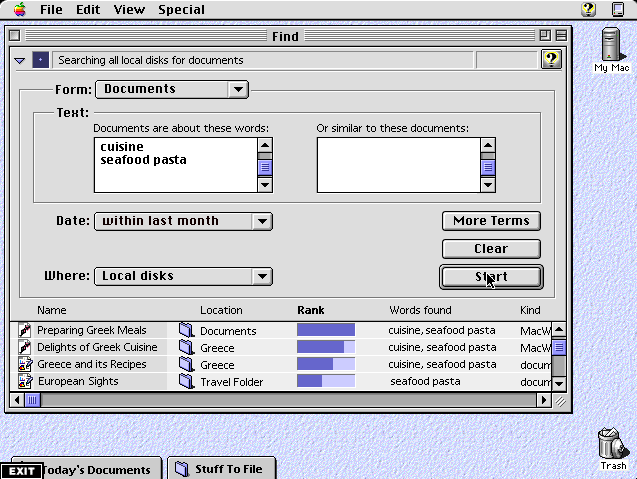
In the mid-90s, Apple embarked on an ambitious journey to develop a next-generation operating system called Copland.
It promised revolutionary features like preemptive multitasking, virtual memory, and advanced networking, which would have brought the Mac OS up to par with emerging systems like Windows NT.
However, the project faced significant challenges from the start, making it one of the most famous software project failures ever.
What made Copland particularly challenging was Apple’s decision to maintain backward compatibility with its existing Mac OS, a single-user, single-tasking system originally designed for the 68000 processor without memory protection or virtual memory capabilities.
The project suffered heavily from feature creep. With each new buzz, Apple would decide to add it to Copeland. Soon, it became clear that the project was unmanageable. Apple struggled to stabilize the code, and prototypes were slow and buggy. Despite having a rough demo, the project was also running years behind schedule, costing millions and eroding Apple’s position in the OS market.
Ultimately, Apple scrapped Copland and shifted gears, acquiring NeXT in 1997. This decision effectively rebooted Apple’s software strategy, allowing it to surpass competitors and secure its future as a tech giant.
Looking back, Copland’s failure highlights the dangers of trying to reinvent a legacy system without a clear roadmap, solid leadership, and a realistic understanding of technological limitations.
Hawaii missile false alarm

On the morning of January 13, 2018, Hawaiians woke up to a terrifying message: “Ballistic missile threat inbound to Hawaii. Seek immediate shelter. This is not a drill.”
It hit phones, blared over radios, and flashed on TV screens, inducing widespread panic as families scrambled for cover, thinking they had just minutes to act.
The chaos started when an employee at the Hawaii Emergency Management Agency (HI-EMA) accidentally clicked the wrong option during a routine drill.
Instead of selecting a test alert, they chose the live missile warning from a drop-down menu and confirmed it. Within two minutes, military officials confirmed there was no threat, but a full 38 minutes passed before the public received the official correction.
The delay wasn’t just a technical glitch. The alert system lacked a quick “false alarm” button, and manual processes slowed everything down.
Later investigations revealed deep flaws in the state’s emergency alert system, including poor training, confusing software design, and the absence of safeguards to prevent such mistakes.
NASA’s Mars Climate Orbiter

The Mars Climate Orbiter mission, launched by NASA in 1998, failed spectacularly in September 1999 due to a simple yet critical mistake: a unit conversion error.
The ground software provided by Lockheed Martin calculated force in English units (pound-force seconds), while the orbiter’s onboard systems expected metric units (newton-seconds).
This mismatch threw off the spacecraft’s trajectory by a factor of 4.45, sending it roughly 57 kilometers too low as it approached Mars, where it likely burned up in the planet’s dense atmosphere.
This wasn’t just a contractor oversight, though. The error slipped through multiple layers of NASA’s verification and validation checks, highlighting deeper issues with communication, management, and quality control.
Warnings from the navigation team about the spacecraft’s troubling course were dismissed, and a planned course correction was never executed, largely due to understaffing and procedural gaps.
Ultimately, this IT project example revealed the risks of NASA’s “faster, better, cheaper” approach at the time, serving as a stark reminder of the importance of clear communication, thorough testing, and rigorous systems engineering in complex space missions.
How many IT projects fail
Around 31% of IT projects are considered complete failures, while 52% are partially unsuccessful, according to a Procedia Computer Science paper.
Larger projects (over $1M) struggle even more, with a 50% higher risk of underperformance, highlighting the unique challenges of managing complex, high-budget operations.
Key factors to ensure a software project is successful
To set your software project up for success, it’s crucial to combine clear planning, effective communication, and the right technical tools.
Here are some critical factors to keep in mind:
- Clear project scope – Define what success looks like from the start to avoid scope creep.
- Effective communication – Keep everyone on the same page with regular updates and clear documentation.
- Agile development – Use flexible frameworks like Agile or Scrum to adapt quickly to changes.
- Realistic budgeting – Plan for unexpected costs and allocate resources wisely.
- Robust testing – Identify and fix bugs before they reach your users.
- Skilled project management – Ensure your project leaders have the experience and tools needed to guide the team.
Choosing the right tools and tech stack is just as important. They form the backbone of every successful project, supporting everything from code stability to easy scaling.
How to launch a successful software project with Hostinger AI Builder
If you’re ready to launch your next software project, Hostinger AI Builder might be the platform you need. It’s an AI software builder that helps developers and businesses build scalable, high-performance software without the need for manual coding.
Whether you’re building a SaaS product, an ecommerce site, or a mobile app, Hostinger AI Builder provides the tools and infrastructure you need to succeed.
How to avoid software project failure
Avoiding software project failure is all about creating a culture of collaboration, continuous improvement, and proactive problem-solving.
Here’s a quick recap of what to do to dodge common traps in software development:
- Communicate clearly and often
- Hire experienced project managers
- Develop an MVP to reduce risk
- Allocate resources wisely
- Test thoroughly before launch
- Stay humble and realistic about project timelines
- Align tech and business teams from the start
With the right mindset, tools, and planning, you can turn potential failures into resounding successes.
Join our Discord channel for more tips and inspiration on making the most of Hostinger Horizons. Connect with the community, get expert advice, and stay updated on the latest features!


Ksenija is a digital marketing enthusiast with extensive expertise in content creation and website optimization. Specializing in WordPress, she enjoys writing about the platform’s nuances, from design to functionality, and sharing her insights with others. When she’s not perfecting her trade, you’ll find her on the local basketball court or at home enjoying a crime story. Follow her on LinkedIn.