Top 8 metrics to measure email marketing performance
Jun 05, 2026
/
Larassatti D.
/
7 min Read
Email marketing performance metrics are the measurements used to evaluate how well your email campaigns reach, engage, and convert your audience. They help you understand not just what happened after an email was sent, but why it performed the way it did.
Measuring email marketing performance is essential because it turns intuition into insight. It lets you know whether your emails are building engagement, driving results, or quietly hurting deliverability and trust.
These are the eight common metrics to track your email marketing performance:
- Open rate shows how many recipients opened your email, making it a strong indicator of subject line effectiveness and sender trust.
- Click-through rate (CTR) measures how many recipients clicked a link, revealing how compelling and relevant your email content is.
- Conversion rate tracks how many recipients completed a desired action after clicking, making it the clearest indicator of business impact.
- Bounce rate reflects how many emails failed to reach inboxes due to invalid addresses or technical issues, which directly affects deliverability.
- Unsubscribe rate indicates how well your content and sending frequency align with audience expectations.
- Email deliverability measures your ability to land in inboxes rather than spam folders, influencing whether your campaigns are seen at all.
- List growth rate shows whether your audience is expanding faster than it’s shrinking, which is critical for long-term scalability.
- Engagement over time looks at trends in opens and clicks across months, helping you identify loyal subscribers and disengaged audience segments.
To make these metrics truly useful, view them together within a clear strategy. When you tie metrics to defined goals and track trends over time, email performance data becomes a tool for continuous improvement, instead of just reporting.
1. Open rate
An open rate is the percentage of subscribers who opened your email out of the total number of emails successfully delivered.
The formula to calculate your email open rate is:
(Total emails opened ÷ Total emails delivered) × 100
Having a high email open rate means your subject line hooks your audience.
On average, email open rates sit at around 35.63% across industries and email marketing platforms, which makes it a useful benchmark when evaluating your own performance.
To improve this metric, focus on:
- Writing clear, curiosity-driven subject lines that align with the email’s actual content.
- Using a consistent and recognizable sender name so subscribers know who the email is from.
- Sending emails at times when your audience is most likely to check their inbox.
Note that recent privacy updates like Apple Mail Privacy Protection (MPP), can distort these numbers by automatically “opening” emails in the background.
So, while it remains relevant for checking initial engagement, make sure to add more email marketing metrics to evaluate efforts accurately.
2. Click-through rate (CTR)
A click-through rate (CTR) measures how many people clicked a link or image inside your email.
While the open rate measures interest in the subject, the CTR indicates how relevant your content actually is. A high CTR signals that your call-to-action (CTA) is clear and your email content is easy to navigate.
This is the formula to find your email CTR:
(Number of clicks ÷ Total emails delivered) × 100
For a deeper engagement signal, you can also track the click-to-open rate (CTOR) of your email. It compares clicks to unique opens, so you can see how well your content performed specifically for those who viewed it.
To calculate click-to-open rate (CTOR), use this formula:
(Unique clicks ÷ Unique opens) × 100
- Unique opens = the number of individual recipients who opened a specific email at least once.
- Unique clicks = the number of individual recipients who clicked at least one link in that email.
To improve your CTR or CTOR:
- Use a focused CTA with concise, action-oriented copy.
- Keep your email layout mobile-friendly, as this has been shown to increase unique mobile clicks by up to 15%.
- Remove unnecessary links or visual distractions that compete with the main action.
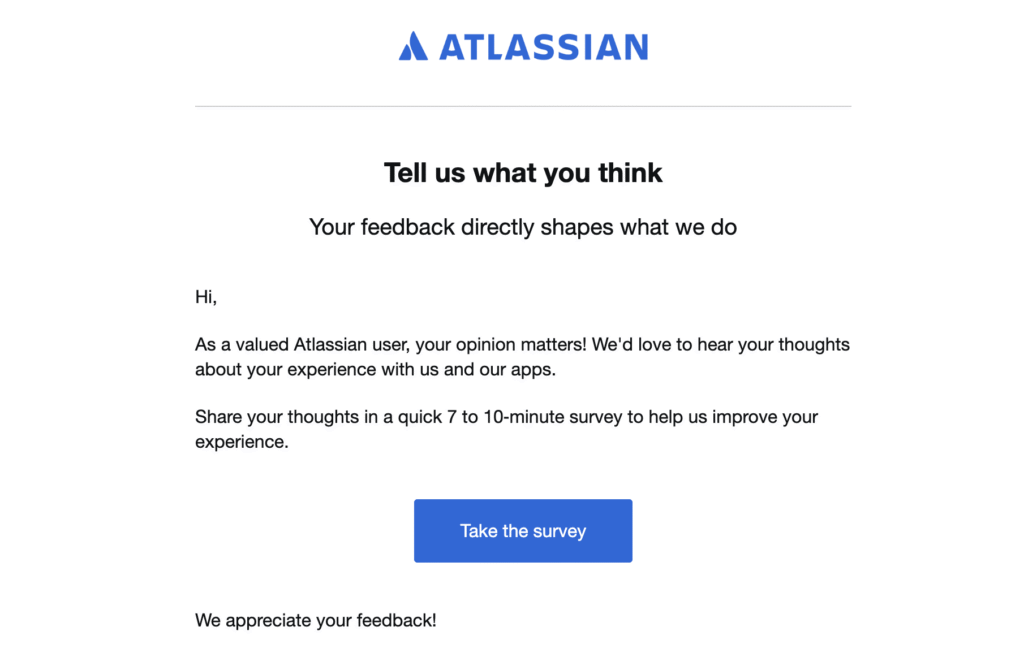
3. Conversion rate
The conversion rate measures the percentage of recipients who completed a specific action after clicking a link in your email. The desired action can include making a purchase, signing up for a webinar, or downloading a resource.
An email conversion rate is considered the most important metric because it shows how much value your email campaigns create compared to the effort you put into them, especially when your main goal is to make money from your email marketing campaign.
To track conversions accurately, every email campaign should be tied to a clear goal.
For example, an abandoned cart email is typically sent to encourage customers to return and complete a purchase, while a lead-generation email aims to encourage downloads or registrations.
Here are some email marketing tips focusing on how to improve your conversion rate:
- Define a clear conversion goal for each email.
- Use Urchin Tracking Module (UTM) parameters, which are small tags added to links, to identify which type of email campaigns drive the most clicks and conversions.
- Set up goals or events in your analytics tool to track completed actions.
4. Bounce rate
A bounce rate is the percentage of emails that aren’t delivered to the recipient’s inbox. It has two different types:
- Hard bounces are permanent delivery failures, usually caused by a nonexistent or invalid email address.
- Soft bounces are temporary issues that come from a full inbox or a temporary server problem.
A high bounce rate damages your deliverability, which can lead to email providers flagging you as a spammer.
To keep your email bounce rate low, make sure to keep your list healthy by:
- Using a double opt-in process where users must confirm their subscription.
- Cleaning your email list regularly by removing inactive or invalid addresses.
- Monitoring your email provider’s feedback loops to identify spam complaints and reduce deliverability issues.
5. Unsubscribe rate
The unsubscribe rate tracks the percentage of recipients who opt out of your mailing list after receiving an email campaign. It’s a clear signal of content fatigue, irrelevant messaging, or emails being sent too frequently.
As a general benchmark, a healthy unsubscribe rate should be below 0.5% per campaign. Numbers above this level indicate a mismatch between your content and audience expectations.
Do the following to keep your unsubscribe rate under control:
- Monitor unsubscribe trends whenever you change your sending frequency or test a new content style.
- Set clear expectations at signup to let subscribers know what type of content they’ll receive.
- Segment your audience to send more relevant messages instead of one-size-fits-all emails. In fact, 54% of marketers personalize their email content, proving that relevance plays a major role in engagement and retention.
6. Email deliverability
Email deliverability shows how often your emails successfully land in the recipient’s inbox rather than the spam folder.
Put simply, email deliverability is where an email actually ends up, rather than just where it is sent. This makes it a strong indicator that your emails reach your audience.
Your deliverability depends on how trustworthy email providers consider you as a sender.
Engagement signals such as opens, clicks, spam complaints, and unsubscribes play a key role in determining your sender reputation.
In addition, email providers track your past behavior through your Internet Protocol (IP) and domain health to decide whether your future emails can be trusted.
Setting up DomainKeys Identified Mail (DKIM) and Sender Policy Framework (SPF) authentication helps verify that your emails are legitimate and haven’t been altered, reducing the chance of them being flagged as spam.
You can do this by adding the DKIM and SPF records provided by your email service provider to your domain’s DNS settings.
Apart from that, here’s how you can maintain strong deliverability:
- Avoid spam-triggering language in subject lines and email copy.
- Use inbox placement tools like GlockApps to monitor where your emails land.
- Warm up new IP addresses gradually by increasing sending volume over time.
- Send emails consistently and focus on engaged subscribers rather than inactive ones.
7. List growth rate
The list growth rate measures how quickly your email list is expanding over time. You can calculate it using this formula:
(New subscribers − Unsubscribes) ÷ Total list size × 100
Because every email list naturally loses subscribers due to churn, maintaining a positive growth rate is essential for scaling your email marketing efforts.
Here’s how to build an email list sustainably and ethically:
- Offer valuable lead magnets such as ebooks, templates, or exclusive content.
- Use clear, well-placed opt-in forms across your website.
- Encourage referrals by rewarding existing subscribers for sharing.

Avoid buying email lists or relying on aggressive pop-ups. These tactics often lead to poor engagement, higher spam complaints, and potential account suspension.
In the long run, list quality matters more than size. A smaller, engaged audience will outperform a large, uninterested one.
8. Engagement over time
Engagement over time focuses on analyzing open and click trends across several months, rather than judging performance based on a single email marketing campaign.
This long-term view helps you identify which subscribers are consistently engaged and which have become inactive.
By segmenting your audience into active and inactive groups, you can tailor your messaging more effectively.
For example, you might send a “We miss you” email with a helpful resource or limited-time incentive to re-engage subscribers who haven’t opened an email in 60-90 days.
Follow these tips to maintain healthy long-term engagement:
- Review engagement trends monthly instead of reacting to short-term fluctuations.
- Create re-engagement campaigns for inactive subscribers before removing them.
- Reduce sending frequency or adjust content for segments showing declining engagement.
Tracking these patterns helps you decide on action points to keep your list responsive, improve deliverability, and ensure your email marketing efforts continue to perform over time.
Best email marketing tools to track and improve performance
Most email marketing tools today come with built-in analytics that help you monitor the key metrics we’ve discussed, making it easier to see what’s working and what you need to improve.
Many platforms also include advanced features and integrations that let you create landing pages to capture leads, segment audiences, generate reports, and automate follow-ups.
This makes it easier to track detailed metrics and refine your email campaigns without juggling between multiple tools.
Here are some of the best email marketing platforms that you can choose from:
- Hostinger Reach. A beginner-friendly, AI-powered email marketing software that helps you create professional, mobile-friendly emails from simple prompts. It syncs contacts, tracks opens and clicks, and simplifies campaign management with automations.
- Mailchimp. A versatile, all-around tool with drag-and-drop builders, automation workflows, and analytics dashboards for tracking campaign performance.
- MailerLite. Simple and intuitive interface, ideal for bloggers and small businesses needing automation, landing pages, and basic analytics.
To get the most value from these tools, set clear goals for each campaign and review reports regularly. Look for patterns over time, identify your best-performing content, and use those insights to refine future emails.
If you’re doing email marketing alongside other channels, connect your email platform to a broader marketing analytics tool like Google Analytics so you can see how email supports your growth.
How to create an effective email marketing strategy
Email marketing metrics become truly valuable when they’re applied within a broader strategy. This means you’re having a foundation that defines how you plan, execute, and improve your campaigns over time.
A strong strategy gives your email efforts direction. It helps you set clear goals for each campaign, decide which metrics actually matter for those goals, and turn performance data into consistent, repeatable improvements.
So, instead of reacting to numbers in isolation, you’re using insights to refine targeting, messaging, timing, and offers with purpose.
Most importantly, a strategy keeps your email marketing aligned with real business outcomes. It ensures that metrics aren’t just tracked, but used to create action points that bring greater results over time.
If you’re ready to move from measuring performance to executing with intent, learn how to build an email marketing strategy with our guide. New to email marketing? Start with our beginner’s guide on what is email marketing to get started.
All of the tutorial content on this website is subject to Hostinger's rigorous editorial standards and values.

Larassatti Dharma is a content writer with 4+ years of experience in the web hosting industry. She has populated the internet with over 100 YouTube scripts and articles around web hosting, digital marketing, and email marketing. When she's not writing, Laras enjoys solo traveling around the globe or trying new recipes in her kitchen. Follow her on LinkedIn