What is agentic AI? Definition, examples, and how it works
Mar 10, 2026
/
Matleena S. & Aris S.
/
8 min Read
Agentic AI is an advanced form of artificial intelligence that can independently set goals, plan, reason, and take action to achieve a specific objective with minimal human oversight.
Unlike traditional AI, which is reactive and responds to direct commands, agentic AI is proactive and can initiate tasks on its own. It is characterized by its autonomy, goal-orientation, reasoning, adaptability, and collaborative capabilities.
To help you grasp the cutting-edge of AI, we’ll break down agentic AI, explaining how it plans, reasons, and acts to achieve goals. Discover practical examples of its use in business, finance, and healthcare, and learn exactly how it differs from generative AI to understand which is the right tool for the job.
What is agentic AI?
Agentic AI is a type of artificial intelligence that reacts to commands and actively takes initiative to accomplish specific goals.
While traditional AI systems are designed to carry out predefined tasks in response to clear input (like answering questions or sorting data), agentic AI operates with a high degree of autonomy. It can function independently, perceive its environment, analyze data, “reason” about the next action, and act to achieve a goal without needing constant human intervention.
To put it into perspective, imagine a self-driving car. Traditional AI would simply follow pre-programmed commands, such as “navigate from point A to point B.”
Agentic AI goes a step further. It’s capable of analyzing changes in the environment (for example, road conditions or traffic patterns), reasoning potential obstacles, and adapting its behavior (like rerouting or slowing down) to reach the destination safely.
🤖 Agentic AI vs AI agent
Despite their similar names, agentic AI is different from AI agents. AI agents are built upon reactive AI, designed and trained to complete a specific, well-defined task. They don’t have the ability to analyze dynamic data and adjust their actions autonomously based on the outcome.
This shift from a reactive model (where AI only reacts to input) to a proactive one (where AI takes independent action to achieve an outcome) is one of the defining features of agentic AI.
Whether optimizing business processes or managing a smart home, agentic AI doesn’t just follow instructions – it anticipates needs, solves complex problems, and learns from experience to improve its performance over time.
How does agentic AI work?
To understand how agentic AI works, think of it as a cycle of perception, reasoning, action, and learning. This feedback loop allows the AI to function autonomously, make decisions, and take actions that bring it closer to its goal. Let’s explore each stage in detail:
1. Perception
This is the first stage, where the AI “perceives” its environment by collecting data from its surroundings. It could use hardware or fetch data from external systems by setting up the model context protocol (MCP) and application programming interface (API).
In a smart factory, for example, the AI might collect real-time data on machinery conditions. Meanwhile, agentic AI in a self-driving car gathers data through cameras, LiDAR, and radar to understand the road and its surroundings.
2. Reasoning
Once the data is collected, the AI processes it to understand the situation. It breaks down complex problems into smaller, manageable tasks.
For example, an AI tasked with optimizing a supply chain might receive data about current stock levels, supplier delays, and customer demand. The AI then analyzes this information and determines the best course of action, such as adjusting production schedules or finding alternative suppliers.
An agentic AI on a self-driving car, on the other hand, may use data about the current traffic situation, road conditions, and weather.
3. Action
After reasoning through the data, the AI takes actions to achieve the goal. In the supply chain example, this could involve rerouting a shipment, making a recommendation to users, or activating a system (such as turning on a machine or adjusting a thermostat).
Meanwhile, in an autonomous vehicle, this stage involves adjusting the car’s speed, changing direction, and stopping when necessary.
4. Learning
The final stage of the agentic AI cycle involves learning from the previous actions’ outcomes. It assumes questions like:
- Did the action help the AI achieve its goal?
- If not, what can be improved?
- Would I reach the goal if I did A instead of B?
The AI adjusts its behavior based on this feedback, becoming more effective and efficient over time. For instance, a warehouse AI that detects a bottleneck in the supply chain will learn from the delay and improve its future actions by adjusting routing or scheduling.
This continuous feedback and refinement cycle allows agentic AI to operate with increasing efficiency and autonomy. With each iteration, it becomes better at understanding complex situations and optimizing its actions to achieve its goals.
Key characteristics of agentic AI
Here are the core characteristics that define agentic AI, allowing it to function efficiently and independently:
Autonomy
As the cornerstone of agentic AI, autonomy refers to the system’s ability to operate almost entirely independently. This allows it to complete tasks without constant human intervention.
For instance, in a smart home, an autonomous assistant could monitor energy consumption, detect anomalies, and adjust the thermostat settings accordingly to ensure optimal comfort and efficiency. The system takes the initiative and doesn’t need humans to manually adjust the settings.
Goal-oriented
Agentic AI is specifically designed to achieve goals, rather than simply responding to commands. Once it understands its objectives, it breaks them down into actionable tasks and carries them out autonomously.
For example, an AI in customer support may aim to resolve issues efficiently. It would first assess the customer’s query, select the best response or action (e.g., providing troubleshooting steps, routing to a human agent), and then execute it automatically.
Reasoning and planning
Agentic AI doesn’t just act blindly; it reasons through complex problems and plans its actions. By analyzing multiple scenarios and considering possible outcomes, it formulates a strategy to achieve its goals.
For instance, an AI agent tasked with optimizing a supply chain would not simply follow a preset routine. It would analyze dynamic inventory data, assess current demand, and predict future needs, allowing it to plan for delays, reallocate resources, or streamline operations to minimize inefficiencies.
Adaptability
In real-world scenarios, things rarely go according to plan, and agentic AI must adapt to new information or changing conditions.
For example, an AI-powered robot in a warehouse might encounter unexpected delays or changes in inventory levels. It must adapt by finding an alternate route or adjusting its task priorities, ensuring that operations continue smoothly even in the face of uncertainty.
Proactive nature
One of the most powerful aspects of agentic AI is its ability to be proactive. Instead of waiting for instructions, agentic AI can anticipate problems and take action before they escalate.
Take the example of a predictive maintenance system in a manufacturing facility: the AI monitors machine performance and proactively schedules maintenance before a breakdown occurs, saving time and reducing costs.
Collaboration
Agentic AI can work in collaboration with other AI systems or human teams. This allows for more effective problem-solving and decision-making.
For example, an AI in the financial sector could work alongside human analysts to identify fraudulent transactions, improving accuracy and efficiency. It could autonomously flag suspicious activities while allowing the human team to focus on more complex cases.
Examples of agentic AI
Agentic AI is already transforming industries by taking on complex, multi-step tasks that were previously time-consuming or required human intervention. Let’s look at some real-world examples of how agentic AI is applied across various sectors:
Business process automation
The main role of AI in businesses revolves around automating administrative and operational tasks, allowing human employees to focus on higher-value work. For example:
- Invoice processing. AI agents can handle the entire invoicing process, like generating invoices, sending reminders for overdue payments, and even updating accounting records. This eliminates human error and accelerates payment cycles.
- Customer service. AI-driven chatbots can answer customer inquiries, resolve complaints, and offer personalized product recommendations. Hostinger is one of many companies already implementing AI systems to instantly answer inquiries or troubleshoot product-related issues for better customer satisfaction.
👋 Meet Kodee, our MCP-powered AI assistant
Hostinger users can chat with Kodee, our AI assistant, anytime to ask questions, manage their virtual private servers, or modify their WordPress sites.
You can access this tool from hPanel, Hostinger website builder interface, or WordPress admin panel.
Manufacturing
The manufacturing sector is benefiting greatly from agentic AI, particularly in optimizing operations and reducing downtime. It can help with tasks such as:
- Predictive maintenance. AI agents can monitor equipment in real time, analyze sensor data, and predict when a machine might fail. Before the failure happens, the agent can schedule maintenance, order parts, and even reroute production to minimize downtime, keeping the factory running smoothly.
- Supply chain optimization: Agentic AI can predict fluctuations in demand and supply, enabling businesses to adjust their production schedules accordingly. It can also handle tasks like managing inventory levels, ordering materials, and coordinating shipments without human oversight.
Financial services
The financial sector is also seeing a huge impact from agentic AI, with applications in areas like risk management and trading. Examples include:
- Fraud detection. AI agents monitor transaction data in real time, using advanced algorithms to detect patterns indicative of fraudulent behavior. When suspicious activity is detected, the system can autonomously freeze accounts, notify customers, and even trigger further investigations.
- Automated trading. AI agents can autonomously execute trades based on market conditions, continuously analyzing vast amounts of financial data to optimize investment strategies. In high-frequency trading, agentic AI can make decisions in milliseconds, far faster than a human trader could react.
Healthcare
In healthcare, agentic AI is being used to support both diagnostic tasks and treatment plans, improving outcomes and efficiency. Examples include:
- Diagnosis assistance. AI systems can autonomously analyze medical records and imaging data (e.g., X-rays, MRIs) to detect diseases or abnormalities. For example, an AI system might scan a mammogram and identify early signs of breast cancer, alerting a doctor to review the case.
- Personalized treatment plans. Agentic AI can analyze a patient’s medical history, genetic data, and current health status to recommend personalized treatment options. It can autonomously suggest medications, lifestyle changes, or therapy plans and adapt the treatment as new information becomes available.
Agentic AI vs generative AI
Agentic AI and generative AI are two distinct types of artificial intelligence, each serving a different purpose. While they can sometimes work together, they are designed to handle different tasks.
The primary goal of generative AI is to create new content. This could include generating text, creating images, composing music, or even writing code. Generative AI systems analyze large datasets to learn patterns and generate new, original content based on that data. For example:
- Chatbots (like ChatGPT) generate responses to user queries based on context, offering personalized conversations.
- DALL-E generates images from textual descriptions, producing original artwork based on the input it receives.
In contrast, agentic AI is focused on autonomous action to achieve specific goals. While generative AI creates content, agentic AI is designed to take actions and make decisions that move toward an objective. It perceives its environment, reasons about the best course of action, and carries out tasks to achieve goals without needing constant human supervision. Examples include:
- Autonomous vehicles that navigate roads, avoid obstacles, and make driving decisions based on real-time data to get from one location to another.
- Predictive maintenance systems in factories that detect wear on machinery and schedule repairs automatically, preventing downtime.
| Aspect | Generative AI | Agentic AI |
| Purpose | Create new content (text, images, music) | Achieve specific goals through action |
| Process | Reactive (generates based on input) | Proactive (perceives, reasons, acts) |
| Primary goal | Produce content based on data patterns | Complete tasks autonomously to reach an outcome |
| Examples | ChatGPT, DALL-E, Claude | Autonomous vehicles, predictive maintenance, smart assistants |
Why is agentic AI important?
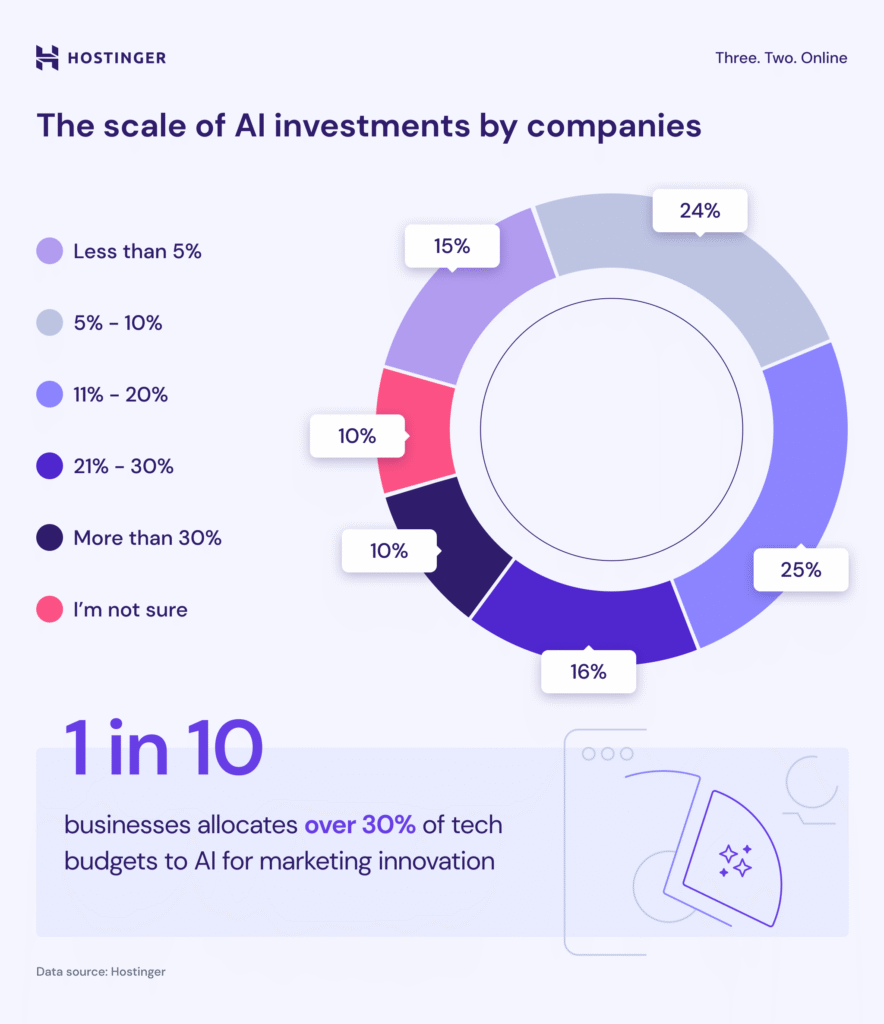
Agentic AI is crucial for businesses because it automates complex, multi-step tasks, increasing efficiency and reducing the need for human intervention. It enables systems to operate autonomously, saving time and minimizing errors.
In industries like manufacturing and healthcare, agentic AI optimizes operations, predicts maintenance needs, and supports decision-making, allowing employees to focus on more strategic tasks.
Beyond operational efficiency, agentic AI drives innovation by providing insights and automating processes that were previously too intricate to manage. Its continuous learning and adaptability ensure systems improve over time, making it a powerful tool in fast-changing fields like finance.
As AI evolves, it holds immense potential to reshape industries, create new business models, and open up opportunities for growth.
Agentic AI trends and future outlook
According to the latest AI statistics, by 2030, AI is projected to contribute over $15.7 trillion to the global economy.
This surge reflects growing AI adoption across various industries, from finance to healthcare. Companies are turning to agentic AI to improve efficiency, reduce costs, and innovate their operations. In sectors like finance, AI systems are already automating tasks such as fraud detection and trading, enhancing performance and reducing reliance on human oversight.
A key trend driving this growth is the integration of Large Language Models (LLMs). Initially used for content generation, LLMs are now enabling agentic AI to reason and make decisions, improving its ability to guide autonomous behavior. This shift is making agentic AI more intelligent and more capable, especially in decision-making processes that require adapting to new data or unforeseen circumstances.
In the future, automation platforms like Hostinger’s Horizons and n8n will make it easier for businesses to implement agentic AI, democratizing access to this powerful technology. As more industries adopt these systems, agentic AI will continue to drive growth, efficiency, and innovation across various sectors.


Matleena is a seasoned Content Writer with 5 years of content marketing experience. She has a particular interest in emerging digital marketing trends, website building, and AI. In her free time, Matleena enjoys cups of good coffee, tends to her balcony garden, and studies Japanese. Follow her on LinkedIn

Aris is a Content Writer specializing in Linux and WordPress development. He has a passion for networking, front-end web development, and server administration. By combining his IT and writing experience, Aris creates content that helps people easily understand complex technical topics to start their online journey. Follow him on LinkedIn.