How to start a clothing brand in 10 steps
Mar 10, 2026
/
Larassatti D.
/
11 min Read

Beyond the quality apparel, a clothing brand represents a distinct identity, vision, and message that customers emotionally connect with. Launching a clothing business means creating pieces that reflect your values while ensuring your operations, pricing, and marketing strategies are sustainable and profitable.
Here’s a quick breakdown of the ten steps to start a clothing brand:
- Pick your niche and audience. Identify your fashion category and understand who your ideal customers are.
- Shape a brand identity. Define your brand’s personality, design style, and tone of voice.
- Verify the availability of your preferred domain name. Check whether your brand name is available as a domain so you can secure your online presence early.
- Claim your brand. Register your brand name, logo, and domain to secure ownership and establish your online presence.
- Develop a business plan. Outline your goals, strategies, and financial roadmap.
- Craft your clothing collection. Create garments that embody your brand’s essence and appeal to your audience.
- Plan your production method. Decide whether to use print-on-demand, dropshipping, or bulk manufacturing.
- Determine your pricing strategy. Set prices that strike a balance between costs, profits, and brand perception.
- Create an online store. Build a website where customers can explore and purchase your products.
- Launch and promote your brand. Generate excitement, attract attention, and start selling.
Starting a clothing brand is both an art and a business. The key is to start small, stay consistent, and adapt as you learn. Every successful brand began with an idea and the courage to bring it to life, and yours can too!
1. Decide on a niche and target audience
Think of your niche as the intersection between what you want to create, what customers are looking for, and what competitors aren’t offering yet.
Sometimes the best niche starts from a personal concern – something you wanted to buy but couldn’t find in the market.
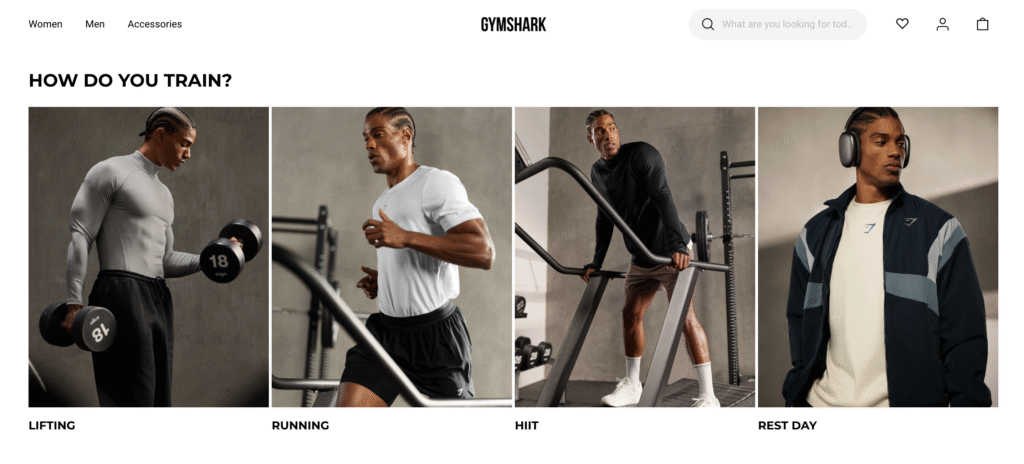
Gymshark (now a billion-dollar fitness brand) started because the founder, Ben Francis, couldn’t find gym clothes that fit the aesthetic he wanted. Most athletic wear at the time was baggy and generic, and he was looking for fitted, modern gym wear. Instead of settling, he created what he wanted to wear and discovered thousands of other gym-goers wanted the same thing.
Once you have a niche idea, research your target audience by analyzing:
- Demographics. Picture your audience’s age, location, gender, lifestyle, and spending habits. For instance, if you’re targeting Gen Z, you may want to create bold, statement streetwear, whereas millennials tend to lean toward minimalist, versatile basics.
- Interests and style preferences. What aesthetics are they drawn to? What influencers or brands do they follow?
- Competitor landscape. Study brands in the same niche. Examine their product range, pricing, customer reviews, and marketing strategy.
Identify what they do well, then look for gaps you can fill, such as improving fabric quality, offering inclusive sizing, or developing a unique brand story.
2. Build your brand identity
Brand identity encompasses both visual elements, such as your brand name, logo, typography, and color palette, as well as intangible aspects, including your tone of voice, messaging, and the emotions you evoke.
Having a clear identity is crucial when creating your clothing brand, as perception matters just as much as the product itself in the fashion industry. Customers often choose a specific brand because it evokes a specific emotional response.
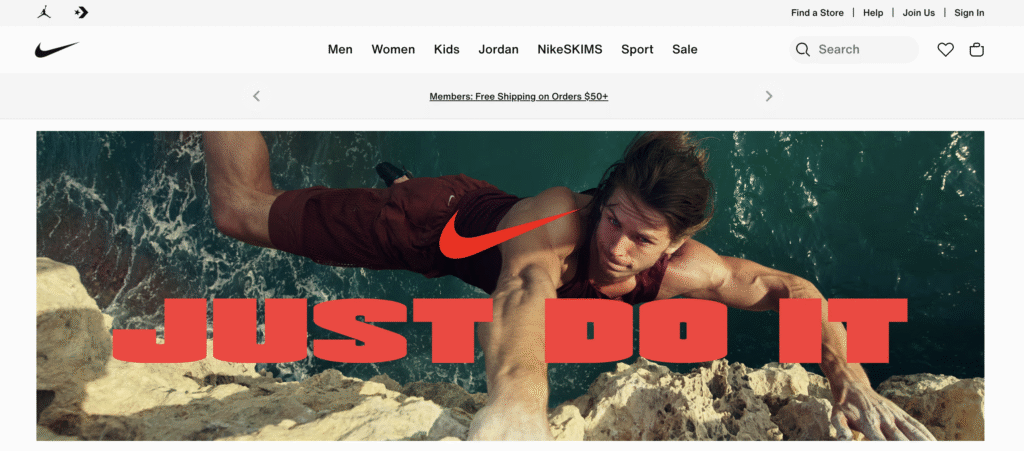
Take Nike, for example. The brand doesn’t just sell athletic wear — it also sells motivation and empowerment. Its famous slogan, “Just Do It,” isn’t about the product itself: it’s actually about how wearing Nike makes people feel confident, driven, and capable of pushing their limits.
Similarly, Patagonia goes beyond outdoor jackets and gear. People buy Patagonia not just for the quality of the products, but because the brand embodies environmental responsibility and adventure.
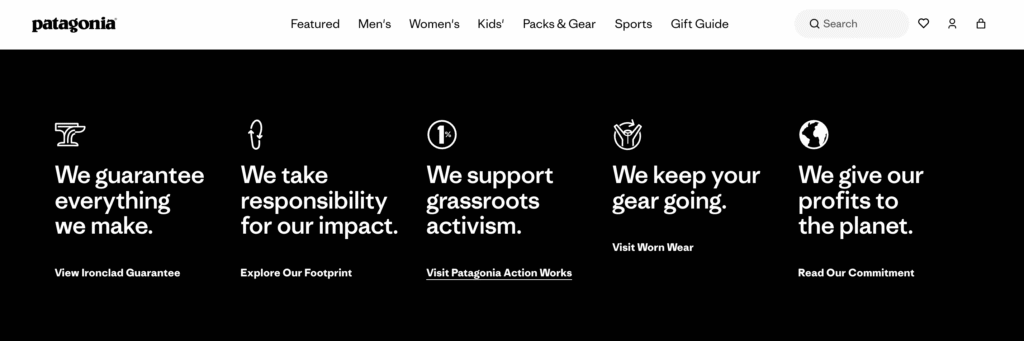
These brands succeed because they offer a way to express identity, values, and lifestyle through their product branding. That’s the power of a well-crafted brand identity, and it’s precisely what your clothing line should aim to achieve.
So, when building your clothing brand, think about the emotional experience you want to convey. A strong brand identity answers:
✅ What does our brand stand for?
Example: “We create everyday essentials using ethical fabrics.”
✅ What makes us different?
Example: “We focus on sustainable materials, limited releases, and bold graphic designs that set us apart from mainstream brands.”
✅ How do we want to be perceived?
Example: “We aim to be seen as chic and premium while remaining accessible and wearable for everyday life.”
If you try to sell clothes for everyone, your brand becomes generic and forgettable. Instead, narrow it down to a specific lifestyle, aesthetic, or customer group.
3. Check your brand’s domain name availability
Finding a domain name is a crucial step in establishing your brand’s online presence – not just for building a website, but also for protecting your brand. Even if you’re not ready to launch your clothing brand’s site yet, securing a domain early prevents others from claiming it first.
This is important because unused domains can be parked, resold at high prices, or even misused for spam or malicious activities, which can harm your brand reputation.
Ideally, your domain name should match your clothing brand name, allowing people to remember it easily and find you quickly. In case the exact match isn’t available, you can explore variations, like using different domain extensions such as .shop, .store, or .clothing, as long as the name remains clear and distinct.
If you already have a domain name idea, use our domain name checker tool to see if it’s still available:
Domain Name Checker
Instantly check domain name availability.
4. Check and register your brand’s trademark
Look up your brand name in your country’s official trademark database, like the United States Patent and Trademark Office (USPTO) in the US. Check if the name is already registered, specifically within the clothing or apparel category.
Even if your desired brand name already exists in a different industry, you may still be able to register it for use in the clothing industry. This step helps you avoid accidental infringement and ensures no one else can take legal ownership of the name.
Once confirmed, register your trademark with your local government or trademark office. The process involves submitting an application, providing a logo or wordmark, and paying a filing fee. After approval, you’ll receive exclusive rights to use that name or logo for your clothing business.
Protecting your brand early not only gives you legal ownership but also strengthens your brand credibility. Customers feel more confident buying from a brand that is established and legitimate, and you’ll avoid costly legal disputes if someone tries to copy your brand identity.
5. Create a business plan
A clothing line business plan serves as a roadmap, transforming your ideas into a structured action plan that helps you stay organized and focused. This way, you can prevent costly mistakes and communicate your vision to potential investors or partners more easily.
Your business plan doesn’t need to be complicated. It can be as simple as a document or a slide deck that includes:
Brand overview (mission, vision, niche)
Clearly describe what your clothing brand stands for. Your mission explains why the brand exists, while your vision expresses what you want to achieve in the long term. This section should also define your niche and the audience you’re targeting.
Then, state the problem you’re solving in your brand overview section, such as offering stylish athletic wear that’s also sustainable or providing sustainable fashion options made from eco-friendly materials. This way, you stay aligned with your goals and provide external parties with a clear understanding of your brand direction.
Market research and competitor analysis
Research similar brands in your niche to understand how they position themselves in the market. Look into their products’ pricing, the tone and style of their branding, and how customers perceive them.
Reading customer reviews and comments is especially valuable, as they reveal what shoppers love and what they feel is missing.
By analyzing this data, you can identify gaps and opportunities your brand can fill. This will guide your strategy and give you a realistic idea of the profitability of your clothing business.
Then, define your target audience by describing their demographics (age, location, lifestyle) and psychographics (values, interests, fashion preferences). To make this more concrete, create a buyer persona – a fictional profile representing your ideal customer.
This helps you visualize who you’re designing for and make more strategic decisions in product design, branding, and marketing.
Pricing and financial goals
This section explains how your brand makes money. Outline your cost of production (materials, human resources, packaging), then determine your selling price and expected profit margin. You can structure this section by including:
- Break-even point. Say your initial investment is $2,000, and you profit $40 per hoodie, you need to sell 50 hoodies to break even.
- Revenue projection. State your initial sales goal within a specific time frame, such as selling 200 products in the first quarter.
- Funding needs. If additional funds are required, specify the amount and its intended purpose.
We’ll dive deeper into product pricing later in the seventh step.
Production and logistics plan
Describe your plan for how your clothing goes from design to delivery. This section should outline:
- How and where your products will be made (like producing in a local manufacturer or overseas factory, print on demand (POD), or handmade)
- How inventory will be managed (stored at home, in a warehouse, or no storage needed if using POD)
- How orders will be fulfilled (self-shipping or through a third-party logistics provider)
Marketing and sales strategy
Explain how you plan to reach your audience and generate sales. Start by outlining the channels you’ll use to promote your brand, such as social media platforms like Instagram, TikTok, or Pinterest.
You can also explore pop-up events and local markets with themes that align with your brand, allowing you to connect directly with potential customers.
Begin with the resources you already have. For example, leverage the social media platform where you’re most active to share your designs. You can offer limited discounts in exchange for honest reviews, which not only builds credibility but also provides valuable feedback to refine your products.
To ensure you have a clear direction, set marketing and sales goals using the SMART method (Specific, Measurable, Achievable, Relevant, Time-bound). This helps you track progress, stay focused, and adjust your strategy as your brand grows.
6. Design your product collection
Focus on creating a cohesive first collection, also known as a capsule collection. Starting with 3-6 thoughtfully designed core pieces allows you to stay within budget, test the market, and refine styles before expanding.
Quality and consistency matter more than quantity. The right fabrics, finishes, and packaging can make your pieces memorable and instantly recognizable, helping you stand out when you officially start a clothing line.
Also consider the brand-defining details like fit, colors, stitching, trims, and labels. These elements may seem subtle, but they play a major role in communicating your brand’s identity and quality.
For instance, if sustainability is part of your brand’s story, consider using organic cotton or recycled fabrics. If your brand is positioned as premium, focus on fabric weight, texture, and construction quality.
In terms of designing your own clothes, there are multiple ways to try, according to your skill level and resources:
- Sketching by hand. Great for brainstorming ideas and quickly putting concepts on paper. It’s simple, cost-effective, and lets you explore different styles before committing to a final direction.
- Using digital design tools. Software like Adobe Illustrator or CLO 3D lets you create precise technical drawings and realistic 3D simulations. These files can later be translated into tech packs for manufacturing.
- Working with a fashion designer or freelancer. If you have a vision but lack design experience, collaborate with a designer who will turn your concepts into professional tech packs that manufacturers use to produce samples.
7. Source manufacturing or production
Choose a sourcing method based on your budget, desired level of customization, and the amount of inventory you wish to manage. Here’s a breakdown of the common clothing sourcing methods you can try:
Print on demand (POD)
POD is ideal for new brands or those testing the market. You simply need to upload your designs to a supplier platform like Printful or Printify. When someone places an order, the supplier prints the design onto the garment and ships it directly to the customer. It’s a quick way to validate design ideas with minimal financial risk.
✅ Pros: No inventory, no shipping logistics, low startup cost.
❌ Cons: Limited control over fabric quality and product customization.
Dropshipping
Dropshipping is similar to print on demand, but instead of customizing the clothes yourself, you sell ready-made garments supplied by a manufacturer. They handle storage and shipping, and you focus on marketing and sales.
✅ Pros: No upfront inventory cost and minimal operational work.
❌ Cons: Limited branding options, and quality may vary across suppliers.
Print on demand vs dropshipping
Compare how print on demand differs from dropshipping in more details by reading our guide.
Bulk manufacturing (cut and sew production)
If you want a fully custom clothing brand (unique patterns, custom fabrics, custom labels, and complete creative control), bulk manufacturing is the way to go. With this method, you work directly with a manufacturer to develop your collection from the ground up.
✅ Pros: Highest level of customization, strongest brand identity, better profit margins.
❌ Cons: Requires a higher upfront investment, longer production time, and you are responsible for storing and managing inventory.
Handmade or manual sewing (including crochet and knitting)
Handmade production is ideal for artisanal or limited-edition clothing lines, such as crochet tops, custom denim, or hand-embroidered pieces. Instead of outsourcing, you produce each piece yourself (or with a small in-house team), making every item unique.
✅ Pros: Very low material cost upfront, high perceived value, strong craftsmanship story.
❌ Cons: Time-intensive, difficult to scale, limited production volume.
Remember that it’s completely okay to start small, as you can always evolve your approach as you grow. For example, start with print-on-demand or small batches to test demand, then transition to bulk manufacturing for higher margins and more control over product quality and design.
8. Set your product price
Start by calculating your cost of goods sold (COGS), which includes the total production cost, such as fabric, printing, labels, packaging, and any labor costs involved.
Then, add your desired profit margin. The fashion industry commonly uses keystone pricing, which doubles or triples the production cost to determine the retail price.
Beyond that, pricing is also about perception. The price tag communicates where your brand sits in the market. Higher prices can signal exclusivity and premium quality, while lower prices position your brand as affordable and accessible.
For instance, luxury brands like Aritzia price their dresses around $150-300 because their audience values premium fabrics, elegant design, and a high-end shopping experience.
Meanwhile, fast-fashion brands like H&M and Uniqlo price similar clothing at $25-60, as their goal is accessibility and mass appeal.
Both sell clothing, but the pricing shapes how customers perceive the brand.
➡️ To dive deeper into strategies like value-based pricing or competitive pricing, check out our guide on how to price a product.
9. Build your online store
To start selling clothing, you need a place where people can browse, shop, and purchase your products.
Online marketplaces like Etsy, as well as social media platforms like Instagram and TikTok, are great for bootstrapping your business, but they also come with platform-specific rules and transaction fees. Not to mention, you don’t fully own the audience you build there.
That’s why creating an online store is one of the best steps you can take for long-term growth. It’s your own digital storefront where customers can discover your brand 24/7. An online store also gives you full control over your branding, design, pricing, and customer experience.
Building an online store is incredibly simple, thanks to ecommerce website creators like Hostinger Website Builder. You don’t need technical skills to create one yourself. With drag-and-drop editing, store templates, payment integrations, and even built-in marketing tools, you can make a professional clothing store in a day.
Moreover, Hostinger integrates seamlessly with Printful to provide print on demand services, allowing you to design your clothing, upload it to your shop, and start selling right away.
If you need step-by-step guidance, check out our tutorial on how to start an online clothing store or watch this Hostinger Academy video:


10. Launch your clothing brand
Your launch is your first opportunity to introduce your clothing brand to the world, so it should feel intentional and exciting. Instead of randomly posting or releasing products without context, you’re guiding your audience through a story: who you are and why your first collection matters.
This way, you’re building anticipation before launch, which can drive more traffic on the D-Day and eventually lead to your first sales.
Do the following to make your clothing brand launch impactful:
- Build buzz before launching. Start teasing your brand on social media, show behind-the-scenes content (design sketches, fabric samples, packaging), or create a countdown. This helps build curiosity and warms up your audience, rather than launching into silence.
- Create a launch offer or incentive. Encourage people to make purchases with limited-time offers, such as a first-time discount or bundle deals. Additionally, incentives such as free shipping or an early-launch gift are proven to convert interest into sales.
- Use pre-orders or limited drops. Pre-orders help you validate demand and avoid overstock. Limited drops also create urgency – when an item sells out, it reinforces exclusivity and desirability.
- Promote through multiple channels. Announce your launch on social media platforms, your email list that you built early before launch, or any communities related to your niche. Even a small audience can drive impactful results if they feel connected to your brand.
Once orders start coming in, focus on smooth operations: ship products quickly, send order updates, and follow up to gather customer feedback or reviews. Early customer satisfaction is crucial, as those first buyers can become your repeat customers and biggest brand advocates.
Launching your clothing brand is only the beginning. As you grow, focus on building brand awareness through digital marketing, strengthening customer relationships, and expanding your product line based on honest customer feedback.
With consistent marketing and a strong brand identity, your clothing brand can evolve from a small startup into a recognized fashion label.
How to scale your business with digital marketing?
Success in fashion doesn’t come from great products alone, but it’s also about making sure the right people discover your brand at the right time, through the right channels.
Here are some of the most effective digital marketing channels to scale your clothing brand:
- Social media marketing. Platforms like Instagram, TikTok, and Pinterest are ideal for showcasing your clothing through lookbooks, outfit reels, and behind-the-scenes stories.
- Content marketing. Expand your brand’s reach by publishing insightful content like styling guides, clothing care tips, or compilation blog posts that dive into the story behind your collection. Maximize impact by repurposing your content across multiple channels: after writing a blog post, share the shorter versions on social media.
- Influencer partnerships and user-generated content (UGC). Partner with micro-influencers or offer free samples in exchange for authentic content. Real people wearing your clothes build credibility and social proof.
- Email marketing. Collect email subscribers through special offers or pop-ups, and use newsletters to announce new drops, exclusive discounts, or restocks to encourage repeat purchases.
- Paid ads (Meta, TikTok, Google Shopping). Use targeted ads to reach new audiences beyond your organic following and test which platforms yield the best results.
When implementing a digital marketing strategy, consistency, creativity, and data-driven adjustments go a long way in achieving success. Start small, track what performs, and double down on what works.
To avoid feeling overwhelmed, optimize one channel at a time and focus on quick wins before scaling up. For an in-depth look at how to choose and execute effective ecommerce marketing strategies, check out our ecommerce marketing guide.

Larassatti Dharma is a content writer with 4+ years of experience in the web hosting industry. She has populated the internet with over 100 YouTube scripts and articles around web hosting, digital marketing, and email marketing. When she's not writing, Laras enjoys solo traveling around the globe or trying new recipes in her kitchen. Follow her on LinkedIn