How to market digital products: a practical guide
May 20, 2026
/
Nurul S.
/
10 min Read
Digital products are items you sell and deliver digitally with no corresponding physical product. These can include PDFs, ebooks, music, videos, software, templates, online courses, and other digital media.
For successful digital product marketing, you’ll need to build customer trust, choose the right marketing platforms, and come up with effective strategies to fuel growth. But how do you do all of these things?
In this article, we’ll guide you through ten strategies to market your digital products, offering practical tips and tools to help you drive sales and grow your business.
1. Understand your target audience
The key to successfully marketing digital products is knowing who you’re talking to. A well-defined audience helps you choose the right platforms, create targeted messaging, and optimize your sales strategy.
Start by gathering audience insights
Understanding your audience starts with data. Look at:
- Demographics. Age, location, profession, income level, education level.
- Interests and behaviors. , Their hobbies, spending habits, preferred platforms, and the types of content they engage with.
- Pain points. The specific challenges they need solutions for.
For example, if you’re selling budgeting templates, your audience might include young professionals struggling with financial planning. If you offer graphic design courses, your buyers may be aspiring designers looking to upskill.
Segment your audience for better targeting
Not all customers are the same. Breaking them into smaller segments helps you create more personalized and effective marketing. Here’s a quick example of how you can break it down:
| Audience type | What they buy | Best marketing approach |
| Freelancers and entrepreneurs | Business templates, online courses | Email marketing, LinkedIn content, SEO blog posts |
| Hobbyists and creatives | Ebooks, design assets, online courses | Pinterest, Instagram, TikTok, YouTube tutorials |
| Professionals and businesses | Software tools, industry reports | LinkedIn, paid ads, content marketing |
| Developers and gamers | Plugins, game mods, coding courses | Reddit, Discord, YouTube tutorials |
For more tips on aligning your digital product types with the right audience, check out our complete guide to selling digital products.
2. Optimize your digital product website
Having a dedicated website gives you more control over branding and customer experience, but more importantly, your website is the platform for driving traffic and converting visitors into buyers.
Still not sure if you need one? Find out more about the benefits of having a website.
Focus on these key areas to improve your website:
- Unify branding elements. Keep your fonts, colors, and logo consistent across your website. This creates a strong product brand with a professional look and feel that also makes your business easier to recognize.
- Simplify website navigation. Organize categories, use clear menus, and remove unnecessary steps to improve user experience. A clean, clutter-free design makes it easier for visitors to find and buy your products.
- Add clear call-to-action (CTA) buttons. Use action-driven text like “Get Your Template Now” to guide visitors toward purchasing or signing up.
- Optimize product pages. Write compelling product descriptions, use high-quality images, and highlight key benefits. SEO-friendly titles and descriptions help improve search rankings and attract organic traffic.
- Streamline the checkout process. Reduce the number of steps, offer multiple payment options, and use auto-filled form fields to make buying quick and hassle-free.
A good example is Heather Farris’ website. It features clear CTAs, product pages, and unified branding elements – all key aspects that support conversion.

While you might feel overwhelmed at creating a fully-optimized website, you’ll find that it’s much easier if you use the right tools.
For example, Hostinger Website Builder is designed to help you create a professional, high-converting website quickly and effortlessly, with all the essential features already built in. With this tool, you can:
- Upload and sell digital products in various formats, including PDFs and videos.
- Generate automatic download links once a customer makes a purchase.
- Use AI tools to streamline the website customization process.
- Use the SEO settings to optimize your product pages.
- Track product sales with built-in analytics.
- Create and schedule discount codes.
You can create either an entire website or a high-converting landing page to generate leads or promote specific products. Simply type your specific request into the AI prompt field to create the kind of website you want.
Here’s what a typical prompt can look like.
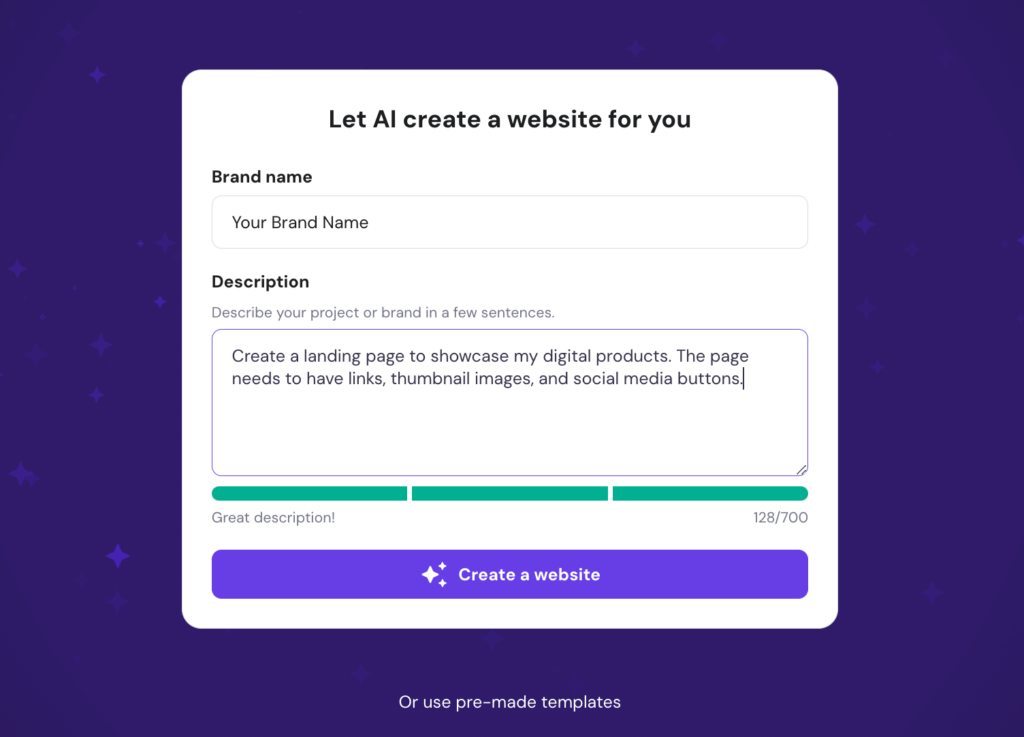
Next, AI generates a preview of your website that you can customize. Try our free trial or read the guide on using Hostinger Website Builder to learn more.
Hostinger Website Builder has two plans: Premium Website Builder and Business Website Builder. These cost CA$ 4.19/month and CA$ 5.59/month, respectively.

3. Use social media to promote digital products
After you optimize your website for conversions, the next step is to drive social media traffic. 82% of consumers use social media platforms for product research, making it an effective way to introduce your digital products to your ideal audience.
Facebook is a solid platform for connecting with communities and building your network. It helps you to create brand awareness and to attract potential customers.
Facebook Ads work especially well for launching new digital products, which we’ll explore more in Step 7.
Instagram is best for promoting visual products, like social media templates.
Many Instagram creators share their online shop links in their bios. An example is @tinaghazidigital, who teaches people how to earn money selling digital products.

Instagram is recognized as a popular hub for influencer marketing. You should collaborate with influencers in your niche to promote your products and reach a wider audience.
TikTok is geared towards younger audiences who want to see more casual, personal, “day-in-my-life”-type content.
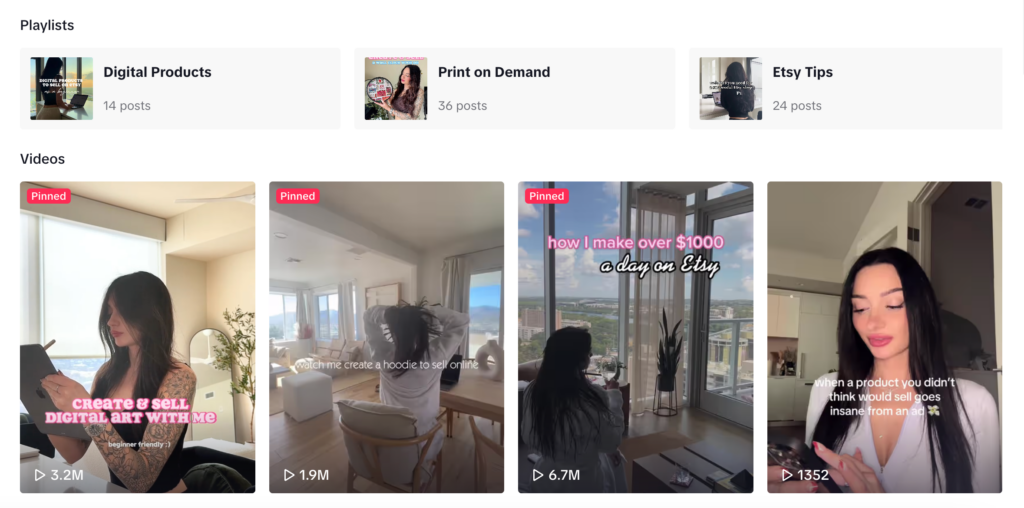
Many creators, like @moneywithmak, compile all their videos into a playlist. This helps followers and visitors identify the latest or most popular clips.
LinkedIn is frequently used for social selling of professional tools or B2B products. Check out this guide on LinkedIn selling.
Pinterest is ideal for linking pins to blog posts, landing pages, or product pages. It’s great for evergreen content that drives long-term traffic.
X is helpful for building a personal brand, engaging with potential buyers, and sharing valuable insights about your digital products.
Lastly, Discord is well-suited to building a community around your product. This platform works well for online courses, gaming products, and exclusive memberships.
Regardless of the platforms you choose, the key takeaway is that your audience wants value – they want to learn, engage, and gain something.
That’s why many creators use a mix of tutorials, how-to content, and product promotion to build trust and foster a deeper connection with their followers.
4. Tap into content marketing to drive sales
Content marketing works best when it promises value to your audience. By creating high-quality, informative content, you can establish yourself as an expert in your niche and build trust with potential customers.
Here are some examples of content types that can help drive sales:
- Blog posts. Write in-depth guides, listicles, and case studies that showcase your expertise.
- Tutorials. Teach readers how to solve a problem using your digital product.
- Long-form content. Publish ebooks, whitepapers, or industry reports to attract serious buyers.
- Webinars. Host live or recorded sessions to engage directly with your audience.
While creating valuable content is essential, it’s equally important to ensure your content is discoverable by your target audience. SEO plays a critical role in boosting your content’s visibility.
To get more eyes on your content, start by targeting long-tail keywords. These keywords have higher click-through rates (CTR) at 31% and often attract more qualified traffic, leading to better conversions.
Next, ensure your content is fully optimized by adding internal links to guide visitors through your site, and be don’t forget to optimize titles, descriptions, and tags to improve your search ranking.
For more detailed advice, check out our guide on writing SEO-friendly content and our article on ecommerce content marketing.
5. Leverage email marketing strategies
Email marketing brings in 174% more conversions than social media. This makes it a powerful tool for targeted marketing and driving sales – but to fully harness its potential, you need the right approach.
Build and grow your email list
Start by personalizing your emails to make them more engaging and relevant. Segmented email campaigns and tools like Google Analytics can help with this process.
To manage your campaigns more effectively, consider using a tool like Hostinger Reach, which makes it easy to design, send, and track professional newsletters directly from your hosting dashboard.
Read our guide on building an email list to learn more about the basics.
You should aim to grow your email list using the following lead-generation strategies:
- Offer free trials, exclusive discounts, or early access to new products.
- Create and share lead magnets to encourage sign-ups. This can be ebooks, checklists, or PDF guides related to your products.
- Run a drip campaign. A well-crafted drip campaign helps you stay connected with your audience, share helpful content that builds trust, and gently encourage subscribers to take action.
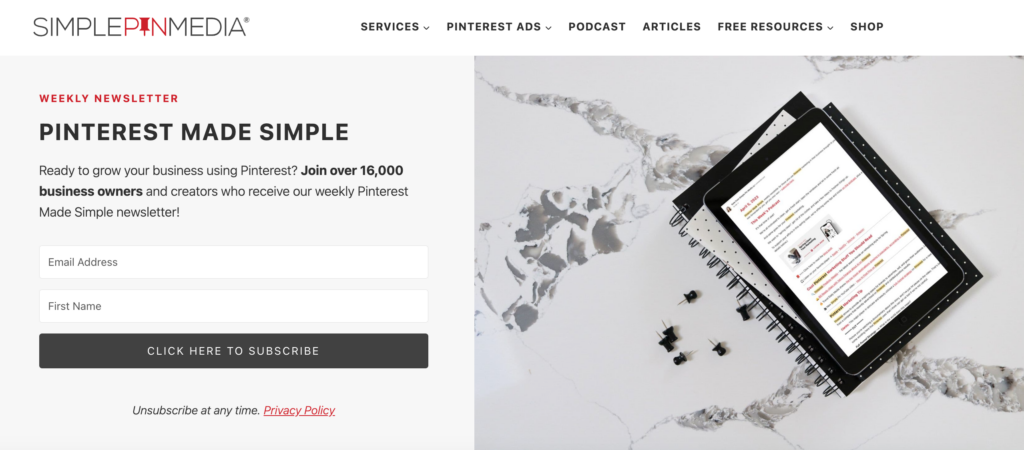
- Create a website page to collect email addresses. For example, Simple Pin Media’s newsletter page provides Pinterest marketing tips, including videos, podcasts, and downloadable resources, giving visitors a compelling reason to subscribe.
6. Launch “Pay what you want campaign”
In addition to your regular pricing, you should experiment with product pricing strategies. One innovative approach that you may wish to explore is the Pay What You Want (PWYW) campaign.
PWYW lets customers decide the price rather than following a fixed amount. Sellers can either set a minimum price or leave it completely open.
Once the customer selects their price and completes the transaction, they receive the product.
A PWYW campaign reduces hesitation by making it easier for customers to purchase while encouraging higher payments, as some buyers may willingly pay more to support creators.
This strategy helps expand your reach and attract new customers from the widest possible range of income levels.
Here’s how you can structure a PWYW campaign effectively while still making a profit:
- Modify the product. Offer a basic PWYW version of your product while keeping advanced features or premium content at a fixed price. This encourages upgrades without devaluing your product.
- Set a minimum price. Instead of making it completely free, set a low minimum price to cover costs while still keeping it accessible.
- Use PWYW for lead generation. Ask for an email address during the purchase process so you can send exclusive offers and upsells later on.
- Create urgency. Run PWYW for a limited time or offer bonuses for those who pay above a certain amount. This pushes customers to pay more.
- Track and optimize. Monitor average payment amounts, conversion rates, and customer feedback to adjust pricing or product positioning as needed.
7. Use paid advertising to boost sales
Paid advertising can significantly increase your sales by putting your products in front of the right audience at the right time. Unlike organic marketing, which takes time to gain traction, paid ads offer immediate visibility and measurable results.
Let’s divide it into two: Google ads, and social media ads (Facebook and Instagram).
Google ads
Google Ads uses a pay-per-click (PPC) model, meaning you only pay when someone clicks on your ad. This makes it cost-effective, as you can set a daily budget and adjust it based on performance.
To get started:
- Define your goal. Do you want more website traffic, leads, or sales? Google Ads allows you to choose a campaign objective that aligns with your needs.
- Choose keywords wisely. Use Google Keyword Planner to find relevant keywords with good search volume and manageable competition.
- Set a budget. You can start small with $5/day and scale as you see results.
- Optimize your ad copy. Keep it clear, compelling, and action-oriented, e.g. “Get 20% Off – Limited Time Offer!”
- Track and adjust. Monitor your ads regularly to ensure your marketing strategies are working – more on this in Step 10.
Note that if your website is made with Hostinger Website Builder, you’ll be able to launch, monitor and optimize Performance Max campaigns without even leaving the platform, thanks to the Google Ads integration.
Facebook and Instagram ads
Facebook and Instagram Ads use the Meta Ads Manager, which lets you create campaigns tailored to specific goals, whether it’s engagement, lead generation, or direct sales.
To create an effective ad:
- Use eye-catching visuals. High-quality images or short videos tend to perform best.
- Write a clear CTA. “Shop Now,” “Sign Up for Free,” or “Get 50% Off” encourages immediate action.
- Leverage retargeting. Show ads to people who have visited your website but haven’t made a purchase yet.
- Budget smartly. Start with $3–$10/day, test different ad formats, and scale up what works.
You can combine both ad platforms to maximize your return on investment (ROI). For example, start with Google Ads to target high-intent users searching for your product. Then, continue with social media ads for retargeting.
This multi-channel approach ensures you attract new customers, nurture potential buyers, and convert leads more efficiently.
8. Create a resource hub or knowledge center
Your website can be a valuable resource hub where customers find helpful information about your niche.
Offering free, high-quality content – such as guides, how-to articles, case studies, or troubleshooting resources – builds trust and attracts potential buyers.
Here’s how you can create a knowledge hub that helps drive traffic:
- Create step-by-step tutorials. Teach potential customers how to use your product with easy-to-follow guides.
- Share expert insights. Offer industry tips and advice to position your brand as a go-to resource.
- Publish case studies. Showcase real-world success stories to build credibility.
- Add an FAQ section. Address common questions and troubleshooting issues to enhance user experience.
To get started, you can use Hostinger’s website templates or the AI Website Builder, which offers a free trial and helps you create a custom website effortlessly.
9. Monitor analytics and adjust your strategy
Monitoring your digital product’s performance helps you understand what’s working and where to improve.
Whether you sell on your own website using Hostinger Website Builder or a marketplace like Etsy, tracking key metrics ensures you’re making data-driven decisions.
Below are the key metrics to measure the performance of your digital products sales:
- Sales and conversion rate. Track the percentage of visitors who purchase your product.
- Traffic sources. Identify where your visitors come from (search engines, social media, ads).
- Customer behavior. Analyze how users interact with your product pages (time spent, clicks, exits).
- Repeat customers. Measure customer loyalty and product value.
- Refund rate. A high refund rate may indicate unclear product descriptions or quality concerns.
Google Analytics 4 (GA4) is a powerful tool for tracking website performance, user behavior, and sales trends.
It includes AI-powered insights that help predict trends, detect anomalies, and suggest optimizations. Learn how to set up and use GA4 in this Google Analytics 4 tutorial.
If your key metrics aren’t where you want them to be, consider these strategies:
- Start A/B testing. Experiment with landing pages, ad creatives, and CTAs to see what performs best.
- Adjust strategies in real time. Use analytics insights to tweak ad targeting, pricing, or content.
- Conduct an SEO audit. Improve your website’s search rankings and visibility. Check out our SEO audit guide to find out how.
10. Use reviews and customer feedback to strengthen your brand
Marketing doesn’t stop when a customer makes a purchase. What customers say about your product afterward can impact future sales.
Positive reviews build credibility and trust, while constructive feedback helps you improve and refine your digital products.
Here’s how to collect customer reviews:
- Follow up with customers. Send an automated email requesting a review after purchase.
- Make it easy to leave reviews. Allow customers to post reviews on your website or use a platform like Trustpilot.
- Offer an incentive. Give customers a discount on their next purchase in exchange for a review.
Once you have reviews, showcase them across different platforms to build trust and increase conversions.
Adding testimonials to product pages or landing pages can help potential buyers feel more confident about purchasing. Takumi Shyegun’s page is an example.

Conclusion
Marketing digital products is about building trust, showing value, and using data to boost sales.
To recap, the key strategies for success are optimizing your website for conversions, using social media to engage your audience, and creating valuable content that keeps customers coming back.
Remember to monitor customer reviews and adjust your strategies accordingly. Additionally, communicate actively with your audience to better understand their needs.
Now that you know the strategies, it’s time to take action. Start marketing your digital products today and watch your business grow.
How to market digital products FAQ
Which platforms are best for selling digital products?
You can sell digital products on your own website using platforms like Hostinger Website Builder or Stan. Alternatively, you can also sell on marketplaces like Etsy or eBay.
Is it profitable to sell digital products?
Yes, digital products have high profit margins since there are no production or shipping costs, and storage costs are minimal. You can earn more per sale and scale easily, making them a profitable option for side hustlers.
How do I promote my digital products effectively?
To market your digital products, focus on creating valuable content, leveraging social media, and optimizing your website for conversions. Don’t forget to use email marketing and paid ads to expand your reach.

Nurul Siregar has over 3+ years of experience in the tech industry with a passion for writing about digital marketing. Nurul enjoys reading fiction novels and making digital illustration in her free time. Follow her on LinkedIn.