Ecommerce content marketing: Drive sales and build your brand
Mar 10, 2026
/
Ksenija
/
12 min Read

Online shoppers have endless options, and they’re quick to judge. From your photos and tone to how authentic your ecommerce brand feels, nothing goes unnoticed.
To earn their trust and drive sales, you need more than just great products. You need content that connects.
This article breaks down what ecommerce content marketing is, why it matters, and how you can use it to build your brand and boost conversions.
Whether you’re just starting out or looking to refine your approach, you’ll learn how to create content that meets your audience’s needs at every stage of their journey, from discovery to purchase and beyond.
What is ecommerce content marketing?
Ecommerce content marketing refers to strategically producing and distributing valuable content with the goal of attracting, engaging, and converting leads into customers.
This subset of ecommerce marketing includes creating blog posts, videos, product descriptions, guides, ebooks and other resources that offer useful information, solve problems, or simply entertain your target audience.
By providing value, each piece of content should act as a subtle nudge, guiding buyers closer to making a purchasing decision.
Why is content marketing crucial for ecommerce?
With over 22 million ecommerce sites worldwide competing for customers, you need to use every trick in the book just to get noticed.
Content marketing does just that. It helps buyers recognize your brand, trust it, and ultimately buy your products or services. It drives organic traffic through improved search visibility while guiding consumers through the buying journey with targeted content that educates and inspires.
What’s more, shareable content extends ecommerce brand reach across social platforms, which creates ongoing engagement opportunities beyond traditional advertising.
A recent study from the Content Marketing Institute shows just how important content marketing is for ecommerce businesses:
- 87% of marketers report that content marketing helped increase brand awareness.
- 74% saw content marketing generate demand or leads.
- 62% used content to nurture leads and subscribers.
- 52% found that content marketing strengthened customer loyalty.
- 49% said content directly contributed to generating sales.
Suggested Reading
Interested in more ecommerce stats? Explore our key findings and shopping trends in ecommerce in 2025.
Developing your ecommerce content marketing strategy
Ecommerce success is all about having the right message for the right person at the right time. That requires a smart, scalable content marketing strategy. That process starts by understanding how to create a content marketing campaign that aligns your content, channels, and goals into one cohesive plan.
Why is it important to have a strategy?
Without a strategy, content creation and distribution become a game of guesswork.
You might write a blog post about your new collection, run a flash sale on Instagram Stories, or post an unboxing reel. But without a bigger plan, none of these pieces connect. There’s no narrative, no funnel, and no momentum.
A strategy ensures that every piece of content serves a purpose by giving you:
- Direction – know who you’re talking to, what you’re saying, and why it matters.
- Consistency – build trust through regular, valuable content across all platforms.
- Better ROI (return on investment) – focus on what moves the needle, not what burns time.
If you think about it, your website is your store, which makes content your sales team. And just like a great team, your content should be knowledgeable, focused, and working toward a clear goal.
Defining your target audience
The first step in any successful content marketing strategy is knowing exactly who you’re speaking to.
Your content shouldn’t be for everyone. It should be aimed at the people who are most likely to click, buy, and become loyal customers.
That’s where a buyer persona comes in. It’s a detailed profile of your ideal customer, based on real data and insights about who they are, what they need, and how they behave.
To build your ideal buyer persona, gather the information on their:
- Demographics – age, gender, location, income.
- Personality – interests, values, buying motivations.
- Pain points – what frustrates them? What solutions are they searching for?
- Habits – where do they hang out online? How do they shop?
To profile your ideal customer, try the following:
- Use audience research tools like SparkToro to discover what your target audience follows, talks about, and shares.
- Read posts on Reddit and other niche forums to find unfiltered conversations and pain points your audience might not openly share elsewhere.
- Tap into social media to catch what people are excited about and monitor hashtags relevant to your niche to see trending topics.
- Examine customer reviews – both yours and your competitors’ – to spot repeated complaints, praise, and patterns.
- Apply social listening using tools like AnswerThePublic to discover what your audience is saying about your business.
- Conduct polls on social media to understand your customers’ preferences and interests.
Setting clear goals and objectives
Before you start creating, get clear on what success looks like for you.
Are you trying to:
- Increase organic traffic to product and blog pages?
- Improve product page conversion rates with better descriptions?
- Reduce product returns by providing clearer content?
- Grow your email list through lead magnets or gated content?
Set SMART goals: Specific, Measurable, Achievable, Relevant, and Time-bound. These give your team direction and your strategy purpose.
Your objectives should be as specific as possible.
For example:
- Increase organic blog traffic by 30% in 3 months by publishing SEO-optimized buying guides.
- Grow Instagram engagement by 20% this quarter by posting 3 reels per week featuring customer testimonials and product use cases.
- Boost product page conversion rates from 1.5% to 2% in 60 days by rewriting top-performing product descriptions and adding user-generated content.
According to Coschedule, when your content is tied to outcomes, it is more likely to give results, as marketers who set goals are 377% more successful than those who don’t.
Content marketing strategy for ecommerce
Your ecommerce content marketing strategy should cover three key components to ensure success:
- Planning content calendars
- Keyword research and SEO
- Content distribution and promotion
Planning your content calendar
A content calendar is a planning tool that helps you manage every step of content production, from brainstorming ideas to publishing and promotion.
With so many moving parts and people involved in content creation, having a centralized system helps you stay focused, consistent, and strategic.
To set up an effective content calendar, try the following:
- Choose your calendar format – Decide if you want to use a spreadsheet like Google Sheets, a project management tool like Trello, or a purpose-built content platform like StoryChief.
- Include important details – Your calendar should track content type, topics, owners, due dates, publish dates, channels, and status.
- Organize your content by themes and channels – Assign the right format and platform to each idea (e.g., Instagram post, blog, newsletter, webinar) and group content by type using labels like “educational,” “promotional,” “interactive,” or “entertainment”.
- Set deadlines and assign roles – Map out the full content lifecycle from idea approval and publishing, and assign specific roles (writer, designer, editor, social media manager) for each piece.
How often should you publish new content? There is no exact number that would guarantee the success of your content marketing strategy, still, industry standards suggest aiming for 2–4 blog posts per week, keeping social media active daily or weekly, and sending emails weekly or bi-weekly.
For email newsletters specifically, Hostinger Reach can streamline this process by using AI to transform your blog content into professional email campaigns automatically, making it easier to maintain that consistent weekly or bi-weekly email schedule.
Keyword research and SEO for ecommerce
Keyword research and SEO for ecommerce help you find search terms your potential customers are typing into Google (or other search engines).
You would then use these terms to optimize your content and drive more organic traffic to your ecommerce website.
Here’s how to set up your SEO strategy:
- Use tools like Semrush or Ahrefs to find high-intent keywords your audience is searching for.
- Focus on long-tail keywords like “best cushioned running shoes for flat feet” instead of just “running shoes.” These longer terms have clearer intent and lower competition.
- Optimize product pages by naturally including keywords in your product titles, descriptions, image alt tags, URL slugs, and meta descriptions.
- Create content clusters to build authority. Start with an anchor blog like “How to choose the right running shoe” and support it with related content like “Top 5 cushioned running shoes for long distance” and “Running shoes for flat feet: What to look for.”
Pro Tip
Always write for humans first, then optimize for search. Much like your customers, Google also rewards quality and relevance.
Content distribution and promotion
Content distribution is the strategic process of sharing your content with the right audience through the right channels.
These include owned (your website, social media), earned (shares, backlinks, media mentions), and paid (ads, sponsored content) media.
Different content formats perform better on certain channels. For example, 20% of marketers report that social media ads outperform all other content types their company publishes.
Meanwhile, 17% say email marketing is their top-performing content, and 16% attribute their best results to blogs.
This highlights the importance of selecting the right content type for each distribution channel to maximize impact.
Best content formats for owned media include:
- Blog posts
- Ebooks
- Case studies
Since earned channels depend on others to share or promote your content, it’s important to focus on content types that naturally encourage sharing, such as:
- Shareable videos
- UGC (user-generated content)
- Testimonials
To get the most out of paid media, focus on content that grabs attention fast and encourages action, like:
- Time-sensitive promotions
- Short, punchy videos or animations
- Ads
You can also set up an email campaign to promote exclusive offers or valuable content directly to your subscribers.
Leveraging AI in ecommerce content creation and optimization
AI in ecommerce has made many segments of content marketing easier and faster. You can use it to speed up and optimize:
- Content generation
- Personalization for content delivery
- SEO and keyword research
Content generation
Tools like ChatGPT, Jasper AI, and Writesonic can help you generate everything from product descriptions and blog outlines to full email campaigns.
To make the most of these platforms, make sure you train them on your brand’s tone of voice by feeding them examples of your existing content so they can mirror your style.
However, no matter how advanced the tool, the human touch is still essential. Always review and edit AI-generated content to verify it’s accurate, on-brand, and adds real value for your audience.
Personalization for content delivery
Platforms like Klaviyo and Mailchimp use behavioral data to send targeted emails with personalized product recommendations or curated content.
You can take it a step further, and tap into AI-driven recommendation engines like Nosto or Dynamic Yield.
These tools can analyze user behavior in real time and suggest the most relevant content or products based on their browsing patterns, purchase history, and engagement signals.
AI for SEO and keyword research
Platforms like Surfer SEO and Clearscope can analyze top-ranking pages and recommend semantic keyword clusters, content outlines, and optimal word counts.
You can also use Screaming Frog SEO Spider to scan your site for duplicate content, missing metadata, broken links, and on-page SEO gaps.
These are all issues that, if left unchecked, can tank your rankings.
Essential ecommerce content types and examples
Here’s a breakdown of the most important ecommerce content types, with tips and examples to help you get started.
Product descriptions that convert
Think of your product descriptions as your online sales representatives. They should not only describe the product but also convince the customer it is the product that solves their problem.
Tips for writing compelling descriptions:
- Highlight benefits, not just features. For instance, instead of saying “Made with memory foam,” say “Contours to your body for cloud-like comfort and pressure relief after a long day.”
- Help your reader feel the product. Describe textures, sounds, scents, or the experience of using it. Words like “crisp,” “buttery-soft,” “velvety,” or “refreshing” trigger emotions and spark desire.
- Keep it scannable. Use bullet points for quick specs or standout features, break text into short paragraphs with plenty of white space, and use bolding to highlight key selling points.
Take a look at how some of the world-famous brands approach product descriptions:
Nike
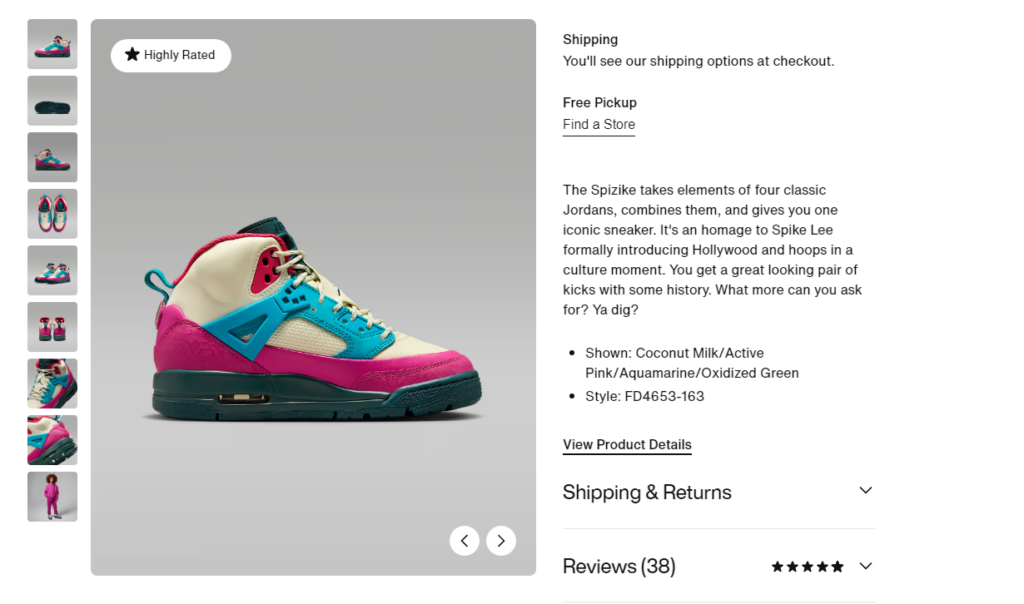
The Nike product description effectively blends storytelling and cultural significance, highlighting the sneaker’s historical roots with iconic Jordan elements and Spike Lee’s influence.
The casual, relatable tone and clear value proposition make it engaging, connecting emotionally with the target audience while emphasizing both style and heritage.
Apple

Apple’s product description highlights key features and benefits in a clear, concise manner, emphasizing the AirPods 4’s new design, advanced technology, and performance upgrades.
It also uses specific details like Active Noise Cancellation and IP54 rating to demonstrate the product’s value.
Bvlgari
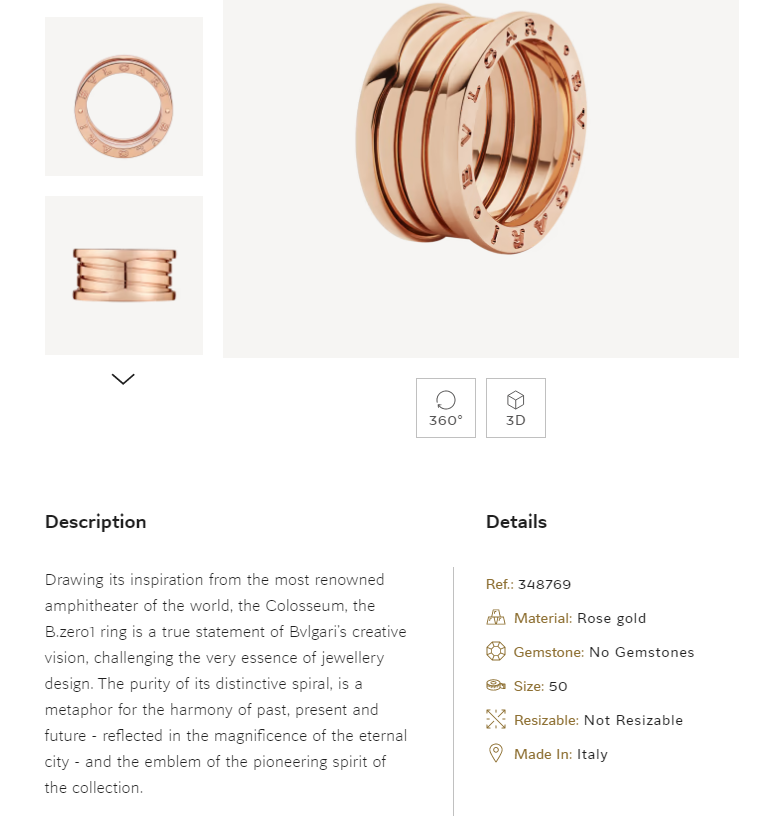
Above’s Bvlgari’s product description connects the B.zero1 ring to a powerful cultural symbol, the Colosseum, enhancing its narrative and emotional appeal. It skillfully blends the ring’s design with its deeper symbolism, conveying both artistic vision and timeless elegance.
Blog content for ecommerce growth
To attract, engage, and convert your audience, you can choose between the following blog content types:
- How-to guides and tutorials. These aim to show your products in action while solving customer problems. Think of something informative that will help shoppers visualize how they’ll use what you’re selling, like “How to style your fall collection for every occasion.”
- Product comparisons. For instance, a post like “Our vacuum cleaner vs. competitor brands: What sets us apart” allows you to highlight your key differentiators and help customers make confident decisions.
Expert opinions or interviews. For instance, a blog titled “An interview with our product designer about the latest trends” gives your audience insider access and reinforces your authority. - Listicles. A headline like “Top 10 must-have accessories for summer 2025” is quick to read, highly shareable, and easy to digest.
If all else fails, see what the biggest ecommerce businesses, such as Amazon and Etsy, write about in their blog posts to get inspired.

You’ll see that Amazon blog posts showcase a mix of content types, from product updates to how-to guides, promotional campaigns, and educational pieces.

Etsy concentrates on blog posts that fall into three main content types:
- Shopping guides
- Gift guides
- Featured collections
They’re all designed to inspire purchases by offering seasonal ideas, carefully chosen lists of products, and themed gift suggestions for specific audiences or occasions.
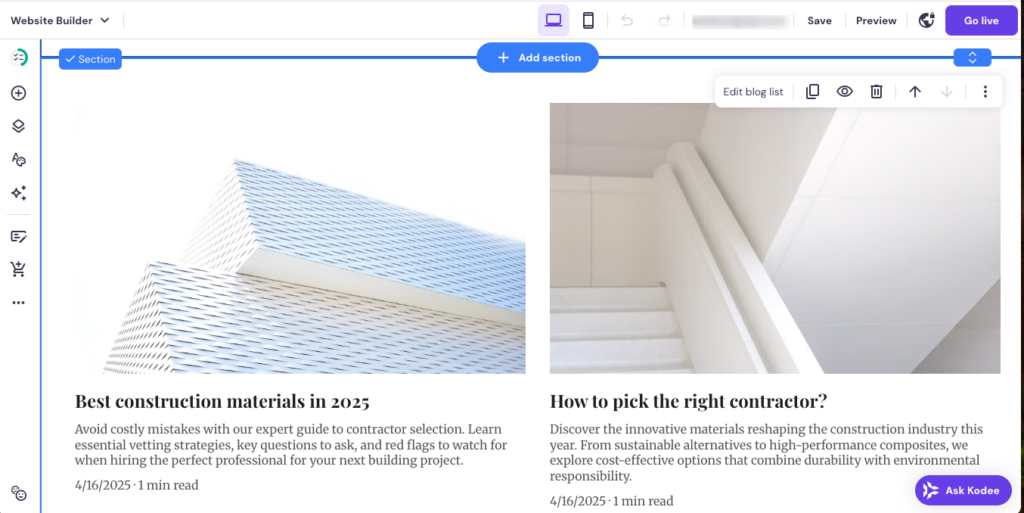
If you’re building your site with Hostinger’s website builder, you can easily add a blog section to house all types of content in one place.
Visual content: Images and videos
High-quality photos and videos build trust, reduce return rates, and directly influence buying decisions.
In fact, according to Baymard Institute, 56% of users explore the images on a product page before doing anything else.
Plus, Google found that 50% of shoppers say online video has helped them decide which specific brand or product to buy.
The content your customers want to see and interact with includes:
- Product videos showing items in action.
- High-quality images that show your product from every angle.
- 360-degree views for tech gadgets or furniture.
- User-generated content from real people using your product in real life.
Customer reviews and testimonials
Nearly 40% of online consumers read online reviews before buying in physical stores, according to Statista.
Additionally, around 50% of consumers are happy to share feedback with brands, especially if they are offered a small incentive or discount.
- To make customer reviews and testimonials work on your behalf, try the following tactics:
- Place star ratings and written reviews on your product pages and make them easy to spot.
- Reuse customer quotes in social media, emails, and homepage banners.
- Showcase testimonials that directly answer common buyer concerns (like sizing or durability).
- Use review filters (e.g., by star rating, keyword, or product use case) to help shoppers find the feedback that’s most relevant to them.
- Incorporate reviews into retargeting ads.
- Ask specific review questions post-purchase (like “How did it fit?” or “Was setup easy?”) to get more targeted testimonials.
- Highlight real-time feedback (e.g., “5 people just rated this item 5 stars”) to create a sense of urgency and validation.
Social media content for ecommerce
When creating content for social media, keep in mind that each platform has its own style and format that performs best. They also attract different audiences, so your content strategy should reflect where your customers actually spend their time.
For instance, Gen Z is more active on TikTok and responds well to short, casual videos that feel authentic.
Older audiences are more likely to be on Facebook, where longer-form posts and community-building efforts have more impact.
A high-end or luxury brand might focus more on Instagram and Pinterest, where high-quality visuals and aspirational content perform best.
The best content types to use, depending on the social channels, include:
- Instagram. Perfect for high-quality lifestyle photography that tells a story. Use Reels to highlight quick styling tips or product demos, and share Stories to tease upcoming launches or give followers a peek into your creative process.
- Pinterest. Best suited for content like step-by-step DIYs, seasonal fashion lookbooks, or home decor inspiration. Focus on vertical, high-resolution pins with keyword-rich descriptions to boost visibility.
- TikTok. Great for behind-the-scenes clips, before-and-after transformations, or quick how-to videos using trending audio. Whether it’s a skincare routine, outfit try-on, or unboxing experience, your aim should be to show your products in action.
- Facebook. Ideal for building long-term engagement. Host live Q&As to answer customer questions in real-time, share user testimonials in video form, and create or participate in Groups to foster community around your brand.
Measuring and optimizing your content performance
Once your content is out in the world, the next step is analyzing its performance to understand what methods are working and what might need adjusting.
You can do this by tracking important metrics, using tools for content analytics, and refining your strategy based on the insights you gather.
Key metrics to track
Keep your eye on the following metrics:
- Website traffic – Measures how many people are visiting your site.
- Bounce rate – Shows the percentage of visitors who land on a page of your website and leave without interacting with any other pages.
- Time on page – Tells how long visitors are spending on a specific page.
- Engagement – Includes the number of likes, shares, comments, and saves.
- Conversion rate – The percentage of visitors who take the desired action, whether it’s making a purchase, signing up for a newsletter, or downloading an ebook.
- Click-through rate (CTR) – Measures the percentage of people who clicked on a link (e.g., in an email or an ad) compared to the total number who saw it.
- Pages per session – Tracks how many pages visitors view during one session.
- Social shares and mentions – Measures how often your content is shared or mentioned on social media.
Tools for content analytics
When it comes to content analytics, there are a variety of tools that can help you track, measure, and improve your content strategy.
Here’s a brief overview of some useful analytics tools:
- Google Analytics is one of the most popular and powerful tools for tracking website traffic, user behavior, and conversions. It offers detailed insights into user demographics, source of traffic, pages viewed, bounce rates, and more.
- HubSpot is a comprehensive inbound marketing platform that includes content analytics as part of its suite. It tracks content performance from blog posts, landing pages, and emails.
- SEMrush is a robust SEO tool that offers analytics for organic search performance, keyword rankings, and competitor analysis. It can help you understand how your content performs in search engines.
Iterating and improving your strategy
The ecommerce world never stops changing, and neither should your strategy.
Specific reasons for continuous content optimization include:
- Adapting to changing trends – Consumer behavior and ecommerce trends are always shifting. By regularly reviewing and tweaking your content strategy, you ensure your content remains fresh and engaging to your audience at all times.
- Refining targeting and messaging – By experimenting with different content formats, messaging, and distribution channels, you can pinpoint what resonates most with your audience and tailor your strategy accordingly.
- Improving user experience – User feedback, behavior analytics, and performance data can help you identify any friction points in your content experience. Addressing these issues ensures your content is as effective as possible at driving engagement.
- Maximizing ROI (return on investment) – Regularly improving your strategy allows you to optimize your resources. You’ll be able to focus on the content and tactics that deliver the highest returns.

Conclusion
Creating a successful ecommerce content marketing strategy requires understanding your audience, producing high-quality content, and consistently measuring and optimizing your efforts.
Keep experimenting with new approaches, stay on top of trends, and refine your content to maximize engagement and drive conversions.
By continuously improving, you’ll ensure that your content remains effective and aligned with business goals.
Key takeaways:
- Create content your target audience wants to consume.
- Focus on SEO to improve visibility, attract organic traffic, and support long-term growth.
- Regularly monitor performance metrics to understand what works.
- Optimize your strategy so your content remains relevant at all times.
Ecommerce content marketing FAQ
What are the 5 C’s of content marketing?
The 5 C’s of content marketing are Customer, Content, Context, Channel, and Connection.
“Customer” refers to understanding your audience and their needs, while “content” stands for creating high-quality and engaging material. “Context” is about ensuring your content fits the platform and audience, and “channel” involves distributing content on the right platforms. Lastly, “connection” means building meaningful interactions with your audience.
What types of content are most effective for ecommerce?
Effective content for ecommerce includes product pages with detailed descriptions and images, user-generated content like reviews and testimonials, and educational content such as blog posts, guides, and tutorials. It also involves social media content, such as lifestyle shots that showcase products in real-life settings.
How can AI help with ecommerce content marketing?
AI can automate content creation, personalize product recommendations, and analyze customer behavior for targeted marketing. For example, Hostinger’s AI Ecommerce Website Builder comes with built-in tools like an AI content generator for product descriptions and blog posts, plus an AI image generator for creating quality visuals.

Ksenija is a digital marketing enthusiast with extensive expertise in content creation and website optimization. Specializing in WordPress, she enjoys writing about the platform’s nuances, from design to functionality, and sharing her insights with others. When she’s not perfecting her trade, you’ll find her on the local basketball court or at home enjoying a crime story. Follow her on LinkedIn.