Learn how to make your website better with AI
Sep 18, 2026
/
By Simon L. & Miglė C.
/
6 min Read
You can improve your website with AI by using it to tailor your content for visitors, speed up your page load times, and handle customer questions automatically with chatbots, among other things.
AI tools help you save time on repetitive tasks and provide your customers with what they actually want.
Here’s how you can use AI to optimize your site:
- Customized user journeys. AI tracks what visitors like, and displays specific products or articles that match their interests.
- Detailed visitor analysis. AI tools detect how people navigate your site to identify exactly where they get confused or leave.
- Automatic speed enhancements. You can use AI to instantly compress large images and refine messy code that slows down your site.
- Improved site accessibility. Automated systems help resolve visibility issues and generate descriptions for images, ensuring your site is accessible to everyone.
- Effective SEO suggestions. AI helps you find the exact phrases people are searching for and shows you how to rank higher for them.
- Efficient content drafting. You can leverage AI to create article outlines or product summaries, ensuring your site remains regularly updated.
- Round-the-clock assistance. AI bots are available 24/7 to help customers resolve problems without requiring you to be at your desk.
Benefits of using AI for websites
The benefits of using AI for your website include better performance, smoother website optimization, and enhanced content marketing.
Improved user experience
AI improves your user experience (UX) design by providing real-time data on how visitors actually interact with your pages.
For example, AI heatmaps can show you exactly where users click or where they get frustrated and leave.
By understanding these preferences, you can rearrange your website’s layout to place the most important information where people are looking, making the site feel more intuitive.
Increased customer satisfaction
AI chatbots handle everyday interactions, resolve basic technical issues, and provide 24/7 assistance so your customers never have to wait for an email response.
They can also offer personalized product recommendations based on a user’s browsing history, guide potential customers through the checkout process, and address concerns before users decide to abandon their carts.
Better search engine optimization (SEO) rankings
Incorporating AI into your SEO strategy gives you a competitive advantage that helps drive more organic traffic.
AI tools use machine learning to analyze shifting search patterns and user intent, ensuring your pages remain relevant.
Instead of just guessing which keywords to use, use AI for suggestions of specific, high-value phrases and identify content gaps where your competitors are failing.
Additionally, AI can audit your backlink profile to identify high-quality link-building opportunities, which helps establish the authority and credibility that search engines require to rank you on the first page.
Personalized content
AI-powered tools enable you to deliver a website experience that feels tailored to each user.
By analyzing past behavior and demographics, machine learning can generate targeted content recommendations, such as specific blog posts or limited-time offers that match a visitor’s unique interests.
This level of personalization makes visitors feel understood, which naturally increases engagement, keeps them on your site longer, and ultimately boosts your conversion rates.
Improved website performance
AI helps to optimize website performance by continuously monitoring site traffic and identifying technical bottlenecks that human developers might overlook.
These tools track how quickly your pages load across different devices and suggest specific fixes, such as code minification or improved server routing.
Performance isn’t just about speed, though – it’s also about how well your content works. For instance, landing page statistics show that embedding videos can increase conversion rates by 86%.
AI tools can analyze how users interact with these videos, providing you with precise insights into when they stop watching, allowing you to edit your content for maximum impact.
By using these advanced insights, you can ensure your site remains fast, efficient, and highly persuasive.
How to optimize a website with AI
To optimize your website with AI, focus on making your pages faster, more relevant to your visitors, and easier to navigate for everyone.
Here’s how you can use AI to tackle those specific goals:
Personalize user experience
AI enables businesses to analyze deep user information, such as specific browsing habits and past interactions, to create a truly personalized journey.
It goes beyond basic categories like age or location – it can actually predict what a user wants to see next based on their unique click patterns.
This personalization process works through behavioral targeting, where the AI suggests products or articles that match a user’s specific interests in real-time.
For instance, if a visitor frequently looks at vegan recipes on a cooking site, the AI will prioritize showing them plant-based meal plans rather than generic meat dishes.
Since AI continually learns from every action, these recommendations become increasingly accurate over time.
This helps you build genuine loyalty and increase your sales by showing people exactly what they are looking for.
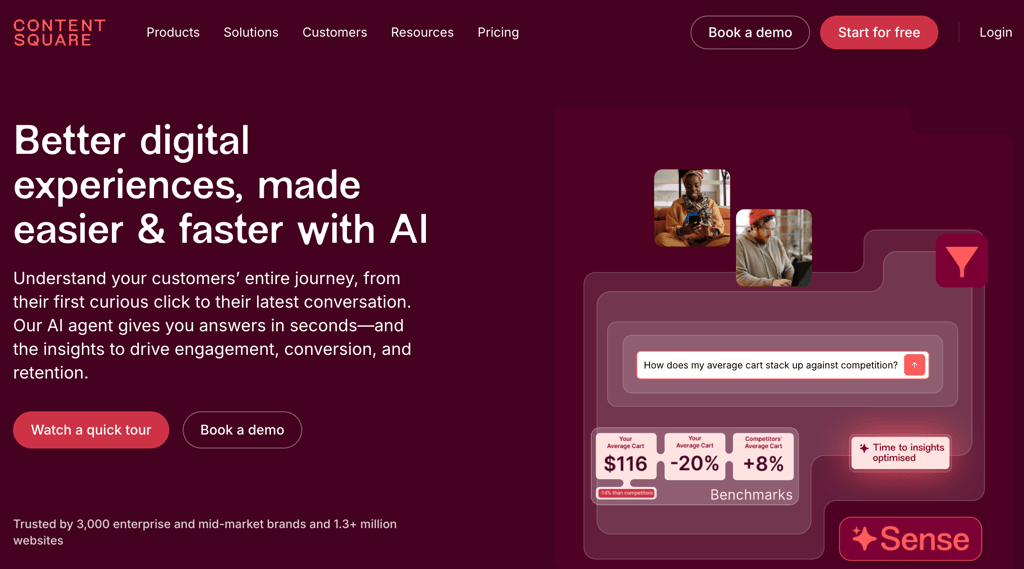
An example of this AI in action is with tools like Google Analytics and Contentsquare, which provide you with the data needed for these insights.
Analyze user behavior
AI takes the guesswork out of website design by tracking every click, scroll, and second spent on a page.
This pattern recognition tells you exactly what users like about your pages and, more importantly, where they are getting stuck.
These tools can help you identify which images or buttons are performing best and swap out the ones that aren’t working.
For AI in ecommerce, this is especially useful when identifying the ideal conversion path, which is the specific series of actions that turn a casual visitor into a paying customer.
Increase website speed
Use AI to optimize various technical aspects of your site to drastically reduce page load times.
One of the simplest ways is through automatic image optimization. AI algorithms analyze your images and compress the file size without compromising visual quality, ensuring your pages remain visually appealing while loading much faster.
AI also acts like a 24/7 technical assistant for your site’s code. It can scan your backend to identify bloated code or unnecessary elements that are slowing down performance and suggest ways to optimize them.
Additionally, AI can predict and prevent downtime. By analyzing server patterns and user traffic, it can identify potential bottlenecks or security vulnerabilities before they crash your site.
Finally, by regularly utilizing AI tools to test website speed, you can maintain peak performance as your website grows.
Offer better site accessibility
AI is a powerful tool for making your website user-friendly for everyone, including those with disabilities.
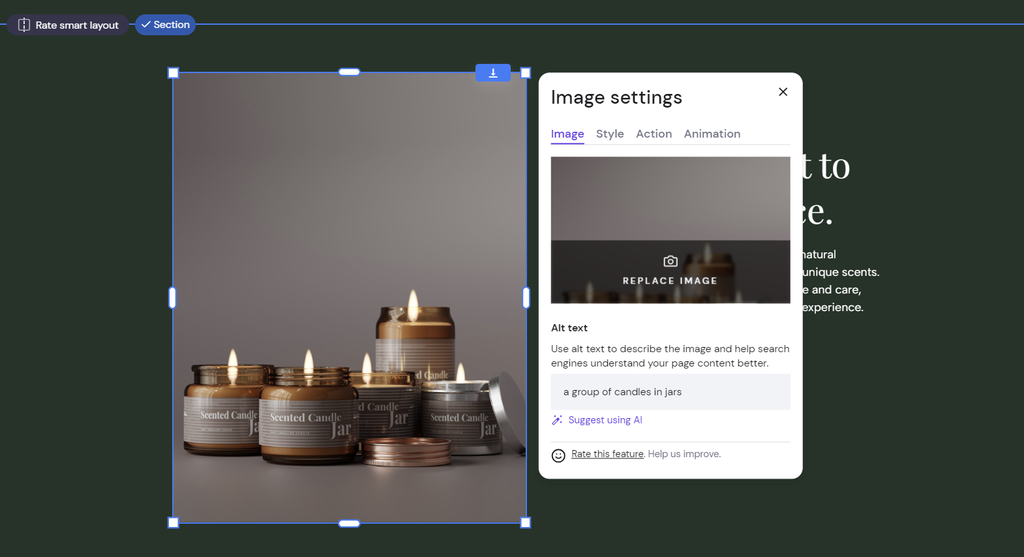
For example, Hostinger’s AI website maker can automatically generate alt text for images. This allows visually impaired visitors who use screen readers to understand exactly what a photo depicts.
AI can also perform real-time video analysis to generate accurate captions for users with hearing impairments.
Beyond content, AI can suggest improvements to your site’s actual layout. It might recommend better labeling for buttons or a more logical heading structure to ensure that someone navigating via a keyboard or voice command can easily find what they need.
Investing in these tools not only helps you comply with accessibility regulations but also demonstrates to your customers that you are committed to inclusion.
Improve SEO
AI enhances your SEO through Natural Language Processing (NLP), a technology that enables computers to understand how humans communicate and search.
Instead of just looking for exact keyword matches, AI understands the intent behind a search. This allows you to optimize your pages for the questions your customers are actually asking.
AI-powered SEO tools can also audit your meta tags, headings, and descriptions to ensure they are attractive to both search engines and humans.
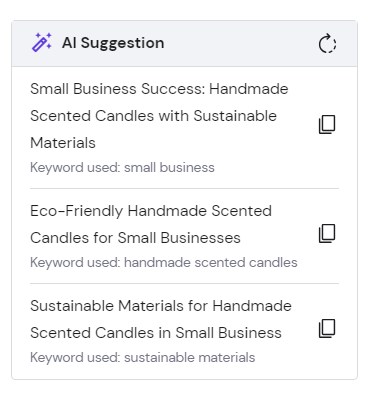
For example, Hostinger’s website creator features an AI SEO assistant that generates high-performing keywords, page titles, and meta descriptions based on a short description of your brand.
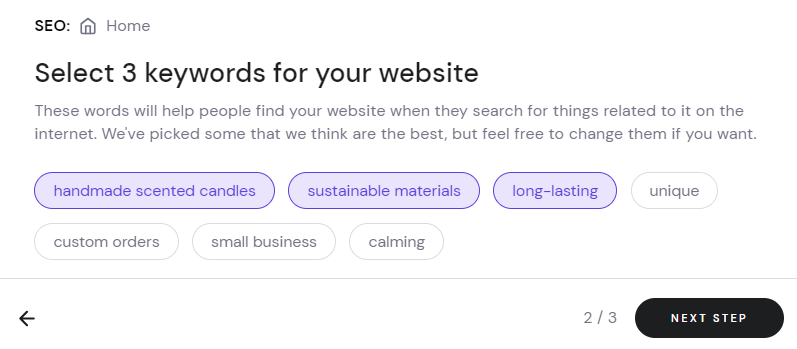
It can even suggest the best meta title for your page to ensure Google understands your content perfectly.
Create automated content
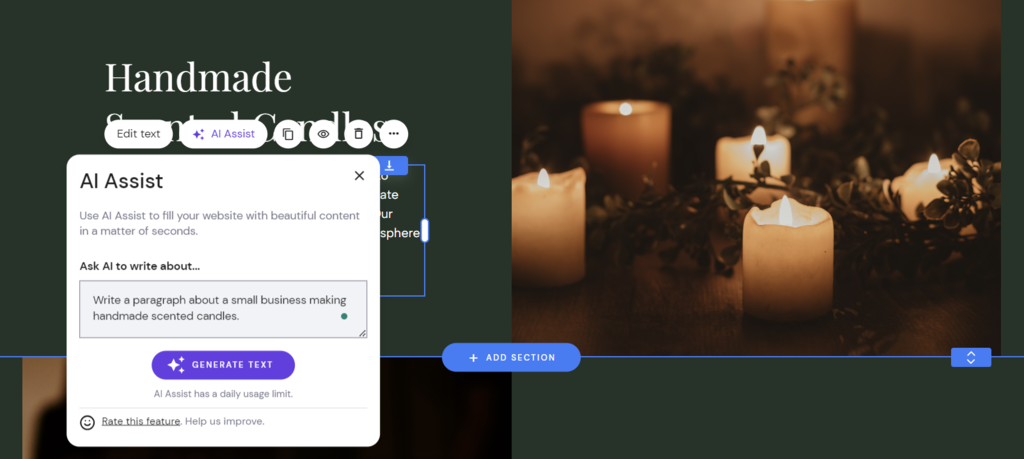
Automate time-consuming tasks like writing blog outlines, product descriptions, and social media captions with AI.
Various AI content generators use Natural Language Generation (NLG) to process your business data and turn it into human-like text. For ecommerce owners, AI can pull technical specs from a product catalog and transform them into engaging, unique descriptions for every item in your store.
A great example of this is Hostinger’s AI Writer, which can generate promotional copy or product details with just a few clicks.
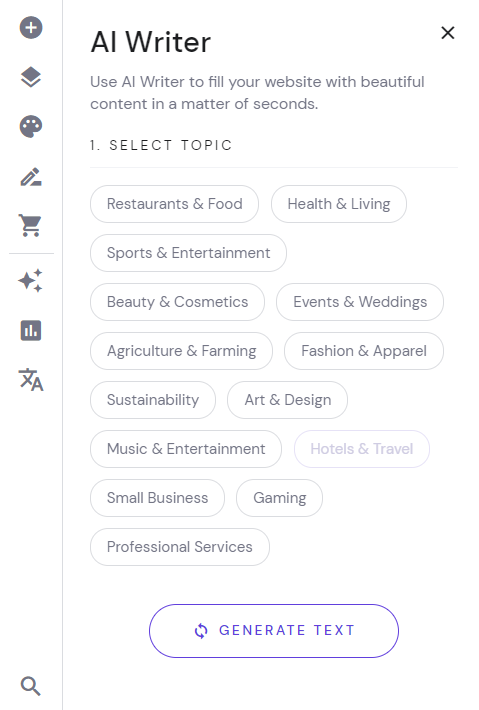
You can even format the text to fit your specific site layout and generate SEO-friendly blog posts. What’s best is that the more you use the tool, the better it gets at matching your specific brand voice.
For ongoing website growth, use Hostinger Agent, because it can support content, SEO, and marketing tasks through specialized AI personas.
For example, the SEO Consultant researches keywords and reviews pages for optimization opportunities, the Creative Writer drafts blog posts and product copy, and the Marketing Planner helps plan how to distribute and promote that content.
Include chatbots for customer service
AI-powered chatbots provide immediate, personalized help at any time of day or night.
Unlike basic bots of the past, modern AI bots use NLP to understand the context of a question and can even process transactions or track orders directly in the chat window.
This 24/7 availability helps reduce wait times and ensures common questions get answered quickly, which improves customer satisfaction.
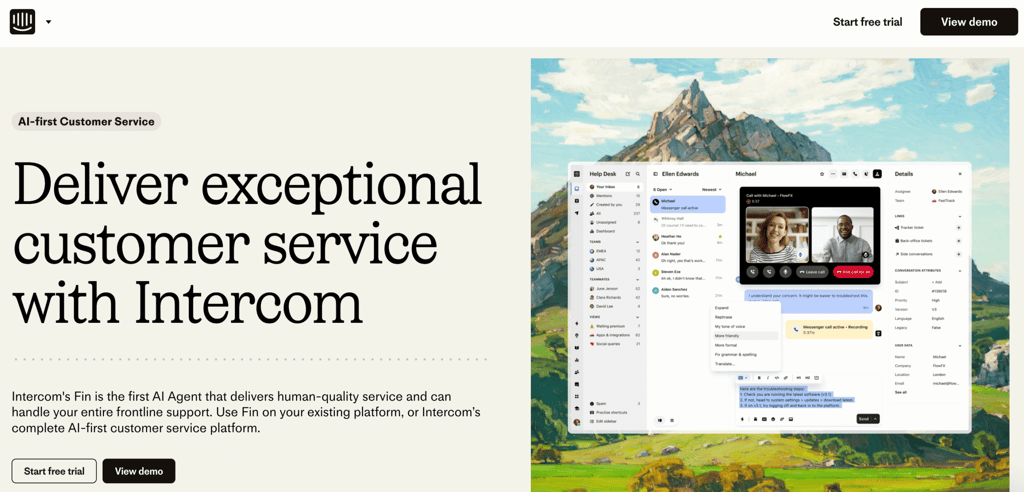
To set this up on your own site, use established tools like Intercom or Zoho SalesIQ, which can be easily integrated to handle your most common customer queries.
Can I use AI to build a website from scratch?
Yes, you can use AI to build a website from scratch. AI website builders can now generate a full site, including layout, images, and text, based on a few simple prompts about your business.
Here’s how to design websites with AI:
- Define your goals. Tell the AI about the purpose of your site, such as an online store for handmade jewelry.
- Let AI generate the blueprint. The AI will create the draft layout and basic framework for your website.
- Refine the design. Using a drag-and-drop editor, adjust the details, fine-tune your text or swap out images to match your brand.
- Publish and optimize. Once you’re happy, launch the site, use AI tools to monitor its performance, and optimize it based on the data.
This article is a localized version of Learn how to make your website better with AI, originally published in English.
All of the tutorial content on this website is subject to Hostinger's rigorous editorial standards and values.

Simon is a dynamic Content Writer who loves helping people transform their creative ideas into thriving businesses. With extensive marketing experience, he constantly strives to connect the right message with the right audience. In his spare time, Simon enjoys long runs, nurturing his chilli plants, and hiking through forests. Follow him on LinkedIn.

Miglė Cicėnaitė-Jocė is a Product Manager for Hostinger's Website Builder. She is on a mission to redefine website creation, focusing on the AI flow and its features, and is always eager for product feedback and market insights to improve the user experience. Follow her on LinkedIn.