What is ecommerce customer service and how does it work?
Aug 07, 2026
/
Simon L.
/
9 min Read
Ecommerce customer service is the support provided to online shoppers throughout their buying journey, from pre-purchase questions to post-purchase returns.
It operates entirely through digital channels, such as email, live chat, social media, and phone, rather than face-to-face interactions.
Unlike a physical store where a sales associate can assist immediately, online businesses rely on tools and processes to bridge the gap between the screen and the customer.
Online customer service acts as the sales team, the complaint department, and the brand ambassador all at once.
The core components include:
- Multiple communication channels like chat, email, phone, and social media.
- Support tools such as help desks and ticketing systems that keep everything organized.
- Knowledgeable team members who understand your products and policies inside out.
- Smart workflows that route questions to the right people quickly.
When these pieces work together smoothly, you create experiences that turn browsers into buyers and one-time customers into loyal fans.
What is ecommerce customer service?
Ecommerce customer service encompasses all the ways you help customers throughout their entire relationship with your online business.
It starts when they’re comparing products, checking shipping costs, or figuring out sizing. It continues during checkout when payment questions pop up, or coupon codes don’t apply.
And it extends long after delivery, handling returns, troubleshooting product issues, and answering questions about their account.
Online shoppers have three primary expectations when it comes to ecommerce support:
- Speed. Customers appreciate quick answers. Solving a query in minutes, rather than making them wait until morning, keeps the excitement of the purchase alive.
- Availability. Shoppers visit on their own schedule, and it’s often late at night or during lunch breaks. Being available during these times ensures you are there exactly when they are ready to buy.
- Consistency. They value a seamless experience. Whether they reach out via Instagram or email, providing the same high-quality help everywhere builds confidence in your brand.
In ecommerce, your support team is your unique opportunity to connect personally. A helpful, friendly interaction is often the deciding factor that turns a visitor into a loyal customer.
Ecommerce customer service vs traditional customer service
The biggest difference between ecommerce and traditional customer service is that online support never closes.
While a physical store might operate from 9 to 5, your website is taking orders at 2 AM on Sunday. Customers expect support to match that availability, or at a minimum, crystal-clear expectations about when they’ll hear back.
Here are some differences:
Channel variety is wider online
Traditional customer service happens face-to-face or over the phone. Ecommerce support happens across email, live chat, social media, messaging apps, help centers, and phone.
Response time expectations are tighter
In a store, customers might wait a few minutes for help. Online, they expect live chat responses within seconds and email replies within hours, or at least within 24 hours. This pressure drives ecommerce businesses toward automation and self-service in ways traditional retail never needed.
Scalability matters exponentially more
A physical store has natural limits, as only so many customers can walk through the door. Your ecommerce site can suddenly jump from 100 orders to 10,000 during a product launch or holiday sale. Your support system needs to flex with that demand without breaking.
Types of ecommerce customer service
Types of ecommerce customer service include self-service support, live and real-time customer service, and automated AI-based support that handles routine questions at scale.
Most successful ecommerce operations use all three, letting customers choose how they want help based on urgency and complexity.
Self-service customer support
Self-service support includes FAQ pages, help centers, and searchable knowledge bases.
This allows customers to solve simple problems, like checking a return policy or finding a sizing chart, without waiting for help.
Why it works: By writing the answer once, you help thousands of customers indefinitely. It reduces ticket volume for your team and provides instant gratification for the user.
The key is making information genuinely easy to find:
- Put a prominent search bar within your help center.
- Organize content by topic, not by your internal department structure.
- Use clear, conversational language instead of corporate jargon.
- Update content regularly based on actual customer questions.
Live and real-time support
Live chat and phone support connect customers directly with humans who can solve complex problems, answer nuanced questions, and provide personalized recommendations.
It’s best used for:
- Urgent issues. For example, assistance in changing a shipping address immediately after placing an order.
- Pre-sale conversions. Helping a customer decide between two expensive products.
- Complex troubleshooting. Resolving nuanced problems that require empathy and judgment.
The downside? Cost and scalability. Each phone or chat agent can help only one person at a time, making this the most resource-intensive support option.
Automated and AI-based support
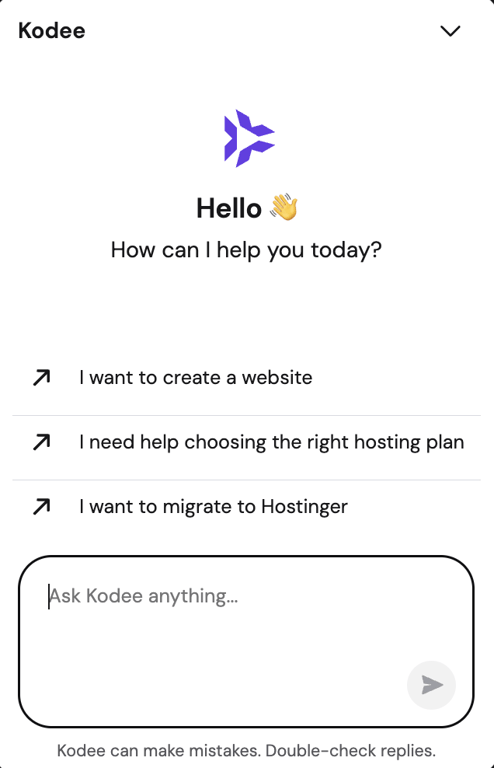
Automated support uses chatbots and AI assistants to handle routine tasks. These tools can check order statuses, initiate returns, or answer basic product questions.
They work 24/7, respond instantly, and can manage hundreds of conversations simultaneously.
The golden rule: The best automated systems know their limitations. When a question gets complex, emotional, or outside their programming, they should smoothly hand off to a human agent with full context intact.
Nothing frustrates customers more than a bot that keeps insisting it can help when it clearly can’t.
The goal is to free your human team to focus on conversations that need empathy, creativity, or problem-solving skills.
Ecommerce customer service tools and platforms
Ecommerce customer service tools and platforms include help desk software, live chat agents, knowledge base platforms, and CRM systems that track customer history across interactions.
Managing customer service through scattered email inboxes and spreadsheets creates chaos and falls apart quickly.
You need systems that organize incoming questions, route them to the right team members, track response times, and give agents full context about each customer.
The right tools transform support from reactive firefighting into a smooth, scalable system. Common categories of customer support software include:
- Help desk software. Platforms like Zendesk, Gorgias or Help Scout help organize, prioritize, and assign tickets to agents. Look for tools that integrate with your ecommerce platform so agents can view orders, process refunds, and update customer information without switching systems.
- Live chat platforms. Meet customers right on your product pages when questions arise. No need for them to hunt down a contact form.
- Knowledge base software. Tools like Helpjuice, Notion or Document360 help you build and maintain searchable help content that actually gets used.
- CRM tools. Platforms such as Salesforce or Klaviyo store customer data and interaction history, so returning customers don’t have to re-explain their situation every single time they reach out.

How businesses meet customer expectations
Businesses meet customer expectations by responding quickly, communicating consistently across all channels, and making support genuinely helpful rather than just checking boxes.
Customers generally understand that mistakes happen, but they expect you to care when things go wrong and fix problems without making them jump through hoops.
Speed matters tremendously
Set clear response time goals and stick to them:
- Live chat. Under one minute ideally, but 2-3 minutes is more realistic.
- Email during business hours. 4-6 hours.
- Email maximum. Under 24 hours.
Can’t solve an issue immediately? Acknowledge it with realistic expectations. A fast “We’re looking into this and will update you by tomorrow afternoon” beats radio silence every time.
Consistency across channels
Customers should get the same answers and level of service whether they contact you through email, live chat, phone, or social media.
This requires:
- Detailed documentation that everyone on your team can access.
- Thorough training so everyone knows your policies.
- Systems that give all agents the same customer information.
Make it personal and actually helpful
Template responses save time, but shouldn’t be your go-to methodology. It’s better to use the customer’s name, reference their specific situation, and show that you actually read their message.
If they’re frustrated, acknowledge it. If you made a mistake, own it quickly and explain how you’re fixing it.
Customers remember how you made them feel far longer than they remember what went wrong.
Ecommerce customer service KPIs and metrics
Ecommerce customer service KPIs and metrics include first response time, average resolution time, customer satisfaction scores, Net Promoter Score (NPS), and ticket volume trends.
Without data, you’re guessing. With it, you can spot problems early, justify investments in better tools or more staff, and directly link support quality to business outcomes such as retention and revenue.
Here’s what you should be tracking:
First response time
This tracks the gap between when a customer reaches out and when they first hear from you. It’s a great chance to make a positive first impression.
A quick acknowledgment puts the customer at ease and lets them know help is on the way, setting a positive tone for the rest of the interaction.
Be sure to track this separately by channel, since customers naturally expect a chat response much faster than an email reply.
Average resolution time
Tracks the full cycle from initial contact to problem solved. Simple questions (“Where’s my order?”) might resolve in one message, while returns or defective products require multiple exchanges.
Monitor resolution time by ticket type. If password resets take 48 hours, your process is broken. If complex refund disputes take 3-4 days of back-and-forth, that’s normal.
When resolution times increase across the board, it usually signals unclear policies, insufficient agent training, or tools that require too many manual steps.
Customer satisfaction score
Asks customers to rate their support interaction immediately after it closes, typically on a 1-5 scale. Aim for 80% or higher reporting they’re satisfied (4-5 rating).
Filter CSAT by ticket type to spot problem areas. If returns consistently score 2-3 while order tracking scores 4-5, your return process needs work – not your team’s skills.
Low CSAT on high-value customers matters more than low scores from bargain hunters who expect white-glove service on $15 orders. Weight your analysis accordingly.
Net Promoter Score (NPS)
To obtain this metric, ask your customers: “How likely are you to recommend us to a friend?” on a 0-10 scale.
The score is calculated as: (% of promoters) – (% of detractors)
- Promoters (9-10): Loyal customers likely to refer others
- Passives (7-8): Satisfied but unenthusiastic
- Detractors (0-6): Unhappy customers who may damage your brand
Example: If 60% of respondents give you 9-10, 30% give you 7-8, and 10% give you 0-6, your NPS is 60 – 10 = 50.
This creates a score ranging from -100 (everyone is a detractor) to +100 (everyone is a promoter).
Scores above 50 indicate strong word-of-mouth potential. Below 0 signals serious problems. Most ecommerce businesses land between 20-40.
NPS captures the cumulative effect of product quality, shipping speed, and support interactions. Use it to measure long-term trends (quarterly or annually), not to diagnose specific support issues.
Ticket volume trends
These metrics reveal valuable patterns over time. A sudden spike could signal that something specific, like a confusing product description or a shipping delay, needs your attention.
Recurring questions about the same topic are actually opportunities in disguise. They highlight exactly where you can improve your self-service content or clarify your policies.
By using this data, you can solve the root cause once and save your team from answering the same question over and over.
Common ecommerce customer service challenges
Common ecommerce customer service challenges include managing volume spikes, handling returns, and dealing with shipping errors.
High ticket volume during peak periods
Sales events such as Black Friday, the holiday shopping season, and product launches are exciting times, but they can bring a wave of inquiries that challenges even well-staffed teams.
Here’s how to turn that volume into victory:
- Hire and train seasonal staff well in advance. This ensures your core team has the backup they need when things heat up.
- Build robust self-service content. By answering predictable questions in your FAQ, you empower customers to help themselves instantly.
- Set up automation. Use tools to handle status checks and simple requests so your team can focus on the complex conversations.
- Communicate clearly. If you are busier than usual, just say so. Adjusting response time expectations upfront builds patience and trust.
Preparation is key. It allows you to ride the wave of a busy season rather than getting swept under it.
Managing returns and refunds
Returns and refunds involve logistics and money, but they are also a unique opportunity to turn a potentially negative experience into a moment of trust.
You will face decisions, like how to handle a damaged item or a customer’s change of heart. Instead of seeing these as conflicts, view them as chances to be fair and helpful.
Here is how to navigate it smoothly:
- Write clear, friendly return policies that cover common scenarios so customers know exactly what to expect.
- Guide your team on how to handle unique situations so they don’t have to guess.
- Empower your staff to make reasonable exceptions – sometimes a small act of kindness wins a customer for life.
- Find the sweet spot between being generous with your customers and sustainable for your business.
How you handle these moments defines your reputation just as much as your products do.
Delivery and payment issues
These situations create some of the most urgent and emotional moments for customers, but they also offer your biggest opportunity to show you care.
Whether it’s a missing package right before a birthday or a payment that looks wrong, the stakes feel high. Even though you rely on shipping carriers or ecommerce fulfillment services to do the actual work, your customer looks to you for help. This is your chance to step up and be their advocate.
Here is how to turn these stressful moments around:
- Send proactive tracking updates so customers feel informed before they even have to ask.
- Provide clear shipping estimates upfront to manage expectations from the start.
- Move quickly to make it right when carriers stumble, whether that means refunding shipping costs or offering a discount on their next order.
- Show them you are on their side. Even when the error isn’t your fault, taking ownership of the solution proves that you value their peace of mind above everything else.
How automation and AI improve ecommerce customer service
AI chatbots can instantly answer common questions about order status, shipping times, return policies, and product specifications. Automated workflows can route tickets intelligently based on keywords, order value, or customer history.
This allows your human team to focus on high-value interactions that require empathy, negotiation, and complex problem-solving.
For example, a longtime customer’s complaint automatically goes to a senior agent, while a simple “where’s my order” question gets handled by a junior team member or bot.
This improves efficiency and ensures your best people focus where they create the most value.
By exploring practical n8n workflow examples, you can see exactly how to build these smarter systems for your business.
The goal isn’t replacing humans with robots, it’s building a support system where technology handles what it does best (instant responses, data lookup, consistent information) while your team handles what they do best (empathy, complex problem-solving, relationship building).
Get that balance right, and you create ecommerce customer service that scales without losing the personal touch that builds loyalty.


Simon is a dynamic Content Writer who loves helping people transform their creative ideas into thriving businesses. With extensive marketing experience, he constantly strives to connect the right message with the right audience. In his spare time, Simon enjoys long runs, nurturing his chilli plants, and hiking through forests. Follow him on LinkedIn.