Ecommerce website development: Essential strategies and practical tips
May 20, 2026
/
By Simon L.
/
9 min Read

Ready to turn your ecommerce vision into digital reality?
Whether you’re a small shop wanting to reach more customers or an established company improving your online presence, building an effective ecommerce website takes careful planning and thoughtful implementation.
This guide covers everything you need to know about ecommerce website development. We’ll explore what makes an ecommerce website work well, help you plan your online store, show you different ways to build your site, and highlight upcoming trends in online retail.
By the end of this article, you’ll have a clear path for creating an ecommerce website that meets your current business needs and sets you up for future success.
Key takeaways
- Ecommerce website development is about building an online store to sell products or services.
- Planning an ecommerce business involves defining goals, identifying your target audience, and determining what sets your business apart.
- Key components of a successful ecommerce website include user-friendly design, secure payment options, and efficient product and order management.
- The steps to build an ecommerce website are:
- Choosing your domain name.
- Choosing a reliable platform.
- Designing your website.
- Adding products to your store.
- Planning your order fulfillment strategy.
- Maintaining and updating your website.
- Marketing and scaling your business.
- The cost to develop an ecommerce store can range from a few hundred dollars for a solo business to several thousand for a medium-sized company, depending on factors like hosting, design, marketing, and the number of products sold.
What is ecommerce website development?
Ecommerce website development is the process of building an online store where businesses can sell products or services. Visit our guide on what eCommerce is.
It includes creating an easy-to-use website with secure payment gateways and systems to manage products, orders, and customer information.
Why ecommerce website development matters
Ecommerce website development matters because it opens doors to increased opportunities.
By creating an ecommerce store, you instantly expand your market beyond local boundaries, allowing you to reach customers anytime, anywhere.
A well-designed website makes online shopping easier for customers with simple navigation, personalized recommendations, and convenient checkout options.
Your ecommerce site also gives you valuable data about what customers like, helping you make better business decisions.
Planning your ecommerce website development
Before getting into the technical details of your ecommerce website, setting clear business goals and knowing your target audience are key first steps that will guide all other decisions.
Clarify your business objectives
Setting clear goals and objectives for your ecommerce business can help you make better decisions about your website while keeping your project on track.
These can be:
- Revenue targets. Set realistic sales goals for your first year and plan for growth.
- Market position. Decide if you want to compete on price, quality, uniqueness, or service.
- Brand identity. Define the values and personality of your brand.
- Product range. Choose whether to offer specialized products or a wider selection.
- Market reach. Decide if you’re selling locally, nationally, or internationally.
- Growth plans. Plan how you’ll grow and how your website needs to support this.
Identify your target audience
Knowing your target audience helps you design an ecommerce website that appeals directly to your potential customers.
The more you know about your audience, the easier it will be to make relevant product selections, create effective marketing campaigns, and design a shopping experience that turns visitors into buyers.
Here’s what you need to know about your audience:
- Basic information. Age, gender, income level, education, profession.
- Personal traits. Values, interests, lifestyle, and behaviors.
- Shopping habits. How they find products, how they pay, and how often they buy.
- Pain points. Issues they face that your products can help solve.
- Online behavior. Devices they use, social media they visit, and content they like.
- Purchase factors. The main reasons they decide to buy. For example, are they price, quality, convenience, or other factors?
Determine what sets your business apart
Finding what makes your business unique will help you stand out online and give customers a reason to choose you instead of competitors.
Here’s what you need to do:
- Analyze competitors. Look at similar businesses to find gaps you can fill.
- Create a difference. Identify uniqueness based on factors like exclusivity, features, or values.
- Get feedback. Discuss your unique selling points in niche forums like Reddit to see what matters to potential customers.
- Tell a brand story. Develop an engaging story around what makes your business special.
- Be consistent. Ensure what makes you unique is visible throughout the customer journey.
- Focus on customers. Engage with your target audience regularly to make sure your uniqueness still matters.
Building your ecommerce website
The way you build your ecommerce website can save you time and money, provide a better customer experience, and give you the flexibility to grow your business.
Let’s look at the two main options.
Creating your website from scratch
Building a custom site from scratch gives you complete control over every part of your online store. This approach includes:
- Custom development. Writing the code yourself or hiring developers.
- Unique website design. Creating an original look and feel for your customers.
- Tailored solutions. Adding the exact functionalities your business needs.
- Full ownership. Having complete control of your website’s code and systems.
This option requires significant technical expertise and can cost more upfront if you need to hire an ecommerce website developer. But, the long-term benefit is having a solution that perfectly matches your vision.
Using an ecommerce platform
Ecommerce platforms give you ready-made foundations that you can customize for your needs.
They include:
- Quick setup. Launch faster with pre-built templates and shopping features.
- Lower startup costs. Save money upfront since you won’t need to hire developers.
- Managed technology. Get hosting, security, and updates handled for you.
- Customization tools. Adapt templates and designs to match your brand.
Popular platforms like Hostinger’s eCommerce Website Builder offer simple ways to create and manage your online store. They make it easy by handling all the technical parts for you, such as product page creation, shopping carts, checkout systems, and payment options.
The downside is you are limited by what the platform allows compared to custom ecommerce solutions. But, for most businesses, these platforms offer more than enough to create successful web stores.
Choosing the right ecommerce platform
When selecting an ecommerce platform, several key factors should guide your decision. The right choice will match your business goals, technical abilities, and current needs.
Here are the essential points to consider:
- Total cost. Explore all expenses, including setup fees, monthly subscriptions, transaction fees, and additional costs for add-ons.
- Ease of use. Find ecommerce solutions with user-friendly dashboards and drag-and-drop editors that don’t require extensive training.
- Design customization. Check available themes and designs and assess how they can fit your desired look and feel.
- Responsive design. Ensure your ecommerce website will look great and work well on all devices.
- Search engine optimization (SEO). Look for features that help your website rank well in search engines, including customizable meta titles and descriptions.
- Fast performance. Ensure the platform provides quick page loading times and minimal downtime.
- Product listings. Check if the platform makes adding, organizing, and displaying products easy.
- Inventory management. Find a system that automatically tracks stock and alerts you when items run low.
- Payments and checkout. Look for a simple, one-page checkout process with multiple payment options, such as PayPal and Stripe.
- Ecommerce security. Verify the platform includes SSL certificates, secure payments, and protection against cyber threats.
- Marketing tools. Consider platforms with built-in tools for discounts, content creation, email marketing, Google Ads, and Facebook Pixel.
- Reliable support. Review available customer service channels, such as live support, chatbot, or ticketing system, and whether they fit your needs.
7 steps to develop your ecommerce website
Creating a profitable ecommerce website requires good planning and implementation. Here are 7 essential steps to successful ecommerce development.
- Choose your domain name
Pick a memorable and relevant domain name that reflects your brand. Go for shorter names that are easy to spell and remember, like maniccherry.com or discoverthainature.com.

While .com is the most popular top-level domain (TLD), consider alternatives like .shop, .store, or industry-specific options that better match your business, like .cafe or .tech.
GabrielleCarre.art is an excellent example of this. She uses the .art domain extension to sell her surfing-inspired artwork.

Try to avoid numbers, hyphens, and unusual spellings that customers can easily misspell.
Check for trademark issues before finalizing your choice, and secure your name on major social media platforms for consistent branding.
Play around with our domain name generator to see what you can come up with:
Domain Name Checker
Instantly check domain name availability.
- Choose a reliable platform
Choosing the right ecommerce platform requires evaluating how well each option works with your content needs and if it can grow with your business.
First, be realistic about your tech skills and pick one that is easy to use. The last thing you want is to use ecommerce solutions that frustrate you. Look for drag-and-drop editors and AI tools that simplify tasks.
When calculating costs, check beyond the basic subscription price to include transaction fees and any add-ons you might need for full functionality.
A good approach is to test different platforms out. Hostinger offers a 7-day free trial of our easy website builder, which lets you test all features to see if it’s the right option.
- Design your website
The next step is to create a user-friendly and visually appealing layout for your ecommerce website.
- Use a consistent color scheme and fonts that match your brand
- Make navigation simple with clearly labeled categories in a logical order.
- Take high-quality photos and optimize image sizes for faster loading speeds.
- Include clear calls to action that encourage visitors to buy.
- Test your website design on mobile devices, as 70% of people do their shopping on their phones.
Luka Furniture is an excellent example of great design and consistent styling. Created with Hostinger Website Builder, it uses a minimalist layout that allows its furniture to stand out.
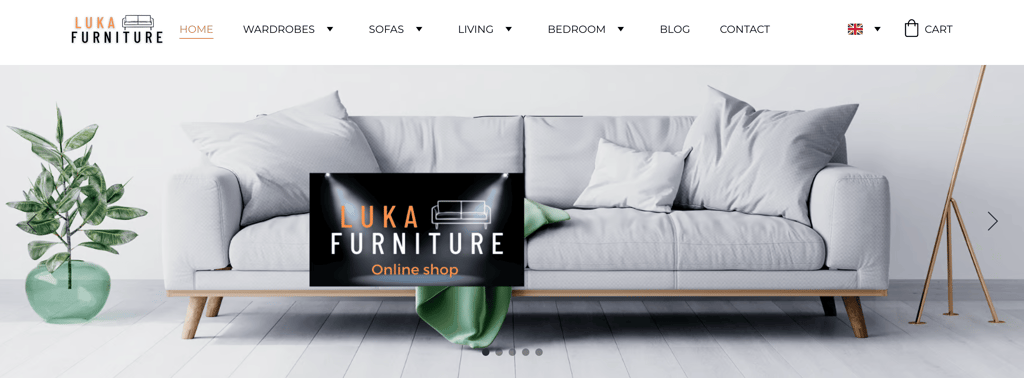
All the websites mentioned in this guide are great ecommerce website examples to gain inspiration from. The other thing they have in common? They were all built with our online store builder.
Our eCommerce Website Builder simplifies the development process with AI, creating a layout based on your description.
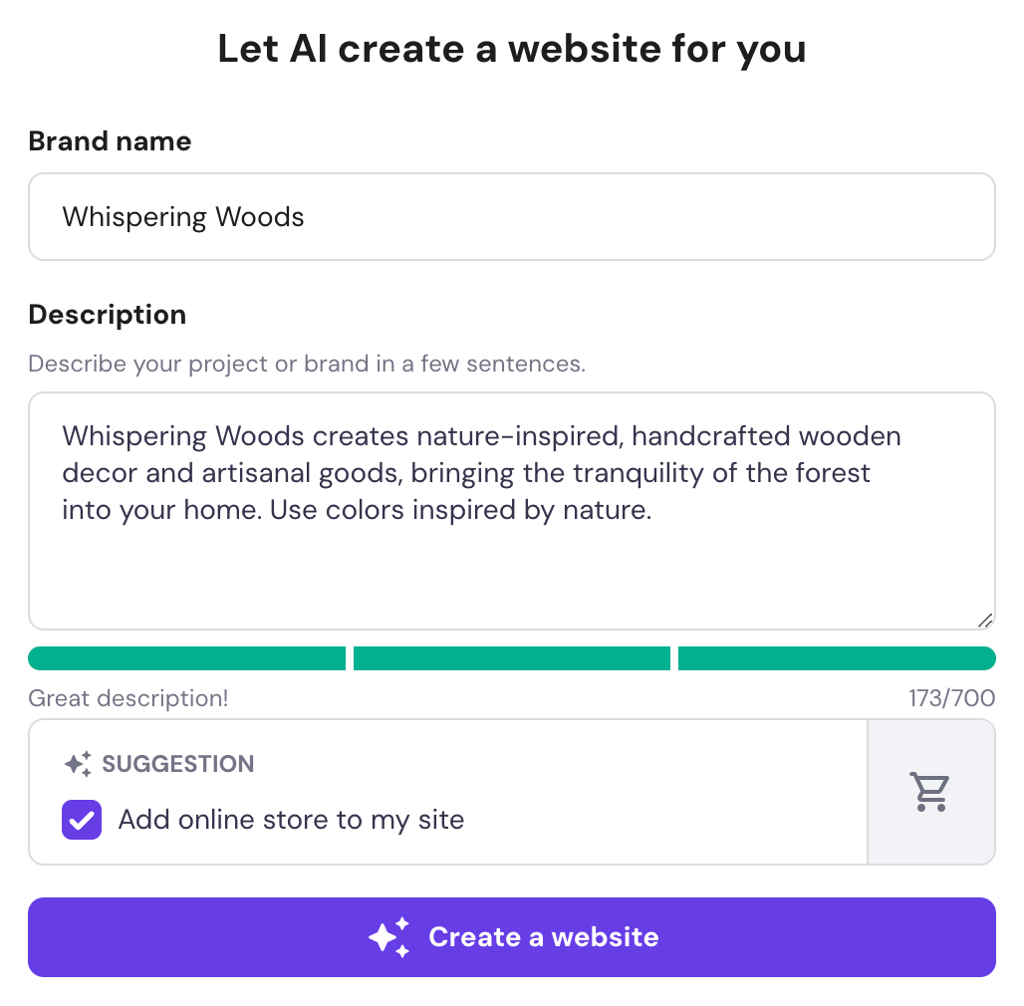
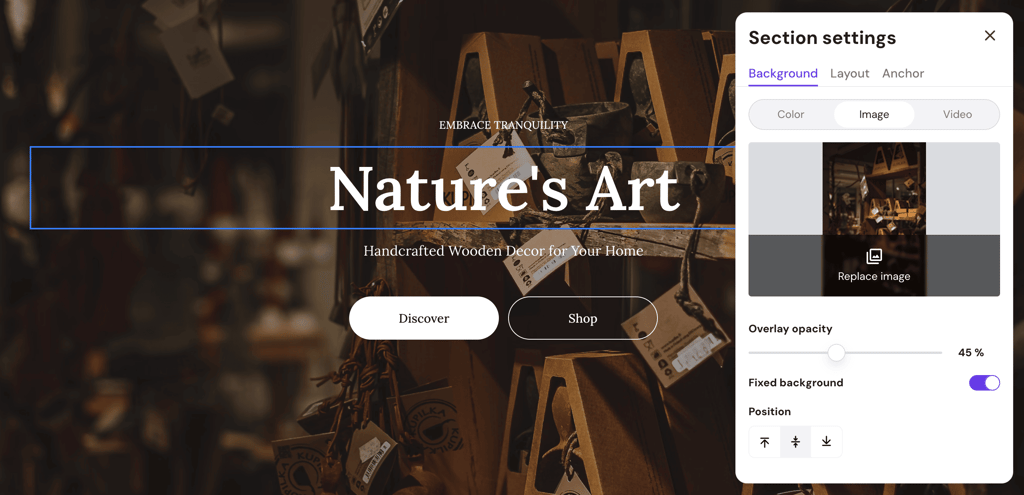
You can then customize elements using the drag-and-drop editor, ensuring your site matches your vision without needing design or coding skills.
- Add products to your store
Once you’ve established a foundation for your ecommerce website, you need to add products that will attract and convert customers.
- Take high-quality product photos from multiple angles, including detailed shots and photos of the product in real-life settings.
- Invest in good lighting, such as a softbox or a ring light, to avoid harsh shadows and achieve even lighting.
- Include size charts, material information, and care instructions where needed.
- Write engaging product descriptions that convey what makes your products unique.
Our eCommerce Website Builder makes adding products a breeze. You can upload up to 10 product images, and AI will create engaging product titles and descriptions for each.
This saves you time while ensuring consistent, SEO-friendly content across your store.

- Plan your order fulfillment strategy
Next, you need to decide how you’ll deliver products to customers. Will you handle shipping yourself or use a third-party service?
When making this choice, consider your product size and weight, the number of orders you expect, your storage space, and your budget.
- Compare rates and delivery times from multiple shipping carriers.
- Consider offering free shipping above certain purchase amounts.
- Set realistic delivery timeframes and provide tracking information.
- Design packaging that protects products while being consistent with your brand.
- Create clear returns policies that balance customer satisfaction with operational efficiency.
- Maintain and update your website
Your online store needs regular updates to stay current with your changing products, inventory, and special offers.
- Create a calendar for seasonal promotions and product launches.
- Review content regularly to update product information and remove discontinued items.
- Start a blog to share helpful information and improve SEO.
Making quick updates with a drag-and-drop editor and a simple content management system will help your online store thrive and stand out.
- Market and scale your business
Even the best-looking ecommerce site needs a good marketing strategy to attract customers.
A great place to start is with SEO. Focus on product-specific keywords and use our AI SEO Assistant to optimize your site for search engines.

Then, use the built-in Google Ads integration to create targeted paid campaigns that bring qualified traffic.
Also, use social media platforms where your target audience spends time. Post interesting content, such as behind-the-scenes videos, and engage with followers regularly.
Jeep Sliding Windows does a great job of this by posting videos on Instagram showing how its customers use its products. It’s engaging, interesting, and captivating.

How much does it cost to develop an ecommerce website
When launching an ecommerce website, costs can vary depending on your business size and what you need.
Here’s a simple breakdown of what you can expect to pay when creating and running an online store:
| Item | Solo business (1 person) | Small business (2-10 people) | Medium business (11-50 people) |
| Domain | $10-20/year | $10-30/year | $10-100/year |
| Hosting | $5-30/month | $30-100/month | $100-500/month |
| Ecommerce platform | $0-30/month | $30-100/month | $100-500/month |
| Design | $0-500 | $500-2,000 | $2,000-$5,000 |
| Photography | $0-1,500 | $1,500-3,000 | $3,000-10,000 |
| Content | $0-500 | $500-2,500 | $2,500-5,000 |
| SEO setup | $0-500 | $500-1,500 | $1,500-5,000 |
| Email marketing | $20-50/month | $50-100/month | $100-500/month |
An all-in-one solution like our online store creator can save you money by combining hosting, design, SEO tools, AI features, and ecommerce functionality in one package.
Future trends in ecommerce website development
Ecommerce development changes quickly, requiring business owners to stay informed of future trends.
If you’re just starting your ecommerce project, these ecommerce trends represent both opportunities and potential challenges.
Businesses that adopt these innovations will better meet customer expectations and stand out from competitors.
Here are key trends shaping the future of ecommerce development:
- Smart recommendations. AI systems that learn what customers like and suggest products they might want.
- Personalized shopping. Custom experiences that change content, offers, and layouts based on how each person shops.
- AI assistants. Chatbots that help customers 24/7 and guide them while shopping.
- Predictive analytics. Tools that forecast what inventory you’ll need and spot new customer trends early.
Headless commerce
- Flexible architecture. Keeping the website design separate from the shopping cart and payment gateways.
- Seamless experiences. Providing the same online shopping experience across websites, apps, social media, and in-store.
- Faster innovation. Making website changes without disrupting your store’s core functions.
- Future-proof setup. Creating a foundation that can adapt to new technologies without major overhauls.
Sustainable practices
- Eco-friendly options. Offering sustainable products and green shipping choices, including the use of low-emission vehicles by carriers and packaging made from recycled materials.
- Transparent sourcing. Showing customers the journey of your products by listing the origin of materials, detailing the creation processes, and identifying the factories involved.
- Reduced digital waste. Making websites energy efficient to lower environmental impact by optimizing code to reduce loading times and using services powered by renewable energy.
- Ethical data usage. Respecting customer privacy by clearly explaining what data is collected and how it’s used while allowing users to access, modify, and delete their data.
- Inclusive design. Building web stores that work well for all customers by considering those with disabilities and following web accessibility standards.
Conclusion
Ecommerce web development is key to your business goals if you want to sell online.
In this guide, we’ve explored the entire development process, from planning your online store to building it, choosing the right ecommerce solutions, following clear development steps, understanding costs, and preparing for future trends.
Whether starting your first online business or upgrading your current site, good ecommerce web development requires careful planning, strategic choices, and awareness of new technologies and shopping habits.
Ready to achieve ecommerce success? Try Hostinger’s AI website generator.
Like all the websites you’ve seen in this guide, you can use our eCommerce Website Builder to quickly create a professional ecommerce store, even if you’re not tech-savvy.

Simon is a dynamic Content Writer who loves helping people transform their creative ideas into thriving businesses. With extensive marketing experience, he constantly strives to connect the right message with the right audience. In his spare time, Simon enjoys long runs, nurturing his chilli plants, and hiking through forests. Follow him on LinkedIn.