How to create and sell an ebook: A step-by-step guide
May 20, 2026
/
By Simon L.
/
15 min Read

An ebook is a digital book designed to be read on electronic devices. Ebooks are popular because they are instantly available via download, are often more cost-effective than regular books, and do not require physical storage space.
The main benefit of creating and selling an ebook is that it positions you as a trusted expert, generates passive income after the initial writing, and expands your audience with powerful lead magnets.
Here’s how to create an ebook and successfully market it:
- Select your topic and audience. Start with strategic planning, confirming market demand, and defining the specific problems your target reader wants to solve.
- Develop compelling content. Structure your writing to be clear, engaging, and authoritative, using real-life examples and data to support your claims.
- Establish a consistent style. Standardize formatting, font choices, and rules to ensure the final product looks polished and professional.
- Make it visually appealing. Create high-quality covers and internal graphics that align with your book’s genre to influence sales positively.
- Determine the right format. Choose the best file type (EPUB, PDF, or MOBI) based on your chosen distribution platform and reader consumption habits.
- Proofread and edit thoroughly. Conduct a detailed review to eliminate errors, refine structure, and maintain credibility before launch.
- Publish and sell your ebook. Choose between self-publishing and traditional publishing, then upload it to your website or platforms like Amazon KDP.
- Promote your ebook. Use strategic marketing tactics across multiple channels to drive targeted traffic to your sales page.
- Track, analyze, and optimize sales. Monitor your marketing efforts using analytics and tracking codes to identify the most profitable traffic sources.
- Apply ethical practices. Adhere to copyright laws and use Digital Rights Management (DRM) to protect your work from unauthorized sharing.
1. Choose your ebook topic and audience
You choose your ebook topic and audience by first identifying your target reader’s specific problems and then validating the demand for your solution.
Creating an ebook should start by understanding who your audience is and what they want. This helps you provide real value and solve their specific problems.
For example, if you’re a personal finance expert, defining your audience as merely “finance enthusiasts” won’t work. You need to be specific:
- Are you writing for households looking to start investing?
- Are they freelancers who need tips for managing inconsistent income?
- Are they young professionals struggling with budgeting?
Once you’ve narrowed down that target audience, you need to confirm there’s actual demand for the topic. Here are four solution-oriented ways to do this:
Use keyword research to validate ebook demand
Keyword research tells you what people are actively searching for, confirming that your topic has existing interest.
Let’s say you want to help households manage their finances or grow their wealth. You can use free keyword research tools such as Google Trends and AnswerThePublic to find trending topics and common search queries.
Search for keywords like “how to start investing as a family” or “how to save for retirement with kids” to gauge demand. Consistent search volume over time is a strong sign that your topic has potential.
You can also explore social media and discussion platforms, such as Reddit and Quora. If the same questions appear repeatedly, it suggests a strong interest, indicating that people are actively seeking answers but may not have yet found a comprehensive resource.
Analyse competitors to identify ebook gaps and opportunities
Research ebooks already covering your topic to find out how they’re selling and how many reviews they have. High sales and a large number of positive reviews indicate interest.
But here’s the problem: they also mean the topic is well-covered. To stand out, analyze your competitors to identify areas where you can fill gaps.
Go through the 1-star and 2-star reviews of popular related books. These negative reviews often reveal unanswered questions or unique angles that competitors haven’t addressed, which you can use as your unique selling point.
Pre-sell your ebook to test market interest
Pre-selling is the most direct way to validate your topic before you invest significant time in writing.
Share a detailed summary of your ebook’s content (a provisional table of contents works great) and offer a discount for those who pre-order. If people are willing to pay upfront, you know you’re on the right track.
Here’s the thing: if only a few people sign up, take it as a clear sign to refine your topic or adjust your marketing message before you commit to the whole writing process.
Survey your audience to refine the ebook topic and content
If you have an email list, send a short survey using Google Forms to measure interest and gauge their preferred format or specific pain points. Offer a small incentive to encourage participation, such as a free workbook that complements your ebook.
Don’t limit yourself to your email list. Share your survey on relevant online communities and social media pages where potential readers are likely to engage. When asking friends or family, ensure they either fit your target audience or know someone who does to get honest, relevant feedback.
2. Create compelling content for your ebook
You create compelling content by ensuring it’s relevant, clear, engaging, and actionable, then structuring it logically and backing your claims with expertise.
To create and sell a successful ebook, the content must evoke interest and attention. Good content provides immediate value to readers by answering their questions, solving their problems, and inspiring them to take action.
What makes content compelling
Here are the key traits of compelling ebook content:
- Relevance. Build directly on the audience research you’ve already done. Your competitor analysis ensures your ebook answers key questions and fills gaps in existing content, making it instantly relevant.
- Clarity. The best content is easy to understand. Avoid jargon or complicated explanations. Your goal is to make the information digestible and accessible, even for those unfamiliar with the topic.
- Engagement. Mix in storytelling, anecdotes, and real-life examples. This not only humanizes the material but also helps readers connect emotionally with the content. Readers tend to remember stories and experiences more vividly than dry facts.
- Actionability. Your content must provide practical advice. The more specific your guidance, the more likely readers are to apply what they’ve learned and see results.
How to structure your content effectively
A well-structured ebook ensures readers can easily follow your ideas, absorb key takeaways, and stay engaged from start to finish.
- Start with a clear outline. Organize your content into clear chapters. Each chapter should logically build upon the previous one, guiding readers from basic concepts to more advanced material.
- Introduce key concepts early. Lay the groundwork in the opening chapters. These sections should introduce the primary concepts, preparing readers for more complex material later.
- Break content into sections. Avoid overwhelming the reader by dividing your content into manageable chunks. Use short chapters or sub-sections to allow readers to digest one idea at a time.
- Add interactive elements. Include activities, prompts, or reflection exercises where appropriate to engage the reader actively. This interaction helps them absorb the material and increases their investment in the content.
How to make your ebook authoritative
Readers are more likely to value and act on content from a knowledgeable, reliable source. Here’s how to demonstrate your expertise:
- Back up claims with research. Ensure that all claims or data you present are backed by research, reputable sources, or real-life examples. Providing references or citing studies enhances your credibility and builds trust. Prioritize links to official reports, data, or studies from authoritative sources, such as Statista or government pages.
- Share personal experience. Research is essential, but your personal experiences and insights make your ebook unique. Sharing your own journey, a relevant case study, or a story makes your content more relatable.
- Write with confidence. Use assertive language that reflects your expertise. Don’t shy away from presenting strong opinions when necessary. Readers respect your ability to take a clear stance and present your ideas with authority.
- Address objections. An authoritative ebook anticipates questions and objections. Acknowledge potential reader doubts and address them head-on as you present your ideas. This shows you understand your topic in depth.
How to optimize your writing process
If you already have blogs, social media posts, or YouTube videos related to your topic, audit them to identify high-performing pieces. Repurpose these by expanding on key points, structuring them into chapters, or combining related content.
This saves time, and you can be confident the content is working since it has already captured people’s attention.
To further help with writing, AI content generators and tools like ChatGPT, Claude, or Gemini can refine your outline, improve wording, and generate new ideas quickly.
Keep one thing in mind, though: these AI tools have limitations, including potential factual errors and a lack of originality. Always review, personalize, and fact-check AI-generated content to ensure authenticity, accuracy, and originality.
AI should enhance your writing process, not replace your unique perspective.
3. Use a consistent style guide
To maintain a consistent style guide, standardize your formatting, use readable fonts optimized for digital screens, and adopt a recognized set of rules.
A consistent style guide ensures your ebook looks professional and cohesive, directly improving the reader’s experience and making the content easier to follow.
To maintain a professional and cohesive look, follow these steps:
- Use readable font styles. Select a consistent, simple font and size for both your body text and headings that is specifically easy to read on small devices, like mobile phones or Kindle readers. Fonts like Garamond, Georgia, or Open Sans are often preferred for digital legibility.
- Standardize formatting. Set consistent paragraph spacing, bullet points, and text alignment to create a polished and uniform design. Consistency in elements like indentation and spacing maintains readability and signals professionalism.
- Decide on a structured format for your chapters. Determine a consistent format for the start of each chapter. Deciding whether each chapter begins with a number, a quote, or an illustration helps improve navigation and gives the entire book a cohesive feel.
- Follow a recognized style guide. Using an established guide ensures technical consistency across grammar and citation. AP style is best suited for journalistic and business writing, while the Chicago style is often used for professional publications and nonfiction books. MLA style is typically reserved for academic and literary works.
4. Design a visually appealing ebook
To design a visually appealing ebook, focus on a professional cover that clearly communicates your genre, using high-quality images, and ensuring the design works well as a small thumbnail.
According to StudyFinds, 57% of people purchase books based solely on the cover. Even a thoroughly researched and well-written ebook will be hard to sell if the design fails to capture attention.
To ensure visual appeal, focus on these key elements:
- High-quality visuals. Use high-quality images or graphics that clearly reflect your ebook’s subject.
- Clear title. Ensure the title is clear and readable, utilizing contrasting colors that stand out.
- Genre alignment. Use a design that aligns with the ebook’s tone and genre. For example, a minimalist design may work well for an ebook about starting a business, while a bold, vibrant cover suits a self-help topic.
- Thumbnail test. Ensure the cover looks good as a small thumbnail, since many readers browse ebooks on small screens and mobile devices.
If you’re not a designer, you can find free and customizable ebook cover templates on platforms like Canva.
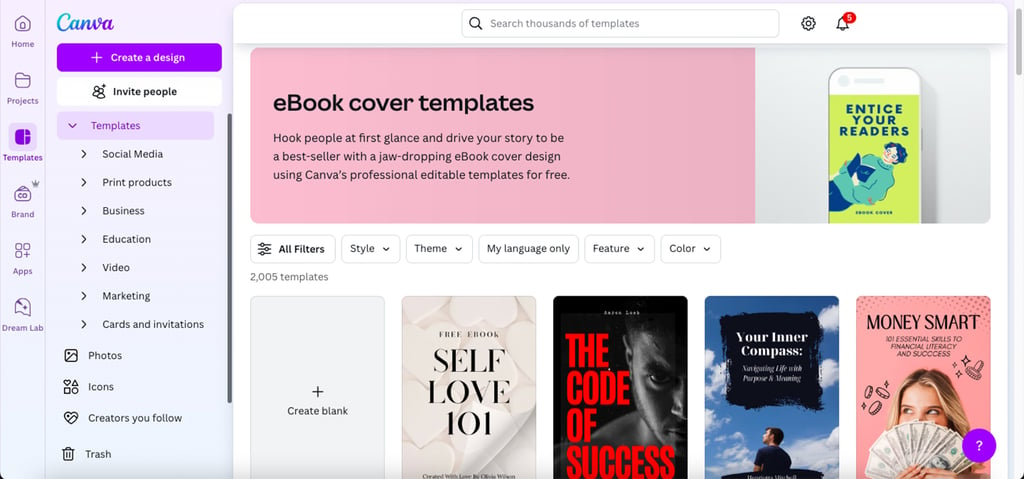
However, if your budget allows, consider hiring a skilled graphic designer. A custom cover is the most effective way to communicate your ebook’s genre and subject and ensure it immediately resonates with your target audience.
Beyond the cover, incorporate relevant images, infographics, or branded elements throughout your ebook. These visuals break up text-heavy sections, making the reading experience more engaging and easier to digest.
5. Choose the right ebook format
To choose the right ebook format, consider where you plan to publish, how your audience will read the book, and the complexity of your content.
Each format has strengths that make it suitable for different use cases and devices, so you can prioritize a format type based on your primary distribution platform.
However, offering multiple formats (especially EPUB and PDF) can help you reach a wider audience and cater to different reader needs.
Here are the main formats to consider:
- EPUB (Electronic Publication). This is the most versatile format. Unlike PDF, EPUB automatically adjusts to fit different screen sizes, making it ideal for fiction, nonfiction, and educational books. Due to its adaptability, it is the best choice for wide distribution across multiple platforms.
- PDF (Portable Document Format). Use PDF if your ebook requires a fixed layout, such as illustration-heavy workbooks or content with precise diagrams. While PDF is widely compatible with computers and tablets, it does not adjust to different screen sizes, which makes it less ideal for dedicated ebook readers like Kindle.
- MOBI: This format is best for authors publishing exclusively for older Kindle readers. It is ideal for text-heavy books, such as novels and non-fiction, but is primarily limited to the Amazon ecosystem.
6. Proofread and edit your ebook
To proofread and edit your ebook, thoroughly review the content multiple times, focusing on both minor errors, such as grammar and spelling, and overall structure, including clarity and flow.
Start by focusing on catching basic errors using:
- Systematic review. Break your review into dedicated passes, focusing on one aspect at a time. For example, one pass for spelling, another for punctuation, and a final one for consistent formatting.
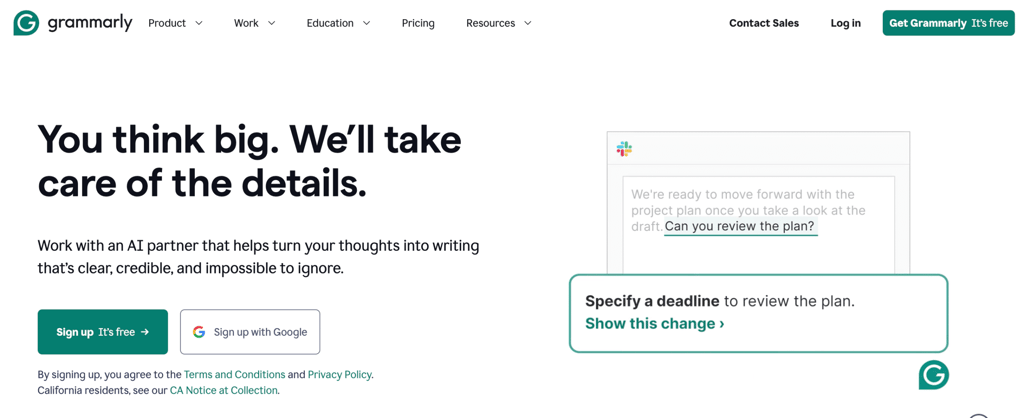
- Digital tools. Tools like Grammarly, ProWritingAid, or Hemingway Editor can help you quickly catch common errors and refine overly complex sentences.
Beyond typos, pay attention to how your content flows to ensure your ideas are easy to follow:
- Logical organization. Verify that paragraphs are logically organized and that the information builds cohesively.
- Smooth transitions. Ensure transitions between sections and chapters are smooth. Avoid jarring jumps in thought.
- Clear explanations. Check that all technical terms or complex ideas are clearly explained and accessible to your target audience.
External insights can identify areas that are unclear or need improvement, as you may be too close to the material to see its flaws.
- Ask a trusted reader. If a professional editor isn’t an option, ask a trusted friend or colleague who fits your target audience for feedback. Ask them specific questions like, “Which section did you find confusing?” or “Was the tone consistent?”
- Hire a professional. If you have the resources, hiring a professional editor is the best way to guarantee a polished, high-quality product.
7. Publish and sell your ebook
To publish and sell your ebook, you first need to decide what matters more to you: the support of a traditional publishing company or the control and higher royalties of self-publishing.
Traditional publishing involves working with an established publishing house. They provide professional editing, marketing, and distribution support.
On the other hand, self-publishing means you publish your own material directly on platforms like Amazon Kindle Direct Publishing, Apple Books, or Kobo Writing Life. You handle all aspects yourself, including formatting, design, and promotion.
For most people, self-publishing is the faster route, allowing you to distribute your book to a global audience. While each platform has its own process, the general steps for self-publishing include:
- Creating and verifying your account on your chosen platform.
- Providing your bank details to set up royalty payments.
- Setting up your ebook details, including title, description, and categories.
You also have the powerful option of selling your ebook directly from your own website. This gives you maximum control over the customer experience and the revenue. Selling direct is beneficial because it allows you to:
- Build your store quickly. Use tools like Hostinger’s AI website builder to simplify the process of creating a professional online storefront to showcase your book.
- Manage large files. Host your ebook files on services like Google Drive or Dropbox and provide secure download links, which prevent large files from slowing down your website.
- Offer multiple formats. Provide secure download links for various ebook formats so readers can choose the best option for their specific device.
- Include bonus content. Easily package and deliver bonus materials, such as worksheets or exclusive guides, alongside the main ebook.
In addition to publishing platforms and your own website, listing your ebook on online marketplaces like Gumroad, Etsy, and Ko-fi can expand your reach.
Selling on multiple platforms increases your ebook’s visibility and opens up more opportunities to grow your readership and income.
To help you decide if self-publishing is the right move, here is a breakdown of the key advantages and disadvantages:
Advantages:
- Faster time-to-market. You can sell your ebook within weeks, not months.
- Full control. You have total authority over content, design, and pricing.
- Higher royalties. You keep between 35% and 75% of sales, versus about 10% from traditional publishers.
- Immediate authority. You instantly position yourself as an authority and retain control over using the book for future business opportunities, such as speaking, consulting, or online courses.
Disadvantages:
- Upfront costs. You must cover editing, cover design, and marketing yourself.
- Stigma. Some readers still view self-publishing as lower quality, which requires strong branding to overcome.
- High competition. With millions of self-published books available, you need an effective marketing strategy to stand out.
8. Promote your ebook
Setting up your ebook for sale doesn’t mean people will automatically buy it. To stand out in a crowded market, you need to actively promote your ebook using social media, email marketing, and other marketing methods.
Here are the most effective strategies to promote your ebook:
- Social media. Use platforms like Instagram and TikTok to post short videos that show behind-the-scenes glimpses or quick previews. On platforms like Facebook and LinkedIn, share longer posts, testimonials, or case studies to engage your professional audience.
- Email marketing. This remains one of the most effective ways to build a readership and drive sales. Get people to subscribe to your newsletter with a lead magnet (like a free chapter) and set up an automated sales funnel with tools like Hostinger Reach that guide subscribers toward purchasing your book.
- SEO (Search Engine Optimization). Whether you sell on your website or a platform like Amazon, SEO is an effective way for people to find your pages. Research keywords to optimize your title, description, and meta tags, and publish related blog posts on your site to drive direct traffic to your sales page.
- Online communities. Engage in platforms like Quora and Reddit by answering questions related to your ebook’s topic. Subtly referencing your book as a deeper resource positions you as an industry expert and drives targeted traffic.
- Paid ads. If you have the budget, paid advertising can accelerate visibility by targeting people actively searching for content like yours. Platforms like Facebook, Instagram, Amazon Ads, and Google Ads allow you to capture specific search intent and demographics.
- Influencer and affiliate marketing. Use the trust that influencers already have with their audience to promote your ebook. Offer free copies to niche YouTubers or bloggers for review, or set up an affiliate program offering a commission, such as 20% per sale, to incentivize others to promote your ebook.
For a more in-depth look at how to promote your ebook, check out our guide on how to market digital products.
If you prefer visual learning, we also have a video guide that walks you through how to write and sell ebooks online like a pro, with a step-by-step walkthrough of the entire process.


9. Track, analyze, and optimize ebook sales
To track, analyze, and optimize sales, monitor platforms like Google Analytics, use specialized tracking codes to attribute conversions, and refine your sales page based on buyer behavior.
This is a necessary process that helps you understand your ebook’s sales performance and allows you to refine your marketing strategies to focus on what works.
To understand where your sales are coming from, you need the right tools:
- Platform dashboards. Publishing platforms offer built-in dashboards that provide insights into units sold, royalties earned, and overall sales trends. Use these as your baseline performance metric.
- Website analytics. If you are selling directly from your own website, Google Analytics can help you track traffic sources, conversion rates, and customer behavior. This provides a clear understanding of where your audience is coming from and how they respond to your marketing efforts. It can also monitor bounce rates or shopping cart abandonment, helping you identify weak points in your sales funnel.
Beyond just tracking sales numbers, you should analyze which marketing channels are driving the most conversions. Social media, paid ads, and email campaigns all contribute, but some will be more effective than others.
To do this, use UTM (Urchin Tracking Module) parameters. A UTM parameter is a tracking code added to your URLs that tells your analytics tool exactly where your ebook traffic and sales originate.
For example, if your Facebook ads are outperforming your Google ads, you can see this with UTM data, allowing you to adjust your ad spend to maximize conversions.
Examining the buyer journey also helps uncover potential bottlenecks that prevent readers from completing a sale.
If visitors land on your sales page but don’t make a purchase, you can refine pricing, strengthen testimonials, or make your call-to-action more transparent and more prominent to improve conversion rates.
By tracking these insights, you gain valuable audience data that can lead to more sales and greater opportunities.
10. Ethical considerations when publishing an ebook
Ethical considerations when publishing an ebook focus on adhering to copyright laws by using only original or properly licensed content and proactively protecting your own intellectual property from piracy.
When publishing, ensure that all content – text, images, charts, or third-party material – is either original, properly licensed, or falls under fair use.
- Avoid infringement. Using copyrighted material without permission, even a small portion, can lead to serious legal issues, as these laws apply strictly to digital books.
- Verify usage. To avoid copyright infringement, always check whether the content you are using is in the public domain or requires explicit permission. For example, some government resources may be freely available for use, but others require clear attribution.
- Online does not mean free. Just because content is publicly available online does not mean it is free to use. If you are quoting another author, using an image, or incorporating research data, ensure you have the necessary rights to do so.
It’s equally important to safeguard your own work against unauthorized use and piracy.
- Establish ownership. Registering your own ebook with the relevant copyright authorities in your country provides legal proof of ownership. Copyright laws protect authors by granting them exclusive rights over their original work, including reproduction, distribution, and adaptation.
- Prevent piracy. Consider using Digital Rights Management (DRM) tools, such as Digify. These tools help prevent piracy and unauthorized sharing by restricting how your ebook is accessed and distributed.
If your ebook includes multiple sources or complex licensing requirements, consulting a copyright expert is highly advisable. For basic questions, resources like the U.S. Copyright Office website or intellectual property legal guides can help you understand the fundamentals.
Why creating an ebook is a smart idea
Creating an ebook is a smart idea because it instantly establishes your authority, expands your audience reach, and generates passive income through a scalable product.
According to Statista, ebook market revenue is projected to reach $15 billion in 2030. This growth confirms a real opportunity for entrepreneurs and creators to make money online with ebooks.
Build authority and trust with your ebook
Writing an ebook adds credibility to your business, positioning you as an expert in your field.
A well-researched and informative ebook demonstrates to potential customers that you understand their challenges and can offer valuable solutions.
For example, personal finance expert Dave Ramsey built a massive audience through books like The Total Money Makeover.
His ebooks provide actionable strategies for debt management and wealth building, establishing him as one of the most recognized voices in finance.
Grow your audience through organic reach
An ebook increases visibility because you can promote it across multiple channels, and it acts as a long-term marketing asset.
Unlike short-form content, an ebook has higher perceived value, which helps attract new readers interested in your niche.
Many businesses use ebooks as lead magnets, offering them in exchange for an email address. As more people download and share your ebook, your reach expands organically, bringing in a steady flow of potential customers who are already engaged with your topic.
Generate passive income with scalable products
If your book is well-written and provides unique insights, it can continue generating revenue long after you’ve written it. This is why selling ebooks can be profitable if you use the right strategies.
Beyond direct sales, an ebook can be repurposed into other high-value, revenue-generating products. You can leverage the content to create an online course with video lessons and interactive elements, or offer coaching or consulting based on the expertise covered in your book.
You can learn how to create an online course to scale the knowledge from your book into a higher-priced offer.
Next steps: Promote your ebook with a high-converting landing page
Now that you know how to create and sell a professional ebook, your last critical step is directing all that promotional effort to a focused, high-converting location.
Simply listing your ebook on a large marketplace isn’t enough, as it is often cluttered with distractions, including competitors, other content, and complex navigation, which can divert the reader from the purchase decision.
This is where a dedicated landing page becomes essential. It serves as the final destination for all the traffic generated from social media, email campaigns, and paid ads.
A focused landing page simplifies the buying process, eliminates distractions, and gives you ample space to sell your ebook on its own merits. If you’re ready to ensure your marketing efforts lead directly to ebook sales, learn how to create a landing page that is fully optimized for conversion.
This article is a localized version of How to create and sell an ebook: A step-by-step guide, originally published in English.

Simon is a dynamic Content Writer who loves helping people transform their creative ideas into thriving businesses. With extensive marketing experience, he constantly strives to connect the right message with the right audience. In his spare time, Simon enjoys long runs, nurturing his chilli plants, and hiking through forests. Follow him on LinkedIn.