47 key digital marketing statistics for strategic growth in 2026
Dec 02, 2025
/
By Ricardo
/
14 min Read

Dive into your digital marketing strategy with the main statistics for 2025. Whether you’re launching your startup or reinforcing your market position, you should keep a well-informed eye on where trends are heading.
A well-thought-out combination of digital marketing statistics, facts, and a close connection to your customer could make a significant difference to your business.
Take a look at key industry stats from reliable sources and some original data from our own studies.
Top digital marketing statistics for 2025
- The global market value of digital marketing will reach around $1.3 trillion by 2033.
- More than 50% of company marketing budgets go to paid media and new technologies.
- Mobile advertising will account for 70% of total ad spending by 2028.
- The global digital advertising market is forecasted to reach $843 billion in 2025
- Around 84% of B2B marketers managed to create brand awareness through content marketing.
- Blogs are used by 76% of marketers to distribute content, making them the most popular form of content marketing.
- Short-form interactive videos boosted sales and conversions by up to 80%
- On average, the first result on Google generates 39.8% of all clicks. If it’s a featured snippet, the click-through rate increases to 42.9%.
- Nearly half of all millennials believe influencer recommendations more than regular ads when buying a product.
- Generative AI powers operational improvements for 51% of businesses.
Digital marketing industry growth statistics
The potential of online marketing grows daily. With every new trend and technological advancement, digital marketing strategies should be updated.
Businesses refine their tactics to reach their goals, and marketers do the same. This first section will give you a quick look at the main statistics of the marketing industry.
1. Global digital marketing market size is expected to be worth around $1.3 trillion by 2033
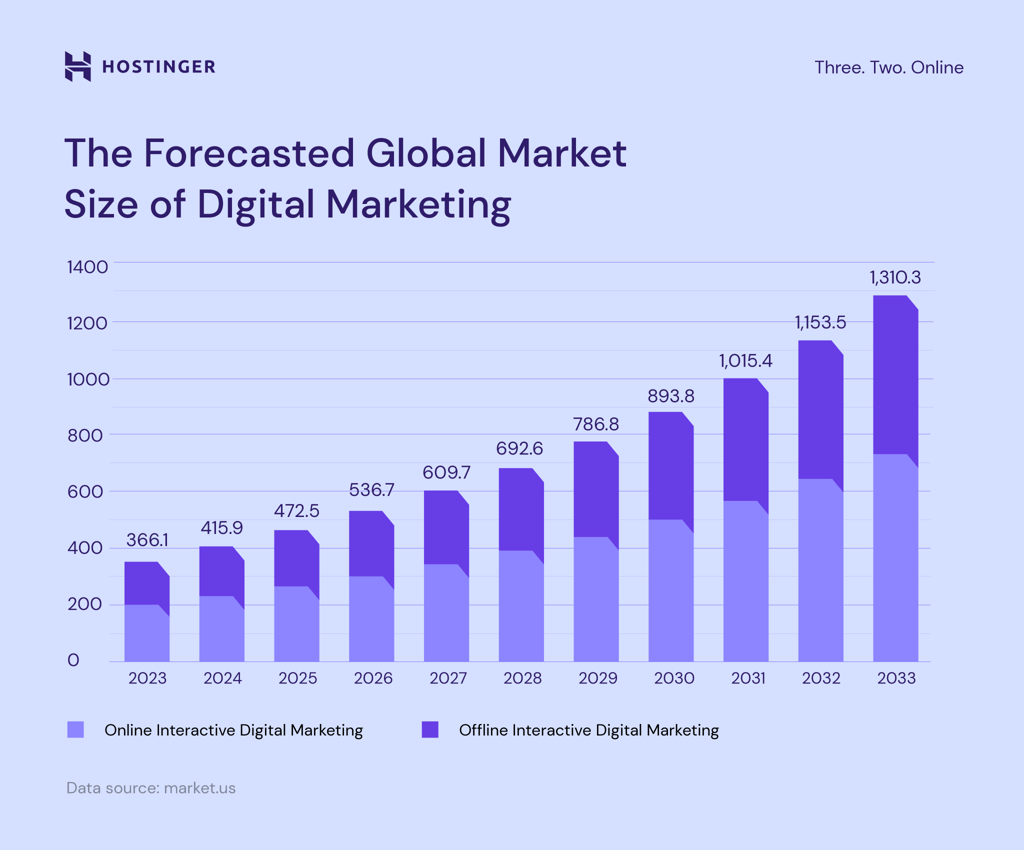
The market value of digital marketing is predicted to reach $472.5 billion in 2025 and will continue to grow at a compound annual growth rate of 13.6% until 2033. Digital marketing trends, from new social media challenges to new AI tools, lead to new investments and costs.
2. North American and European companies allocated 7.7% of their total revenue to marketing in 2024
According to an annual survey of chief marketing officers (CMOs), companies’ marketing budgets reached 7.7% of their total revenue in 2024, the lowest percentage registered since 2021.
3. Paid media and marketing technology make up 51% of marketing budgets
Companies in North America and Europe allocate 25.6% of their marketing budgets to paid media, including pay-per-click (PPC) campaigns, video ads, and sponsored social media posts.
Marketing technology, which refers to software or systems marketers use to achieve their goals, takes second place with a 25.4% share. The remaining portions of the budget go to labor (24.6%) and agencies (23.3%).
4. About 82% of marketing leaders reprioritize investments in digital channels
Amidst recent market volatility, marketing leaders are forced to adjust their strategies to optimize growth and return on investment (ROI). 82% of CMOs chose to reprioritize investments in digital channels, while only 59% adjusted offline channels.
5. Data-driven strategies mostly benefit email marketing projects, according to 47% of marketers
Exploiting data and applying it to effective marketing strategies is still a hard-fought battle. Among marketing decision-makers, 47% said email marketing is the area in which data-driven marketing was the most useful. Customer experience also received a high mention rate of 46%, and paid advertising was not far behind at 41%.
6. Improved marketing data leads to a better customer experience
As the quality of data improves, which areas benefit from it the most? 61% of marketing leaders said customer experience, while another 45% cited engagement. Also, they perceived improvement in lead generation (35%), personalization (34%), and the overall decision-making process (33%).
Digital advertising statistics
The number of internet users grew by 1.8% in 2024 compared to the previous year, reaching 5.35 billion globally. The rapid adoption of new trends and technology, such as AI, explains the growing expenditure on online advertising.
Read on to learn more about the current state and upcoming trends in digital advertising.
7. The global digital advertising market is forecasted to reach $843 billion in 2025
Businesses of all sizes rely on digital advertising tactics to reach new users. According to the Digital Advertising Market Report, this segment of the marketing industry will grow at 14% annually and will peak at $1,426 in 2029.
8. Mobile advertising will comprise 70% of total ad spending by 2028
These days, most consumers use their phones as their primary device to browse the internet, and mobile usage will grow even more in the years to come. If you want to stay competitive, engaging in mobile marketing has become a must rather than an option.
9. Display advertising has the largest ad spend share
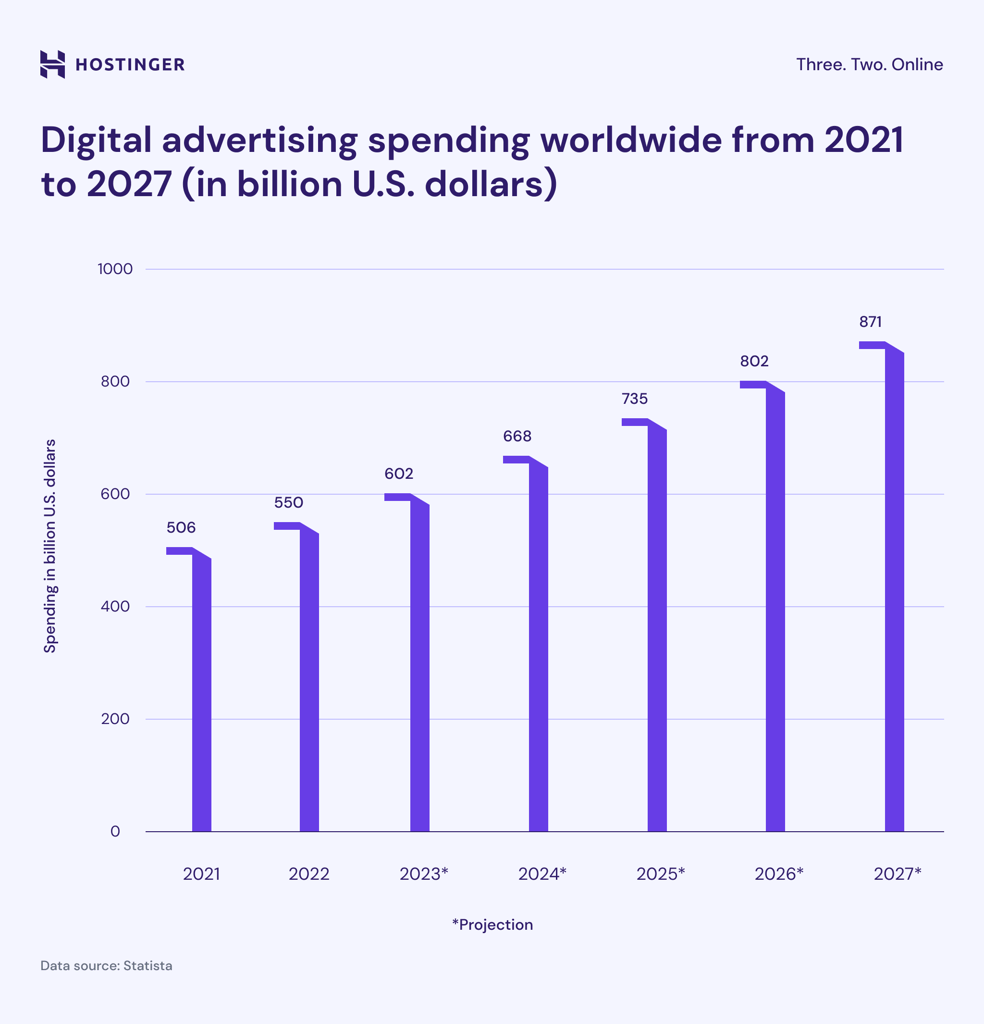
Global expenditures on digital advertising are projected to reach $734.6 billion in 2025. Spending on ads, including all platforms, will surpass the $800 billion mark by 2027.
10. The video advertising market will be worth around $207.5 billion in 2025
Users interact and spend more time watching videos, especially short-form ones. So, it comes as no surprise that companies are willing to invest $34.36 per internet user to create and promote video ads.
11. Google and Facebook continue to dominate the advertising space
Google boasts the highest digital advertising revenue among tech companies. By 2026, the search engine platform is projected to generate around $357 billion, comprising roughly 44% of global ad earnings.
The second-best major player in the digital advertising world is Facebook, which is expected to earn $203 billion from ads in the same period.
12. PPC is used by 32% of companies to drive direct-to-consumer sales
Pay-per-click (PPC) has a clear data path to measure success. Google is the biggest player in this field, with 82% of the PPC market share. If your business relies on PPC, keep an eye out for any changes or new launches from Google so you can adjust to scale up your digital marketing growth. According to the California-based tech giant, the average click-through rate for Google Ads is around 4% to 6%.
Expert tip
Pay-per-click advertising has proven to be a vital tool for driving direct-to-consumer sales. At Hostinger, we leverage PPC to target highly specific audiences, ensuring that every click delivers value. The ability to measure performance in real time and optimize campaigns makes PPC an indispensable strategy for businesses looking to accelerate growth in a competitive digital marketplace.

Hüseyin O.
Head of PPC at Hostinger
Content marketing statistics
Successful content marketing relies on storytelling. For small business owners with a limited budget, content marketing is a more affordable strategy for driving website traffic. Although the results won’t come as easily and as quickly as with search advertising, your efforts will pay dividends in the long run.
Let’s take a closer look at the six most important content marketing statistics you should know.
13. Content marketing revenue has increased by more than 10% annually since 2018
The global revenue of the content marketing industry is estimated to be at $94 billion in 2025, and it’s expected to grow 10.4% in 2026. Businesses and individuals trust content to lead their digital marketing strategies. 72% of marketers believe their content plan has increased engagement and traffic.
14. Around 84% of B2B marketers successfully created brand awareness through content marketing
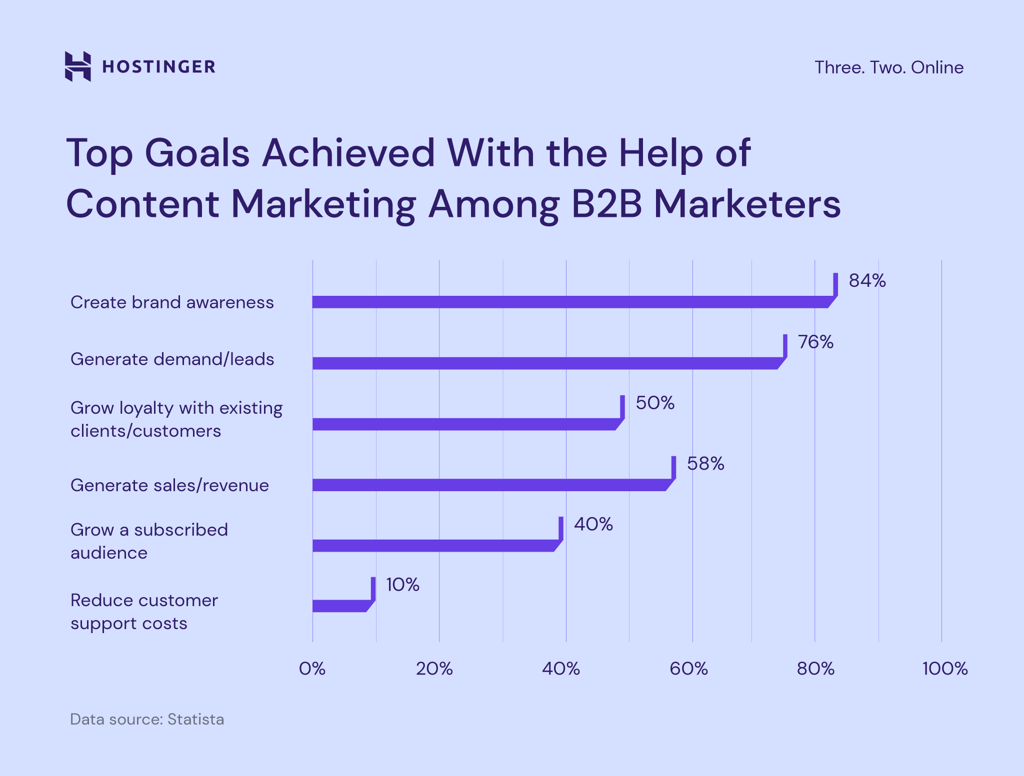
When asked which marketing goals B2B marketers achieved with the help of content marketing, 84% of respondents said brand awareness, 76% cited demand generation, and 58% mentioned a sales boost.
Some experts also noticed an increase in customer loyalty (50%), growth of a subscriber list (40%), and a reduction in customer support costs (10%).
15. The blog is the most popular content format
A whopping 76% of marketers use blog posts to distribute content. In terms of results, 10% said that blog content brings the best ROI, with 36% agreeing that it performs better than case studies, webinars, infographics, ebooks, and podcasts.
According to blogging statistics, active blogs contribute to a 434% increase in indexed pages and 97% more inbound links, making them a key driver of improved SEO performance.
Interestingly, more than half (55%) of bloggers believed that producing high-quality content is more important than making it SEO-friendly and partnering with influencers.
16. 7 out of 10 brands have a well-defined content strategy
Customer research, community building, and content quality improvement were the most heavily funded areas of content marketing.
As for the winning tactics, most experts highlighted the importance of publishing more often and combining SEO strategy with creative storytelling.
Expert tip
By investing in content quality and diving deep into customer research, brands can create compelling narratives that resonate with their audience. Moreover, having a well-defined strategy not only ensures alignment within the team but also facilitates clear communication with other stakeholders across the company, driving cohesion and long-term success.

Vakarė Simanaitytė
Head of Content at Hostinger
17. Marketers measure the impact of content with the levels of organic traffic and social media engagement
The combination of SEO, content marketing, and social media marketing is crucial for brand visibility. Businesses that adopted SEO strategies experienced a 40% increase in organic traffic, while those focusing on content marketing saw a 60% improvement in customer retention. Social media marketing tactics led to a 53% rise in customer engagement.
Surprisingly, ranking high on a search engine results page (SERP) is no longer the top priority for most brands and marketers. Focus has shifted to generating high-converting traffic through guest blogging on authoritative sites, building an email list, and engaging with the target audience on social media platforms like LinkedIn, Reddit, and Quora.
18. Thanks to AI, 68% of companies managed to increase content marketing ROI
Among those brands, 39% saw a moderate ROI increase, and 29% saw a significant rise compared to when AI tools weren’t involved.
However, 21% of the respondents said that their ROI stayed more or less the same, 10% weren’t sure, and 1% experienced an ROI decrease.
Video marketing statistics
The human brain is designed to process visual information faster than text, which is why videos are so effective in capturing the audience’s attention. Thanks to social video, video marketing has established itself as a powerhouse in digital marketing.
Exploit video’s full potential to boost user engagement by learning the facts about video and its trends:
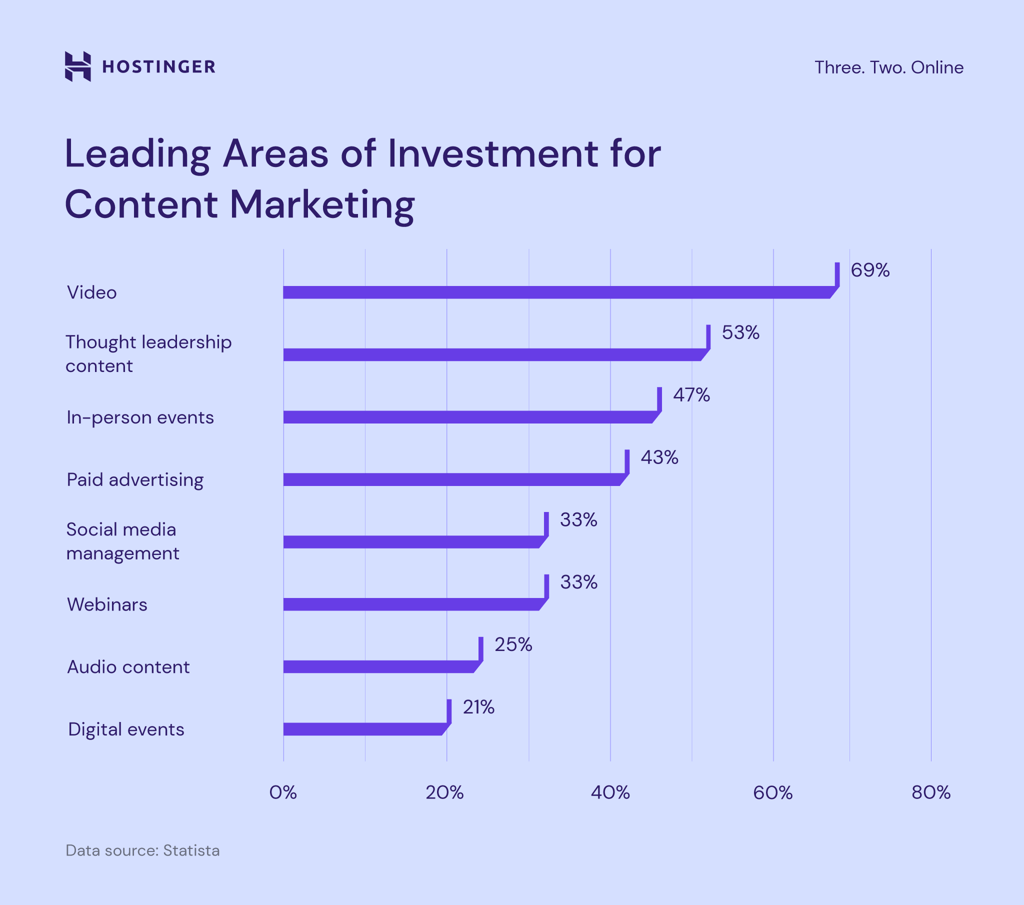
19. Roughly 69% of B2B marketers invest in video marketing
Five out of 10 B2B marketers prioritize thought leadership content as a key investment area. In-person events and paid advertising are also significant areas of investment, with 47% and 43% of marketers investing in these areas, respectively. (These categories are not mutually exclusive.)
20. Global online video viewership to reach 3.88 billion in 2025
In 2025, digital marketing campaigners will have to take a close look at video marketing. Digital video viewership grew from 2.78 billion users worldwide in 2019 to 3.88 billion by the end of 2024. This means that in the last five years, 40% more people have begun watching videos on the internet.
21. By 2025, 82% of internet traffic will come from video content
5G’s rapid worldwide adoption means it will serve 2 billion people by 2025, according to a GSMA report. This mobile technology enables faster video streaming, which particularly helps creators of short-form video content. Easy access to faster internet will make video a consideration for almost every digital marketing strategy.
22. Short-form interactive videos boost sales and conversions by up to 80%
One of the most impactful digital marketing statistics for 2025 is expected to come from short-format videos. According to Firework, the engaging nature of a video could help you increase sales and conversions by up to 80%.
Online shopping relies on short-form video platforms as well. 90% of consumers watch TikTok, YouTube Shorts, or Instagram Reels during their free time, the same study found.
23. YouTube is the most popular video marketing channel
As expected, around 90% of companies use YouTube to promote their video content. Facebook comes in second, with 86% of brands using it, followed by Instagram (79%) and LinkedIn (79%).
Expert tip
YouTube continues to dominate as the go-to platform for video marketing because of its massive reach, advanced analytics, and evergreen content potential. Brands that invest in YouTube not only gain visibility but also build lasting relationships with their audience through consistent, high-quality video content.

Gökhan O.
Head of YouTube at Hostinger
Surprisingly, major video platforms like TikTok and Snapchat are employed by a lower percentage than one might expect, used by only 35% and 13% of brands.
24. Most businesses include videos in their marketing strategy
The vast majority (91%) of businesses create videos as a promotion tool, and 96% continue to regard video as an integral part of their marketing strategy. Among those who have yet to use video marketing, 70% plan to do so.
25. Nearly half (47%) of companies invest in product demo videos
The top three types of videos that companies most frequently invest in are product demos, explainers, and recorded webinars. Meanwhile, brands spent the least amount of money on promos, thought-leadership content, and FAQ videos.
SEO statistics
Marketers use a search engine optimization (SEO) strategy to make their content stand out on search engine results pages (SERPs). When implemented properly, SEO helps your business site rank higher on Google, which in turn will bring in more organic traffic and, ultimately, sales.
Here are some statistics that highlight the importance of SEO in your marketing strategy.
26. Ranking first on Google means generating 39.8% of all organic clicks
Featured snippets get an even higher share of the traffic, with an average click-through rate (CTR) of 42.9%. For the second and third positions, the number drops significantly to 18.7% and 10.2%, respectively.
27. Google dominates the search engine market with a 91.37% share
Bing, as Google’s closest competitor, only gets 3.37% of the global market share. Other popular search engine platforms include Yandex (1.64%), Yahoo (1.1%), Baidu (0.99%), and DuckDuckGo (0.53%).
28. Before buying, 59% of online shoppers use Google to find reviews
According to the latest ecommerce statistics, Google is the go-to platform for most online shoppers when it comes to finding authentic reviews of a product or service.
That’s why now is the perfect time to set up a Google My Business account if you haven’t already. Encourage existing customers to leave a positive and honest review on your Google My Business page to improve your online reputation.
29. Mobile traffic makes up 84% of all Google visitors
87% of smartphone owners use a search engine every day, and 60% of consumers discover a new brand or product while browsing on their mobile devices.
Notably, 30% of all mobile searches are related to local stores. Among those who search for a nearby business, 76% visit it the very next day.
30. Long-tail keywords tend to perform better than broad terms
Pages targeting key phrases with five to nine words have a 31% CTR, almost twice as many clicks as single-word terms (16.5%).
Although there is no exact explanation for this phenomenon, experts suggest that longer keywords answer user intent better. Keeping in mind how to write SEO-friendly content will move the search needle in your favor. Visitors know exactly what they’re looking for and are thus more inclined to click.
31. Organic search brings the highest ROI for websites among all digital marketing channels
When it comes to acquiring website traffic, 49% of marketers found success in organic search, while 19% suggested that paid search yields the highest ROI. According to landing page statistics, embedding videos on landing pages can lead to an 86% increase in conversion rates.
Email marketing statistics
Email marketing is not dead. In fact, it is still one of the most effective strategies to build long-term relationships with your existing audience. The following email marketing statistics will reveal why that is the case.
32. There will be 4.73 billion email users in 2026
The current trend doesn’t suggest a dying user base in the slightest. Quite the contrary – the number of email users consistently increased each year from 2017 to 2022, and it’s set to grow to 4.73 billion users by 2026.
33. Global email marketing revenue is expected to reach $17.9 billion by 2027
Even though the market cap is not as big as content marketing and advertising, the steady growth of email marketing means that it’s still highly effective in driving conversions and nurturing customer relationships.
Email marketing offers direct access to consumers, allowing for personalized communication and targeted messaging. This often results in higher engagement and ROI for your campaigns.
34. Newsletters are the most popular form of email campaigns

In 2023, newsletters were used by 16.8% of marketers, followed by promotional content (15.3%), lead nurture campaigns (11.6%), and welcome emails (11.6%). The least popular type of email marketing was cart abandonment messages, with only 5.7% of professionals using it.
We have a dedicated tutorial on creating an email newsletter—check it out if you want to connect with your audience via their inboxes.
35. The average email click-through rate is 1.89%
That said, the exact number depends on your specific industry. For example, communications and publishing companies have the highest click-through rates, at 5.77% and 5.43%, respectively.
There are also industries with lower-than-average CTRs, such as beauty (1.78%), health care (1.72%), and internet marketing (1.68%).
36. Automation is more common in email marketing than in social media and content management
58% of marketing decision-makers use automation in their email campaigns – this is higher than both social media management (49%) and content management (33%).
Thanks to automation, marketers can send emails based on a predetermined schedule, ensuring timely delivery without the need for manual intervention. The best part? It actually brings positive results, as around 33% of recipients who opened automated emails ended up making a purchase.
Social media marketing statistics
Digital marketing can not be properly evaluated without social network stats. Social media marketing combines customer connection, interaction, and data to market products and services. With more than 5 billion active user accounts through all social media platforms, the opportunities to engage with your audience are endless.
According to our social commerce study, 82% of consumers use social media for product research. The following facts will inspire your creativity so you can blossom on multiple channels.
37. Global market value of influencer marketing is set to reach a record-high $23.6 billion in 2025
One of the main social media marketing predictions for 2025 is that brands will be willing to spend more on influencer partnerships than ever before.
Working with well-known content creators on platforms like Instagram and TikTok can open the door to better brand awareness, user engagement, and product sales.
38. TikTok will establish itself as the second-best social media platform for purchasing products
TikTok is the fastest-growing social media platform, with a 200% increase in advertising revenue. In 2022, the short-form video platform generated $11.6 billion from ads, and this sum is expected to triple to $33.6 billion by the end of 2025.
Although it still has a long way to go if it expects to match Facebook’s numbers, TikTok’s rapid growth and unique user demographics signify its emergence as a promising platform for advertisers looking to reach a younger generation of consumers.
39. Nearly 50% of millennials find influencer recommendations more engaging than regular ads
While traditional advertising is still very effective, millennials trust the opinions of influencers more these days. 45% said that they are more likely to buy products recommended by influencers.
40. Increased exposure is the leading benefit of using social media for marketing purposes
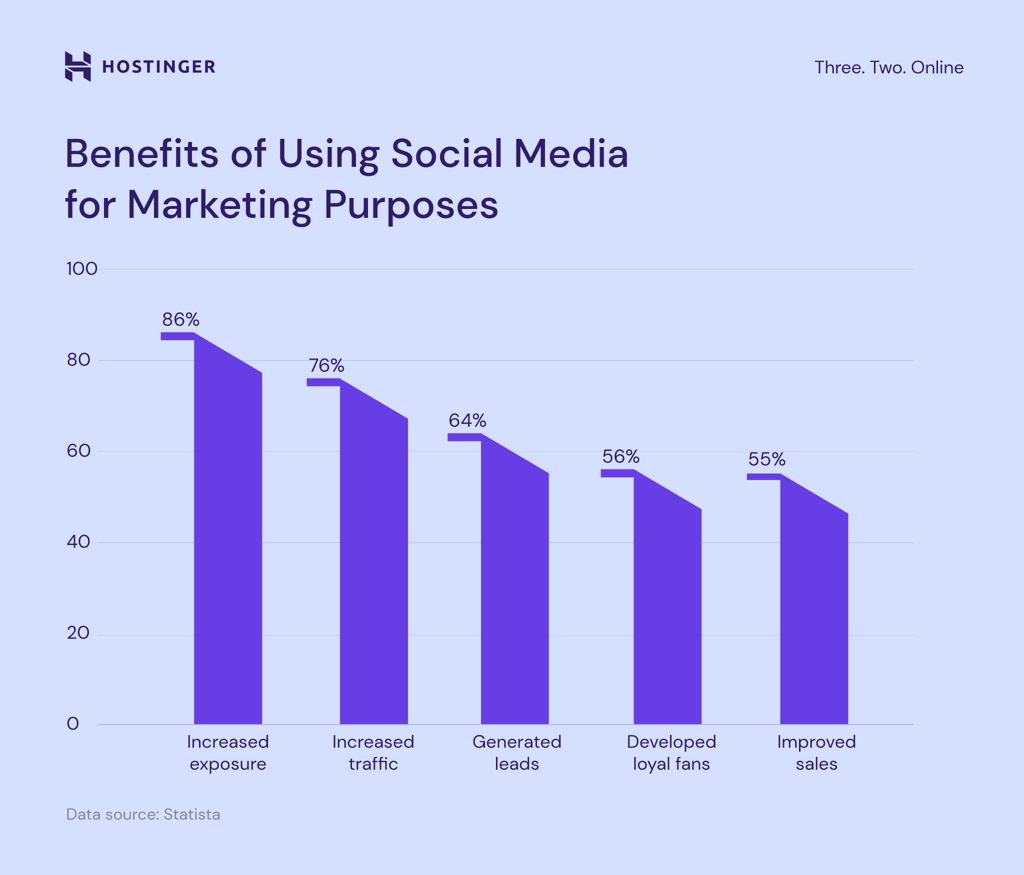
86% of marketing professionals identified social media as a key benefit of improving brand exposure. Increased site traffic was named as a benefit by 76%. Marketers also recognized lead generation (64%), building a loyal fan base (56%), and boosted sales (55%) as benefits of social media marketing. (Percentages are not mutually exclusive.)
41. Facebook dominates millennial shopping, while Gen Z prefers TikTok

According to our most recent social commerce statistics, social media platforms are among the most visited websites in the world, making them powerful tools for businesses to increase visibility and drive sales.
Facebook is the most widely used among millennials (53%), while TikTok Shop takes the lead for Gen Z at 40%. Millennials also trust TikTok (35%) and Instagram (34%) for online shopping. In the case of Gen Z, Facebook (35%) is the second option, and no other platform has surpassed 30%. (Percentages are not mutually exclusive.)
Marketing technology (MarTech) statistics
The marketing industry is changing fast. AI is becoming key for many businesses. According to our latest survey on AI in business, 56% of businesses are in early or moderate adoption stages, while 20% are advanced adopters.
Remember, every new breakthrough puts us all at square one. Your big idea needs to align with the latest emerging technologies. Learn how marketing technologies can help your company optimize its strategies, enhance customer experiences, and drive measurable results like never before.
42. The market size of marketing technology reached $406.56 billion in 2024
Although it decreased 39% from $670 billion in 2023, the market is projected to grow at 8.1% per year over the next 9 years. By 2033, the value of the MarTech industry will hit $822 billion. This upward curve means companies of all sizes are expected to invest in new tools or resources to optimize their marketing efforts.
43. Nearly 36% of business leaders believe AI will transform their operations within the next 3 years
Our survey on AI in business also found that at least one of every three people in leadership positions predicts AI will change how logistics and operations are run in the next 2 to 3 years.
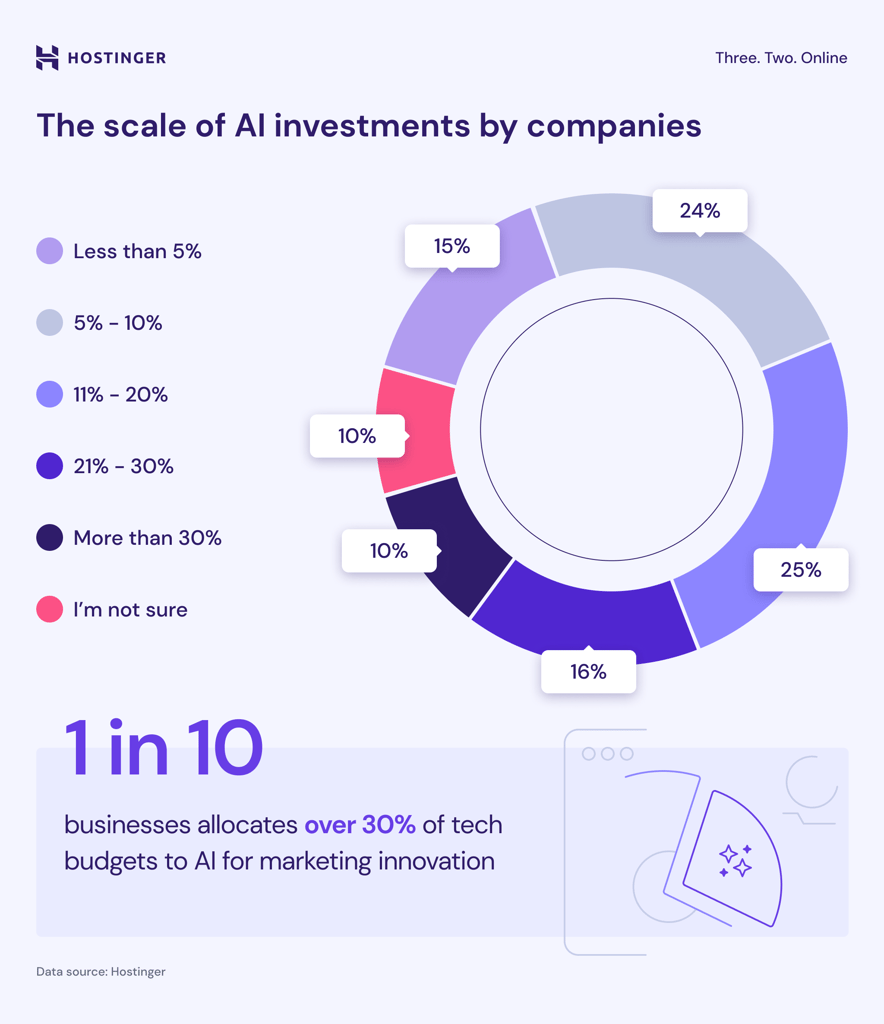
44. Half of all businesses are using Generative AI to improve creation around content, data, or images
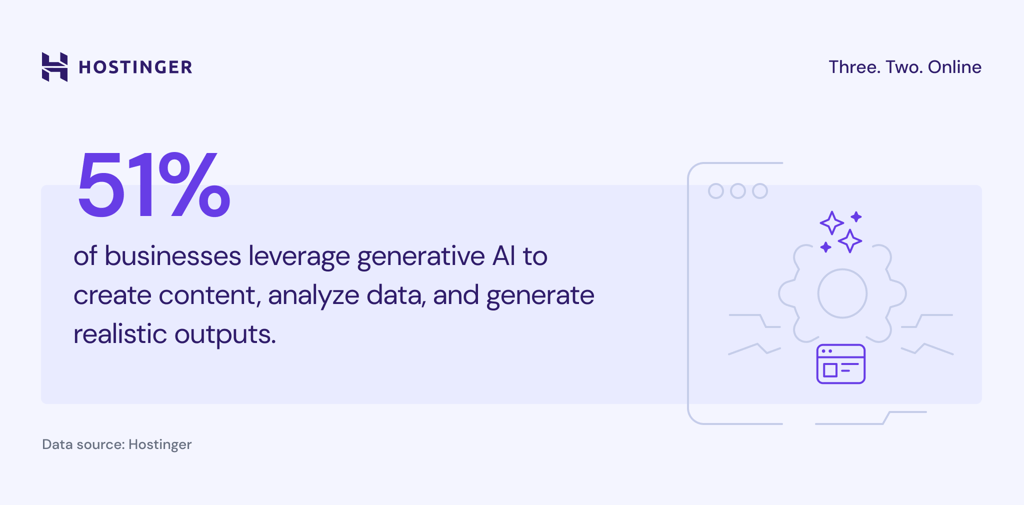
Virtually every AI-related announcement since ChatGPT’s big public launch in 2023 has demonstrated a clear connection to digital marketing tools or operations. This might involve creating content, analyzing data, or generating realistic outputs. 51% of businesses are now using generative AI for these purposes.
45. Marketers employ AI to optimize content creation
Producing high-quality content is a time-consuming process, and small businesses sometimes don’t have the resources to do that consistently. AI tools can help reduce costs and speed up the process.
Marketing professionals use AI to create first drafts (54%), optimize content (43%), check spelling and grammar (42%), paraphrase and summarize (38%), create tone of voice guidelines (27%), and perform translation tasks (25%).
46. Six out of 10 marketers state that improved targeting is the main benefit of marketing automation
More than half of marketers (60%) believe improved targeting is marketing automation’s leading advantage. Industry experts also acknowledge higher efficiency (40%) and ROI, as well as better customer experience (39%), as positive consequences.
47. Higher cost: 53% of experts find marketing technology too expensive
When asked to identify any drawbacks to their current marketing technology stacks, 53% of marketers said that they are too expensive, and 28% felt overwhelmed by the complexities.
Other top complaints included the lack of tool integrations (25%), customization capabilities (20%), and customer support (17%).
Future of digital marketing
Digital marketing is always evolving, and staying updated with the latest trends is key to staying ahead of the competition. Your online strategy has multiple options. Which one should you focus on? It will depend on your business type and goals.
From paid advertising to a blog post, you must consider the needs and wants of your buyer persona. Test different marketing channels and tactics to find what works for your business. Don’t forget to try combining digital marketing with other strategies, like affiliate marketing, as this could also boost your results.
We have been where you are, and our (unsolicited) advice is to pivot and adjust your digital marketing strategy accordingly if new tools or trends emerge in the future.
Sources
- Statista
- Forbes
- HubSpot
- Semrush
- Exploding Topics
- WPBeginner
- GetResponse
- Search Engine Journal
- Backlinko
- Statcounter
- First Page Sage
- Vidyard
- Wyzowl
- QuickFrame
- Ascend2
- Iterable
- Gitnux
- IMARC Group
- Gartner
- Market.US
- Colorlib
- The Business Research Company
- Zenodo
- Business Research Insights
Digital Marketing Statistics FAQ
What is digital marketing?
Digital marketing aims to communicate, promote, and deliver products and services with unique value to customers through online channels.
Different industries implement digital marketing strategies with varying success, but some stand out because of their recent rapid development, such as retail, healthcare, education, media, and hospitality.
What percentage of businesses use digital marketing?
Around 58% of small businesses use some form of digital marketing. The most popular digital marketing channels or strategies for small businesses are social media, websites, email marketing, SEO, video, and content marketing.
How rapidly is the digital marketing industry growing?
The digital marketing industry is expected to grow at a compound annual growth rate of 13.6% for the next decade and to reach a market size of $1.3 trillion by 2033.
Is digital marketing more effective than traditional marketing?
It depends on your goals. Traditional marketing channels like television commercials are great for reaching broader audiences and building brand awareness.
On the other hand, digital marketing is more effective when targeting specific demographics. It provides more detailed analytics, so you can perform A/B testing, track ROI, and adjust strategies in real time.
Can I be successful with a career in digital marketing?
According to Forbes, digital marketing is one of the fastest-growing and most in-demand skills for 2025 and beyond. In fact, digital marketing job growth is projected to increase by 6%, which is higher than the average job growth rate.
If you’re interested in a digital marketing degree, search for free courses and review job descriptions for social media managers, graphic designers, content writers, SEO specialists, and web developers. Once you’ve gained enough experience, you could even start your own digital marketing agency.
This article is a localized version of 47 key digital marketing statistics for strategic growth in 2026, originally published in English.

Ricardo is a data journalist and visualization expert with over seven years of experience uncovering insights through data storytelling. His work focuses on data exploration, geospatial analysis, and interactive visualizations, helping audiences understand complex information through compelling narratives. His projects have been featured in Statista, Forbes, La Nación, among others. When he’s not analyzing datasets, Ricardo enjoys brewing specialty coffee, watching sports, and reading fiction. Follow him on LinkedIn or check his Portfolio to see his latest work.



Comments
0 responses