10 newsletter examples to inspire your email campaigns
May 18, 2026
/
Alma
/
10 min Read
Email newsletters remain one of the most effective channels for driving traffic, retaining readers, and converting subscribers into customers – but only when you send the right format for the right goal. The challenge most people run into isn’t technical. It’s not knowing what to actually send.
Good examples cut through that. Seeing what a promotional email actually looks like, or how a well-structured welcome sequence is built, makes the decision much easier than reading about it in the abstract.
The 10 examples below cover the most useful newsletter types – promotional, educational, welcome, and more – with a breakdown of what each one includes, why it works, and when to use it.
- Welcome newsletter
- Product update newsletter
- Newsletter with curated content
- Event invitation newsletter
- Educational newsletter
- Seasonal promotion newsletter
- Customer testimonial newsletter
- Company news newsletter
- Interactive newsletter
- Digest newsletter
1. Welcome newsletter
A welcome newsletter is the first email you send to someone after they join your list. It introduces your brand, tells subscribers what’s coming, and gives them a reason to keep reading.
According to GetResponse, welcome emails consistently outperform every other email type, with average open rates around 80%. The person receiving it just signed up, so they’re actively paying attention.
A welcome newsletter typically includes:
- A short intro about who you are or your brand
- What kind of emails subscribers will get (and how often)
- One clear call to action (CTA), like “browse our guides” or “shop new arrivals”
- An optional discount or freebie as a thank-you
The tone should feel warm and personal. Write it like you’re greeting someone who just walked into your store. A short line about why you started or what you believe in also gives context without overwhelming.
Keep the CTA to a single action so readers aren’t forced to choose between three buttons. And send it right after signup. You have their full attention the moment they subscribe, so don’t let that window close.
Example: Glossier sends a welcome email with the subject line “Cheers to our new friendship.” It opens with a 15% first-order discount and a unique code, followed by a short brand philosophy section: “Skin First. Makeup Second.”
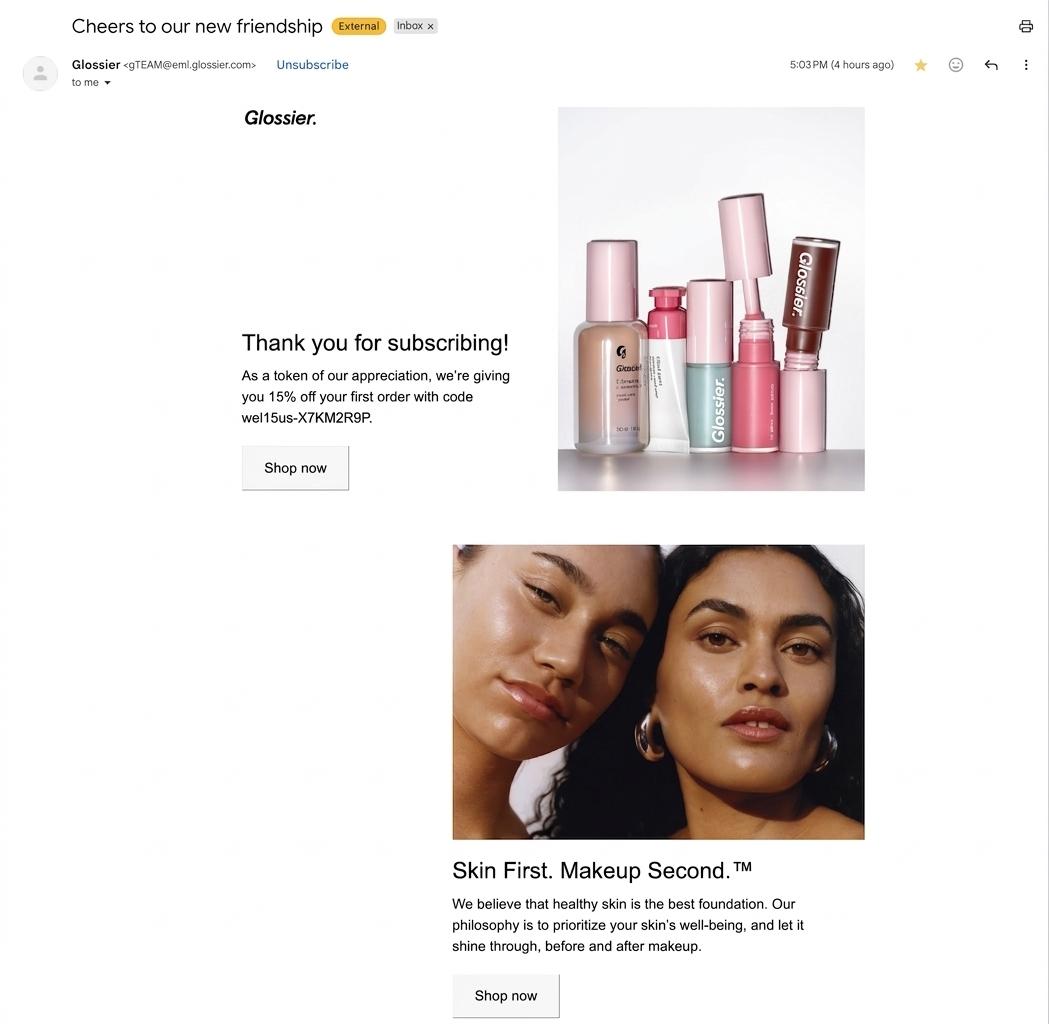
Further down, a “Start Here” grid highlights four bestsellers with one-line descriptions and individual Shop Now buttons. The email closes with a note that “Every order comes with a sticker.”
The whole email stays focused on one goal: getting the reader to browse.
Your welcome email also shapes how subscribers interact with every email after it. A strong first impression trains people to open, read, and click.
Starting from scratch? Build an email list with people who want to hear from you first.
2. Product update newsletter
When you release a new feature or update, a product update newsletter explains what changed and why they should care. You’re keeping people informed while giving them reasons to use your product more.
The best product update emails lead with what’s changed for the user, not what changed in the code. “You can now export reports in one click” is miles better than “We added a new export function.”
A strong product update email has:
- Feature announcement. Describe the benefit in one sentence, not the technical detail.
- Visuals. Add a screenshot or short GIF so users can see the change.
- CTA. Link directly to the feature so readers can try it right away.
- Tone. Keep it short. Two to three sentences per update is plenty.
For the timing, it’s best to send product update newsletters after meaningful feature releases or improvements. Skip the minor bug fixes. Save updates for changes your users will actually notice and use.
Example: Miro sends a monthly “What’s New in Miro” email with a subject line that highlights the biggest update. The March ’26 edition opens with a personal greeting, a short paragraph framing the theme, and a See what’s new button.
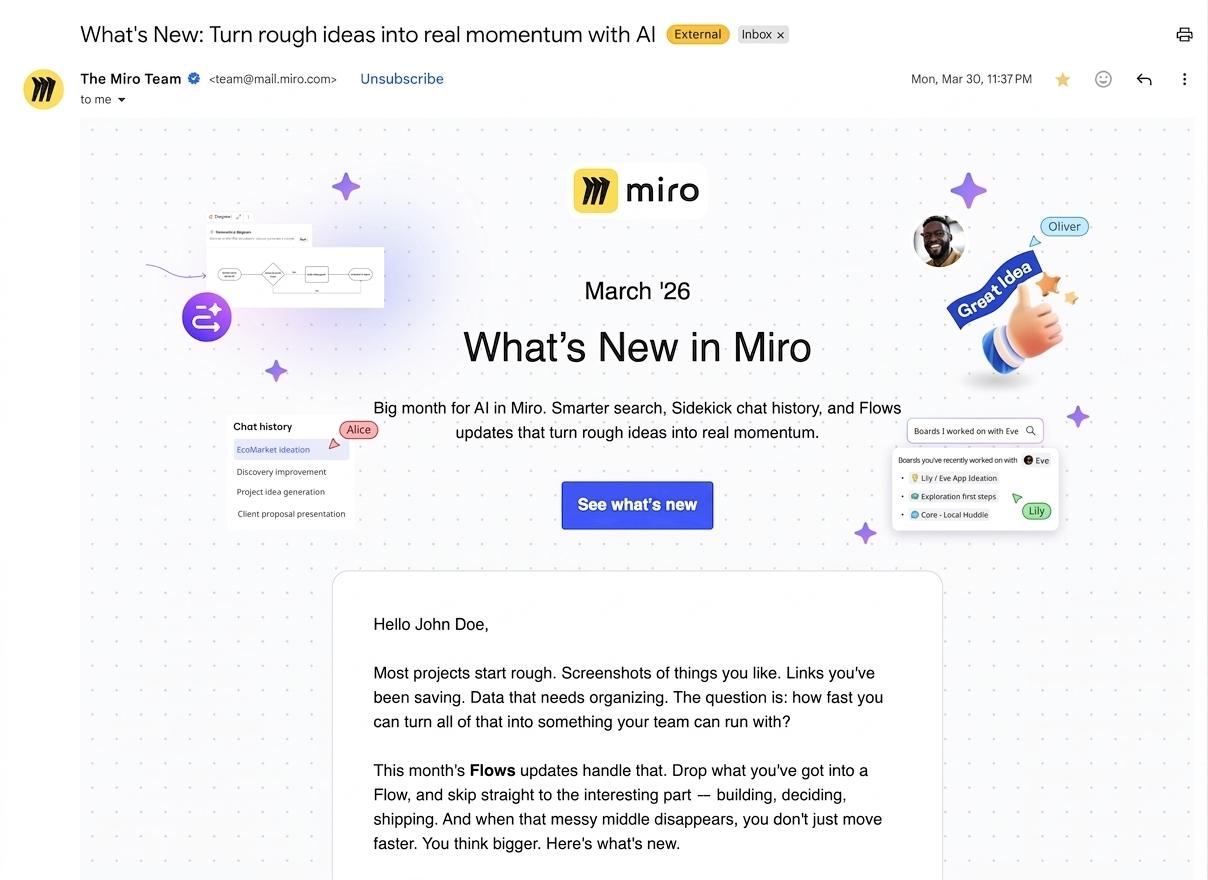
The rest of the email walks through five feature updates one by one. Each gets a headline, a benefit-focused sentence, a visual, and its own CTA link. A related webinar invite and links to the full changelog round out the bottom.
3. Newsletter with curated content
Instead of producing original content, a curated newsletter does the research for your readers – but the value isn’t just saving them time. It’s your judgment. You decide what’s worth reading, what isn’t, and why it matters to your specific audience.
Most curated newsletters pull from articles, tools, and news across the web, organized around a clear theme or niche. The format varies: some present links with brief commentary, others weave them into a more editorial narrative.
What stays consistent is the perspective – readers come back because they trust the curator’s eye, not just the content itself.
That trust depends on two things: consistency and focus. When readers know they’ll get your take on the same topic, on the same day each week, you stop being just another newsletter. You become their filter.
What separates strong curated newsletters from weak ones is:
- Tight niche focus. Cover one topic area well instead of linking to random articles.
- Clear section headings. Let readers jump to the category they care about.
- Brief descriptions. Two sentences per link. Say what the piece covers and why it’s useful.
Example: Medium takes a different approach to curation. Instead of themed sections, it sends a Daily Digest personalized to each reader’s interests and reading history. The email lists around 15 recommended articles under a “Today’s Highlights” heading, each showing the author, headline, a one-line summary, read time, and metrics like claps and comments.
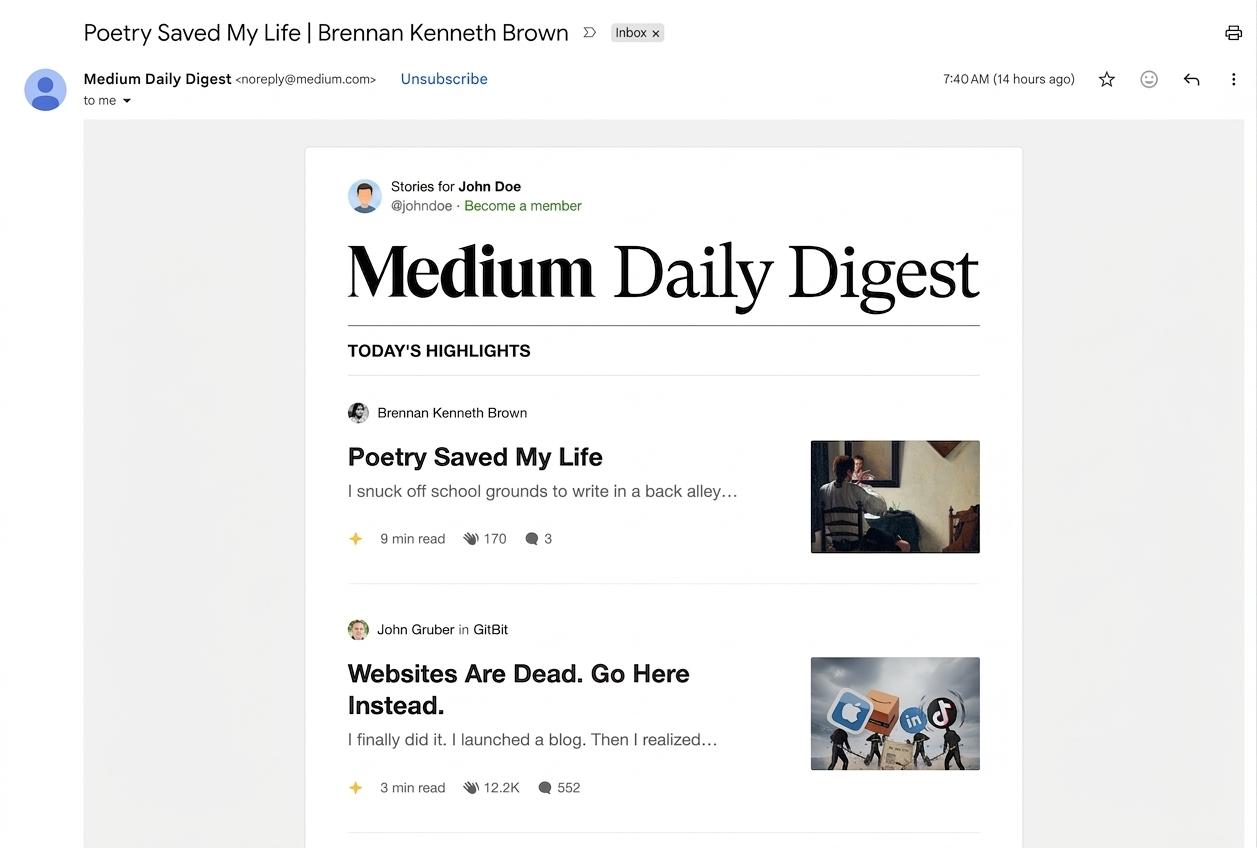
At the bottom of the newsletter, there’s a Control your recommendations button to adjust what you’ll see next time.
4. Event invitation newsletter
An event invitation newsletter promotes an upcoming webinar, workshop, or launch and drives people to register. Every element in this email should point toward one action: getting the reader to sign up.
Be sure to include these details if you’re writing an event invitation:
- Date and time (with time zone) so readers decide instantly if they’re available
- Event topic or agenda that tells them whether the content fits their needs
- Speaker or host info, which adds credibility and personal connection
- Registration button like one obvious CTA, visible without scrolling
Besides mentioning the speaker, sharing past attendee numbers or results from previous events also helps build trust. It shows people what to expect and why it’s worth joining.
Urgency helps too. Lines like ‘Only 100 spots left’ or ‘Registration closes Friday’ give people a reason to act now. To make that work, send your first invite two to three weeks before the event, follow up a week later, and send a final reminder the day before.
Example: Canva promotes its annual Canva Create event through a series of emails branded as “The Unofficial Newsletter.” The March 2026 edition uses memes, a behind-the-scenes mockumentary teaser, and a playful tone to build hype in the weeks leading up to the event.
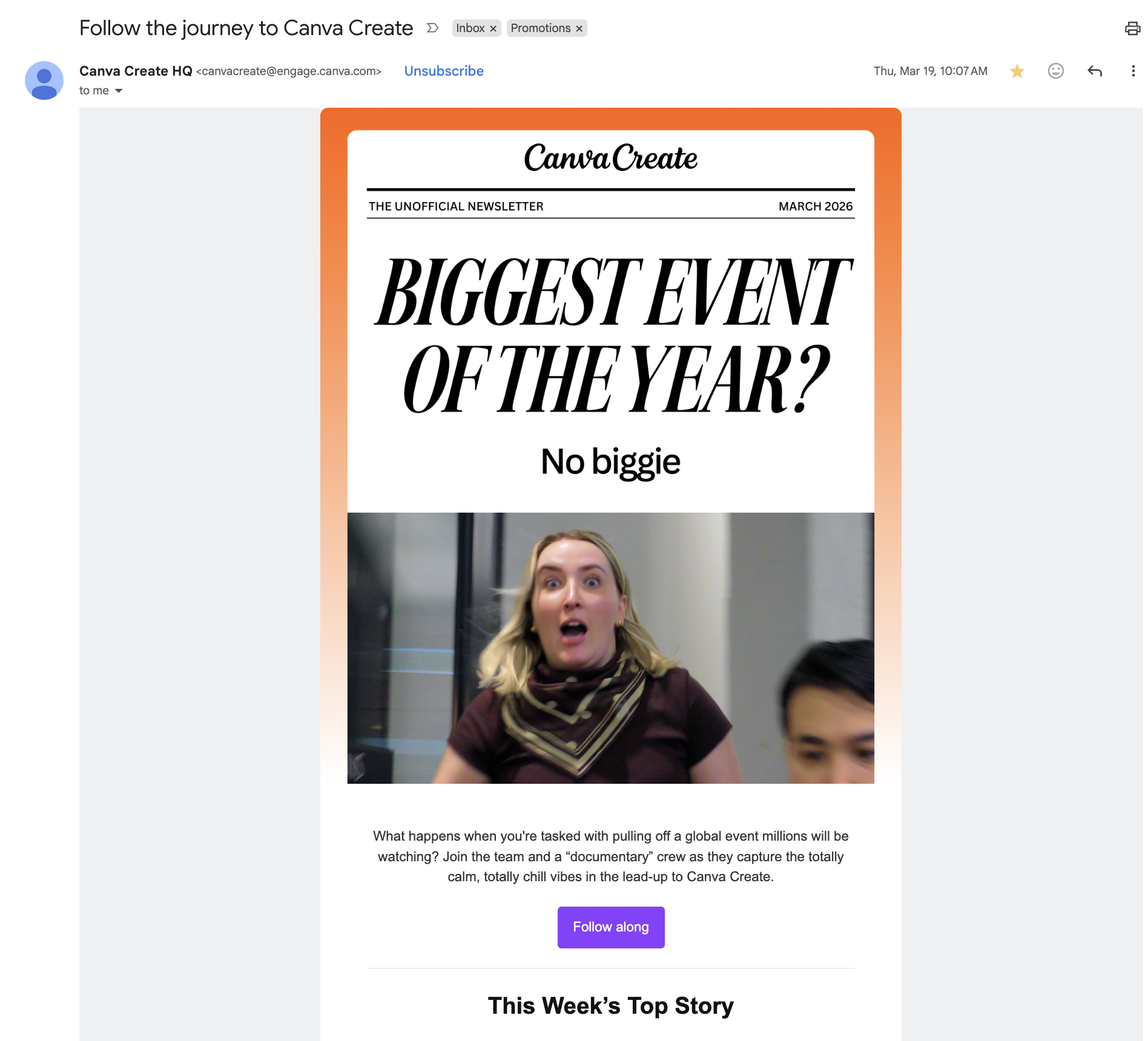
Despite the creative format, the structure still does the job. Event details and a Register for the keynote button sit near the bottom, and the whole email builds toward that one action.
5. Educational newsletter
An educational newsletter teaches your readers something they can use right away – a practical tip, a step-by-step walkthrough, or common mistakes to avoid.
This type of email builds trust faster than any sales pitch. When you consistently help people solve problems, they start treating you as the expert in your space. The way you do that is by keeping each email focused on one topic and making it useful and actionable.
Keep explanations simple enough that someone new to the topic can follow along. And end every tip with something the reader can do today, not a vague suggestion to “revisit their strategy.”
Strong educational emails share a few traits:
- One focused topic. Don’t cram three lessons into one email.
- Plain-language explanations. Write as if your reader has never done this before.
- A concrete next step. “Change this setting in your dashboard” beats “consider adjusting your approach.”
- Scannable format. Numbered steps, bold key phrases, and short sections help readers absorb the content fast.
Example: AXA’s email titled “Your Vacation Essentials Checklist” walks readers through five things to sort out before a summer trip: airport taxes, customs regulations, visa requirements, vaccinations, and embassy locations. Each item gets a visual and a one-line explanation of what to do.
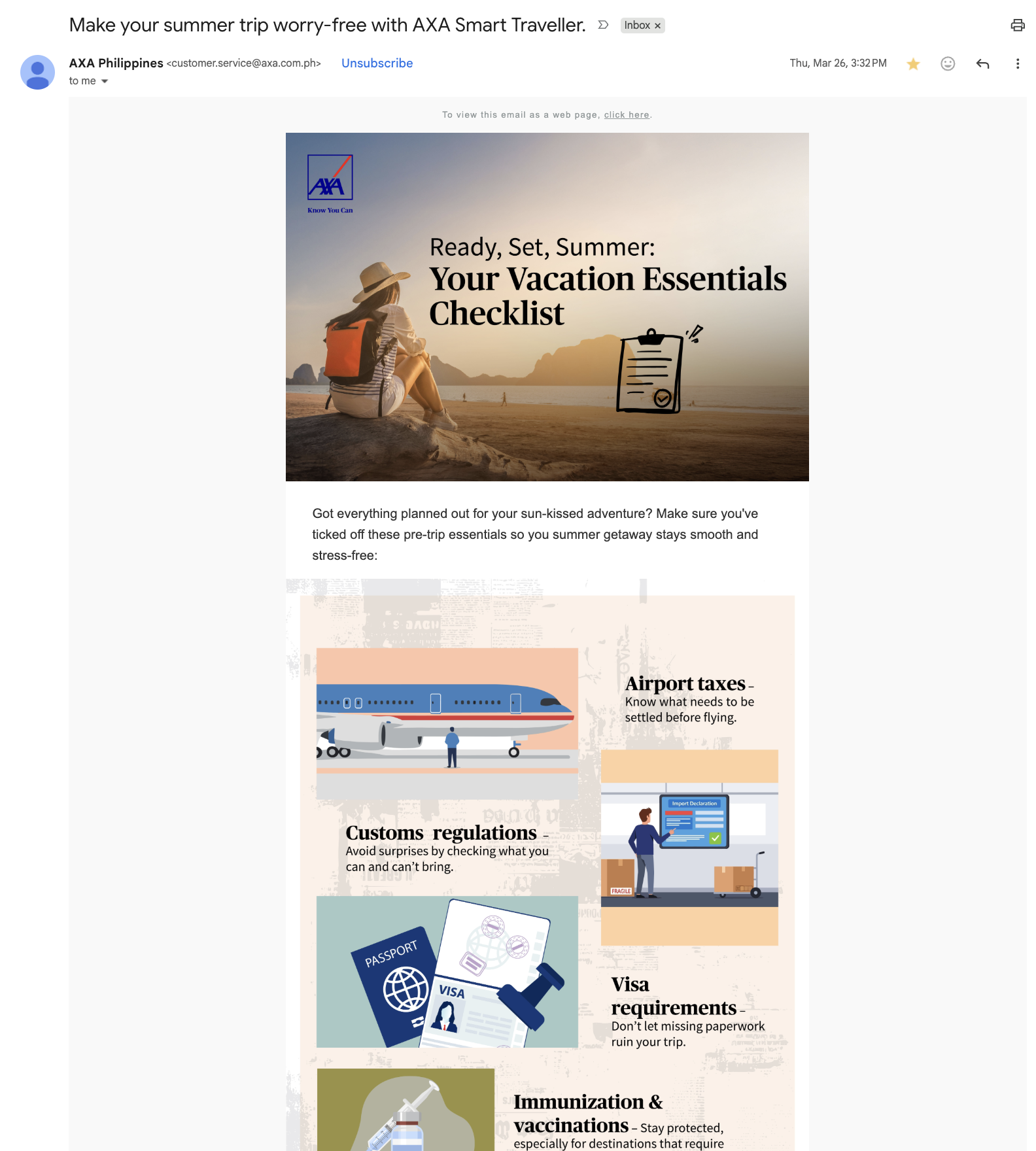
The insurance pitch only shows up at the bottom. Everything above it is practical, useful, and free of selling.
6. Seasonal promotion newsletter
Black Friday, back-to-school, New Year’s. A seasonal promotion newsletter ties your offer to a holiday or time of year when people are already looking to buy.
These emails usually include a limited-time offer, seasonal visuals, and a clear deadline. When the timing and the urgency are both right, people click.
A few keys to getting seasonal emails right:
- Set a real deadline. A countdown timer or a specific end date (“Ends Sunday at midnight”) pushes people to act rather than bookmarking and forgetting.
- Keep the CTA direct. “Shop the sale” or Grab your deal” works well. Don’t make readers guess what to do.
- Match the timing. Promoting Black Friday in early October feels off. Send seasonal emails when your audience is already thinking about that holiday or event.
Example: Steam runs major sales every season – Spring, Summer, Autumn, Winter – and their audience actively looks forward to them. That built-in anticipation is what makes their seasonal emails so effective.
Their sale emails pull directly from your personal wishlist, so the subject line features games you’ve already saved. One example: “Cyberpunk 2077 and 7 other items from your Steam wishlist are now on sale!” The email opens with a sale banner, a clear deadline, and a Browse the Sale button.
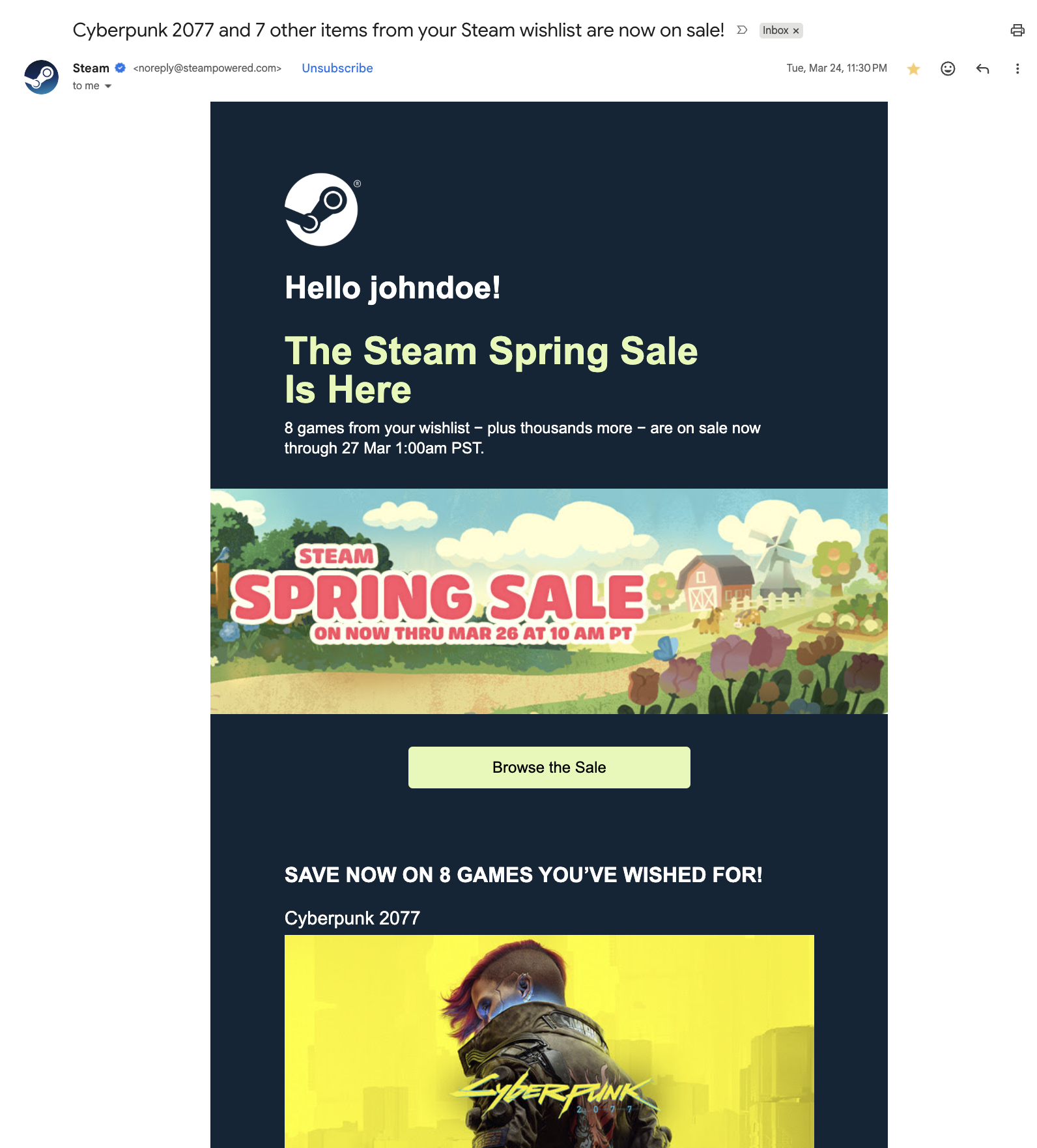
Below that, each game appears with its cover art, discount percentage, and sale price. One View your Wishlist button at the bottom wraps it up.
7. Customer testimonial newsletter
A customer testimonial newsletter features real reviews, success stories, or case studies from people who’ve used your product or service. Your customers can often sell what you offer better than you can.
People trust other people more than they trust branded content. A specific success story with real numbers and a relatable starting point can do more for your credibility than any landing page.
The strongest testimonial emails share three qualities:
- Real words from real people. Use the person’s actual language, not a polished rewrite. Readers can spot the difference.
- Specific results. “My sales went up 40% in two months” is more convincing than “Great product, love it.”
- Visual proof. A photo or logo next to the quote makes the story feel grounded.
A reader on the fence will often take action after seeing someone in a similar situation share their results.
Example: UNHCR isn’t selling a product, but its newsletter structure follows the same testimonial format. Real people, real outcomes, used to show supporters that their contribution made a difference.
Their April 2026 newsletter features two personal stories: Ina, whose family gained access to rights and livelihood support, and Anna, who fled Ukraine and rebuilt her life in Moldova.
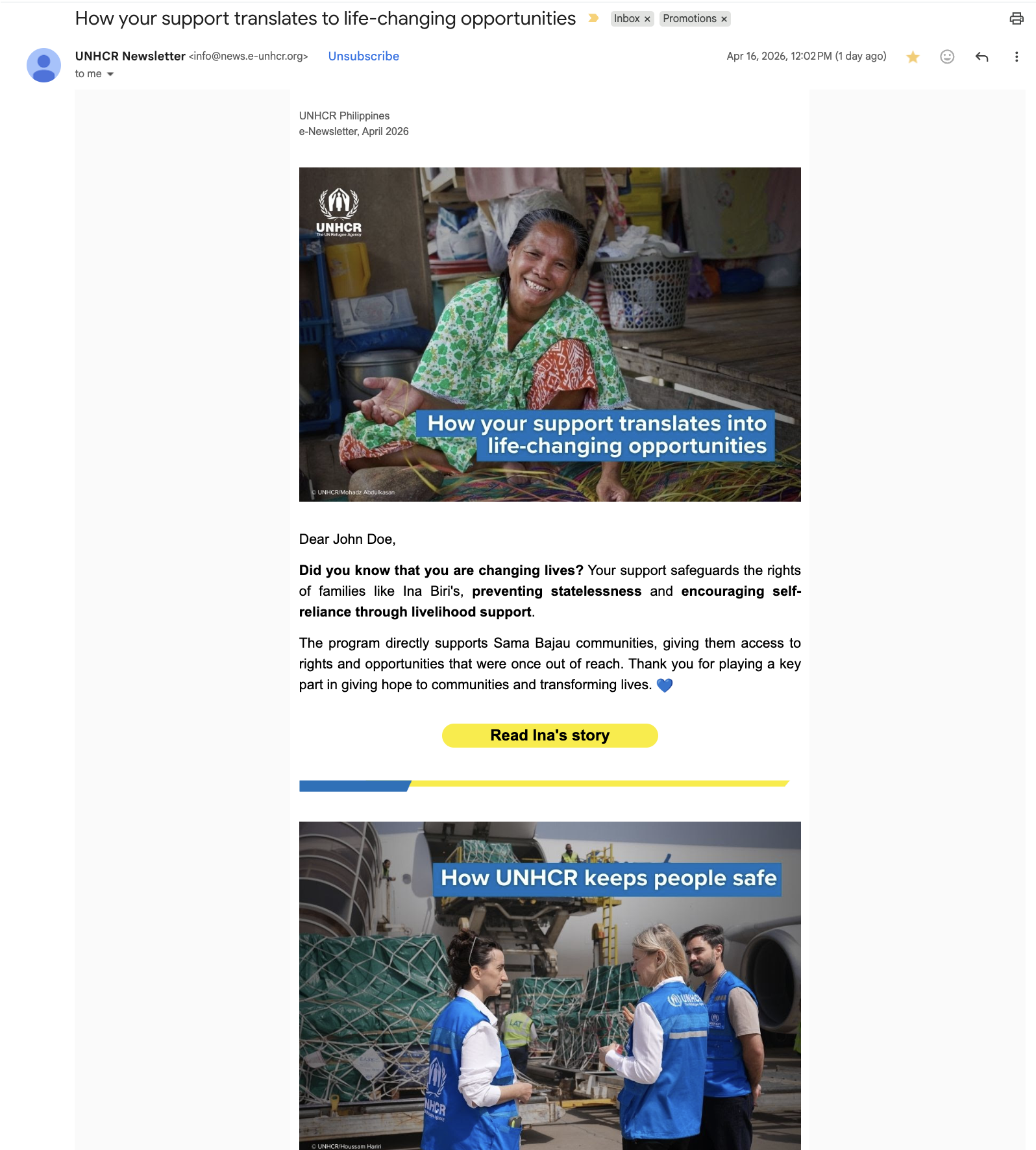
Each story includes a photo, a short narrative, and specific outcomes, such as 30,000 refugees supported with clean water. The Read Ina’s story and Read Anna’s letter buttons link to the full versions on UNHCR’s site.
8. Company news newsletter
A company news newsletter shares your milestones, team updates, or announcements to keep subscribers connected to the people behind the product. Not every email needs to sell something, and this type never does.
Choose updates your subscribers would actually care about. “We hit 10,000 customers last month – here’s what we learned along the way” is relevant. “We rearranged the office layout” isn’t.
Once you’ve picked the right updates, how you write them matters just as much. Write like you’re telling a friend what’s been going on at work. Be transparent, keep it brief, and focus on what’s ahead rather than only looking back.
Content ideas for company news emails:
- Product or growth milestones
- New team members or leadership changes
- Partnerships, expansions, or new directions
- A personal note from the founder or CEO
Example: &you sends a founder letter with the subject line “A note from the founder.” There are no images, no banners – just a plain-text email from founder Emil Eriksen explaining why he built the company, what problem he saw, and what the team set out to fix.
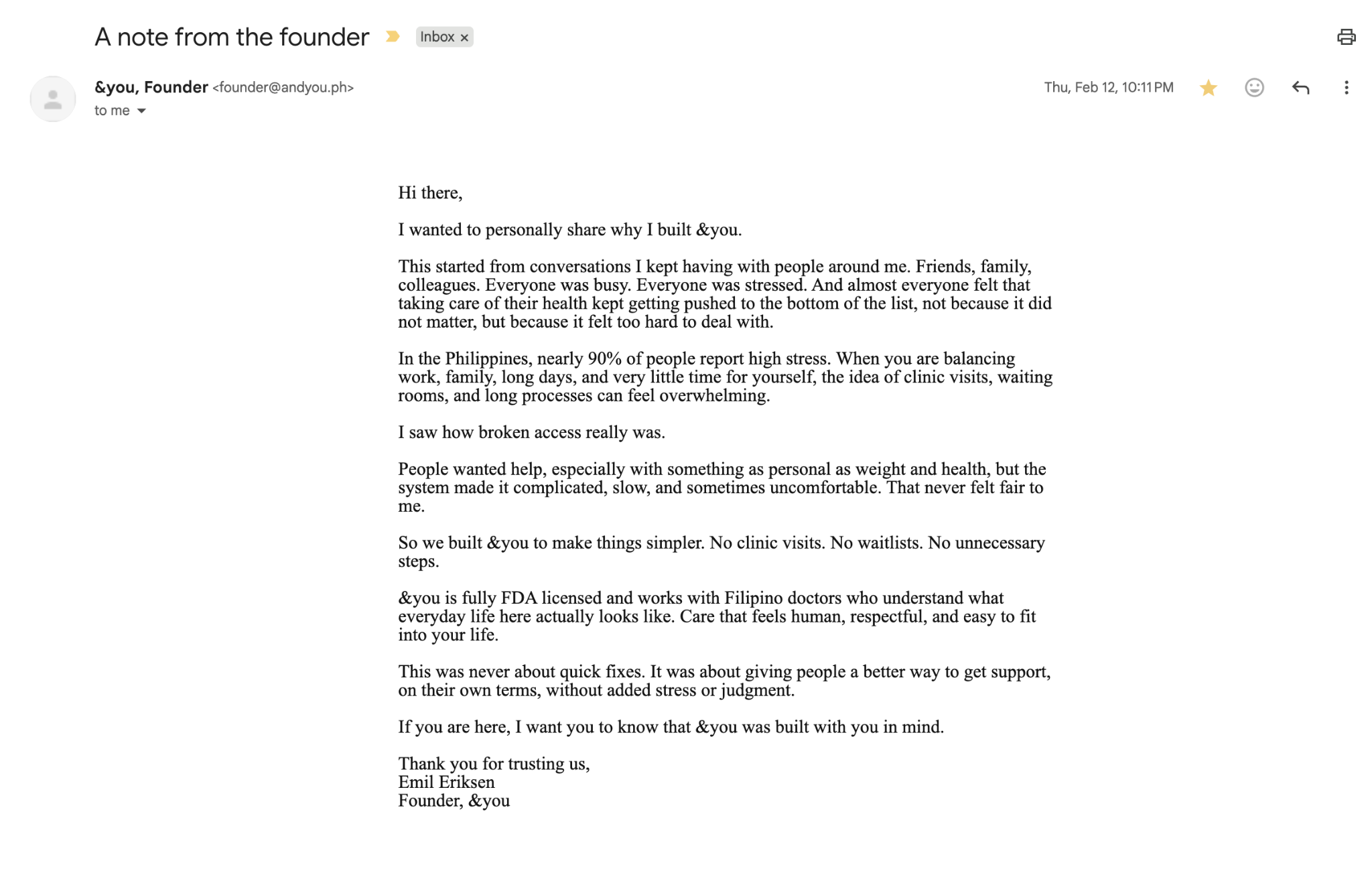
It reads like a personal message, not a marketing email. Subscribers pay attention when they feel like they’re hearing from a real person with a real reason for building something.
9. Interactive newsletter
An interactive newsletter asks readers to do something inside the email instead of just reading it. Vote in a poll, take a quiz, tap a “this or that” image, or answer a quick one-question survey.
Keep the interaction limited to a few clicks. A single-question poll or a quick quiz is enough. You’ll lose most people once an interaction takes more than 30 seconds.
Even something small can get more people to respond. For example, telling them “see how you compare to others” or “we’ll share the results next week” gives them a reason to take part.
These emails also give you useful insights. Each response shows what your audience is interested in – like which topics, products, or preferences matter most to them.
People who vote or answer a question are more likely to open your next email because they feel like part of the conversation rather than just an audience.
Example: Airbnb’s inspiration emails open with “What are you in the mood for?” and four tappable image blocks: Top destinations, Pet-friendly homes, Family getaways, Waterfront retreats. You tap one, and you’re taken to matching listings.
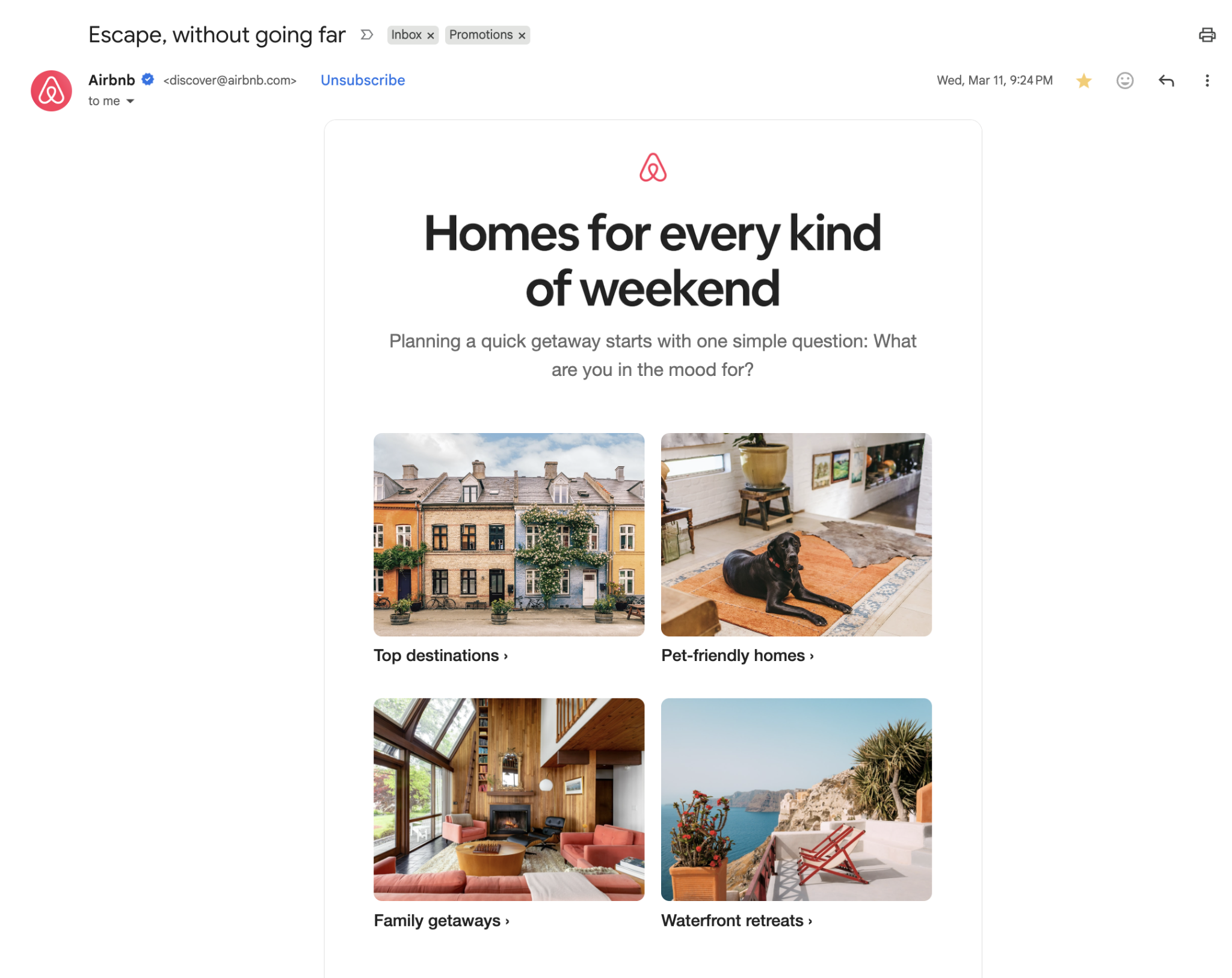
Below the categories, the email shows personalized property picks with prices, ratings, and dates. A “Build your wishlist together” section at the bottom invites you to save places and let friends vote on favorites.
10. Digest newsletter
Sending five separate emails can overwhelm people. A digest newsletter solves that by putting your key updates, content, and links into one email. Instead of multiple messages, subscribers get one clear summary they can quickly scan.
Digest emails work best when they’re easy to skim:
- Clear sections. Use headings so readers can skip to what interests them
- Consistent schedule. Send weekly or monthly, so subscribers know when to expect it
- Short summaries. Two to three lines per item, with a link for anyone who wants the full version
Your readers are busy. A good digest takes about two minutes to scan. They pick the one or two items they care about and move on.
Example: Morning Brew’s daily digest opens with a short, playful intro and a bullet-point preview of the day’s top stories. Sections like “Markets” and “World,” along with rotating themed headers, break the email into scannable blocks.
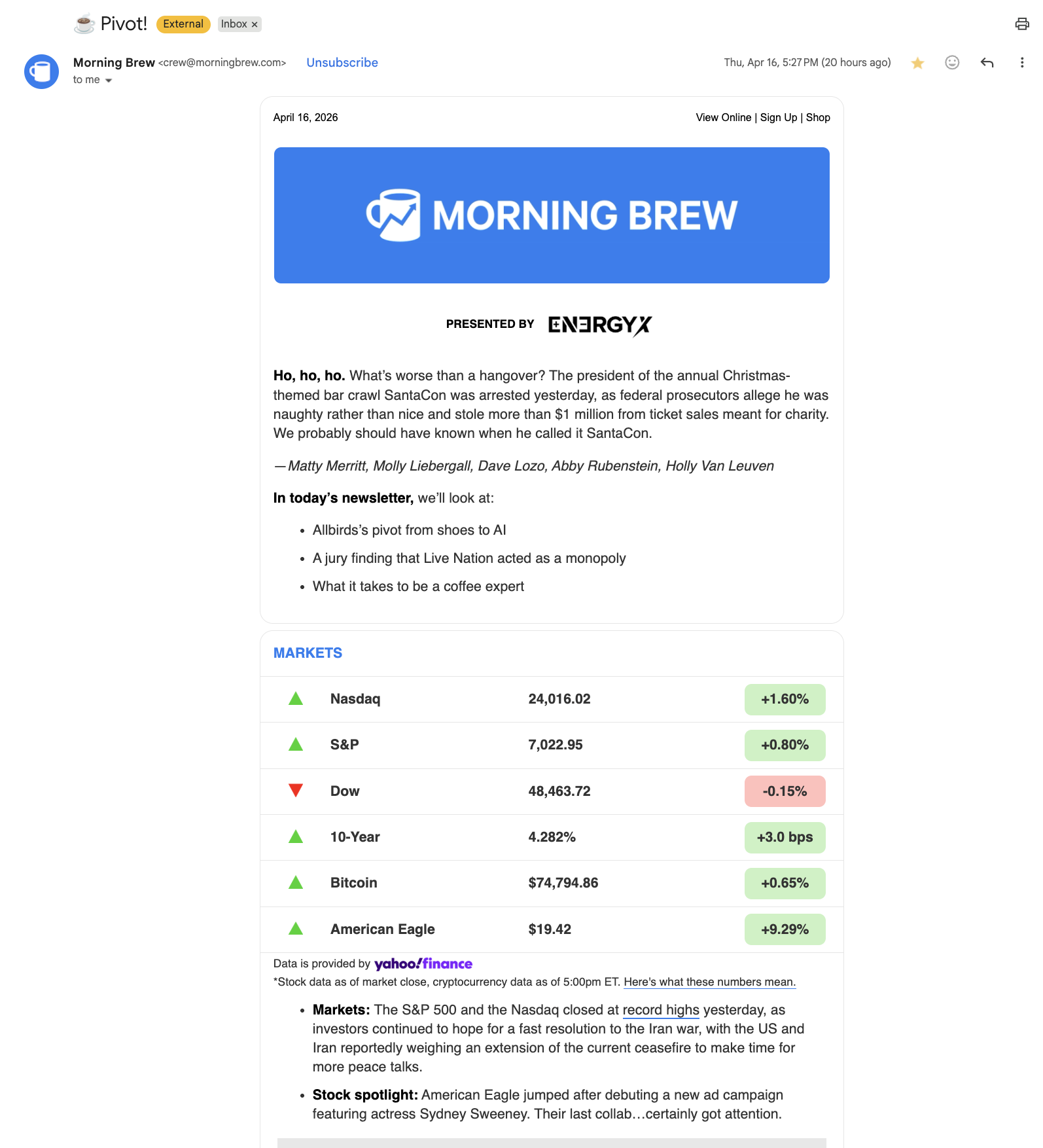
Each section includes one main story and a few shorter updates. A simple table shows daily changes in stock and crypto at a glance. The layout stays the same every day, so readers quickly know where to find what matters to them.
What makes a great newsletter?
Strong newsletters answer two simple questions: “Why does this matter to me?” and “What should I do next?” If either is missing, the email falls flat.
They get to the point in the first two sentences, focus on one goal per email, and use clear subject lines that make people want to open. These are basic email newsletter best practices, and every example above follows them.
Consistency also matters. Sending on a regular schedule helps readers know when to expect your next message. Even light personalization – like using a first name – can improve engagement.
Finally, test what works. Try different subject lines, send times, and formats to see what your audience responds to.
Next step: Start your newsletter campaign
You’ve seen how 10 different newsletter examples work in practice, from welcome emails to daily digests. Now it’s your turn. Start by picking the format that matches what you’re trying to do:
Your goal | Start with |
Get new subscribers engaged fast | Welcome email |
Keep existing users active | Product updates and educational emails |
Drive sales during key periods | Seasonal promotions |
Build credibility and trust | Testimonial and educational emails |
Stay top of mind without selling | Curated content, digests, or company news |
Learn what your audience wants | Interactive emails |
Look at the examples above and pay attention to what you’d want to borrow. Maybe it’s Glossier’s single-CTA simplicity, Miro’s benefit-first feature descriptions, or Morning Brew’s scannable section layout. The structure, tone, and format are all things you can adapt for your own emails.
Every strong newsletter in this list follows the same basic pattern: one clear goal, one focused message, and one obvious next step for the reader. You don’t need to reinvent anything. Just pick a format, follow the pattern, and make it yours.
You can set up your email newsletter in an afternoon once you’ve picked a good AI email marketing platform and decided on your format. Your first email won’t be your best. Send it anyway, see what happens, and improve from there.
All of the tutorial content on this website is subject to Hostinger's rigorous editorial standards and values.

Alma is an AI Content Editor with 9+ years of experience helping ideas take shape across SEO, marketing, and content. She loves working with words, structure, and strategy to make content both useful and enjoyable to read. Off the clock, she can be found gaming, drawing, or diving into her latest D&D adventure.