How to Start a Fitness Blog in 8 Simple Steps
Mar 10, 2026
/
Matleena S. & Miglė C.
/
10 min Read
Fitness blogs have become a popular platform for enthusiasts and professionals to share their knowledge and inspire others.
Whether you’re a certified personal trainer or a passionate home workout aficionado, creating a fitness blog helps you build a community, establish yourself as an expert, and even turn your passion into profit.
This comprehensive guide will walk you through everything you need to know to start a successful fitness blog, from choosing your niche to attracting a loyal readership and monetizing your content.
How to Start a Fitness Blog
A successful fitness blog helps you gain traction in the competitive fitness industry and build a personal brand. Get started by following these easy steps:
- Select a blogging platform.
- Choose a fitness niche.
- Pick a blog name and a domain.
- Write quality content.
- Optimize your site for search engines.
- Promote your new fitness blog.
- Think of monetization strategies for your fitness website.
- Maintain and grow your blog.
1. Select a Blogging Platform
With the right platform, your fitness blog can become a powerful tool to educate and inspire a global community of fitness enthusiasts.
Consider the following key factors when choosing the platform for your exercise blog:
- Ease of use. A user-friendly interface is essential, especially if it’s your first time creating a blog. Look for a drag-and-drop website builder to get started.
- Customization. Your blog should reflect your brand identity. Platforms offering a variety of themes and design options allow you to create a visually appealing website that represents you and resonates with your target audience.
- SEO capabilities. Search engine optimization (SEO) helps users discover your blog. Choose a platform with built-in SEO tools and plugins to optimize your content for search engines.
- Responsiveness. Your blog should seamlessly adapt to different screen sizes. This ensures a positive user experience for all visitors, regardless of their device.
- Price. Pay attention to the monthly costs associated with your chosen platform. If you’re on a tight budget, consider using free AI website builders to get your blog up and running.
Blog Maker by Hostinger Website Builder makes launching a fitness blog fast and easy. From customizing the look and feel of your blog to optimizing each page for search engines, you get all the tools you need in one intuitive website editor.

With designer-made templates tailored for fitness enthusiasts, you can quickly set up a blog that reflects your passion and brand identity.
Thanks to our builder’s user-friendly drag-and-drop interface, it’s easy to create a visually appealing website without any coding skills. This allows you to dedicate more time to what you do best: crafting engaging content and sharing your fitness expertise.
The built-in SEO tools improve your blog’s visibility, helping you attract a dedicated audience looking for fitness advice. All websites made with Hostinger Website Builder are also mobile-optimized by default, meaning that you can provide a seamless user experience across all devices.
2. Choose Your Fitness Blog Niche
Choosing a niche lets you focus on a specific segment of the fitness audience with well-defined interests. This enables you to create content that directly addresses their needs and potentially even builds a loyal readership.
Within your chosen niche, you can become a recognized authority. Readers will trust you as a go-to source for information on your expertise, be it weight training routines, vegan meal plans, or beginner yoga.
Start by leveraging your passions. What areas of fitness excite you? Are you drawn to the intensity of weightlifting or the serenity of yoga? Or perhaps you excel at creating healthy meal plans?
Also, consider your qualifications. Do you have certifications, formal training, or personal success stories in a specific area? This information will help to establish your credibility and position you as an authority within your fitness blog niche.
Next, analyze existing fitness sites and blogs, as well as the health and fitness niches they target. Identify what resonates with their audiences and if there are any gaps in currently available content. Is there a unique perspective you can offer on vegan meal prep, a specific aspect of weight training you can delve deeper into, or an underserved weight loss niche you can cater to?
Aim to select a niche that aligns with your passion, leverages your existing knowledge, and has an existing audience. This way, it will be easier to create targeted content, grow a dedicated audience, and solidify your expertise in your field.
Fitness Niche Examples:
- Home workout. Cater to busy individuals seeking effective exercise routines they can perform at home.
- Strength training. Provide in-depth guides, exercise variations, and targeted workout plans for muscle and strength enthusiasts.
- Running coach. Equip runners of all levels with training tips, race preparation guidance, and inspiring stories.
- Yoga teacher. Develop yoga routines designed to improve flexibility, manage stress, and promote overall wellbeing.
- Plant-based nutrition. Craft delicious and healthy meal plans specifically for vegans and vegetarians.
Suggested Reading
Find more inspiration in our Best Fitness Website Examples article.
3. Decide on a Blog Name and Domain
Your blog name and domain are the cornerstones of your fitness blog. Here’s how to choose a memorable brand name and a domain for your fitness brand:
- Relevance is key. Choose a name that reflects your fitness niche. Is your focus on high-intensity interval training, or plant-based meal plans and nutrition tips? Maybe yoga for beginners is your focus. Whatever your niche, the name of your blog should hint at the content you offer, attracting a targeted audience.
- Keep it memorable. Strive for a name that’s catchy, easy to remember, and easy to spell. Consider wordplay, alliteration, or using strong verbs that evoke action and motivation.
- Ensure it resonates with your target audience. Imagine your ideal reader. What kind of language would resonate with them? Keep their preferences in mind while brainstorming names.
Once you have settled on a name for your blog, you need to decide on a domain name. Ideally, your domain name should correspond to your fitness blog name.
A matching domain reinforces your brand identity and makes it easier for readers to remember and find your blog. This can also have a positive impact on SEO, making it easier for potential readers to discover your blog through search engines.
After you have come up with a good blog name, just a domain name checker to ensure it is available:
Domain Name Checker
Instantly check domain name availability.
All Hostinger Website Builder plans come with a free domain name for the first year. This way, you don’t need to worry about purchasing a domain name separately, simplifying the process of launching your fitness blog.
4. Write Useful and Engaging Fitness Content
Compelling content is the lifeblood of any successful blog, and fitness blogging is no different.
Develop a content calendar to organize your content and blog post ideas. Plan a mix of fundamental content covering the basics (also referred to as evergreen content) and trending topics. This way, you offer a steady stream of valuable content for your readers.
Consider topics like “bodyweight workout routines,” “best gym training splits for beginners”, or “upper body workouts.” This evergreen content provides a strong foundation for your blog and attracts readers at any stage of their fitness journey.
You should also stay up-to-date on the latest fitness trends, such as high-intensity interval training (HIIT) variations or popular plant-based recipes. Creating content around these trends will not only position you as a knowledgeable source in your niche but also attract a wider audience.
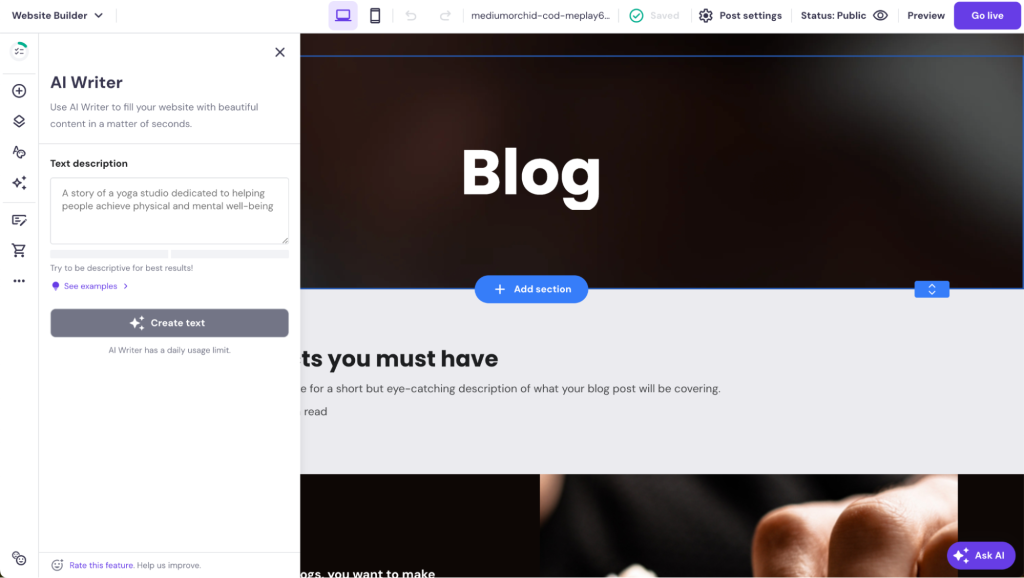
Use Hostinger Website Builder’s built-in AI Writer to speed up your content creation process. Describe the content you need in a few words, and the AI will create content based on your needs. Simply copy and paste the text to a new blog post or on a new page.
Provide readers with practical tips and strategies they can implement in their own fitness or meal-prepping routines. Focus on clear instructions, step-by-step guides, and workout variations to cater to different fitness and experience levels.
Avoid overly technical jargon and complex sentence structures. Strive for clear, concise writing that is easy to understand for readers of all backgrounds. Imagine explaining a concept to a friend – that’s the tone to aim for.
Weave in personal stories and anecdotes from your own fitness journey, or success stories from your clients. Sharing your experiences fosters a sense of connection with readers and builds trust.
5. Optimize Your Blog Content for Search Engines
Search engine optimization (SEO) is the practice of optimizing web content to improve its ranking in search engine results pages (SERPs).
In the context of fitness websites, optimizing your content for search engines can increase the visibility of your fitness blog to users actively seeking fitness content in your niche.
This targeted traffic to your site is highly valuable, and achieving a strong presence in the SERPs positions your blog as a credible resource within the competitive fitness niche.
Optimize your content and climb the search engine rankings by following these tips:
- Conduct keyword research. Discover the search terms your target audience uses to find fitness information. Tools like Google Keyword Planner can help you identify relevant keywords with search volume. Integrate these keywords naturally throughout your content, but avoid unnatural repetition, also referred to as keyword stuffing.
- Write good meta tags. Meta tags are short summaries displayed in search engine results. They give readers a clear idea of what your blog post is all about. Ensure you include your target keyword in both the meta title and description for the best effect.
- Focus on readability and proper formatting. Search engines favor content that’s easy to read and understand. Use clear headings, subheadings, bullet points, and short paragraphs to break up your text.
- Remember images. Visually appealing images capture attention, improve user experience, and encourage readers to delve deeper into your content. Include relevant high-resolution images throughout your posts.
- Pay attention to alt texts. Alt texts are short descriptions that tell search engines and visually impaired readers what your images are about, further enhancing your SEO reach.
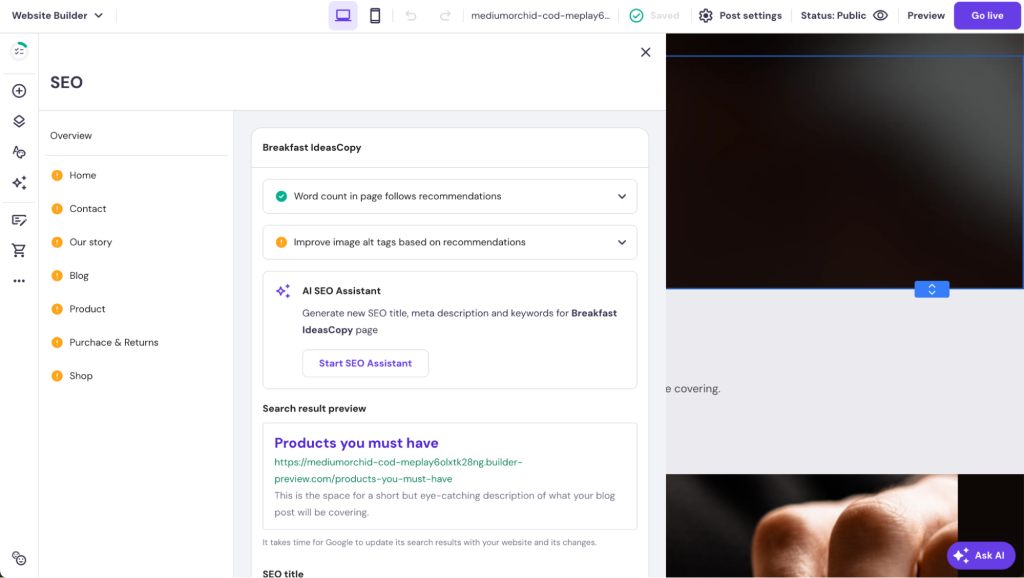
In Hostinger Website Builder, you can easily adjust the on-page SEO settings for each page in the SEO settings. Use AI to generate unique meta titles and descriptions, and follow the tips to ensure all of your content is fully optimized before you launch your blog.
6. Promote Your Fitness Blog
Building an audience requires spreading the word about your fitness content. Consider exploring these key promotional channels post-launch:
Social Media
Social media platforms are great for visually showcasing your blog content and engaging with potential readers. Share snippets of your blog posts, motivational quotes, and fitness tips on your accounts.
For instance, on Instagram, consider sharing high-quality photos and videos showcasing workout routines, healthy meals, or progress transformations. Utilize fitness hashtags and “stories” to reach a wider audience.
Create a Facebook group for your blog and foster a community where members can share their fitness journeys, ask questions, and motivate each other. Also, run targeted Facebook Ads to reach users interested in specific fitness areas you cover.
Use Pinterest for infographics, healthy recipe pins, and workout inspiration boards. Include links back to your blog posts for more information on the topic.
Email Marketing
Add a newsletter sign-up form strategically on your homepage to build an email list for marketing purposes. Encourage visitors to sign up by offering valuable freebies, like downloadable workout guides or healthy meal plans.
Create engaging newsletters packed with fitness tips, success stories from your readers, and sneak peeks at upcoming blog content.
Fitness Influencer Collaborations
Partner with fitness influencers and other bloggers in your niche for guest posts, social media shoutouts, or joint video collaborations.
This can expose your blog to a wider audience and leverage the influencers’ established fanbase.
Embrace the Community
Active audience engagement is vital for blog growth. Actively respond to comments on your blog and social media posts. This shows readers you value their opinions and encourages further interaction.
Also, engage in relevant fitness forums and online communities. Share your expertise, answer questions, and subtly promote your blog as a go-to resource for content in your niche.
Track Your Progress
Monitoring your blog’s performance is crucial for strategic adjustments. Utilize analytics tools like Google Analytics to track metrics like website traffic, user engagement, and popular content. Use these insights to refine your content creation and promotion strategies.
For more in-depth blog marketing strategies, read our guide on how to promote a blog.
7. Monetize Your Fitness Blog
Your blog can become a platform for sharing your passion while also generating income. Some of the most common monetization strategies for fitness bloggers include the following, which are crucial when you start a health blog as well.
Affiliate Marketing
Partner with fitness brands or retailers, and promote their products through affiliate links. You earn a commission for every purchase made through your unique links.
Sponsored Content
Collaborate with brands to create sponsored content that aligns with your niche and resonates with your audience. Ensure transparency by clearly disclosing when a third party has sponsored social media content or a blog post.
eCommerce Store
Many blogging platforms have eCommerce functionality. This allows you to sell merchandise or exclusive content, such as branded fitness apparel or eBooks and fitness programs.
With Hostinger Website Builder, it’s easy to add an online store to your blog. Sell up to 500 products, ship internationally, and manage sales with popular payment gateways like Stripe and PayPal.

Our tutorial on how to make money blogging covers more monetization tactics in more detail.
8. Maintain and Grow Your Blog
Building a successful blog is an ongoing journey. Here are key practices to ensure long-term growth:
- Publish consistently. Publish high-quality content regularly to keep your readers engaged and coming back for more. Stay up-to-date on fitness trends and incorporate them into your content strategy.
- Deepen your knowledge. Continually educate yourself, explore new training methods, and stay at the forefront of the industry to deliver valuable and relevant content and insights.
- Adapt to new tools and strategies. Stay on top of current technological trends to optimize your blog’s reach and impact. For instance, get familiar with different AI tools to optimize and streamline different repetitive tasks.
Nurture Your Community
Keep your readers engaged with your health and fitness blog by actively participating in your community. Here are ways to nurture it:
- Host challenges. Organize fitness challenges that encourage reader participation and interaction.
- Organize giveaways. Host giveaways of fitness products or merchandise to generate excitement and attract new readers.
- Run interactive Q&A sessions. Hold live Q&A sessions on social media or your blog to connect with your audience and address their fitness questions directly.
Conclusion
Launching a successful fitness blog begins with choosing a platform that’s easy to use and SEO-friendly, such as Hostinger Website Builder. Picking a niche that plays to your interests and strengths helps you establish your blog as the go-to resource for all things yoga or weight training, for instance.
After settling on a catchy blog name and domain, it’s important to create engaging content that is optimized for search engines. Make sure you blend common topics and upcoming trends to provide value to the reader.
Once you have launched your blog, focus on promoting it through social media to expand your reach. You can monetize your blog by joining affiliate marketing programs, publishing sponsored posts, and selling physical and digital products. Don’t forget that consistent content updates, trend awareness, and community engagement are key to growth.
By following these points, you can carve out a niche for yourself in the fitness blogging world, inspire others with your content, and potentially turn your passion for fitness into a lucrative business.
How to Start a Fitness Blog FAQ
Find answers to some of the most common questions about how to start a fitness blog below.
Do Fitness Blogs Make Money?
Yes, a fitness blog can turn a profit through ads, affiliate marketing, or selling products and services, like eBooks or coaching plans. Success depends on factors like audience size, content quality, and the chosen niche. For more tips, see how to make money as a fitness influencer.
How Can I Come Up With Engaging Fitness Blog Topics?
Go beyond basic workouts. Explore trends, healthy recipes, overcoming plateaus, budget-friendly fitness options, or target specific demographics.
Are There Any Legal Considerations When Starting a Fitness Blog?
Anyone can start a fitness blog, but we recommend ensuring that you back up any claims related to health and wellbeing with scientific studies where possible.
What’s the Difference Between a Fitness Blog and a Fitness Website?
A fitness website might showcase a gym’s classes, while a fitness blog offers regular content to educate and motivate readers. Read our tutorial on the difference between a website and a blog for a more thorough explanation.

Matleena is a seasoned Content Writer with 5 years of content marketing experience. She has a particular interest in emerging digital marketing trends, website building, and AI. In her free time, Matleena enjoys cups of good coffee, tends to her balcony garden, and studies Japanese. Follow her on LinkedIn

Miglė Cicėnaitė-Jocė is a Product Manager for Hostinger's Website Builder. She is on a mission to redefine website creation, focusing on the AI flow and its features, and is always eager for product feedback and market insights to improve the user experience. Follow her on LinkedIn.