How to make money with dropshipping
Apr 17, 2026
/
Alma
/
9 min Read
Dropshipping is an ecommerce model where you sell products through an online store without buying or storing inventory. You choose what to sell, run the store, and handle customers, while suppliers take care of storage and shipping. Instead of tying up cash in bulk orders or warehouse space, you test products with real buyers and scale only what proves it can sell.
Here’s an example of how to make money with dropshipping: you sell a portable phone charger for $35 in your store. When someone buys it, you pay your supplier $12 to ship it straight to them. Once transaction fees and basic store costs are covered, the remaining amount is your profit. That difference is how profit in dropshipping is made.
But steady profit isn’t something most beginners see right away. The first months usually go into learning ads, spotting which products actually convert, and fixing friction in the store experience. Think of this phase as validation.
Once you find a product people consistently buy, you can grow that winner without ordering boxes of inventory or guessing demand.
What makes this model appealing is the risk profile. You’re testing ideas with a few hundred dollars instead of committing thousands to stock that might not move. If a product fails, you remove the listing and move on – no storage headaches, no sunk inventory.
Here’s the process you’ll follow from start to scale:
- Research a profitable niche. Focus on products people already want and that leave room for profit.
- Choose suppliers you can rely on. Work with dropshipping suppliers who ship consistently and meet quality standards.
- Set up your dropshipping store. Build an online store that looks trustworthy and makes buying simple.
- Market your products effectively. Bring targeted visitors to your store through ads or organic channels.
- Manage orders and customer support. Keep customers informed, handle issues quickly, and manage returns.
- Scale what works and increase profits. Expand winning products and automate tasks that slow growth.
Everything starts with choosing the right niche, because no amount of marketing fixes a product people don’t want.
1. Research and choose a profitable niche
A profitable dropshipping niche is one where people actively search for solutions and you still have room to stand out, instead of competing only on price and slowly losing profit per sale.
The goal is to find demand that already exists and position yourself clearly within it.
Start your niche research by using tools like Google Trends to check what people consistently search for. You’re looking for steady interest over time, not short-lived hype that fades quickly. Portable blenders, for example, have stayed relevant year-round, while fidget spinners surged once and vanished.
Next, validate demand through marketplaces. Amazon’s bestseller lists help you spot trending products for dropshipping with staying power. If an item remains a top seller for months, that’s a strong signal. Products priced between everyday purchases and big commitments tend to convert well – more than pocket change, but not something customers overthink.
Profit margins change fast depending on what you sell, so your niche choice isn’t cosmetic:
- Tech accessories and phone gear typically deliver 25-35% net margins.
- Home goods and kitchen items average 15-20%.
- Fashion and apparel fall somewhere in between at 20-30%, though returns run higher at 8-12% compared to 3-5% for most other categories.
This is where the math matters. Those margin gaps decide whether your product can absorb ad spend and still leave real profit at the end of the month.
Then move into market analysis for dropshipping by studying competitors.
Search for your product idea and review the stores ranking highest. If everyone uses the same photos and copy, that’s an opportunity. Better images, clearer comparisons, or simple buying guides often make the difference when customers choose between similar stores.
Customer reviews are another shortcut to insight. When you see complaints about “took 4 weeks to arrive” or “packaging was crushed,” those are supplier red flags you can avoid – or quality improvements you can promise.
Your audience also shapes every decision. Selling premium pet accessories to urban professionals in their 30s looks very different from selling budget dorm organizers to college students. One group expects polished branding and fast delivery, while the other wants it affordable and functional.
Before committing fully, test demand in the real world. Order product samples yourself and run a small ad test to see whether people actually click, ask questions, or add items to their cart. Real behavior tells you far more than forecasts.
To see how this step fits into broader earning strategies, explore different ways to make money online using proven business models.
2. Find reliable dropshipping suppliers
Dropshipping suppliers play a direct role in how customers experience your store, because they control shipping speed, packaging, and product quality.
Even though buyers never see the supplier’s name, your reputation depends on how well orders arrive.
You can find suppliers through platforms like AliExpress, which offers a huge product selection but longer shipping times, or Spocket, which focuses on faster shipping from US-based suppliers.
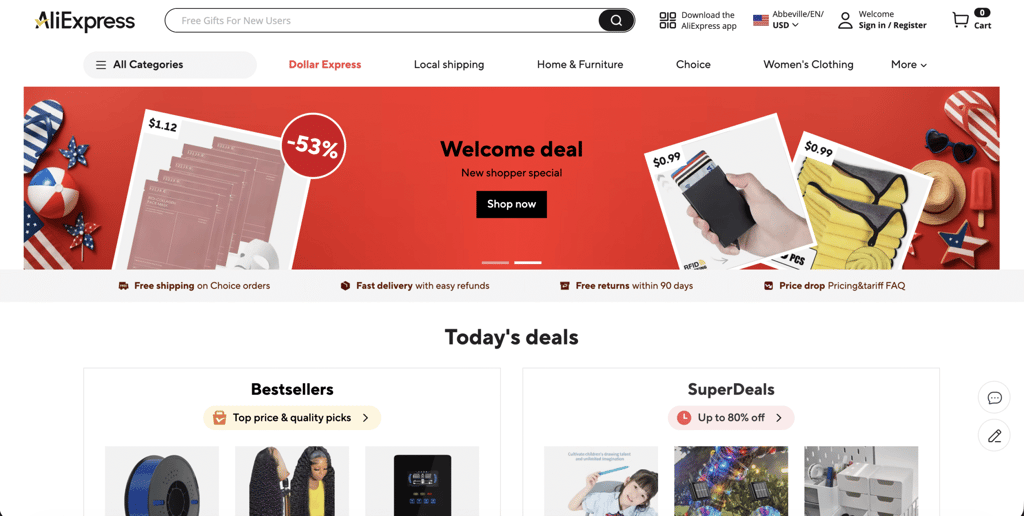
You can also contact manufacturers directly. This usually means choosing between domestic suppliers that deliver in 3–7 days, or international manufacturers where shipping often takes 2–4 weeks but costs less per item.
Domestic options tend to reduce complaints thanks to faster delivery, while international suppliers can improve margins if your customers are willing to wait.
Regardless of your choice, when comparing options, focus on what actually matters for reliable dropshipping vendors. Before committing, make sure you can answer these three questions:
- Do they respond quickly to questions?
- Can they provide tracking information automatically?
- Have they been operating consistently for a while?
These basics matter far more than polished branding or a flashy website.
Once you choose a supplier, always order samples before committing. Seeing the real product quality, packaging condition, and delivery time helps you set accurate expectations in your store. A small upfront cost here prevents bigger problems later, like refunds or negative reviews once customers start receiving orders.
Think of choosing suppliers the same way you’d choose a shipping partner for something important. You want reliability more than the absolute cheapest option. The supplier who charges $11 per item but ships in 5 days beats the $9 supplier who takes 21 days and generates angry emails.
3. Set up your online dropshipping store
Your online store is where trust is built, so it needs to look professional, load fast, and make buying simple and straightforward. Google recommends aiming for page load times under three seconds to deliver a good user experience, especially on mobile.
Everything starts with understanding who you’re selling to, because your audience shapes every decision. If you’re targeting busy parents shopping for time-saving kitchen gadgets, for example, your branding, messaging, and product layout should feel practical and clear from the first click.
Next, choose an ecommerce platform that fits your budget and comfort level, then set up payment methods and shipping options. Customers should be able to check out easily and see realistic delivery times upfront.
Important! Set realistic delivery expectations on your product pages before customers check out. Showing “ships in 2-3 weeks” upfront prevents frustrated support emails asking “where’s my order?” two days after purchase.
From there, focus on design with mobile in mind, using clear photos and benefit-driven descriptions that help people picture using the product.
Finally, create the essential pages every store needs.
An About page explains who you are, a Contact page shows you’re reachable, and a clear return policy reduces hesitation at checkout. These pages are often what tip someone from browsing to buying, especially when they’ve never heard of your store before.
If you want everything in one place, Hostinger Website Builder simplifies this setup by combining hosting, domain management, and ecommerce features. Its AI-powered tools help you generate layouts, product descriptions, and pages faster, without juggling multiple services or technical setups.
For a complete walkthrough of this process, follow this step-by-step guide on how to build an ecommerce website.
This is the stage where your dropshipping business starts feeling real – like opening the doors to a shop, except you’re launching from your kitchen table.
4. Create an effective marketing strategy
An effective dropshipping marketing strategy works best when you balance fast feedback from paid ads with slower results from organic channels like SEO, content, and social media that build over time.
You don’t need to be everywhere at once. Pick one or two channels, learn what actually works for your store, and build from there.
Paid ads give you quick answers. With Facebook ads dropshipping campaigns, you can reach people based on interests and behaviors, which works well for visual products. Google Ads help you show up when someone is already searching for a solution, while TikTok ads can surface demand fast for trend-driven items.

Start with a small budget you’re comfortable testing with – like $10–$20 per day on each ad platform – then increase spend gradually on ads that convert. At this stage, you’re not trying to scale. You’re trying to learn.
Here’s the line that matters: ads must bring in more money than they cost. A clean target is $4 back for every $1 spent. That’s what gives you room to pay for the product, cover fees, and still move forward. You won’t hit that on day one, and that’s fine. Many first campaigns sit closer to $2 per $1 spent before anything clicks.
To make progress faster, test different angles of the same product. For a portable charger, that might mean one ad showing it charging multiple devices, another highlighting its pocket size, and a third focused on travel use.
When one angle clearly outperforms the others, you have a clear signal. Shifting more budget there helps you grow faster by leaning into what your customers respond to.
Organic channels take longer, but they give you more stability over time and mainly cost you your time. SEO for dropshipping helps your store show up when people actively search for specific solutions, like “best wireless earbuds under $50.”
Creating helpful blog content and staying active on the platforms your audience already uses builds familiarity and trust over weeks and months, not days. You typically won’t see much movement in the first 3–6 months, and that’s expected.
Early traction often appears around month 3 or 4 through low-competition keywords, while consistent traffic usually builds closer to 6–12 months of steady work.
Retargeting ads and email marketing help you reconnect with visitors who looked at your products but didn’t buy.
For example, showing reminder ads or sending an abandoned cart email like “You left something behind” can bring back people who weren’t ready the first time. Even a simple follow-up can turn interested visitors into paying customers.
As you go, keep an eye on what’s actually working. Focus on what people buy, not just what gets clicks or likes. When a product or channel consistently converts, put more of your effort there before testing something new. That’s how you grow without spreading yourself too thin.
For deeper guidance, explore practical ecommerce marketing strategies that drive sales.
5. Manage orders and customer service efficiently
Efficient dropshipping order fulfillment comes down to automation and clear communication.
When tracking updates go out early and expectations are set upfront, you avoid most support issues before they escalate. Every unanswered “where’s my order?” email is a risk to your reviews, so your goal is to stay one step ahead.
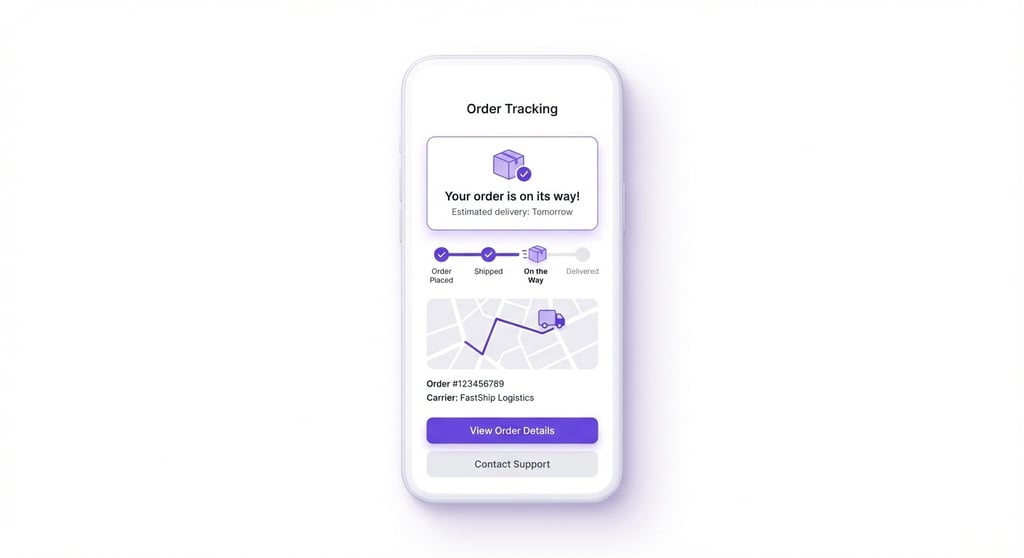
When a customer places an order, your system should automatically forward the details to your supplier. Tracking information usually comes back within a day or two, and sending it right away reassures customers that their order is moving.
Even a short message like “Your order has shipped and should arrive next week” can prevent follow-up emails later.
Strong customer service dropshipping practices directly affect whether people buy again. If someone emails asking about delivery, replying quickly with tracking and a realistic arrival window makes a difference.
The same applies when something goes wrong – acknowledging a delay or damaged item early often matters more to customers than the issue itself.
Clear return management is just as important. Your return policy should explain how long customers have to send items back, who covers return shipping, and when refunds are processed.
For example, clearly stating “returns accepted within 30 days, refunds processed within five business days” reduces hesitation and cuts down on back-and-forth emails.
As order volume grows, customer support tools like Gorgias, Zendesk, or Help Scout keep conversations organized. These platforms show you a customer’s complete order history right next to their message, so you can see what they bought, when it shipped, and any past conversations – all in one view.
This means you’re not asking them to repeat information or scrambling through different tabs to find context, especially when you’re juggling multiple conversations at once.
Pro Tip
Features like saved response templates for common questions (shipping times, return instructions) and conversation tagging can help you respond faster while staying personalized.
Think of this stage as running a small help desk. When orders jump from a few per day to dozens, organized systems and clear processes help you stay calm, responsive, and professional.
How to scale and maximize dropshipping profits
To scale your dropshipping business, focus on expanding what already works while cutting what drains time or money. That usually means adding closely related products to your best sellers or testing new ad angles based on what you already know about your audience, instead of starting from scratch each time.
Once a product sells consistently, you can optimize dropshipping profits by concentrating your ad budget there and pausing campaigns that don’t perform.
In practice, this means watching for products that keep converting after dozens or hundreds of visits, then increasing spend gradually on the ads driving those sales instead of spreading your budget across too many tests.
Let real data guide your decisions. Check which products leave you with the most profit after ads and fees, which traffic sources convert best, and where people drop off during checkout. These signals tell you exactly where to improve, whether that’s pricing, page layout, or messaging.
As your store grows, time becomes your biggest bottleneck. If you’re spending hours each day answering emails or processing orders, that’s your cue to outsource or use dropshipping automation.
Hiring a virtual assistant to handle support or relying more on automation tools frees you to focus on product research, ads, and strategy.
Cash flow matters more as you scale. You’ll often need money available to pay suppliers before customer payments fully clear, so keep part of your profit in the business. Reinvesting into ads, better suppliers, or store improvements gives you more control and stability as you grow.
This stage is where you move from testing ideas to building something steadier. By doubling down on what works and simplifying everything else, you turn short-term wins into more reliable income over time.
Other ideas to make money from an online business
If you’re exploring how to make money with dropshipping, comparing it with other online business models can clarify whether it’s the right fit. At the same time, it helps to understand the real value of dropshipping in terms of profit potential, scalability, and effort before committing.
From there, it becomes easier to evaluate different paths, since each model prioritizes something different, some focus on content and audience building, while others lean more toward branding or fulfillment, each requiring different levels of time and hands-on work.
For example, if you enjoy writing or reviewing tools and products, affiliate marketing may be a good fit. You earn commissions by recommending other companies’ products, without handling inventory, orders, or customer support yourself.
For the more creatively inclined, print-on-demand gives you greater control over branding. You design custom products like apparel or accessories that are made only after someone orders. This guide on how to start a print-on-demand business breaks down the setup, tools, and first steps.
Another low-investment option is selling digital products, such as ebooks, templates, or short courses. You create the product once and sell it repeatedly, without inventory, shipping, or supplier coordination, which makes it easier to scale once demand is validated.
The best choice is the one you can actually stick with. Start with the model that fits your strengths and available time, then explore these online business ideas if you want more options to build on.

Alma is an AI Content Editor with 9+ years of experience helping ideas take shape across SEO, marketing, and content. She loves working with words, structure, and strategy to make content both useful and enjoyable to read. Off the clock, she can be found gaming, drawing, or diving into her latest D&D adventure.