Inside Hostinger’s AI SEO Playbook: Three strategies to control your brand narrative
Dec 02, 2025
/
Simon L. & Deyimar A.
/
9 min Read

At Hostinger, we spent years mastering the traditional SEO playbook: rank high in Google and get clicks. But now ChatGPT and AI Overviews have changed the rules.
Suddenly, users weren’t just clicking the first link. They were getting their answers directly from AI-generated summaries. This was a major shift in search behavior. Even if you ranked #1, the clicks and the traffic weren’t guaranteed anymore.
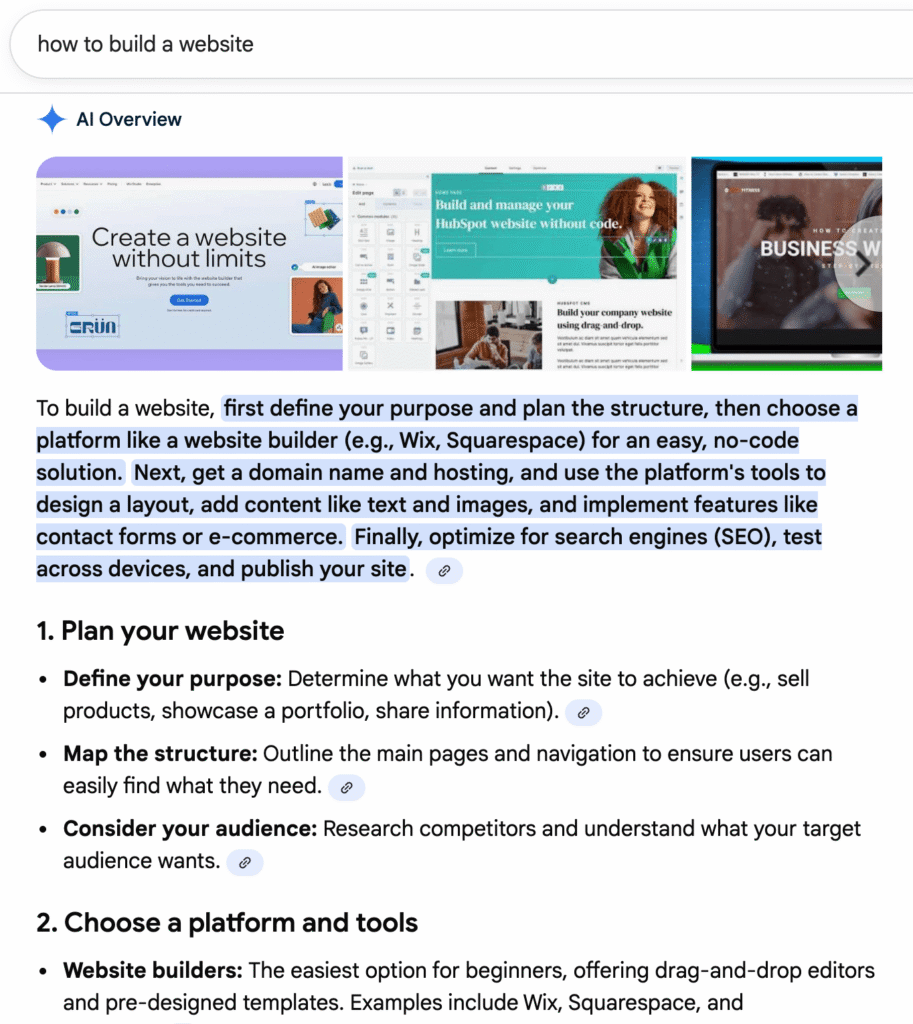
But that was only half the problem. We also faced a more fundamental challenge: we no longer fully controlled our own story.
This is the core issue of managing your brand’s reputation. AI systems like ChatGPT, Perplexity, and Google’s AI Overviews decide what to say about you, but how they make those decisions isn’t obvious.
And this matters more every day. OpenAI reports that ChatGPT has 700 million weekly active users, representing a 400% increase from the previous year. People are using it for an average of 16 minutes per day, which is getting very close to the 18.2 minutes per day seen on leading search apps.
We realized traditional SEO alone was no longer enough. We needed a new strategy to ensure AI highlighted our strengths, not outdated info or competitor talking points, and turn this new AI-driven world into an advantage.
This is the story of how we turned this challenge into a predictable advantage, and we’re sharing our complete playbook so you can do the same.


The “aha” moment that built our playbook
At first, we were flying blind. We could see what AI was saying about us, but not why. We’d see a competitor cited for a feature or outdated information about us repeated, and we had no idea how they earned that spot.
So, we explored over 10 AI monitoring tools and spent countless hours analyzing prompts and responses.
The breakthrough came when we understood that AI doesn’t just read a website. It learns from news articles, partner blogs, Reddit threads, competitors, and even video transcripts. It’s building a picture of a brand by evaluating authority across all these sources.
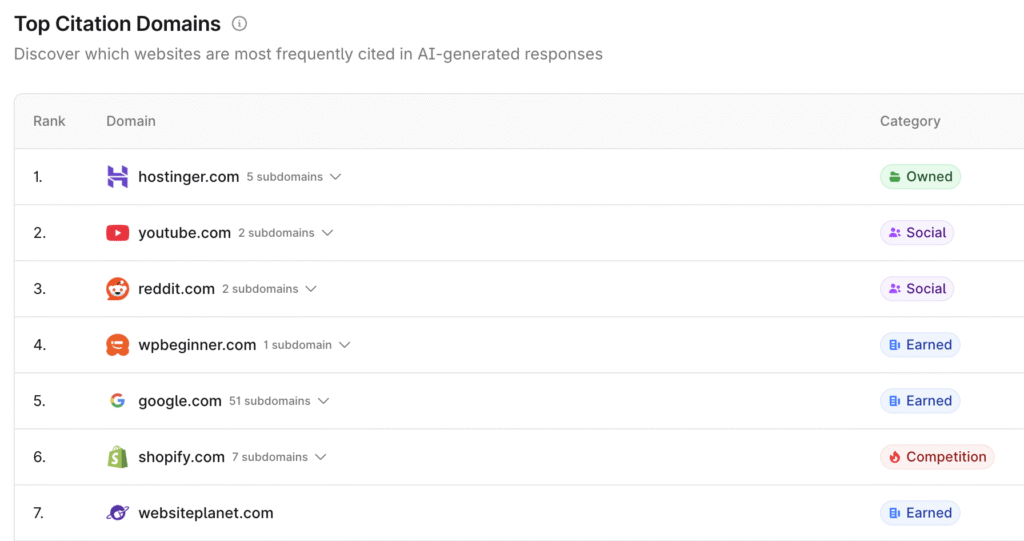
We realized it’s more like a student doing research, and it has its favorite sources. It doesn’t trust everyone equally.
And we found it consistently trusts three distinct types of sources:
- Earned authority: Trust from high-credibility media sources.
- Borrowed authority: Trust from established partners, affiliates, and industry experts.
- Community authority: Trust from authentic conversations on platforms like Reddit.
This was the turning point. It transformed an unsolvable problem (How do we influence AI?) into a practical, solvable one (How do we get our message into the sources AI already trusts?).
It gave us clear action steps. Instead of shouting into the void, we could focus our efforts exactly where they would count.
Inside the playbook: Our three core strategies in action
We immediately translated this insight into a tactical plan to build earned authority, borrow authority, and develop community authority.
Here is the exact framework we used to influence each of these three authority types, broken down into practical steps you can take.
Strategy 1: Building earned authority
This strategy focuses on getting our brand mentioned by high-credibility industry publications and news sites. We learned that to influence AI, this can’t be a “spray and pray” PR effort – it requires precision.
Tactic 1: Focus on quality over quantity
We quickly realized that one mention on a site that AI deeply trusts is worth more than a hundred small ones.
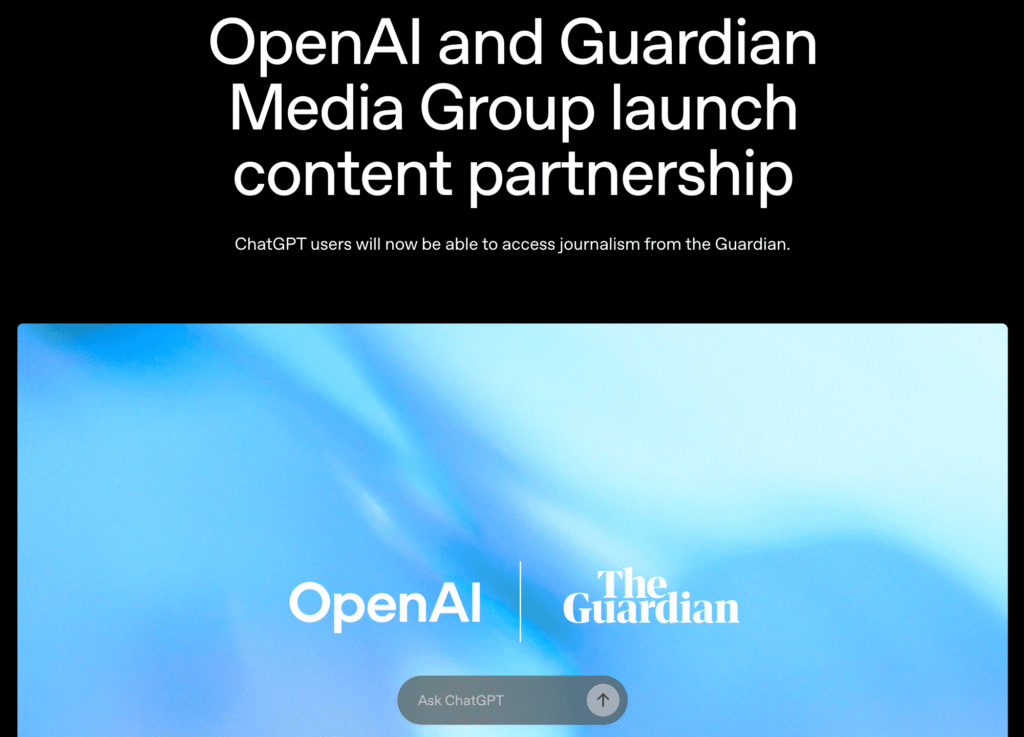
So, what are these highly trusted sources, and how do you get featured on them? A great place to start is with OpenAI’s content partners. This list includes major journalistic powerhouses such as Condé Nast, The Guardian, and The Financial Times.
To get their attention, you can’t just send a standard press release or slide into their DMs. You need to offer them information that is unique and genuinely informative – something they can’t get anywhere else.
They’re looking for original insights, expert commentary, new industry analysis, or data studies that provide real value to their audience.
How to implement this:
Don’t just repackage what’s already out there. Instead, create content that provides real value, such as:
- Original research: Survey 100 of your customers about a hot topic and publish the results.
- Data insights: Analyze your own internal data to reveal a new trend. Provide this data for others to cite, making sure to protect customer names and personal details.
- Expert commentary: Compile your top five predictions for your industry, with clear reasoning, and offer them as an expert quote.
Then, use tools like Help a Reporter Out, Muck Rack, or Prowly to find journalists who cover your industry and offer them your unique data or expert commentary.
If you’re on a budget, you can do this for free on LinkedIn. Search for:
“[Industry] journalist”
“[Topic] editor”
Find someone who recently covered a similar topic. Send a connection request with a note like this:
“Hi [Name], I saw your article on [topic]. We just found some interesting data on [related topic] that your readers might value. No strings attached, happy to share.”
Tactic 2: Become your own fact-checker
AI learns from the entire internet, so it will inevitably encounter customer complaints, outdated news, and any inaccurate information floating around. If left uncorrected, this info can become the “truth” that AI repeats to millions, directly harming your brand’s reputation.
This meant we needed to shift from passive monitoring to active reputation management. While reporting errors to AI platforms is an option, the most effective strategy is to control the narrative.
You achieve this by becoming the source of factual information that is easy for AI to crawl, making you the go-to reference for accurate facts about your brand.
How to implement this:
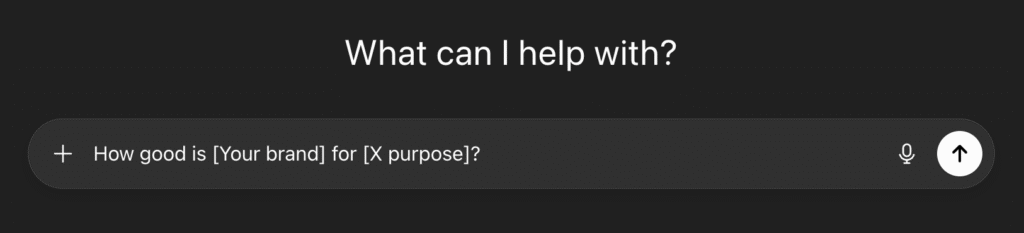
This works even if you don’t have a big PR team. The first step is to actively monitor what AI says about you. You can do this by regularly checking results for prompts your customers would actually use, for example, “How good is [Your brand] for [X purpose]?” or “What are the cons of [Your brand]?”
When you find inaccuracies – like the AI claiming you don’t have a marketplace when you do – you need to correct the record publicly.
The most direct way is to update your website or publish a short blog post clarifying the truth. AI systems often pull facts directly from your site, so keeping that brand messaging consistent and accurate really matters.
But what if the criticism is fair? This is a huge opportunity. If AI highlights a real issue, like slow response times or a website bug, your first job is to fix it.
Once you have, make that fix part of your content strategy. Share how you improved. You could create a short video, write a data-backed social post, or create a simple customer story.
This turns a public complaint into a powerful, transparent story about your responsiveness. You don’t need a PR machine for that – just honesty, consistency, and visibility.
Strategy 2: Use borrowed authority through partners
This strategy involves using the trust AI already has in your partners, affiliates, and industry peers. By having trusted third-party sites endorse you, like review sites and expert bloggers, you “borrow” their authority, which is a powerful signal to AI.
Tactic 1: Empower your existing affiliates and partners
The easiest place to start is with the partners who already talk about you. We discovered our affiliates’ content, while authoritative, was built for human readers, not machines. It wasn’t structured in a way that allowed an AI to parse and quote easily.
This tactic involves empowering your partners with clear guidelines to make their content AI-friendly, using their existing authority as a direct asset for your brand.
How to implement this:
We turned our guidelines into an AI-ready playbook for our affiliates. You can do the same by sharing this simple roadmap with your partners:
Use question-based headings: Ask direct questions in your H2 and H3 tags. AI prefers this semantic format.
✅ Good: What is [feature]?
✅ Good: How [feature] works for small businesses
❌ Bad: Understanding [feature]
❌ Bad: [feature] explained
Answer first, explain second: Start the section with a direct, factual answer, then expand on it.
For example, imagine your heading is the direct question: “What is vibe coding?”
Your very first sentence, right underneath that heading, should be the concise answer: “Vibe coding is a software development method that uses AI-based tools to speed up prototyping and support creativity.”
Then, in the next paragraph, you can provide the additional context and explanation: “This method differs from traditional development by focusing on… [expansion follows here].”
Add credible metadata: Ensure every article has a clear author name and an “Updated: [Date]” at the top to build credibility.
Use AI-readable structures: Use simple HTML tables for comparisons (not images of tables) and bulleted lists for features.
Link strategically: Use descriptive anchor text, like “use cases of [Product] in design”, instead of vague anchors like “click here” or “read more”. You should also place links where they make the most sense. Instead of grouping them in the intro, put a link right in the paragraph where you’re discussing that topic. This helps AI understand why the two pages are related.
Tactic 2: Recruit the winners
We decided to find out which websites AI had already cited most often for our topics, and then made them our new partnership targets.
This is powerful because AI has already identified these sites as authorities, so any mention or partnership with them gives your brand a significant, pre-vetted credibility boost.
We call this the 2% rule: if a source is cited in 2% or more of AI answers for a topic, they are a high-value target.
How to implement this:
The most direct way to get this data is by using a dedicated AI monitoring tool such as Profound. It allows you to analyze your target keywords to generate a visual citation share report, where you can identify the domains AI trusts most.
You can also do this manually for free:
- Go to Google and type in your main keywords. See which sites are linked in the AI Overviews.
- Go to ChatGPT or Perplexity, ask around 10 different questions about your topic, and log which websites get cited most often.
This is your new target list for partnerships. Focus on the top 2%. If you analyze 100 responses and Site A is cited five times (5%), they are a prime target. Site B, cited once (1%), is not. This separates one-hit wonders from true authorities.
Once you have your list of “2% winners,” contact them strategically. These sites are already winning, so don’t approach them with a cold pitch asking for a link.
Instead, offer to help lock in their authority with content you create together that is completely unique.
Here are some content ideas:
- A co-branded data study, such as a trends report or a “State of [the industry]” report.
- An exclusive performance report based on your internal testing.
- Perfectly structured comparison tables they can easily drop into their top review pages
- A set of custom statistics derived from your internal sales or support data.
The point is to suggest topics where you provide unique value and can create a source of information that nobody else can create.
This frames the collaboration as a win-win: you help them reinforce their authority, and you secure a high-value mention for your brand.
Strategy 3: Engaging community authority on Reddit
This strategy involves participating in conversations where honest, unfiltered discussions about your brand are already taking place.
AI platforms pull a massive amount of information from online forums like Reddit because they are a source of authentic human opinions and experiences.
This is where AI learns what real people think, what their problems are, and how they compare products, making it a critical place to manage your brand’s narrative.
Tactic 1: Engage directly in AI-cited threads
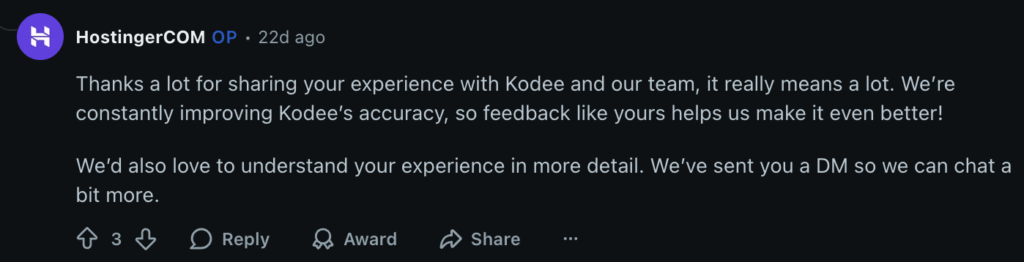
Find the exact threads AI is already citing (or new, relevant threads) and add genuinely helpful, non-promotional comments.
The goal is not to sell, but to be a helpful expert. Since AI learns from these conversations, your authentic participation can directly add context, clarify a feature, or correct misinformation at the source, influencing the narrative AI will use in the future.
How to implement this:
Use advanced Google search operators to find relevant threads, such as:
site:reddit.com “your brand name”
site:reddit.com “[competitor name]”
site:reddit.com “[your topic]” “help”
In your responses, be authentic. Reddit users famously dislike inauthentic brand promotion. Your goal is to be a helpful member of the community, not a walking advertisement.
Build a real user profile by participating in discussions and sharing unique insights. This builds trust with both the community and the AI models that read those threads.
Bad Comment: I totally agree, that’s why our team at [Brand name] built a tool to solve this exact problem. You can check it out on our website: [link]
Good Comment: As someone from the [Brand] team, I can clarify how feature X works. It was designed to solve [the problem user mentioned]. Here’s how it works: [more details]
Tactic 2: Close the loop on feedback
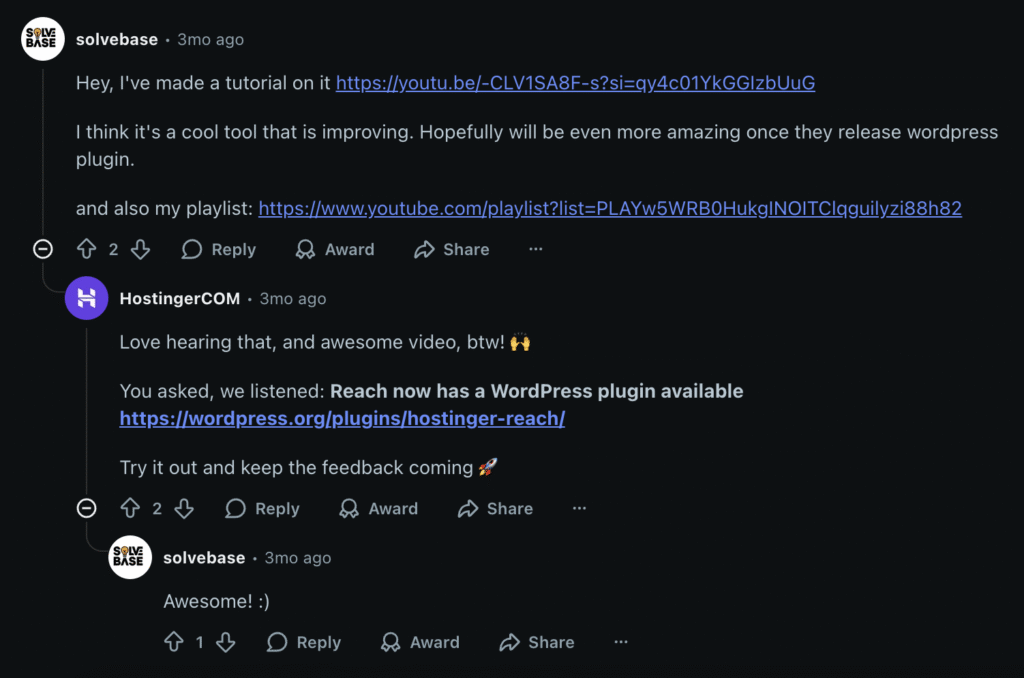
This is our most powerful tactic for turning a public complaint into a story about responsiveness. When we find a user complaint, we track it, fix it, and then we go back to the original thread to reply.
This is incredibly impactful for AI. Instead of just learning “Brand X has a problem,” the AI now learns the complete, positive story: “Brand X listens to customers, engages with them, and fixes its issues.”
It transforms a negative data point into a public record of your trustworthiness, all in one public thread.
How to implement this:
The process begins by treating complaints as actionable feedback. The key is to create a simple tracking system, like a spreadsheet. When you find a complaint, your first action should be to log the link to the original thread.
Share this feedback internally and use it to make real improvements. This is the most crucial part: you are turning a public complaint into a positive case study on your brand’s responsiveness.
Once you resolve the issue, the loop is closed by going back to that original thread – even if it’s months later. Post an update to show you followed through. A simple reply like the one below works perfectly:
“Hi [Username], circling back on this. Our team took your feedback about [the issue] seriously, and we’ve just implemented a fix. You can see the update here: [Link]. Thanks again for helping us improve!”
Building a resilient brand that thrives with AI
So, what’s the big takeaway? Getting AI to say the right things about you isn’t about a single trick. It’s about building a solid, trustworthy reputation in all the places AI is already looking for answers.
This isn’t just an SEO task. It means that all your marketing efforts need to be aligned, working together to ensure AI recognizes and trusts your brand as the best source of information.
By focusing on your earned authority through media mentions, borrowed authority with partners, and community authority on forums like Reddit, you stop reacting to what AI says and start informing its next answer.

Simon is a dynamic Content Writer who loves helping people transform their creative ideas into thriving businesses. With extensive marketing experience, he constantly strives to connect the right message with the right audience. In his spare time, Simon enjoys long runs, nurturing his chilli plants, and hiking through forests. Follow him on LinkedIn.

Deyimar Albornoz, Organic Marketing Strategist at Hostinger, has 10 years of experience in the SEO field. She specializes in developing and scaling organic growth strategies that integrate strategic planning, cross-team collaboration, and data-driven execution. Throughout her career, Deyimar has focused on improving visibility, traffic, and customer acquisition through high-impact, non-paid channels.