How to Create a Restaurant Menu in 8 Steps
Aug 06, 2026
/
By Linda D.
/
10 min Read

Having a compelling menu is critical in running a dining establishment.
A menu does more than list food items. It communicates your restaurant’s identity, showcases your culinary strengths, and sets expectations. Moreover, it’s an essential marketing tool that can retain regulars and attract new clientele.
Whether you’re opening a new restaurant or revamping an existing menu, this guide will walk you through eight steps to create a restaurant menu. Every detail counts, so read on to learn how to develop a menu that looks great and elevates the dining experience.
Download business plan template
1. Define Your Restaurant’s Concept
Before creating a menu online, it’s crucial to have a well-defined restaurant concept, as it lays the foundation for your restaurant’s operations.
In addition to influencing marketing strategies and operational decisions, a clear concept helps shape your restaurant menu. This alignment is essential for attracting the right audience and achieving long-term success.
For example, a fine dining restaurant might focus on exotic ingredients and complex dishes to attract diners who appreciate a high-end, gourmet experience.
In contrast, a family-style restaurant might offer a variety of hearty, comforting meals for a broader demographic.
If you still don’t know which direction to go, try answering these questions:
- What kind of a restaurant do you want to open – a fine dining establishment or a family-style eatery, for example?
- What demographic are you aiming to attract to your restaurant? Consider factors like the average age, dining preferences, and spending habits.
- Will you focus on regional specialties or fusion cuisine?
- How will you get your ingredients? Will you use local suppliers, organic production, or imported specialties?
- If you source your ingredients locally, have you considered offering farm-to-table concepts?
- Are you planning to emphasize a specific cooking technique, such as wood-fired or slow-cooked?
- What is your desired atmosphere or ambiance? Do you aim for a casual, relaxed environment or a more upscale, formal setting? Alignment to these aspects ensures your menu acts as a visual extension of your restaurant’s interior design and branding.
To answer these questions, you can reflect on what inspired you to open your establishment. It can include any culinary heritage or influences that shape the restaurant’s perception and character. Here’s an example from Ricey Silo:
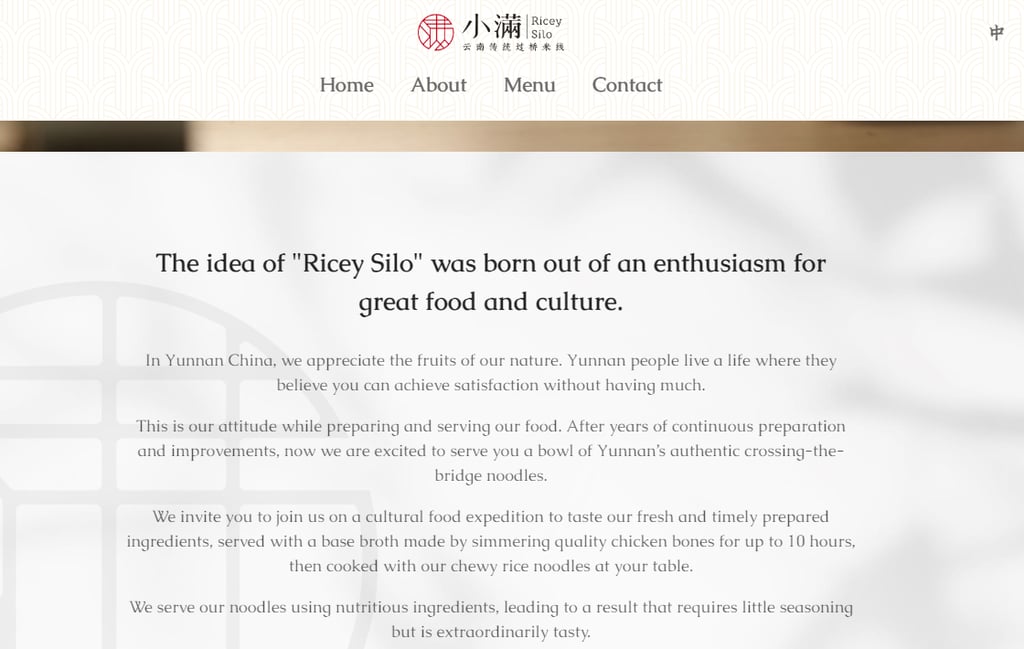
You can also think about the values that drive your business operations, like community involvement, environmental consciousness, or innovation in culinary techniques. If it’s about innovation, your restaurant menu might include unique ingredient combinations, for example.
2. Design Your Menu Layout
Understanding visual hierarchy is very helpful in creating an effective restaurant menu design. It ensures that your menu items are easy to navigate and that your main dishes catch the eye first.
Categorization is crucial in selecting the most suitable restaurant menu template that accommodates your offerings’ breadth. Especially for restaurants with a large menu, it helps avoid overwhelming customers.
Start by listing all potential dishes and beverages you plan to offer. You can use a notepad, a Microsoft Word document, or whichever tool you prefer.
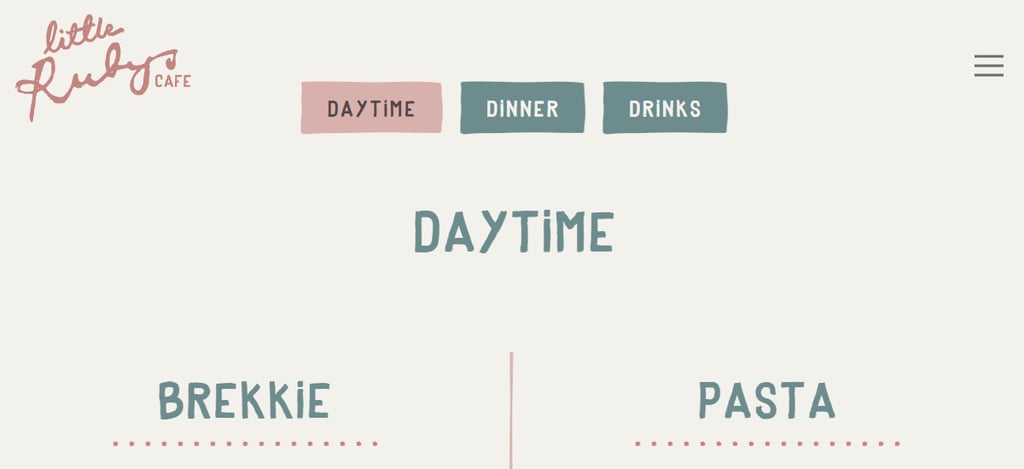
Then, group these items by courses like appetizers, entrees, and desserts. Or, categorize the menu based on sections such as breakfast, lunch, and dinner, like in this example from Little Ruby’s Cafe:
To streamline the design process, you can use an online menu creator and explore the free menu templates. For a more scalable option, you can use a restaurant website builder, choose a restaurant template, and create a dedicated menu page on your site.
Different templates offer different customization options. However, you should choose one that allows you to adjust the color scheme and fonts to match your restaurant’s branding.
When it comes to decorating your menu with design elements, you should always prioritize readability.
For example, when incorporating high-quality photos of menu items, the aim should be to complement the text rather than overwhelm it. Here are some tips to ensure appropriate image usage:
- Balance text and images. For each menu item, consider using one small, high-quality image alongside the description rather than multiple images that can clutter the page.
- Size matters. Oversized photos can dominate the page and detract from the descriptions. However, images that are too small may not be compelling.
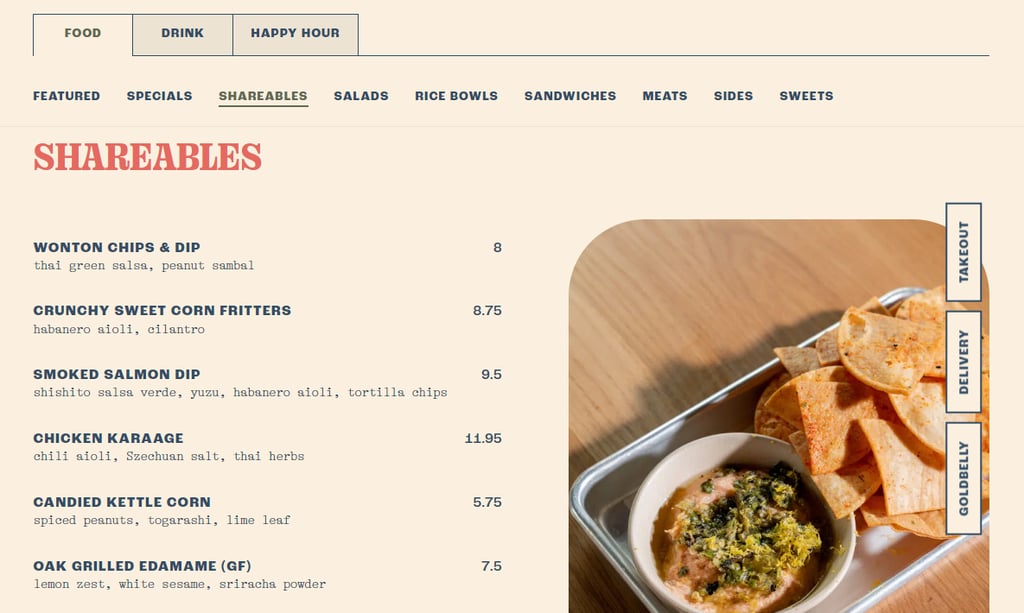
- Strategic placement. You might include a standout photo for each section rather than for every single item. This approach reduces visual overload and highlights key dishes. See an example from Loro:
Having a text-based menu is all right, too. However, be careful not to overcrowd it. Here are some tips for creating an excellent text-based restaurant menu:
- Simplify layout. Use a straightforward layout with clear headings for each section. Maintain consistent alignment, like left or center, throughout the menu to create a clean, organized appearance.
- Adequate spacing. Incorporate sufficient space between menu items and sections to avoid visual clutter and improve readability. Consider using white space effectively to separate different parts of the menu.
- Carefully select your font. Choose menu fonts that are clean and ensure there is a good contrast between the text and the background.
If you have design skills, consider starting with a blank template in your restaurant menu maker. This allows for complete personalization, amplifying your unique qualities.
On top of all, having a well-designed menu that can easily adapt to both print and digital formats is essential. This flexibility caters to customers who want to explore options online before they visit and provides a physical menu for guests dining in. If you’re interested in creating a restaurant website, follow our guide to easily set up a professional and adaptable online presence.
Suggested Reading
Find more design inspiration in our 20 Best Restaurant Websites article.
3. Select Your Menu Items
Now, you have your final menu layout. While including everything in your list in your menu cards is tempting, you should curate them carefully.
A good restaurant menu offers a variety that caters to different tastes and preferences. However, having too many options is counterproductive. They can slow down the kitchen, complicate inventory, and make it harder for customers to decide what to eat.
Therefore, a restaurant menu should be concise but diverse enough to appeal to a broad audience. For example, it can be a mix of both innovative options and familiar favorites.
You can incorporate dishes that accommodate religious dietary practices, such as halal or kosher. Additionally, include options that cater to common dietary restrictions and preferences, such as gluten-free, vegan, vegetarian, and keto-friendly choices.
In the following example, Dim T offers a Dietary Filter button for customers to sort the menu offerings into Vegetarian, Vegan, Vegan Option Available, Non-Gluten, and Non-Gluten Available.

4. Write Enticing Descriptions
Once you decide on your selection, it’s time to write the menu item descriptions.
Highlighting key ingredients is crucial for crafting effective restaurant menu descriptions. If you’re using premium ingredients, mention their origin. For example, specifying that your dish uses A5-grade Wagyu beef immediately signals to customers the exceptional quality of the meat.
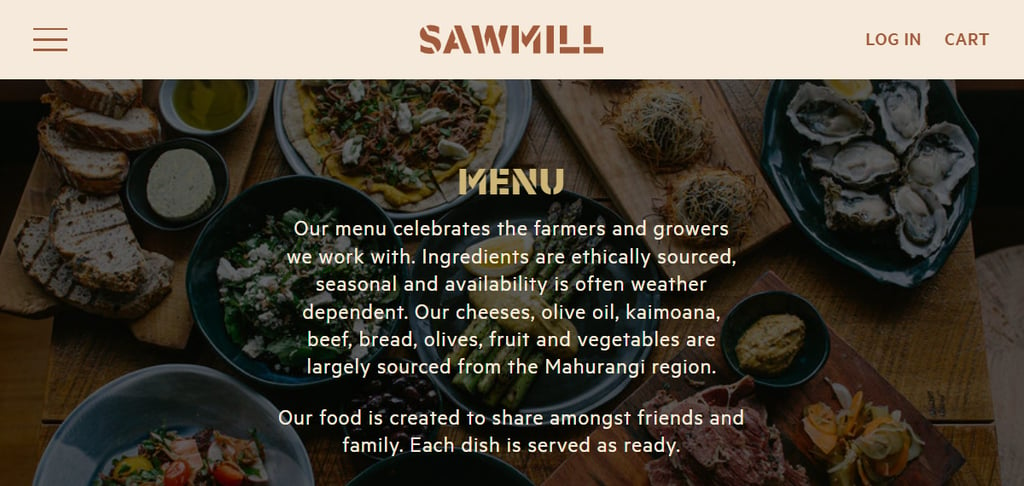
Your approach to sourcing ingredients can also make your descriptions unique. For instance, if your restaurant uses ingredients solely from local organic farms, highlight this as a dedication to sustainability. Sawmill Brewery does this by dedicating a section on its Menu page:
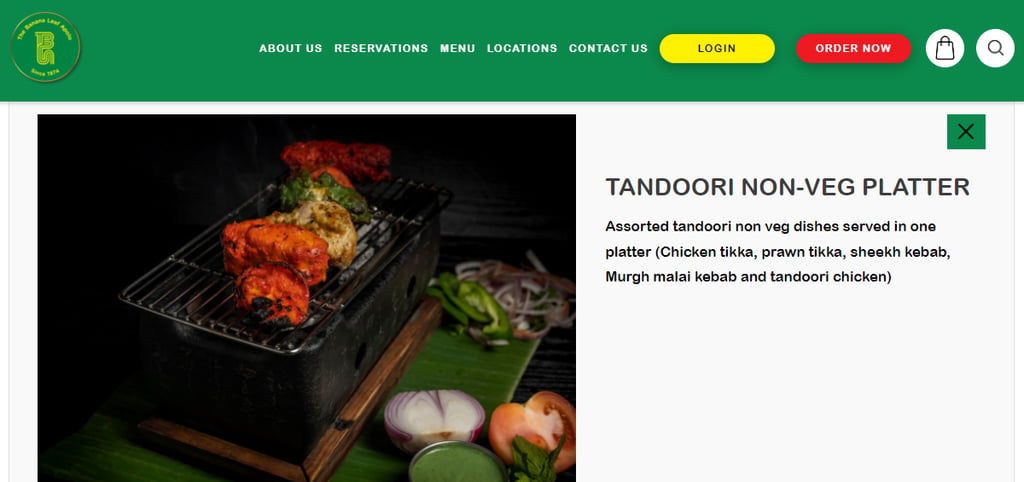
You can also include the cooking techniques. Terms like wood-fired or smoked suggest unique tastes and aromas. Meanwhile, pan-seared or char-grilled indicates culinary expertise and attention to detail.
For ethnic cuisines, traditional cooking methods enhance the cultural experience. Here’s an example from The Banana Leaf Apolo that includes the tandoori cooking method in its description:
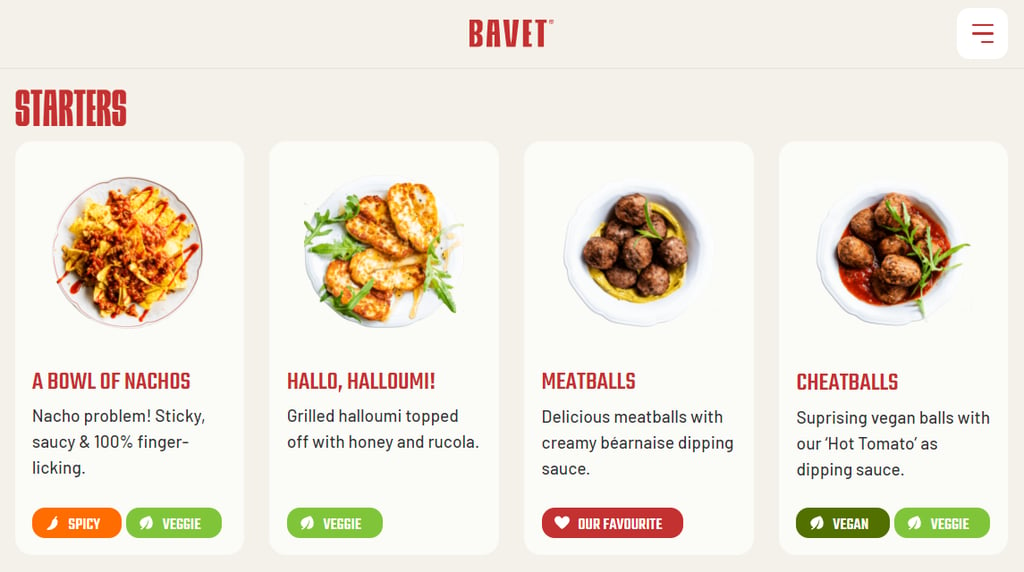
Additionally, you can engage the senses by describing the food’s taste, smell, and texture. Words like crispy, creamy, aromatic, and tangy can significantly improve your menu descriptions. See an example from Bavet:
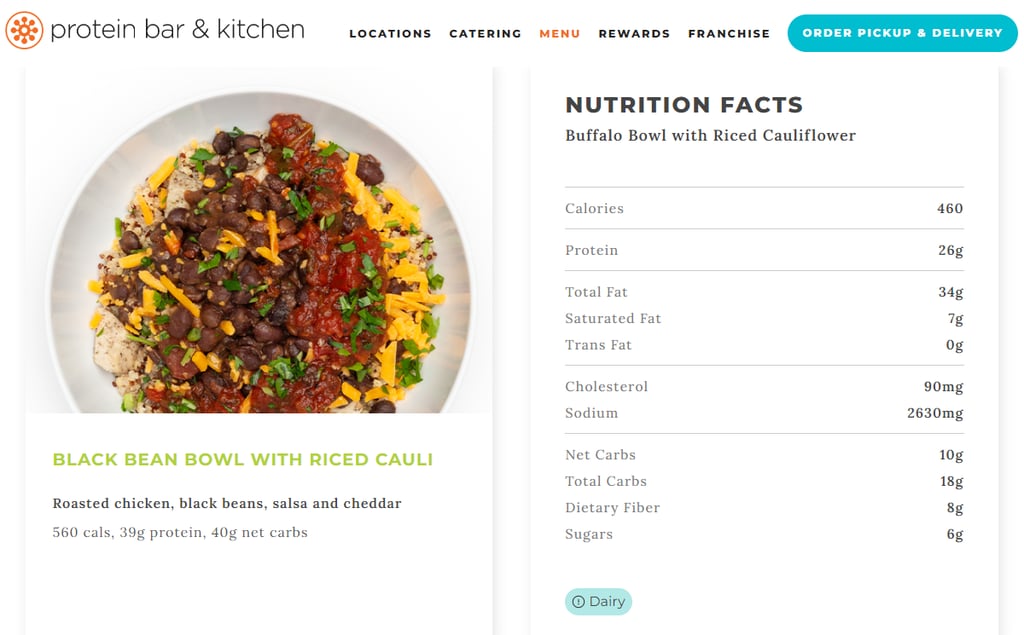
For health-conscious restaurants, having information about calories and other nutritional details is critical. Share these details, like Protein Bar & Kitchen, to build trust with customers and authority in the field:
Importantly, clearly indicate potential allergens like eggs, peanuts, and wheat. Aside from assisting customers with food allergies in making safe choices, this approach reflects your commitment to customer care.
Let’s see some ways you can highlight important information in your menu description:
- Icons or symbols. Indicate specific attributes of dishes, such as icons for spicy foods, vegetarian or vegan options, or signature dishes.
- Color coding. Employ color coding to draw attention to special categories like organic ingredients, locally sourced items, or low-calorie options.
- Footnotes or sidebar. Provide additional information about the sustainability of ingredients, the origin of certain dishes, or explanations of unique cooking techniques. These details give customers more context about what they are choosing to eat.
- Bolding. It’s one of the most common ways to highlight allergens.
Whichever way you prefer, make sure to maintain consistency across all your menu descriptions.
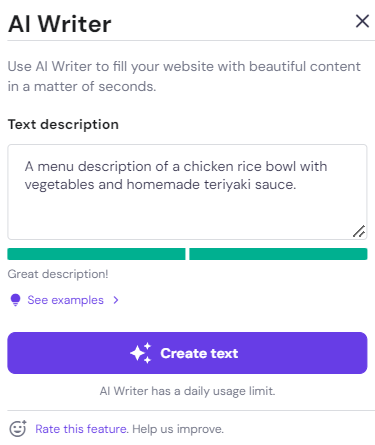
If writing is not your forte, you can use our website builder’s AI Writer for assistance. To start editing the ready-made description, all you have to do is click the description section → AI Writer.
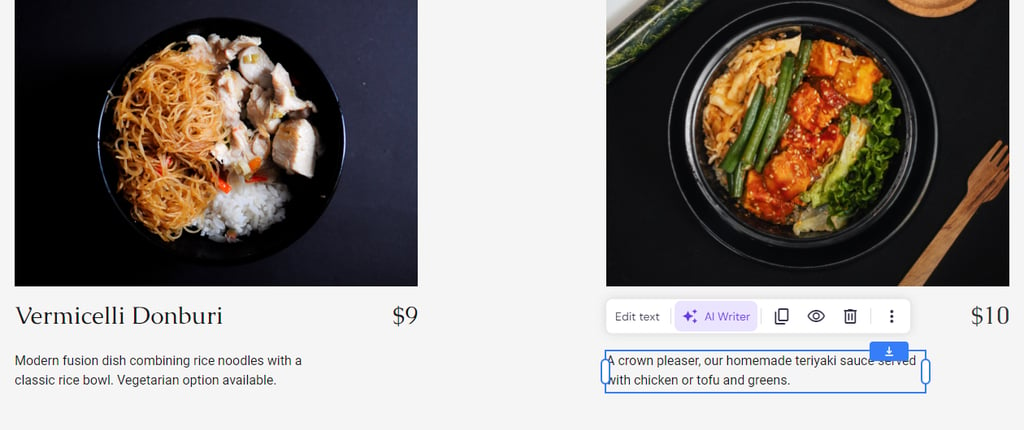
Then, provide a brief description about your menu item and click Create Text.
5. Price Your Menu Items
When it comes to pricing on a restaurant menu, customer perception plays a critical role. It’s because the prices you set can influence how customers perceive the quality and value of your food.
To price your menu items effectively, begin with a detailed cost analysis of each dish.
Understand the cost of ingredients, preparation time, and other overheads to identify which dishes are most profitable. These details can also let you know which food menu needs a price adjustment or reconfiguration of ingredients to maintain a healthy margin.
Note that pricing strategies will vary significantly between upscale and more affordable restaurants.
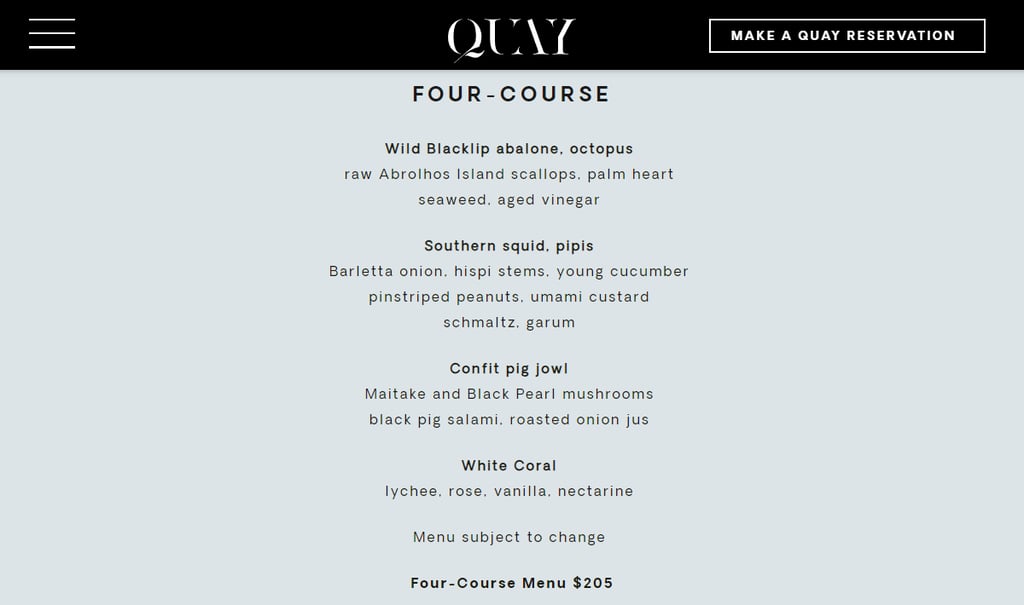
For upscale restaurants, pricing can reflect the exclusivity and quality of the ingredients, with customers expecting a premium experience. Here, psychological pricing might involve setting higher price points to convey luxury. Let’s see how QUAY prices its four-course offering:
For more budget-friendly restaurants, focus on competitive pricing strategies. Hence, offering value for money while ensuring each menu item remains profitable.
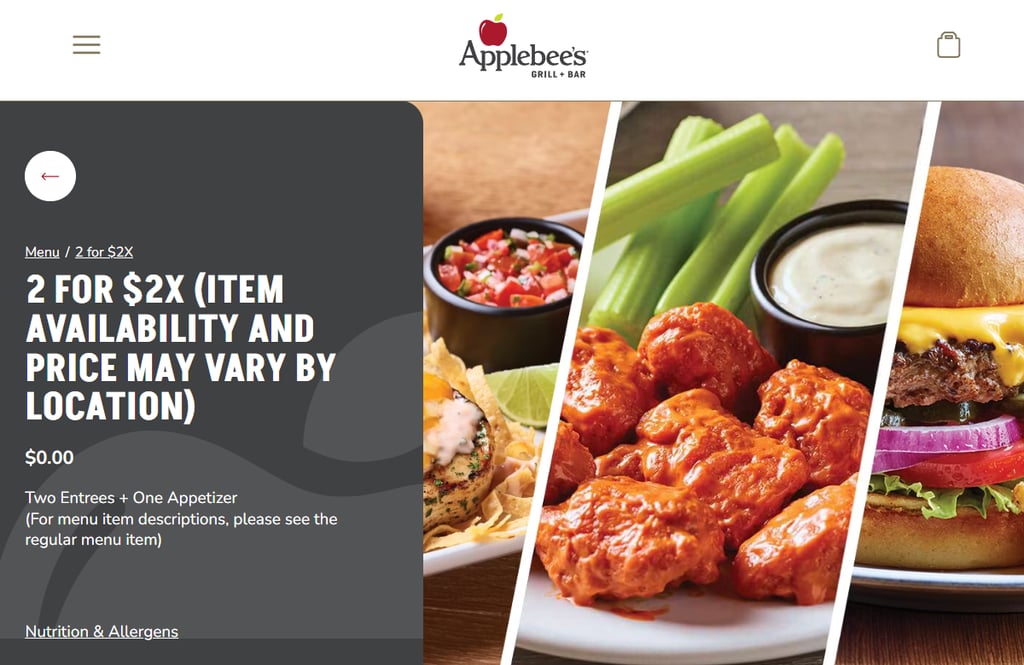
Bundling dishes or offering specials, for example, can attract budget-conscious customers without diminishing value. Applebee has always been well-known for its bundling packages:
Once you’ve determined your pricing, consider its placement on the menu to subtly encourage customers to choose dishes that offer you higher margins. Typical placements are after the menu description and off to the side of the dish name.
Here’s an example from Fifty Nine Republic:
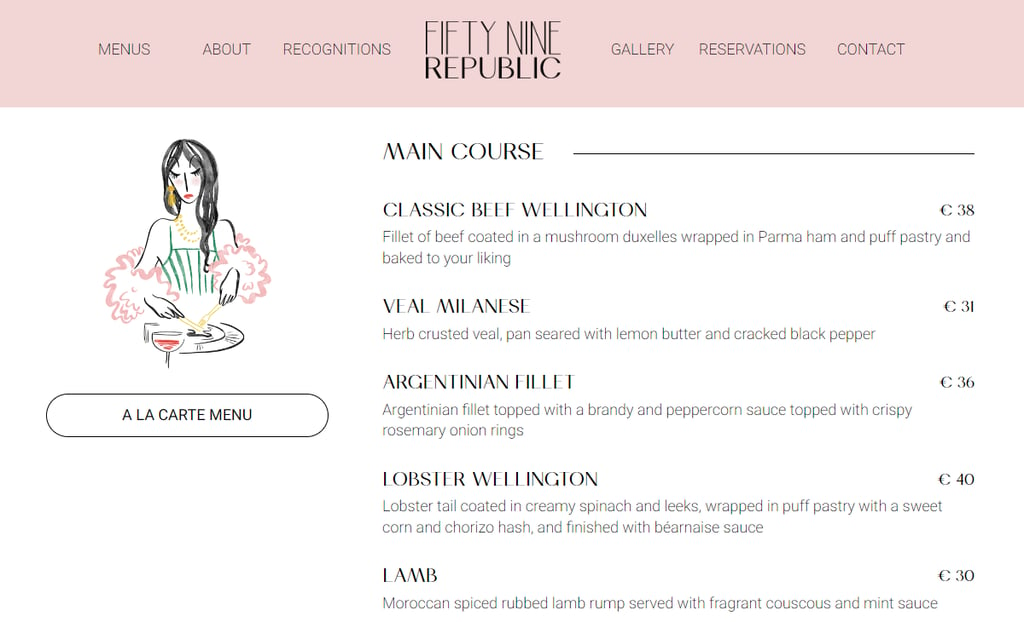
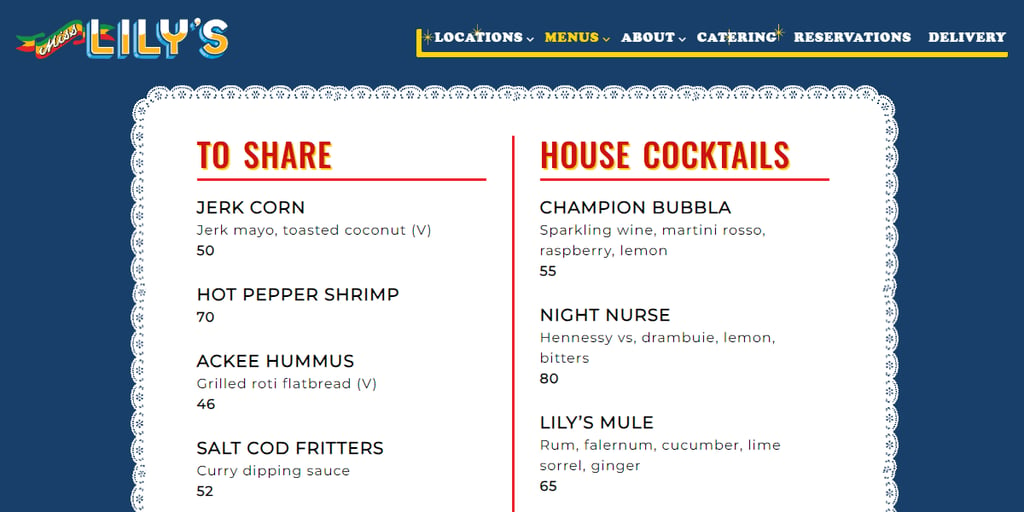
Some restaurant menus opt to place all prices in a column away from the descriptions to draw less attention to cost and more to the dish’s appeal. This subtle tactic will guide diners to choose based on what they want to eat rather than primarily on price.
Additionally, omitting currency symbols or rounding up numbers can affect how customers perceive cost to seem more affordable. Here, you can see Miss Lily’s display menu prices without the dollar sign and with rounded numbers:
6. Conduct a Trial Run of Your Menu
Testing your menu before the official launch is crucial to gather initial feedback and make necessary adjustments. Hosting a soft launch or a series of tasting events for friends, family, and influencers can provide valuable insights into your menu’s appeal and functionality.
During these events, pay close attention to the guests’ reactions to each menu item they order. To gauge customer satisfaction, check if food is promptly prepared and served to tables. You can use comment cards or direct conversations to gather honest feedback.
Additionally, consider implementing A/B testing for different aspects of your menu:
- Layout variations. Experiment with different menu layouts or the positioning of items to see which configuration leads to higher sales of your key dishes or more expensive items.
- Menu descriptions. Try different versions of descriptions for the same dish to see which resonates more. For example, compare a simple description versus a more elaborate one to determine which is more effective in enticing orders.
- Pricing strategies. Test different price points for certain dishes to find the optimal balance between perceived value and profitability. This can help identify price sensitivities among your target audience.
After the test phase, review all collected feedback and analyze data from your A/B tests to identify patterns that suggest changes. For example, you might need to tweak a dish’s flavors, adjust portion sizes, or change the description on the menu to match guest expectations better.
Remember to test the readability and overall functionality of the physical or digital menu. Make sure the generated menu QR code, if used, links correctly to the online menu. This testing phase helps refine your menu into an effective tool for both customer satisfaction and operational efficiency.
You should also monitor the operational aspects like the speed of service and kitchen efficiency.
Observing these elements can offer insights into how your kitchen staff manages order flow, prep times, and workload during service. Check if the setup facilitates smooth movement and provides staff with easy access to tools and ingredients.
7. Promote Your Menu
Promoting your menu effectively is key to attracting customers. One of the easiest ways is to use social media platforms. Here are some tips:
- Upload high-quality restaurant menu photos. When showcasing your dishes, prioritize visual appeal. Take high-resolution images that accentuate textures and colors by optimizing lighting.
- Use Instagram stories and highlights. Share behind-the-scenes glimpses of your kitchen, the preparation process, or daily specials. Save these stories as Highlights for new visitors to see what makes your food unique.
- Share engaging videos. Create short clips of dishes being prepared, plated, or served. You can use slow-motion effects to enhance the visual appeal of your culinary creations. Videos are also great for introducing your staff and offering a personal touch.
- Post user-generated content. Encourage customers to post their photos of your dishes and tag your restaurant business.
- Promote specials and events. Announce new menu items, special discounts, or events like themed dinner nights or tasting menus. They give your audience a reason to visit your restaurant.
- Collaborate with food bloggers and influencers. Partner with local influencers who can help promote your restaurant to a wider audience. Choose influencers whose followers align with your target demographic.
- Optimize link management. Embed Linktree, Milkshake, or Beacons link in your social media bios to centralize access to all your important content. This single link can direct followers to your full menu, online reservations, delivery services, and more.
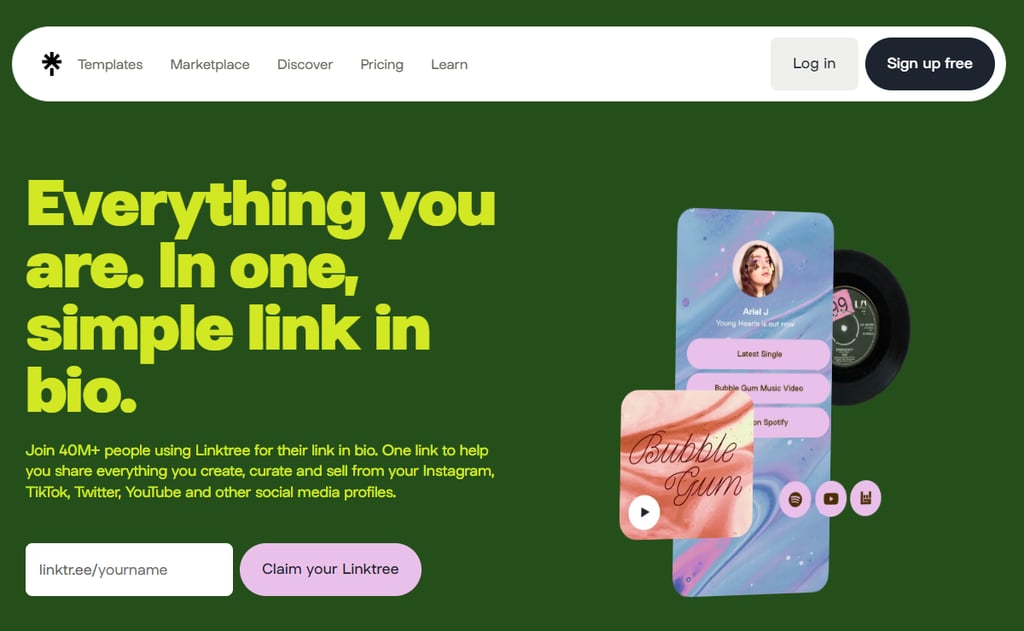
Further optimize this effort by integrating your menu into all promotional materials and advertisements. This unified approach helps create a consistent brand message and makes the menu items more recognizable to potential customers.
Here’s how to maximize the impact of your menu marketing efforts:
- Tailored presentation for different platforms. While Instagram is ideal for sharing high-quality images and videos of your dishes, platforms like X (Twitter) and Facebook are great for highlighting daily specials or upcoming changes with engaging text and links.
- Cross-promotions with local events. For example, offer a special if customers show a ticket stub from a local theater, or provide samples at community events to get your menu items tasted by a broader audience.
- Use word-of-mouth. Encourage satisfied customers to share their experiences online.
- Implement email marketing. If you have a website, use email newsletters to promote new menu items or seasonal specials directly to your customers. Include a direct link to the menu page to encourage potential reservations.
- SEO for menu items. Use our site builder’s AI SEO Assistant to optimize your menu descriptions with relevant keywords. Therefore, for potential customers searching for specific dishes or culinary experiences in your area, your restaurant comes up in search results.
8. Update and Refine Your Menu
To ensure your restaurant remains competitive, it’s crucial to update your menu regularly.
Constant evaluation is vital to maintaining a vibrant menu. Incorporate customer feedback to understand what dishes resonate well and which ones could be improved or replaced. This direct insight helps refine the choices you offer.
There is also the importance of freshness. A dynamic menu keeps the dining experience interesting and encourages repeat visits.
Seasonal items and specials can help with making your restaurant menu dynamic. This is because they often come at a lower cost, have better flavor, and can inspire creative new dishes. Additionally, featuring weekly or monthly specials can draw in crowds looking for something new and exciting, making each visit unique.
As your business grows, consider employing a food photographer to take high-quality food photos of your offerings. Furthermore, working with a professional designer can help you upgrade your restaurant menu design.
On top of everything, you should regularly review costs and adjust your menu prices to reflect changes in supplier pricing, seasonal availability of ingredients, or shifts in customer demand.

Conclusion
As the primary interface between your restaurant and its patrons, your menu is pivotal in shaping the dining experience. Therefore, creating a good restaurant menu involves a thorough and strategic approach.
Let’s have a short recap on the step-by-step process of how to make a restaurant menu:
- Define your restaurant’s concept. Craft a menu that mirrors your style. Also, consider your audience, ingredients, cooking methods, and ambiance to establish your culinary identity.
- Design a user-friendly menu layout. Organize dishes effectively, and emphasize specials for easy navigation.
- Select menu offerings thoughtfully. Balance classics and innovative dishes while catering to diverse dietary needs.
- Write compelling menu descriptions. Highlight ingredients, sourcing, cooking techniques, and sensory details.
- Price items strategically. Maximize profits while reflecting quality and value.
- Conduct menu trials. Evaluate guest reactions, staff performance, and kitchen operations.
- Promote your menu. Utilize social media and other marketing channels.
- Keep your offers competitive. Collect feedback and implement changes based on it.
By continually adapting and refining your menu, you ensure it remains an effective tool that reflects the restaurant’s brand. This strategy ultimately contributes to sustained growth and customer satisfaction.
Good luck with your journey in creating restaurant menus!

Linda is a seasoned Content Writer specialized in website creation. With her passion for the written world and obsession with helping others, her goal is to deliver resourceful content pieces for all skill levels. When she’s not writing, Linda likes to cross stitch and watch films. Follow her on LinkedIn.