Mailchimp vs. Klaviyo: Key differences and features
May 08, 2026
/
Alma
/
7 min Read
Mailchimp vs. Klaviyo – which one is better for you? That depends on the business you run.
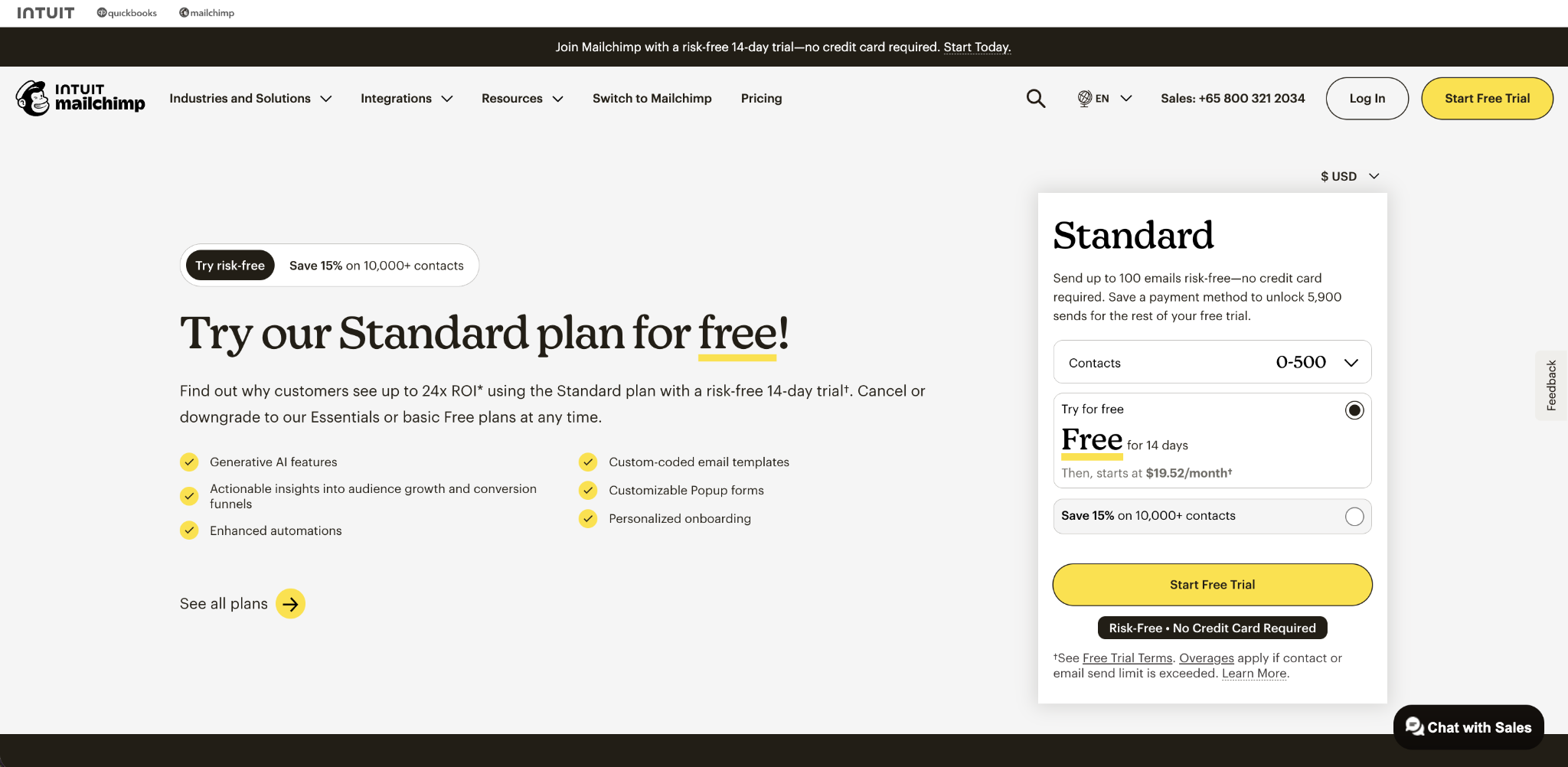
Mailchimp is a general all-in-one marketing platform for newsletters, service providers, and small brands. It covers email, landing pages, social posts, and ads in one dashboard.
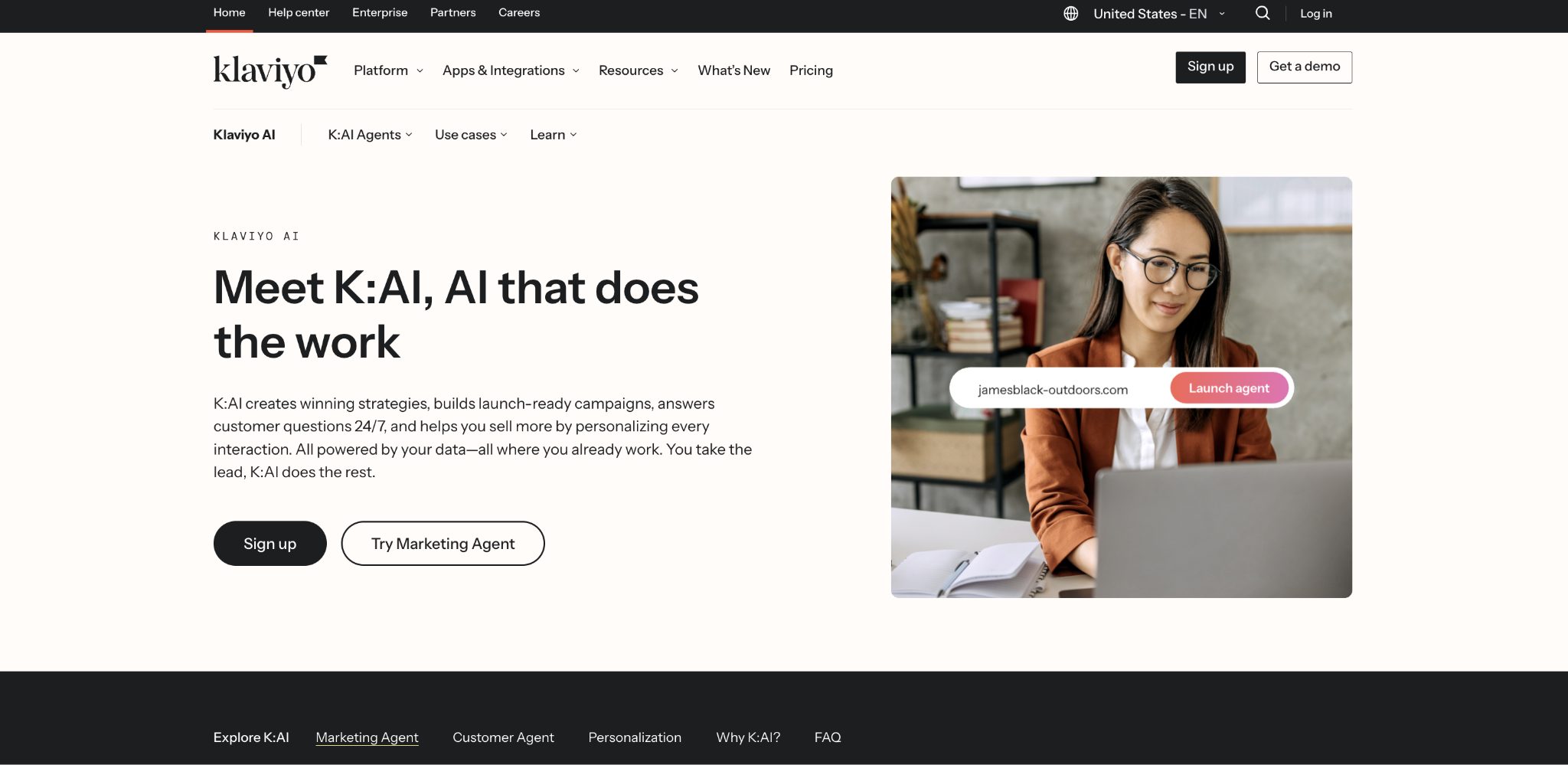
Klaviyo is narrower. It’s an email tool built specifically for ecommerce stores, with automation that pulls live data from Shopify, WooCommerce, or BigCommerce to drive revenue.
That focus is the deciding factor. If you sell products online, Klaviyo earns back its higher price through abandoned cart flows and revenue tracking. If you don’t, those ecommerce features sit unused, and Mailchimp’s lower cost and broader marketing tools are a better fit.
Both have their downsides. Mailchimp bills you for unsubscribed contacts, which inflates your cost as your list ages. Klaviyo gets expensive as your list grows – at 10,000 contacts, you pay $150/month.
But you can test either on their free tier. Both cap at 250 contacts and 500 monthly emails, enough to see if they fit. If neither does, you can try simpler AI-powered tools like Hostinger Reach to handle most small-business email for less.
What are the advantages of Mailchimp over Klaviyo?
Mailchimp’s advantages over Klaviyo come down to ease of use and broader marketing features. It’s a better fit if you want more than a typical email marketing platform.
- Easier to use for beginners. You can create and send campaigns quickly with simple tools and ready-made templates.
- Better for general marketing. It’s not limited to ecommerce, so it works well for service businesses, creators, and small brands.
- Free plan for small lists. You can get started without paying, which is useful for testing or early growth.
- Built-in tools beyond email. You can create landing pages, run ads, and post on social media from one place.
- Larger ecosystem and brand familiarity. It integrates with 300+ tools and is widely used, making it easier to find guides, freelancers, and support.
These strengths make Mailchimp a better choice when you need a general marketing tool rather than relying solely on email marketing platforms.
Let’s say you run a yoga studio. You might send a weekly class update, promote a workshop on Instagram, and collect sign-ups through a landing page. Mailchimp lets you do all three in one place. Klaviyo is more focused on email and ecommerce, so it doesn’t support that kind of setup as well.
What are the disadvantages of Mailchimp compared to Klaviyo?
Mailchimp’s main drawbacks compared to Klaviyo show up in ecommerce. It’s less capable when it comes to automation, targeting, and tracking results, and pricing can rise quickly as your list grows.
For ecommerce stores, the biggest gaps are:
- Limited ecommerce automation. You can set up basic emails, such as abandoned-cart or post-purchase messages. More advanced ones–like emails based on products someone viewed or reminders to restock–are harder to build and less flexible.
- Weaker segmentation. Mailchimp uses tags and simple filters. Klaviyo automatically updates groups based on customer behavior, so targeting is more precise.
- Less detailed revenue tracking. You can see how campaigns perform, but not as clearly how much money each email or flow brings in.
- Less flexible for complex funnels. It’s harder to build step-by-step email sequences based on customer behavior.
- Pricing can increase quickly. Mailchimp counts unsubscribed and duplicate contacts, so you may pay for people you can’t email.
For stores where email drives sales, these limits can make a real difference.
What are the advantages of Klaviyo over Mailchimp?
Klaviyo’s advantages over Mailchimp come down to stronger ecommerce features. It gives you better automation, more useful customer data, and clearer tracking of what’s driving revenue.
- More advanced ecommerce automation. You get pre-built flows like abandoned cart, browse abandonment, post-purchase, win-back, and more – ready to use or customize.
- Richer customer data. Each profile includes purchase history, browsing activity, and estimated value, not just basic contact details.
- Real-time segmentation. Customer groups update instantly based on what people do, so your targeting stays accurate.
- Built-in revenue tracking. You can see how much money each email or automation generates.
- Native ecommerce integrations. Direct connections with platforms like Shopify and WooCommerce automatically sync products and customer activity.
- Only pay for active contacts. Unsubscribed or inactive profiles don’t count toward your billing.
These features make Klaviyo a stronger choice if you run an online store and rely on email as a revenue channel.
For example, with emails based on products someone viewed but didn’t buy, a shopper can view a product, leave your store, and get a follow-up email with that exact item shortly after. Klaviyo supports this out of the box. Mailchimp doesn’t handle it as easily.
What are the disadvantages of Klaviyo compared to Mailchimp?
Klaviyo’s main drawbacks compared to Mailchimp are higher costs as your list grows, a limited free plan, a steeper learning curve, and fewer features outside ecommerce.
This comes from how it’s built. Klaviyo is designed for ecommerce, so if you don’t need those features, it can feel more complex and expensive than necessary.
- Higher pricing as you grow. Klaviyo gets more expensive as your contact list increases, often costing more than Mailchimp at the same size.
- Limited free plan. The free tier is capped at 250 contacts and 500 emails. Good for testing, not enough to run a business.
- Takes longer to learn. You need time to set up integrations and understand how flows and data work.
- Too much for simple newsletters. If you just send basic updates, most features go unused.
- Fewer non-ecommerce tools. It focuses on email and SMS, so there are no built-in landing pages, social posts, or ads.
For businesses that don’t rely on ecommerce, Klaviyo can add extra cost and complexity without much benefit.
Mailchimp is easier to set up. You can send your first campaign in under an hour. Klaviyo usually takes longer because you need to connect your store and sync data first.
Mailchimp’s setup is simple: sign up, import contacts, pick a template, and send.
Klaviyo takes more steps. You connect your store (like Shopify or WooCommerce), wait for data to sync, then learn how to build flows before sending campaigns.
Here’s how they compare:
Setup factor | Mailchimp | Klaviyo |
Time to first campaign | Under 1 hour | Half a day or more |
Store integration | Optional | Needed for full use |
Learning curve | Easy | Moderate to steep |
Onboarding support (free plan) | 30 days | 60 days |
Best for | Beginners, non-store businesses | Ecommerce teams |
The right choice depends on your starting point. If you’re new or not running a store, Mailchimp is quicker to launch. If you run an ecommerce store and want to use email to drive sales, Klaviyo takes longer to set up but gives you more control.
Which is better for maintenance and management: Mailchimp or Klaviyo?
Mailchimp is easier to manage day to day. Klaviyo takes more work, but gives better results if you keep improving your setup.
- Mailchimp – lighter workload. Most of your time goes into writing and sending campaigns. Automations are simple and require little upkeep. One person can manage everything in a few hours a week.
- Klaviyo – more hands-on. You spend time updating flows, adjusting customer segments, and running tests to improve results. It takes more effort to maintain.
- Time vs. results. Mailchimp saves time. Klaviyo can drive more revenue, but only if you actively manage it.
The right choice depends on your time and setup. If you’re a solo founder or small team, Mailchimp is easier to run. If you have an ecommerce business and can invest time (or have someone dedicated to email), Klaviyo’s extra work can pay off.
Which is better for cost: Mailchimp or Klaviyo?
Mailchimp costs less at the start and for simple campaigns. Klaviyo costs more, but includes all features and is built to drive ecommerce revenue.
The key difference is how pricing scales and what you get at each level.
- Mailchimp – lower starting cost. Plans start cheaper, but advanced features like multi-step automation are only available on higher tiers.
- Klaviyo – all features included. Pricing starts at a similar level, but every plan includes the full feature set.
- Pricing grows differently. Mailchimp can seem cheaper, but costs rise as your list grows, especially since unsubscribed contacts can still count. Klaviyo only charges for active profiles.
At 10,000 contacts, the difference looks like this:
Platform | Approx. monthly cost | What you get |
Mailchimp Essentials | ~$110 | Basic automation, unsubscribed contacts still counted |
Mailchimp Standard | ~$135 | Advanced automation and segmentation |
Klaviyo Email | ~$150 | All features, real-time flows, revenue tracking, active profiles only |
One important detail affects the comparison. Mailchimp counts unsubscribed and inactive contacts toward your total. Klaviyo only charges for active profiles, which can make a difference if your list includes many inactive users.
Mailchimp is a better fit if you want to keep costs low and run simple campaigns. Klaviyo makes more sense for ecommerce brands, where features like abandoned-cart emails can generate enough revenue to offset the higher price.
In the end, your cost of email marketing depends on your list size, how often you send emails, and which features you actually use.
Which is better for customization and flexibility: Mailchimp or Klaviyo?
Klaviyo gives you more control, while Mailchimp keeps things simpler and easier to manage.
Klaviyo is stronger in segmentation and automation. You can build very specific customer groups based on behavior, purchases, and engagement, and they update automatically as people take action. Its automation flows are also more flexible, letting you create step-by-step sequences that branch based on customer actions, test different paths, and combine email, SMS, and push messages in a single flow.
Mailchimp, meanwhile, takes a simpler approach. Its Customer Journey Builder handles common use cases like welcome emails, abandoned cart, and re-engagement, but with fewer options to customize each step. Segmentation is also more basic, using tags and filters instead of real-time behavior.
The two platforms also differ in integrations. Klaviyo focuses on ecommerce, with strong native integrations for platforms like Shopify and WooCommerce, where customer and product data sync automatically. Mailchimp connects with 300+ tools across a wider range of use cases, but doesn’t react to customer behavior as precisely or in real time.
Choose Klaviyo if you need detailed control and personalization. Choose Mailchimp if you want a simpler setup and broader integrations beyond ecommerce.
Which is better for performance and deliverability: Mailchimp or Klaviyo?
Both platforms deliver emails reliably. The difference is how well they target those emails and track results.
Area | Mailchimp | Klaviyo |
Deliverability | Strong | Strong |
Targeting | Basic targeting with tags and filters | Real-time targeting based on customer behavior |
Conversions | Good for general campaigns | Higher for ecommerce due to better targeting |
A/B testing | Easy to set up | More advanced, but takes more setup |
Advanced testing | Multivariate testing (Premium plan) | Available within flows and campaigns |
Revenue tracking | Basic performance metrics | Tracks revenue per email and flow |
Predictive data | Limited | Includes customer value, churn risk, and next purchase estimates |
Analytics | Built-in reports + Google Analytics integration | Focused on revenue and customer behavior |
Which one performs better depends on what you send.
For ecommerce stores, Klaviyo usually drives higher conversions because emails are based on real customer behavior. For newsletters or general campaigns, Mailchimp performs well and is easier to manage without extra setup.
Should you choose Mailchimp or Klaviyo?
Mailchimp is better for simple, general marketing. Klaviyo is better for ecommerce businesses that want email to generate sales.
Choose Mailchimp if:
- You’re new to email marketing
- You run a service or content-based business (blog, agency, nonprofit)
- You want simple campaigns without complex automation
- You need a free plan to get started
Choose Klaviyo if:
- You run an ecommerce store (Shopify, WooCommerce, BigCommerce, Magento)
- You want automation based on customer behavior
- You need clear data on what drives sales
- Email is a key revenue channel and you’ll invest time in improving it
Alternative to Mailchimp and Klaviyo: Hostinger Reach
If you want an alternative to Mailchimp and Klaviyo that’s easier to use, consider Hostinger’s email marketing tool, Hostinger Reach. It’s built for small businesses, creators, and solo entrepreneurs who want to quickly create and send newsletters, launch campaigns, or manage email alongside your website without extra tools.
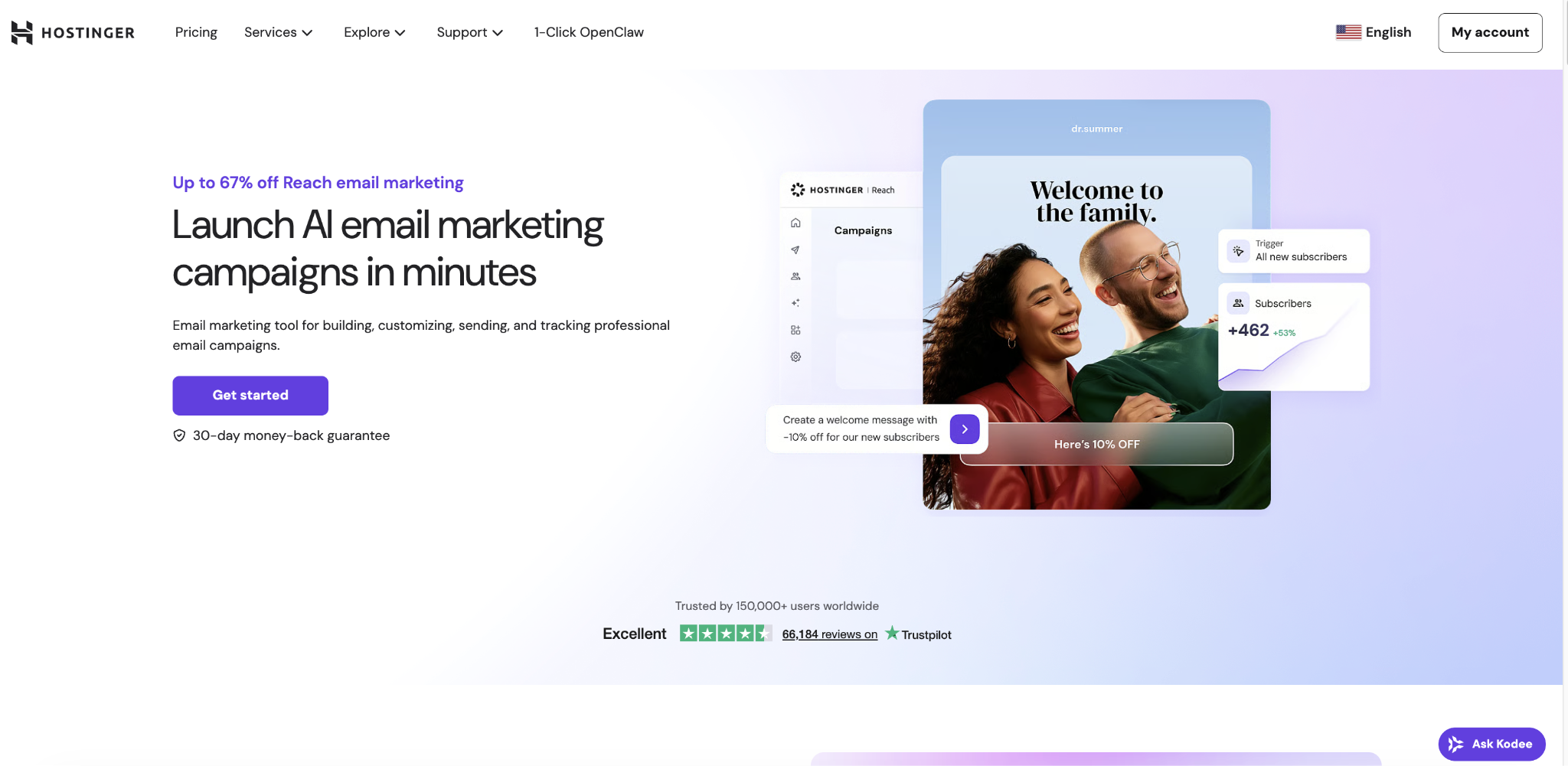
Reach uses AI to generate campaigns from a simple prompt. You describe your email, and it creates a ready-to-send version with layout, copy, and design included. You can go from idea to sent campaign in minutes.
Compared to Mailchimp, Reach is faster to set up and easier to manage. Mailchimp offers more tools and advanced workflows, but they take time to learn. Reach focuses on email only, which makes it better for quick campaigns.
And compared to Klaviyo, Reach is a simpler option. It doesn’t include deep ecommerce automation or real-time behavior tracking. Klaviyo is better for stores that rely on detailed data, while Reach focuses on speed and ease of use.

Alma is an AI Content Editor with 9+ years of experience helping ideas take shape across SEO, marketing, and content. She loves working with words, structure, and strategy to make content both useful and enjoyable to read. Off the clock, she can be found gaming, drawing, or diving into her latest D&D adventure.