8 best ecommerce hosting providers to build an online store
Mar 15, 2026
/
Ksenija
/
11 min Read

Ecommerce hosting providers supply the infrastructure that keeps an online store fast, secure, and always available to customers.
Unlike basic website hosting, ecommerce hosting environments must support product catalogs, payment processing, customer accounts, and traffic spikes during promotions or seasonal sales.
Online stores face several hosting challenges. Slow-loading pages can cause shoppers to abandon their carts, while downtime can interrupt transactions and damage customer trust.
Security is equally important because ecommerce websites handle sensitive data such as login credentials and payment information. As a store grows, the hosting environment must also scale to handle more visitors, larger product databases, and higher order volumes.
Choosing the right ecommerce hosting provider directly affects the shopping experience. Faster page loads make browsing smoother, reliable uptime keeps checkout available, and strong security protects both the store owner and their customers.
The providers below offer different strengths, from beginner-friendly hosting plans to high-performance cloud infrastructure for larger online stores.
Here are our picks for the best ecommerce hosting providers:
- Hostinger – An affordable hosting provider with LiteSpeed servers, built-in caching, and a simple WooCommerce setup for small and growing online stores.
- Bluehost – A beginner-friendly host with WooCommerce-focused plans and guided setup for WordPress ecommerce websites.
- SiteGround – A performance-focused provider offering managed WordPress and WooCommerce hosting with strong speed optimization and security tools.
- InMotion Hosting – A scalable hosting platform with VPS and dedicated server options suited for larger ecommerce websites with higher resource needs.
- Cloudways – A managed cloud hosting platform that lets businesses deploy ecommerce sites on infrastructure from providers like AWS, Google Cloud, and DigitalOcean.
- IONOS – A budget-friendly hosting provider offering flexible plans and built-in security features for small to medium-sized ecommerce businesses.
- DreamHost – A long-standing hosting provider known for transparent pricing, WooCommerce compatibility, and flexible upgrade paths.
- Liquid Web – A premium managed hosting provider designed for high-traffic ecommerce stores that require enterprise-level performance and reliability.
1. Hostinger
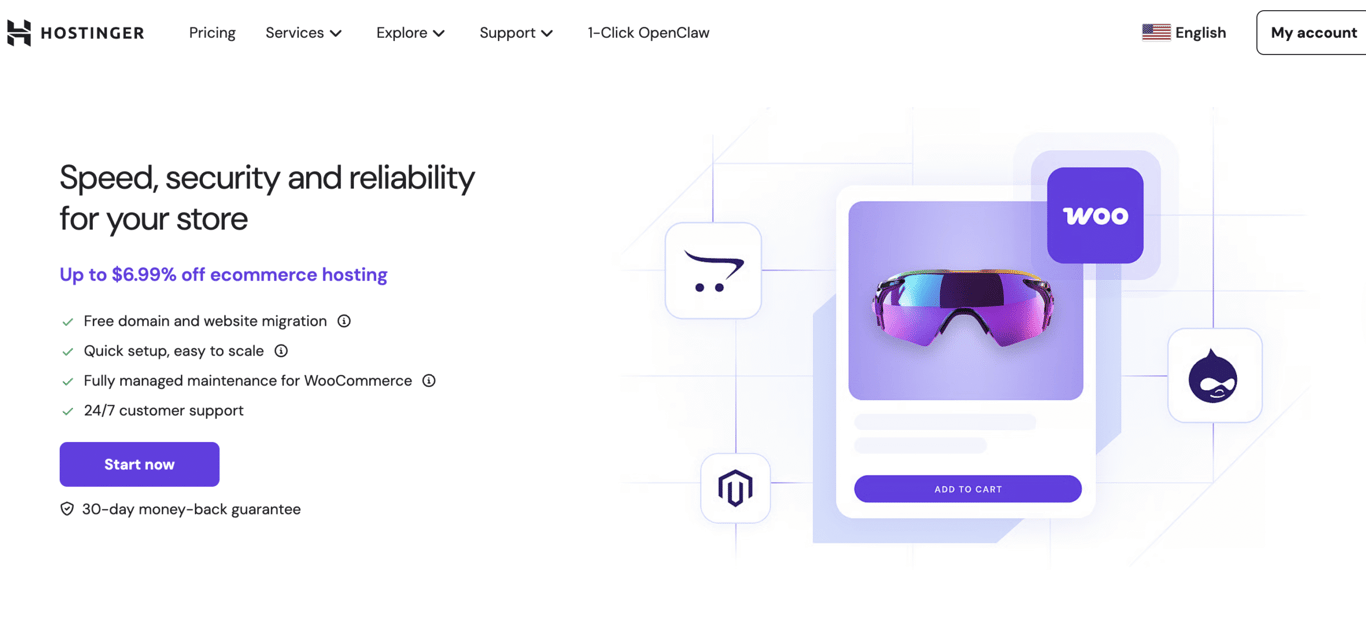
Hostinger is a Lithuania-founded hosting provider that offers affordable hosting plans optimized for ecommerce websites. Its platform focuses on delivering reliable performance and essential security features while keeping costs accessible for small and growing online stores.
The service is well-suited for startups and small ecommerce brands that need fast loading speeds and dependable uptime without investing in expensive infrastructure.
Hostinger’s hosting environment includes LiteSpeed web servers and built-in caching, which help online stores deliver product pages quickly even during higher traffic periods.
It also simplifies the process of launching an ecommerce site. WooCommerce can be installed with a single click, making it easier to host your ecommerce site and start selling online quickly. Each hosting plan also includes a free SSL certificate to protect customer data during transactions.
Combined with global data centers, these features help maintain secure, responsive storefronts for shoppers across different regions.
Compared with premium ecommerce hosting providers such as SiteGround, Cloudways, and Liquid Web, Hostinger focuses more heavily on affordability while still delivering practical performance tools.
If you want to create an ecommerce website for the first time or manage a tight budget, Hostinger offers a balanced mix of speed, security, and simplicity at a lower entry cost.
Hostinger pros:
The main appeal of Hostinger lies in its affordability and beginner-friendly ecommerce setup, as well as:
- LiteSpeed web server technology with built-in caching for faster page loading
- An intuitive custom control panel with one-click WooCommerce and CMS installations
- 24/7 live chat support for troubleshooting and account assistance
Hostinger cons:
While cost-effective for smaller stores, Hostinger’s platform also comes with a couple of trade-offs, like:
- Fewer advanced enterprise-level features compared with premium ecommerce hosting providers
- Limited phone support, with most assistance provided through live chat and documentation
Hostinger pricing:
Hostinger structures its ecommerce hosting plans into clear cloud tiers based on CPU cores, RAM, NVMe storage, and website capacity. Each plan includes fixed resource allocations, which makes costs predictable and easy to compare.
Hostinger’s cloud tiers are priced in the following way:
- Cloud Startup – £22.99
- Cloud Professional – £39.99
- Cloud Enterprise – £59.99
Scaling works in fixed steps. If your ecommerce store outgrows its current allocation, you can upgrade to the next cloud tier with more CPU power, memory, and storage.
Introductory discounts lower the initial price, while renewal rates are clearly stated in advance, which improves pricing transparency compared with usage-based cloud platforms.

2. Bluehost

Bluehost is a long-established web hosting provider that offers WooCommerce-focused hosting plans designed for small to medium-sized online stores.
Its platform emphasizes reliability, beginner-friendly tools, and guided ecommerce setup, making it a common choice for businesses launching a store for the first time.
Bluehost integrates directly with WooCommerce and provides a setup experience tailored for WordPress-based ecommerce sites. Store owners can install WooCommerce quickly and manage their websites through a familiar control panel without advanced technical knowledge.
The hosting environment also includes automatic updates, built-in SSL certificates, and marketing credits that help new stores promote their products online.
Unlike cloud infrastructure platforms such as Cloudways or enterprise hosting environments like Liquid Web, Bluehost focuses on simplicity and guided setup for WordPress-based ecommerce sites.
Bluehost pros:
The main advantage of Bluehost is its beginner-friendly WooCommerce hosting environment, along with:
- Reliable uptime and consistent performance for small to medium-sized ecommerce sites
- Free SSL certificate and domain included for the first year
- 24/7 customer support with experience assisting WordPress and ecommerce users
Bluehost cons:
While accessible for beginners, Bluehost also has a few constraints for larger or highly customized ecommerce projects. These include:
- Limited advanced customization compared with developer-focused hosting platforms
- Reduced performance under high traffic without upgrading to higher-tier plans
Bluehost pricing:
Bluehost structures its WooCommerce hosting plans as fixed shared hosting tiers.
Entry-level plans start at €9.99 per month (≈ $11.59) for a 36-month term and renew at €17.99 per month (≈ $20.87). Higher-tier plans increase ecommerce functionality and bundled tools, with mid-level packages starting at €18.61 per month (≈ $21.59) and renewing at €26.22 per month (≈ $30.42).
Compared with more developer-focused hosting providers, Bluehost’s pricing focuses on bundled ecommerce features and guided setup rather than deep infrastructure customization.
3. SiteGround
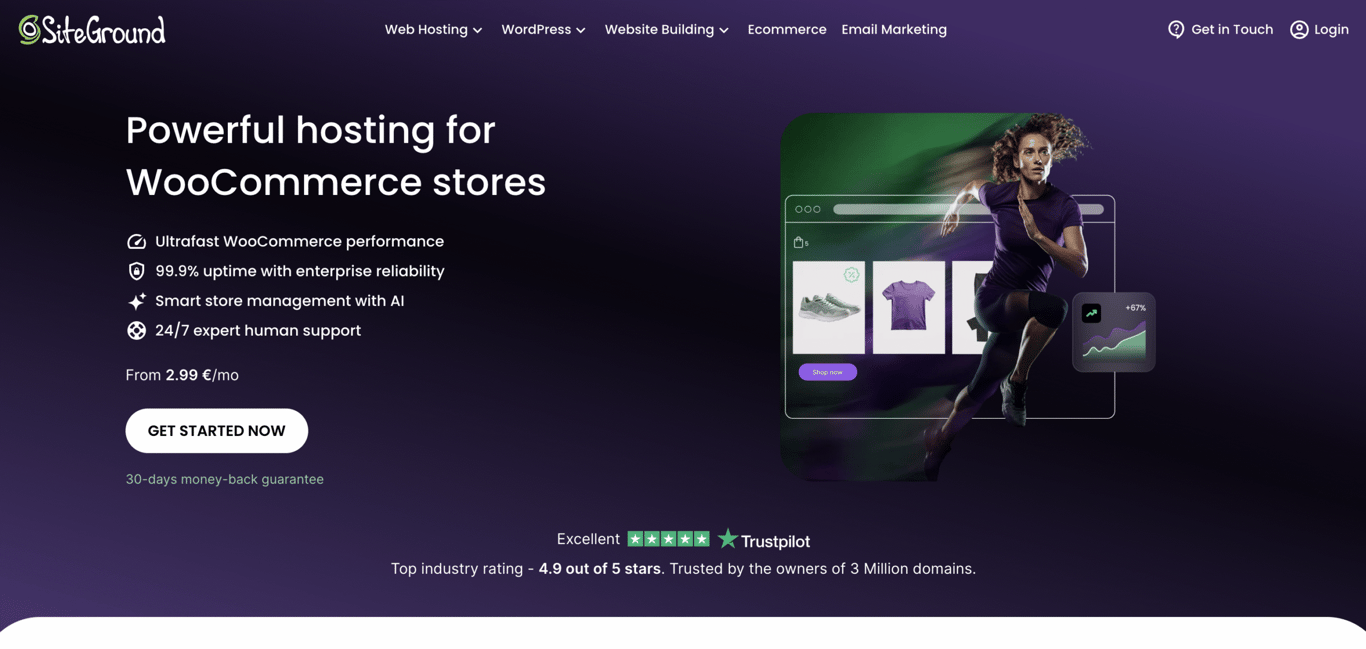
SiteGround is a premium hosting provider offering shared and cloud hosting environments optimized for WordPress and WooCommerce websites.
Its infrastructure focuses on speed, stability, and managed services, making it a common choice for ecommerce businesses that expect steady traffic growth.
Since it provides managed WordPress and WooCommerce hosting, many technical tasks, such as updates, caching configuration, and security monitoring, are handled automatically.
SiteGround’s infrastructure includes built-in caching, integration with a global content delivery network (CDN), and daily automated backups.
These features help maintain fast page loading times while ensuring that store data can be restored quickly if issues occur.
While beginner-oriented hosts such as Bluehost focus on simplified setup, SiteGround emphasizes performance optimization and managed services.
SiteGround pros:
The main advantage of SiteGround lies in its performance-focused infrastructure and managed hosting tools, including:
- Fast loading times supported by SSD storage and built-in caching
- Strong security features, including AI-driven anti-bot protection
- Easy site staging and automated daily backups
SiteGround cons:
While powerful and reliable, SiteGround also comes with a few trade-offs, like:
- Higher renewal prices after the initial hosting term
- Limited storage space on entry-level hosting plans
SiteGround pricing:
SiteGround structures its hosting plans into three shared tiers designed for growing websites and ecommerce stores.
These plans scale from the StartUp tier to GrowBig and GoGeek, with each level increasing storage, performance, and advanced site management tools.
Entry-level plans start at €2.99 per month (≈ $3.47) for the StartUp tier and renew at €15.99 per month (≈ $18.55) after the initial term.
Higher tiers increase resources and advanced functionality, with GrowBig starting at €5.49 per month (≈ $6.37) and GoGeek at €8.49 per month (≈ $9.85) during the promotional period.
4. InMotion Hosting
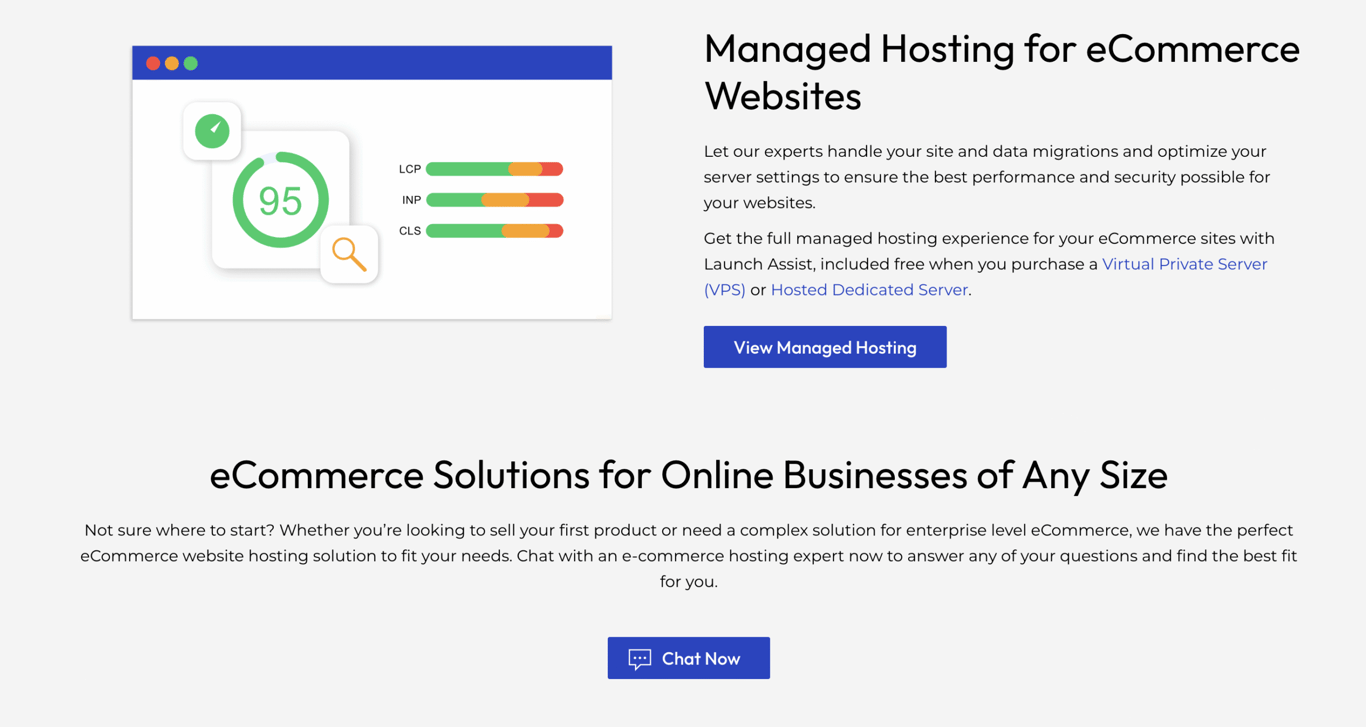
InMotion Hosting is a US-based provider that offers a range of hosting environments, including shared, VPS, and dedicated servers suitable for ecommerce websites.
It offers scalable VPS and dedicated plans that let businesses add more resources as traffic grows.
Its hosting environment includes SSD storage, free SSL certificates, built-in hack and malware protection, and 24/7 US-based customer support.
These features help maintain both site performance and security, which are critical for ecommerce websites that process customer data and transactions.
Unlike shared hosting providers such as Bluehost, InMotion Hosting focuses on higher-performance infrastructure with VPS and dedicated server options that provide greater control over server resources.
This makes it particularly suited for companies running larger stores or projects that require custom software configurations.
InMotion Hosting pros:
The main advantage of InMotion Hosting lies in its scalable infrastructure and strong technical support, including:
- Strong performance supported by VPS and dedicated server hosting options
- High storage capacity and generous bandwidth allocations
- Built-in security protections and website management tools
InMotion Hosting cons:
While powerful and flexible, InMotion Hosting also has a few considerations:
- Higher pricing compared with basic shared hosting providers
- VPS environments that require some technical knowledge to configure and manage
InMotion pricing:
InMotion Hosting offers several hosting tiers, ranging from shared hosting to VPS and fully dedicated servers.
Entry-level ecommerce hosting plans start at $80.49 per month for managed WordPress VPS environments, while dedicated server plans begin at $169.98 per month.
Higher-capacity servers designed for demanding workloads cost more than $349.98 per month, depending on CPU, RAM, and storage configuration.
5. Cloudways
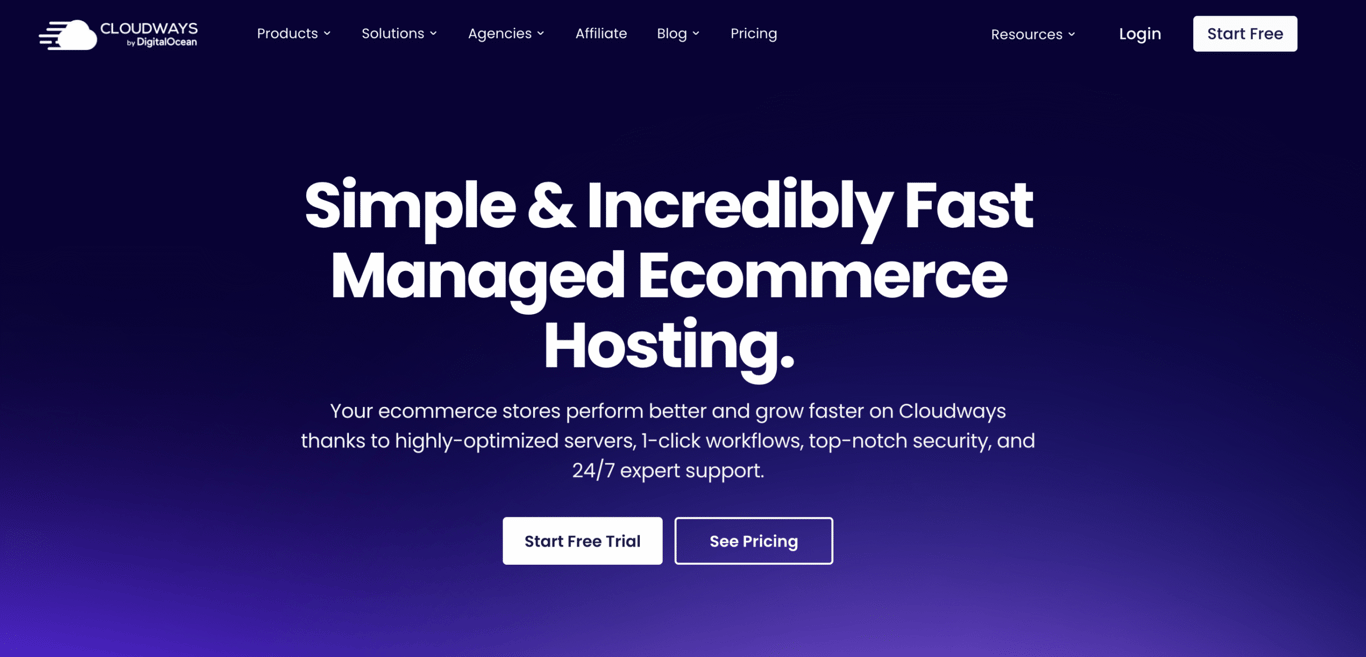
Cloudways is a managed cloud hosting provider designed for websites that need scalable infrastructure without the complexity of managing servers directly.
Instead of running its own data centers, Cloudways allows users to deploy hosting environments on major cloud platforms such as DigitalOcean, Amazon Web Services (AWS), Google Cloud, and Vultr.
The provider manages tasks such as operating system updates, security patches, and server monitoring, allowing store owners to focus on running their business rather than configuring servers.
Cloudways also includes several performance and security features designed for online stores. These include built-in caching, automated backups, firewall protection, and integration with global CDN services.
Cloudways pros:
The main Cloudways advantages include:
- Flexible cloud infrastructure options through providers such as DigitalOcean, AWS, and Google Cloud
- Performance improvements through built-in caching and global CDN integration
- Managed security updates, server maintenance, and automated backups
Cloudways cons:
Cloudways also has a few limitations, such as:
- No domain registration service, so domains must be purchased separately
- A learning curve for beginners unfamiliar with cloud hosting environments
Cloudways pricing:
Cloudways uses a pay-as-you-go pricing model based on the cloud infrastructure provider and server specifications you choose.
Instead of fixed hosting tiers, users deploy servers from providers such as DigitalOcean, AWS, or Google Cloud and pay according to the allocated CPU, RAM, storage, and bandwidth.
Entry-level plans start at $14 per month for smaller cloud servers with limited resources.
Mid-tier configurations for growing websites range between $28 and $54 per month, while larger instances designed for high-traffic ecommerce sites can reach $99 per month or more, depending on the selected infrastructure.
6. IONOS
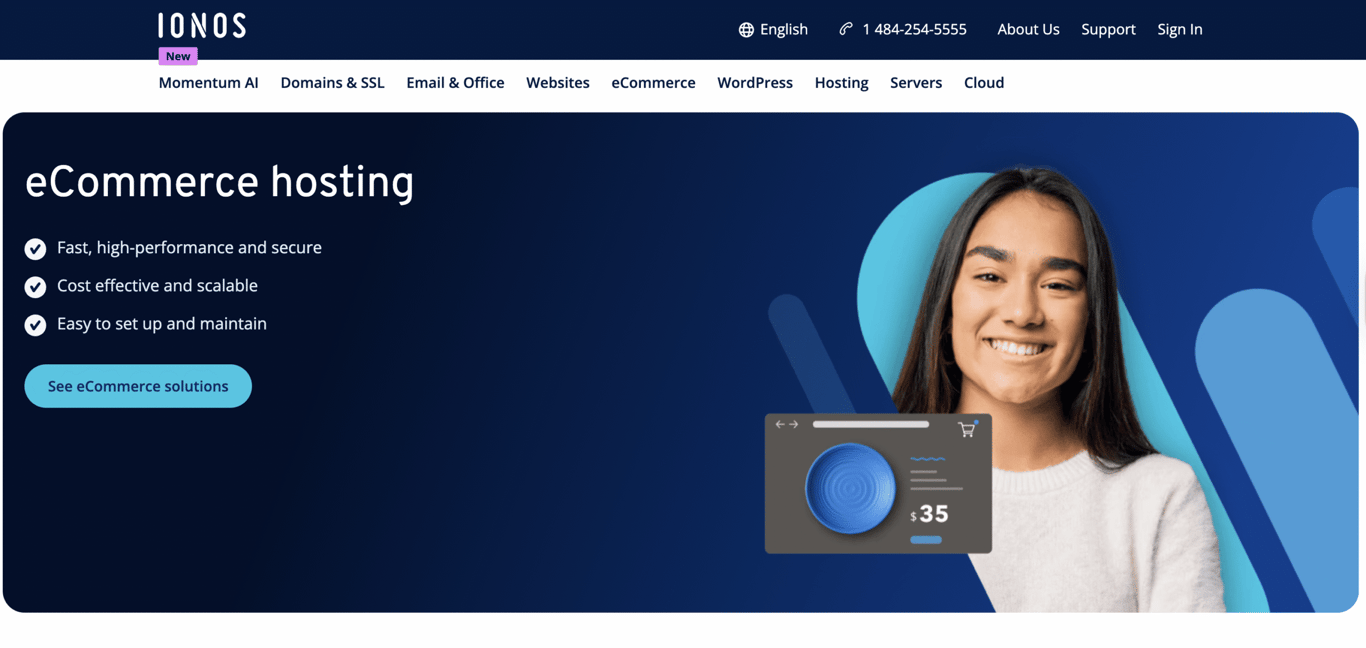
IONOS is a long-established hosting provider that offers shared hosting, VPS, and dedicated servers suitable for ecommerce websites.
Its hosting environment includes free SSL certificates, automated daily backups, and built-in DDoS protection to help secure online stores and customer transactions.
IONOS also comes with multilingual website builder tools and ecommerce creation options that simplify launching a store for users without advanced technical knowledge.
In contrast to performance-focused providers like SiteGround or enterprise platforms like Liquid Web, IONOS positions itself as an affordable, accessible hosting option for small and growing businesses.
The provider works well for small to medium-sized businesses and budget-conscious businesses that want reliable uptime and essential security features without high initial costs.
IONOS pros:
The main advantage of IONOS lies in its affordability and flexible hosting range, including:
- Very competitive introductory pricing, with some entry plans starting around $1 per month
- A broad range of hosting options, from shared plans to VPS and dedicated servers
- Personal consultant support on some plans, along with extensive CMS compatibility
IONOS cons:
While accessible and budget-friendly, IONOS also has a few considerations:
- A more complex interface, as IONOS uses its own custom control panels instead of widely used options like cPanel
- Some advanced configuration features are limited on basic hosting plans, which may restrict customization for developers.
IONOS pricing:
IONOS offers several hosting tiers that scale from entry-level shared hosting to higher-performance plans suitable for ecommerce sites. This structure allows businesses to start with inexpensive hosting and upgrade to stronger infrastructure as their store grows.
Entry-level shared hosting plans start at $4 per month during promotional periods for basic website hosting.
Higher tiers increase available storage, databases, and CPU resources, with mid-range plans costing $6–$10 per month, depending on the plan level and included features. Dedicated WooCommerce hosting plans start at $16 per month for optimized WordPress environments with built-in ecommerce tools.
Additional services, such as extra email accounts, advanced control panel options, or premium security features, can also increase the overall monthly cost.
7. DreamHost
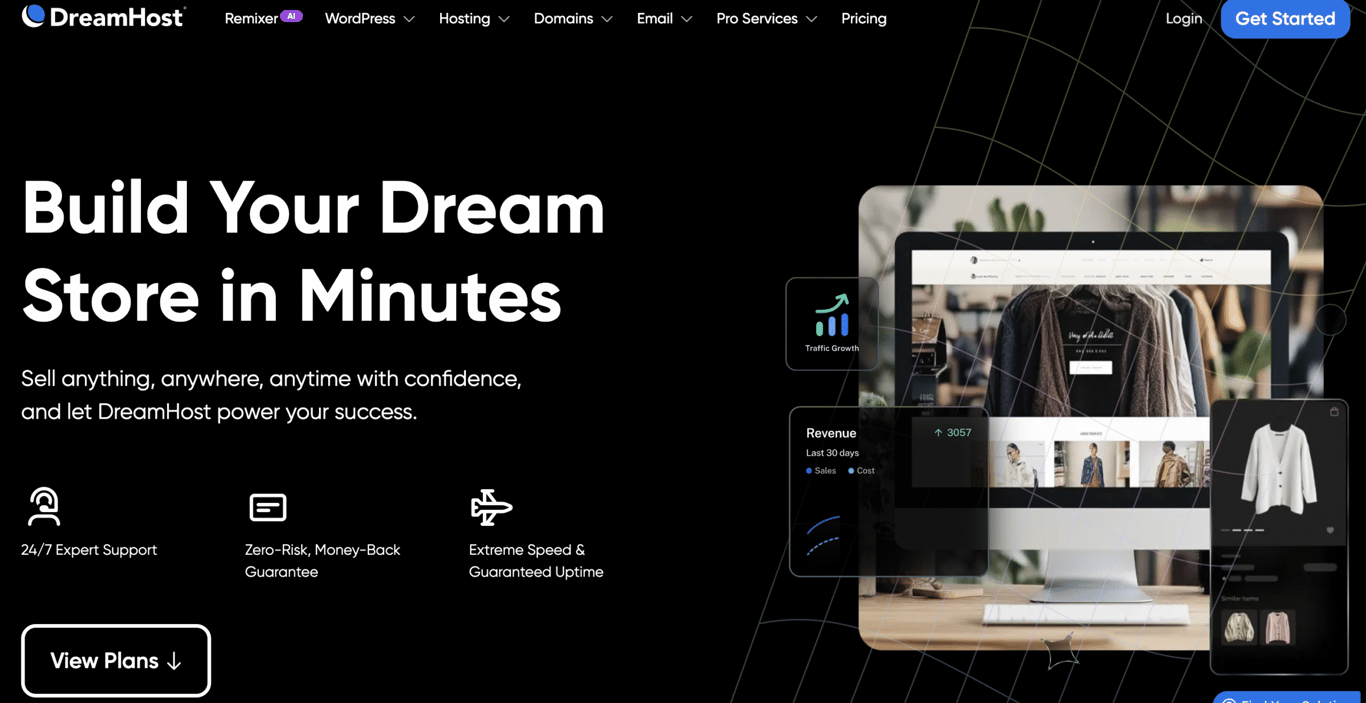
DreamHost is a long-standing hosting provider known for its user-friendly platform and transparent pricing structure.
DreamHost offers several hosting tiers, including shared hosting, WooCommerce-ready WordPress hosting, VPS, cloud, and dedicated servers.
It includes a number of features that support ecommerce sites and small businesses, such as free SSL certificates, a free domain for the first year on many plans, unmetered bandwidth, SSD storage, and one-click installers for popular CMS platforms such as WordPress.
The provider also offers a 97-day money-back guarantee on shared hosting plans, one of the longest refund periods in the hosting industry, giving users more time to evaluate the service.
While providers such as Cloudways and InMotion Hosting emphasize cloud infrastructure flexibility or advanced server customization, DreamHost focuses on simplicity, transparent pricing, and straightforward WordPress hosting.
DreamHost pros:
The main advantage of DreamHost lies in its simplicity and generous shared hosting features, including:
- Free SSL certificates and WHOIS privacy, along with beginner-friendly one-click installers
- Unmetered bandwidth and generous shared hosting resources
- 97-day money-back guarantee on shared hosting plans
DreamHost cons:
While accessible and feature-rich, DreamHost also has a few limitations:
- Antimalware protection and some advanced tools available only as paid add-ons
- Phone-based support may cost extra, and refund policies are more limited for VPS and dedicated plans
- Custom control panel instead of cPanel, which may feel unfamiliar to some users
DreamHost pricing:
DreamHost structures its hosting plans across several tiers, from shared hosting to managed WordPress environments, VPS hosting, and dedicated servers.
Entry-level shared hosting plans start at €2.89 per month (≈ $3.35) during the first year and renew at €10.99 per month (≈ $12.75).
Higher shared tiers increase available storage, website limits, and monthly traffic capacity, with mid-range plans starting at €3.99 per month (≈ $4.63) and scaling to €9.99 per month (≈ $11.59) depending on performance features.
8. Liquid Web
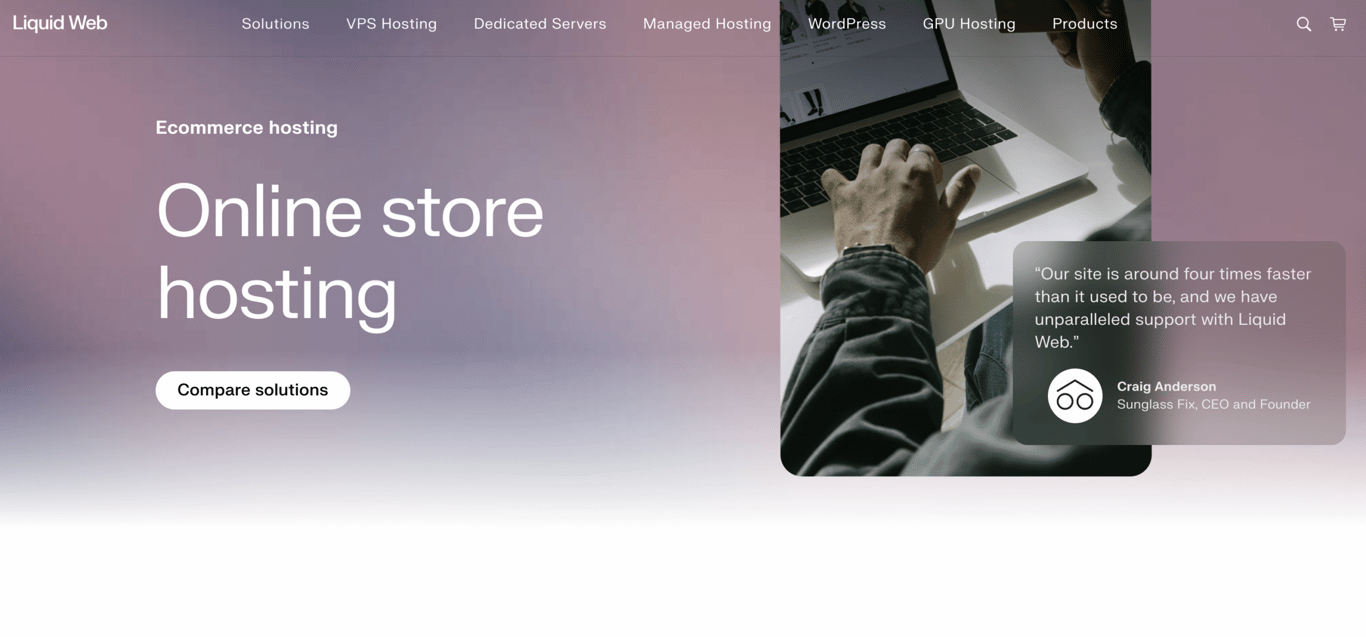
Liquid Web is a premium hosting provider focused on high-performance, fully managed infrastructure for demanding websites and applications.
The provider includes enterprise-grade infrastructure, proactive monitoring, and expert support to help businesses maintain stable operations during traffic spikes or high transaction volumes.
Unlike entry-level hosting providers such as Bluehost or IONOS, which focus on affordability and shared hosting plans, Liquid Web specializes in high-performance managed infrastructure designed for large ecommerce stores and enterprise workloads.
This platform targets ecommerce businesses, mission-critical company websites, and large-scale applications that require reliable uptime and consistent server performance.
Liquid Web pros:
The main advantage of Liquid Web lies in its enterprise-grade infrastructure and managed hosting services, including:
- High reliability and uptime, supported by an SLA-backed 100% uptime guarantee for key services
- Performance-oriented infrastructure, with fast servers and scalable resources capable of handling large product catalogs and heavy traffic
Liquid Web cons:
While highly reliable, Liquid Web also comes with several drawbacks:
- Higher pricing compared with standard shared or entry-level ecommerce hosting providers
- Limited beginner-oriented tools, as the environment is designed for experienced users and technical teams
- Fewer global data center regions, with infrastructure concentrated primarily in the United States and Europe
Liquid pricing:
Liquid Web’s plans are structured across VPS, cloud, and dedicated server environments, allowing businesses to scale resources as traffic and application demands increase.
Entry-level VPS hosting begins at $5 per month for smaller self-managed configurations, while larger VPS instances increase in cost as CPU cores, RAM, and SSD storage expand.
For example, mid-tier VPS plans with 8 GB RAM start around $22.50 per month, while larger configurations with 16 GB RAM can reach $45 per month depending on resource allocation.
Managed hosting environments cost more because they include server maintenance, security monitoring, and technical support.
Factors to consider when choosing ecommerce hosting
Choose an ecommerce hosting provider based on reliability, performance, security, and scalability. Online stores run continuously and handle sensitive data, so hosting directly affects user experience, checkout reliability, and sales performance.
Key factors to evaluate include:
- Uptime and reliability – Look for providers with at least 99.9% uptime guarantees and stable infrastructure. Even short outages can interrupt transactions and reduce customer trust.
- Speed and performance – Fast loading times improve both SEO and conversion rates. Choose hosting that includes SSD or NVMe storage, caching, and CDN support. Server location also matters, as nearby data centers reduce latency.
- Security features – Ecommerce sites handle sensitive customer data. Look for SSL certificates, firewall protection, malware scanning, DDoS protection, and PCI compliance support if processing payments directly.
- Platform compatibility – Ensure the hosting environment supports ecommerce platforms such as WooCommerce, Magento, or PrestaShop, with easy installation and optimized performance.
- Customer support – Ecommerce sites operate 24/7, so reliable round-the-clock support through live chat or ticket systems is essential for resolving issues quickly.
- Scalability – As your store grows, you may need more CPU power, memory, or storage. Providers with clear upgrade paths from shared hosting to VPS or cloud infrastructure make scaling easier.
Your choice should match your store size, expected traffic, and technical expertise. Smaller stores often start with shared hosting, while high-traffic ecommerce sites typically benefit from VPS or cloud hosting environments.
Optimize your ecommerce website performance with hosting
Optimizing ecommerce performance starts with the hosting infrastructure behind your website. The hosting environment determines how quickly product pages load, how reliably checkout processes run, and how well your store handles sudden increases in traffic.
One of the most effective performance tools is server-side caching. Caching stores frequently requested data, so the server does not need to regenerate the same page repeatedly.
This reduces processing time and allows product pages, category listings, and other high-traffic pages to load faster for returning visitors.
A content delivery network (CDN) also improves site speed and reliability. CDNs store copies of your website’s static assets, such as images, stylesheets, and scripts, on servers distributed around the world.
When a customer visits your store, content loads from the nearest CDN location rather than a distant origin server, reducing latency and improving page load times.
Security and performance are also connected. SSL certificates encrypt the connection between the user’s browser and your website, protecting sensitive data such as login credentials and payment information.
In addition to security benefits, HTTPS encryption is now a ranking signal for search engines, meaning SSL can also support SEO performance.
Server location is another factor that directly affects loading speed. Hosting your store on servers located closer to your primary customer base reduces network travel time and improves responsiveness.
For example, an online store targeting European customers will generally load faster if its hosting provider operates data centers within Europe.
If you want to optimize your ecommerce site, choosing hosting that includes these performance tools can significantly improve page load speed, reliability, and overall user experience.
All of the tutorial content on this website is subject to Hostinger's rigorous editorial standards and values.

Ksenija is a digital marketing enthusiast with extensive expertise in content creation and website optimization. Specializing in WordPress, she enjoys writing about the platform’s nuances, from design to functionality, and sharing her insights with others. When she’s not perfecting her trade, you’ll find her on the local basketball court or at home enjoying a crime story. Follow her on LinkedIn.