How to renew a domain name: 3 methods
Mar 10, 2026
/
Matleena S. & Klaudijus J.
/
4 min Read

Unlike diamonds, domain name ownership isn’t forever – and letting yours expire can cause major disruptions to your online presence, like bringing down your website and email.
But don’t worry – renewing your domain registration is easier than you might think, and the process is quick and straightforward in hPanel. In this guide, we’ll explore three common domain renewal methods:
- Renewing an active domain name: This is for domains that are up for renewal before they expire.
- Renewing an expired domain name: We’ll explain how to restore a domain that has already expired.
- Enabling auto-renewal: Simplify the domain renewal process by enabling automatic renewal with your domain registrar.
How to renew an active domain name
To avoid losing access to services like your website or email, it’s essential to renew your domain name before it expires. The renewal process is easy with most domain registration providers, including Hostinger.
Here’s how to do it in hPanel:
- Log in to your Hostinger account and go to Billing → Subscriptions in hPanel.
- Find the domain you want to renew. Click on the arrow to open the Subscription details window.

- Select Renew.

- Select the registration period and payment method.
- Confirm the purchase by checking the Domains page to ensure the expiration date is updated.
Alternatively, you can renew your domain from the Domains page:
- Navigate to Domains → the Domain portfolio page in hPanel.
- Click Renew next to the domain you want to renew.
You can also renew a domain through the Domain Overview page. Simply select Renew now next to the expiration date:
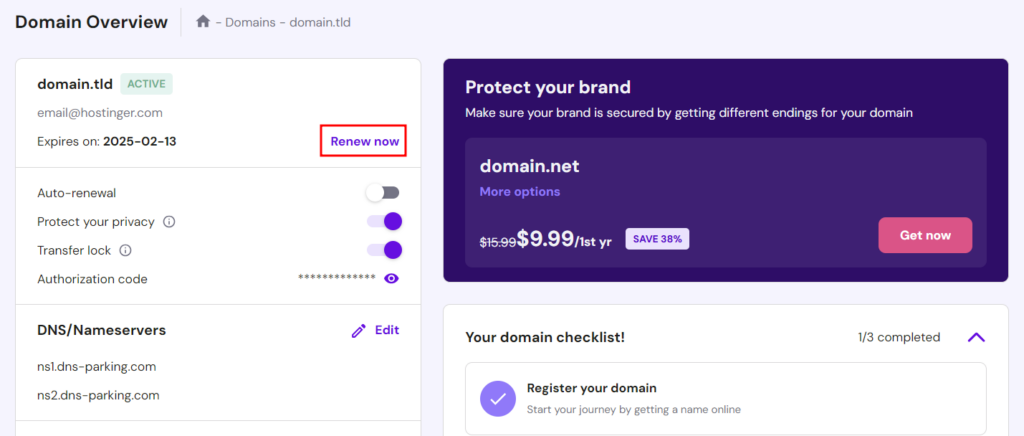
Note that some TLDs allow renewal only when within 28 days of expiration. If you can’t find the renewal button, it may be due to this limitation.
How to renew an expired domain name
When a domain name expires, it enters a grace period of up to 45 days. During this time, you can still renew your domain’s registration at the standard renewal rate.
Follow these steps to renew a domain in the grace period through hPanel:
- Go to Domains or Billing → Subscriptions in hPanel.
- Hover over the expired domain to check if it’s still in the grace period.

- Click Renew next to the domain and follow the payment steps.
- After completing the renewal, check the Domains page to confirm the domain status has changed from “Expired” to “Active.”
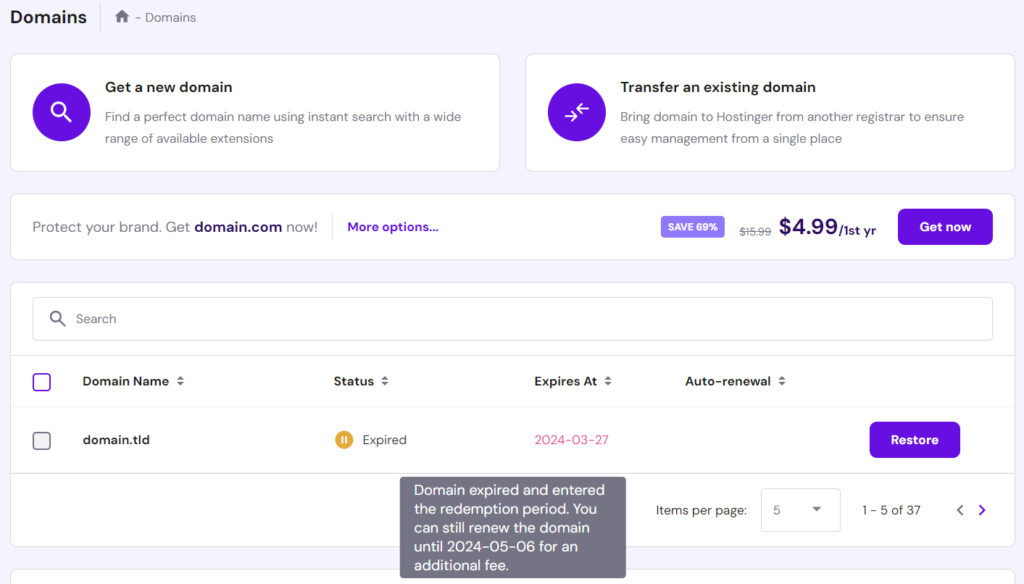
Important! Some TLDs don’t have a grace period and immediately enter the redemption period. Renewal in this case requires paying a higher fee.
If your domain name is in the redemption period – you’ll see this when you hover over the Expired status – follow the same steps, but click Renew next to the expired domain and pay the additional redemption fee. The domain will become active within 24 hours after your payment is accepted.
How to renew a domain name automatically
Many registrars offer an auto-renewal option to ensure your domain name is renewed before it expires. This helps to prevent service downtime or loss of access to your domain.
Here’s how to check if it’s set up for your domain in hPanel:
- Go to Billing → Subscriptions and click on the arrow icon to the right of the domain you want to set up for auto-renewal.
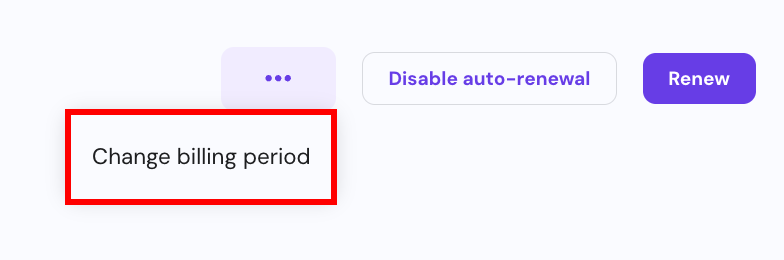
- If you see the Disable auto-renewal button, your domain is already set up for renewal. You can simply close the window, or click on the three dots icon and choose Change billing period to adjust the duration of your renewal.
- If you see the Enable auto-renewal button, simply click on it to enable auto-renewal. If you don’t already have a payment method in the system, you’ll be asked to add one.
- Alternatively, go to Domains and toggle the Auto-renewal option on.

Ensure your payment information is updated to avoid issues. You can add or update your payment method by going to Billing → Payment Methods in hPanel.
If you’re switching registrars to get better renewal rates, make sure to transfer your domain at least a month before the expiration date to avoid downtime. Check out our guide on the best domain registrars to compare registration, renewal, and transfer prices.
Conclusion
Renewing your domain name on time is crucial for keeping your website and email services running without interruptions.
Here’s a quick recap of the different types of renewal methods:
- Active domain renewal: For domains not expired or still in the grace period.
- Expired domain renewal: For domains that have entered the redemption period.
- Auto-renewal: Set it up for peace of mind and to automatically renew your domain.
If you have further questions about renewing your domain, check out the FAQ section or leave a comment below!
And if you’re looking to dive deeper into domain name management, we have articles on how to sell a domain name and how to prevent domain squatting.
Domain Name Checker
Instantly check domain name availability.
How to renew a domain name FAQ
How much does it cost to renew a domain name?
Domain name renewal costs vary by extension, registrar, and any additional services like WHOIS privacy protection. On average, domain renewals range between $10-50/year.
How long does it take to renew a domain name?
Renewing an active domain name happens instantly with no downtime. However, if the domain has expired, it may take up to 48 hours for the changes to propagate.
What happens when a domain name expires?
Once a domain name expires, it usually enters a grace period. If it is still not renewed, or if the TLD does not allow for a grace period, it enters a redemption period, where the domain owner pays a redemption fee to reactivate the domain. After this period, the domain becomes available for new registration. For detailed renewal price breakdowns, check out our domain name cost guide.

Matleena is a seasoned Content Writer with 5 years of content marketing experience. She has a particular interest in emerging digital marketing trends, website building, and AI. In her free time, Matleena enjoys cups of good coffee, tends to her balcony garden, and studies Japanese. Follow her on LinkedIn

As Hostinger's Head of Domains, Klaudijus Januitis is a product leader but also a customer advocate ensuring the product meets user needs. He works closely with engineering, design, and marketing teams to develop and adapt the product and ensure alignment between product strategy and company goals. Klaudijus is also skilled in building relationships with registries and resellers to support joint marketing efforts and ensure successful partnerships. Follow him on LinkedIn.