How to make money as a podcaster in 9 steps
Mar 25, 2026
/
Alma
/
12 min Read
Learning how to make money as a podcaster is more doable than most people think. It comes down to using a few different income streams. That can include sponsorships, affiliate links, paid memberships, selling your own products, or reusing your episodes on other platforms. Most podcasters start with one or two of these and add more as they grow.
You also don’t need a massive audience to make money from podcasting. Many shows start earning at around 1,000 to 5,000 downloads per episode. Some even start earlier if they focus on the right niche and have listeners who are actually engaged.
It gets much easier once you pick the right niche, understand how podcast ads are priced, and know what sponsors actually care about.
From there, the focus is on growing your audience, getting more value out of each episode, and adding new ways to make money over time.
1. Choose a profitable podcast niche
Podcasting is one of many popular ways to make money online, and choosing the right niche is what separates hobbyists from earners. A specific podcast niche attracts better-paying sponsors and builds an audience that buys. The narrower your focus, the more valuable your listeners become to brands that want to reach them.
A broad podcast like “business” is hard to grow because there’s too much competition. But a podcast about “marketing for small online stores” speaks to a clear audience. It’s also a focused group with spending power, and brands pay a premium to get in front of them.
When your podcast is focused, people trust it more. And when trust goes up, so does the chance they’ll buy something a sponsor recommends.
Some topics naturally attract advertisers, like personal finance, B2B marketing, health and wellness, tech, and real estate investing. These audiences are already trying to solve problems or make purchases, which is exactly what sponsors are looking for.
A common piece of advice is to “pick what you’re passionate about.” But that’s incomplete. While passion keeps you recording even when you don’t feel like it, it doesn’t guarantee anyone will pay to reach your audience.
The sweet spot is a topic you can talk about consistently and that already has brands spending money in the space. Passion without a market means you have a hobby, not a business.
To check whether your niche is profitable:
- Check who’s advertising. Listen to popular shows in your space. If brands are spending money there, that’s proof of demand.
- Look for affiliate programs. Search for partner programs related to your topic. If brands offer commissions for referrals, money is flowing through that niche.
- Search for related keywords. Free tools like Google Trends or Ubersuggest show whether people are actively searching for your topic.
👉 If you’re leaning toward a business-focused podcast, browsing popular online business ideas can help you narrow down which specific angle has the most advertiser demand.
2. Grow your podcast audience to 1,000+ downloads per episode
Your download numbers directly decide which sponsors will work with you and how much they’ll pay. Many ad networks look for podcasts with at least 5,000 to 10,000 downloads per episode. But smaller shows can still land sponsors. If your audience is specific and a good fit, some brands will work with podcasts starting around 1,000 downloads per episode.
Here are realistic podcast growth benchmarks:
Downloads per episode | What it unlocks |
1,000 | Entry-level sponsorships, affiliate deals |
5,000 | Mid-tier sponsors, better ad rates |
10,000+ | Premium brand deals, ad network eligibility |
Reaching 1,000 downloads isn’t as far away as it sounds. Most shows that publish weekly for 6–12 months hit this mark. Here are four practices that can help you reach that:
- Publish on a set schedule. Weekly episodes outperform irregular releases by a wide margin. Your listeners need to know when to expect you. Pick a day and stick to it – like a TV show people tune into because they know it’ll be there.
- Use searchable episode titles. Podcast apps work like search engines. “How to negotiate a raise at work” gets found. “Episode 47: Musings” doesn’t. Describe what the listener will learn right in the title.
- Collaborate with guests. Appearing on other podcasts puts your voice in front of new audiences. Even one guest spot on a show with 5,000 listeners can send a wave of new subscribers your way.
- Promote in the first 72 hours. Podcast algorithms favor early traction. Share your new episode across social media, email, and online communities within the first three days.
Don’t forget about engagement, either. Sponsors care about how many listeners stick around until the end, not just how many pressed play. A smaller audience that finishes every episode is often worth more than a larger one that drops off early.
3. Understand podcast CPM and revenue potential
CPM (cost per mille) is how podcast ads are priced: the amount an advertiser pays you for every 1,000 downloads an episode gets.
Podcast ads play at different points in an episode, and placement affects both attention and pay. There are three standard positions where you can slot ads into your podcast:
- Pre-roll. A short ad at the very beginning. It’s usually a quick “this episode is brought to you by…” mention.
- Mid-roll. A longer ad in the middle, during a natural pause. The most valuable spot because listeners are already engaged and less likely to skip.
- Post-roll. A short ad after the main content ends. Costs less because not everyone listens to the end, but those who do are your most loyal fans.
There’s also a fourth type: programmatic ads. These are pre-recorded ads from brands that get automatically placed into your episodes by your hosting platform. You don’t read, choose, or schedule them. They pay less than host-read spots, but they’re completely hands-off.
Here’s what each placement typically pays:
Ad placement | Typical CPM range |
Pre-roll ad (15–30 sec) | $15–$25 |
Mid-roll ad (60 sec) | $25–$50+ |
Post-roll ad (15–30 sec) | $10–$20 |
Programmatic ad (auto-inserted by the platform) | $5–$15 |
To figure out what one ad slot earns per episode, divide your downloads by 1,000, then multiply by the CPM rate.
So if your show averages 5,000 downloads and you sell a mid-roll ad at $25 CPM, that’s:
5,000 ÷ 1,000 = 5, then 5 × $25 = $125/episode
Publish weekly, and that single ad slot puts about $500/month in your pocket.
Mid-roll ads read by the podcast host earn the most. When you personally talk about a product during that mid-episode break, it sounds like a genuine recommendation, not a scripted commercial. That authenticity is what commands higher rates.
There are four factors that can affect your rates:
- Your topic. Finance, technology, and business podcasts earn more because their audiences have more spending power.
- Who’s listening. Advertisers pay more for listeners with higher incomes or clear buying interests.
- Engagement. If most of your audience sticks around until the end, that signals attention – and attention gets better rates.
- Time of year. Ad rates peak from September to December when brands ramp up holiday spending.
Once you know your average downloads and the rates your niche attracts, you can estimate monthly ad earnings and figure out when adding another ad slot makes sense.
4. Secure sponsorships and advertising deals
Most podcasters land their first sponsorship by reaching out to brands, not by waiting for offers to show up. That can feel intimidating, but the process is simpler than it looks once you have two things ready: a media kit and a short list of brands to pitch.
Your podcast media kit is a one-page PDF that shows a potential sponsor your show at a glance: topic, format, listener profile (age, location, interests), average downloads, engagement, and any past sponsor results. Think of it as your show’s resume. You send it along with every pitch so brands can quickly see whether your audience matches theirs.
Once that’s ready, pitch brands directly. List 10–15 companies that already sell to your type of listener, then send personalized emails. Mention why their product fits your show, attach the media kit, and suggest a structure, like a four-week trial with a host-read mid-roll ad.
Use a subject line that tells them exactly what you’re offering, like “Podcast ad spot: reach 5,000 finance listeners through The Budget Hour.” The clearer the subject line, the more likely it is to get opened. Most brands won’t reply to the first message, so follow up after a week or two – that’s where many first deals actually close.
But once you reach a few thousand downloads per episode (often around 5,000), many ad networks and marketplaces can start handling matchmaking for you. They connect you with brands and handle billing so you can focus on content. Many top podcast hosting providers also offer built-in access to ad marketplaces.
When negotiating, push for host-read ad slots over pre-recorded ones. As we covered earlier, they earn higher rates but also give you greater creative control over how the product is presented to your audience.
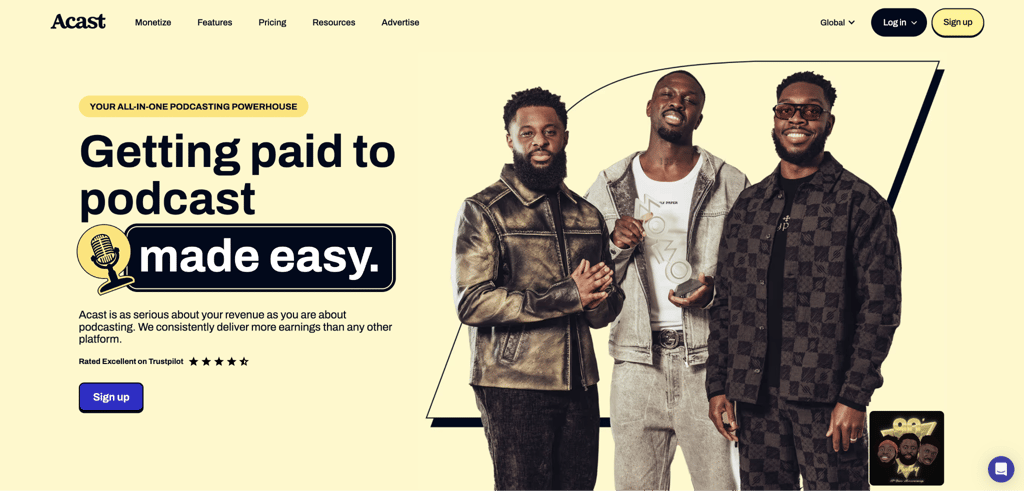
You can also set up automatic ad placement through platforms like Spotify’s Megaphone and Acast. These insert ads into both new and older episodes for you, so your entire library earns revenue, not just your latest release.
If your show has a geographic focus, pitch local businesses too. A local mortgage broker in Denver might pay more per listener than a national brand, because every listener is a potential customer in their area.
5. Launch listener-supported revenue streams
While sponsorships are a great way to earn from your podcast, they’re dependent on your download numbers and advertiser budgets. Listener-supported options, like memberships, give you more control; your most dedicated listeners support you directly with monthly payments.
Even a small group makes a difference. Fifty listeners at $7/month is $350, enough to cover hosting, editing software, and a decent microphone. A hundred at $10/month is $1,000 in steady revenue before you sell a single ad.
You can offer subscriptions through platforms like:
- Patreon. Create tiers ($5, $10, $20/month) with specific perks. Patreon handles payments and subscriber management.
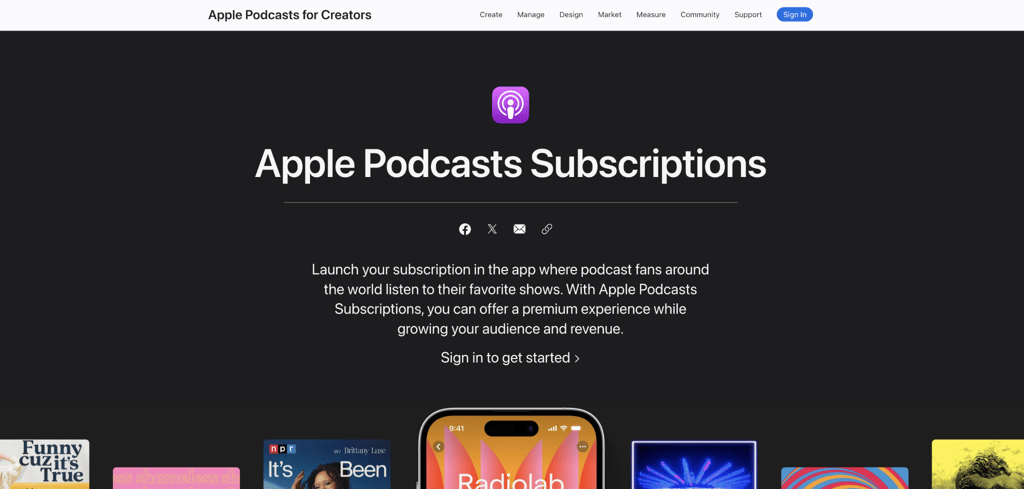
- Apple Podcasts Subscriptions. Offer premium content inside the Apple Podcasts app. Listeners subscribe without leaving their player.
- Supercast. Built for podcast memberships. Paying subscribers get exclusive episodes delivered straight to their regular podcast app.
- Spotify for Creators. Subscription tools built into the platform, letting Spotify listeners upgrade to paid tiers.
For listeners who prefer one-time support, Buy Me a Coffee and Ko-fi let people send tips without a monthly commitment. Think of it as a digital tip jar.
What you offer on these platforms matters more than which one you pick. The perks that consistently drive signups are ad-free episodes, bonus content or extended interviews, early access, private community access (like a Discord group), and behind-the-scenes Q&A sessions.
If you want to go beyond what Patreon or Supercast offer – like gating specific blog posts, courses, or community forums – building a membership website gives you full control over what members can access and how they pay.
Two or three pricing tiers are enough to start. Keep the lowest at $3–$5/month and offer a premium at $10–$15 with added perks. Be specific about what each tier includes – “two bonus episodes, ad-free listening, and access to our private Discord” works far better than a vague “support the show.”
Once you have 50+ paying members, creating a subscription tracker makes it easy to see which tiers people pick, when they cancel, and what’s actually driving revenue.
6. Use affiliate marketing to monetize recommendations
You’re already recommending tools, books, and products on your show. Affiliate marketing means earning a cut when those recommendations lead to a sale.
Sign up for a brand’s partner program, get a tracking link or discount code, mention the product on your show, and earn 5%–30% each time a listener buys through your link. No upfront cost, and you can start at any audience size.
Here are three types of programs to consider:
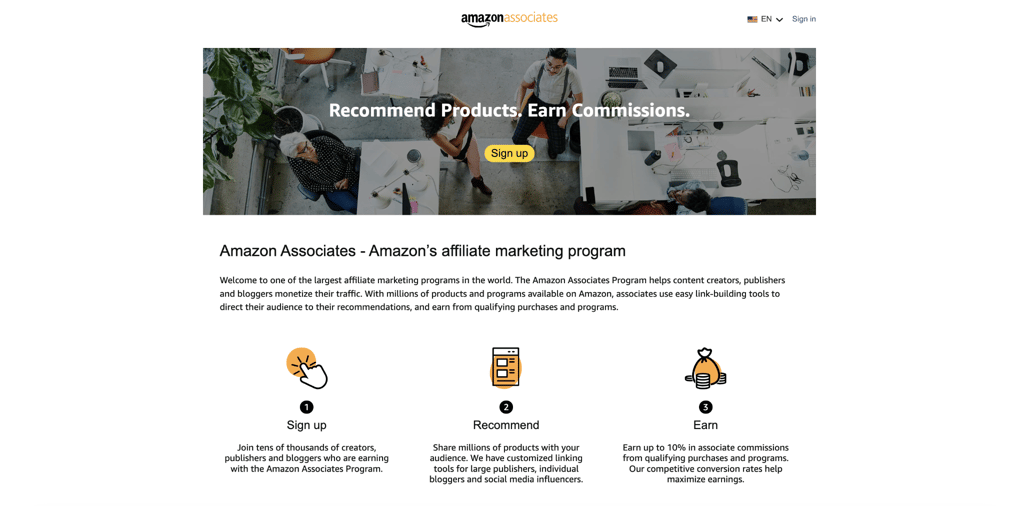
- Amazon Associates. Works for any topic. Commissions are low (1%–5%), but listeners trust Amazon, so they’re more likely to buy.
- Brand-specific programs. Reach out to companies your audience already uses. Software tools, course platforms, and specialty retailers often pay 10%–30% per sale.
- Affiliate platforms. Services like Impact, ShareASale, and CJ Affiliate connect you with hundreds of brands from one account. You browse programs, apply, and manage tracking links in one place.
Most podcasters default to Amazon because it’s the easiest to join. The smarter first move is picking one or two niche products with higher commissions. A personal finance podcaster promoting a budgeting app at 20% per signup will out-earn the same podcaster linking random Amazon products at 3%.
The key to making affiliate mentions work is timing. Bring up products when they fit the conversation – not in a forced break, but in the natural flow. If you’re discussing productivity and you use a specific task manager daily, that’s the moment to share your link.
Where you place those links matters too. Mention the link during the episode (most listeners won’t check show notes unless you tell them to), then make sure it’s easy to find in your show notes, on your website, and in your email newsletter. Starting affiliate marketing is straightforward once you understand how tracking links and commissions work.
After a few weeks, check which products are actually selling. Most partner programs show clicks, purchases, and earnings per link, so you’ll know quickly what your audience responds to and what to stop mentioning.
Pro Tip
Don't overload episodes with affiliate mentions. One or two per episode is plenty. If every segment feels like a sales pitch, your audience tunes out. The trust you've built with listeners is worth more than any single commission.
7. Create a podcast website to sell your products
Selling your own products – like merch, e-books, templates, or online courses – is one of the highest-margin ways to earn from your podcast. But to sell anything directly, you need your own podcast website. Spotify, Apple Podcasts, and YouTube distribute your show, but they don’t share listener emails or let you run a store.
Your website ties everything together. Sponsors get a dedicated page. Affiliate recommendations live in blog posts that show up in search results. Products sit in a store you control. And your email signup form captures subscriber info that belongs to you, not to a third party.
That ownership matters. If a platform changes how it recommends shows or adjusts its payment terms, podcasters with their own sites and email lists barely notice. Those without one scramble. It’s the difference between renting an apartment and owning a house.
Tools like Hostinger Website Builder let you make a website in an hour with no code required. Look for store features, page-building tools, visitor analytics, and payment processing.
Once your site is live, you can start selling. Digital products like e-books, templates, or mini-courses on your topic are the easiest to start with – no shipping, no inventory, and you set them up once and sell them forever. Physical merchandise works too, especially through print-on-demand services.
8. Repurpose your podcast content for additional revenue
One finished episode can become a dozen pieces of content across different platforms, each with its own way to earn. Repurposing isn’t extra work – it’s getting full value from what you’ve already made.
The most impactful move is publishing your podcast episodes on YouTube. Upload video versions of your episodes (or audio paired with a simple image) to earn from YouTube’s ads. Once your channel hits 1,000 subscribers and 4,000 watch hours, you qualify for ad payments, channel memberships, and live stream tips.
YouTube now leads as the top platform for podcast discovery – new listeners often find you there before they ever open a podcast app. And since YouTube is its own earning platform, making money on YouTube can become a full revenue stream alongside your podcast, not just a promotional tool.
Your episodes are useful beyond audio and video, though. Tools like Descript or Otter.ai convert episodes into text that you can edit into blog posts with headings, takeaways, and links. These posts bring visitors to your website through search engines for months. A Tuesday interview could still drive traffic on a random Saturday six months later.
You can also pull 30–60 second highlights and post them as Reels, TikToks, or YouTube Shorts. These act as free marketing, sending curious viewers to the full episode. OpusClip and CapCut help you find and edit the best moments fast.
If you’ve recorded a series on one topic, bundle those episodes into a digital product – an e-book, workbook, or email course. That content already exists. You’re just packaging it in a format people will pay for.
And don’t forget your back catalog. With automatic ad placement, you insert current sponsors’ ads into older episodes still getting downloads. A new listener starting from episode one earns revenue from today’s sponsors on every play.
Start with your most-downloaded episodes. They’ve already proven they connect with your audience.
9. Diversify and scale podcast income
Relying on one way to make money is risky. If a sponsor leaves or a platform changes its payouts, your income can drop overnight.
A more stable approach is to mix a few ways to make money. For example, you might earn from affiliate links, a small membership, and occasional sponsorships at the same time. If one slows down, the others keep things steady.
As your podcast grows, put some of that money back into it. Upgrade your setup, or get help with editing, show notes, or promotion. Even a small budget can save you time and improve quality.
Track what you earn each month by source. A simple spreadsheet is enough. After a while, you’ll see what brings in the most and where to focus next.
Try new ideas, but keep it simple. Test one thing at a time and see how your audience responds. If it works, keep it. If not, move on.
Renegotiate as you grow
Once your numbers improve – more downloads, stronger engagement, better audience data – go back to existing sponsors and ask for better rates. A 20%–30% increase is reasonable after meaningful growth. The worst they can say is no.
How much money can you make as a podcaster?
How much you make depends on your audience size, your niche, and the number of ways you monetize your podcast. Here are some rough benchmarks:
Downloads per episode | Estimated monthly earnings | Main ways to make money |
1,000 | $100–$500 | Affiliate marketing, small sponsorships |
5,000 | $1,000–$3,000 | Mid-tier sponsors, memberships, affiliates |
10,000 | $3,000–$8,000 | Premium sponsorships, products, memberships |
20,000 | $5,000–$15,000+ | Multiple sponsors, digital products, YouTube |
50,000+ | $15,000–$50,000+ | Brand deals, products, memberships |
These numbers assume you’re not relying on ads alone. For example, a podcast with 5,000 downloads that also sells a $29 guide and has 100 members paying $7/month will earn more than one using ads only. That’s $700/month in steady income from memberships alone.
The difference between making $1,000/month and $10,000/month usually isn’t just downloads. It’s what you do around your podcast. Podcasters earning more often have a website, collect emails, sell a product, offer memberships, work with repeat sponsors, and focus on an audience that’s willing to spend.
How to turn your podcast into a long-term online business
Once you’re earning from sponsorships, memberships, affiliate deals, and your own products at the same time, you’re no longer just running a show – you’ve started an online business.
Each part supports the others. Your episodes can drive affiliate sales. Your website helps grow your email list. That list turns into paying members. And as your audience grows, you attract better sponsors.
Because everything is connected, you’re not relying on a single income source. If one slows down, the others help balance it out.
Your podcast also builds something harder to measure but just as valuable over time: authority. That’s what turns a good business into a lasting one. The more episodes you publish, the more your audience sees you as the go-to person in your niche.
That reputation leads to opportunities beyond ads – like paid consulting, coaching clients, speaking gigs, or a paid newsletter. These aren’t beginner moves, but they’re where the biggest long-term earnings tend to come from.
Authority grows faster when you get more out of each episode. After each recording, ask what else you can do with the content. Can the topic be turned into a blog post? Can the best insights become a paid guide? Can a clip bring new listeners from YouTube or TikTok? That’s how one episode keeps earning for you long after you hit publish
And everything you build – the products, the email list, the content, the authority – works better when it has a home base. A website you own ties it all together and gives you a place to grow that no platform can take away.
You don’t need every revenue stream running before you start seeing results. Pick the one or two that fit where you are right now, get them working, and build from there. The podcasters who earn long-term aren’t the ones who had a perfect plan from day one – they’re the ones who started, stayed consistent, and kept adding to what worked.

Alma is an AI Content Editor with 9+ years of experience helping ideas take shape across SEO, marketing, and content. She loves working with words, structure, and strategy to make content both useful and enjoyable to read. Off the clock, she can be found gaming, drawing, or diving into her latest D&D adventure.